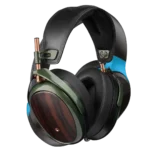
Meze Audio Strada Feature Scores
Explore all 51 feature scores for Meze Audio Strada, organized into pros and cons.
Scores by Feature
Summary
51 reviewed features-
Very positive 4.5-5.028 (55%)
-
Positive 3.5-4.419 (37%)
-
Neutral 2.5-3.41 (2%)
-
Negative 1.5-2.43 (6%)
Pros
Sort
-
Low weight, soft memory-foam pads, and well-distributed pressure make long sessions a major strength. The key exception is fit: smaller heads may struggle even at the minimum adjustment.
-
The magnesium frame, ebony cups, precise assembly, and premium finish draw near-universal praise. Only isolated adjustment, creaking, or cable-connector quirks interrupt an otherwise exceptional construction story.
-
Flagship-derived materials, hand finishing, wood cups, and precise hardware make the Strada look and feel more expensive than its price. Its unusually light frame can briefly seem less substantial until handled closely.
-
The roughly 300–330g build feels notably light for its size and materials, reducing neck and head fatigue during extended listening.
-
Screwed, modular construction, magnetic pads, and replaceable parts make repairability a standout advantage. The Strada is designed to be maintained instead of discarded.
-
Magnetic pads detach and reinstall quickly without tools, simplifying cleaning, replacement, and long-term upkeep.
-
Most consider $799 compelling for the flagship-like chassis, accessories, serviceability, and spacious sound. Buyers who dislike the tuning may see less value, especially when cheaper or more neutral alternatives exist.
-
Macassar ebony and metallic green give the Strada a distinctive, luxurious identity. The craftsmanship is widely admired, but the bold colorway is unmistakably polarizing.
-
Passive isolation is unusually strong for an audiophile headphone and works well in offices, homes, and travel. Performance depends on achieving a complete pad seal.
-
An unusually airy, wide stage is one of the clearest strengths for a closed-back headphone. Its exact depth and scale remain recording-dependent, and a few listeners hear a more intimate presentation.
-
The Strada creates convincing depth, width, and placement for a closed-back design. Imaging is usually engaging and realistic, though a minority finds it diffuse, shallow, or less precise than top technical rivals.
-
Most listeners find the Strada engaging, refined, and easy to live with, while a smaller group is frustrated by tonal thinness or treble peaks. Satisfaction depends heavily on fit and sound preference.
-
The Strada earns broad recommendation for its craftsmanship, comfort, isolation, and spacious presentation. It is not a universal pick: treble-sensitive listeners and people with smaller heads should audition before buying.
-
Layering and separation are clear strengths, giving instruments distinct space even in busy arrangements. A few listeners hear less depth or coherence when the treble dominates.
-
Two useful cables, adapters, a protective case, and a cable pouch form a complete, high-quality package with little obviously missing.
-
The Strada is easy to drive, yet many listeners hear tighter bass, smoother treble, and greater refinement from better-matched amplification. Source synergy matters more than raw power alone.
-
Wide staging, strong positional cues, isolation, and impactful low frequencies make the Strada highly effective for games and films. Competitive players may still prefer sharper imaging or a less treble-forward presentation.
-
The rigid case protects the headphones well and feels appropriately premium, although its generous size is less convenient for light travel.
-
Bass impressions vary with seal, source, and taste. Many hear deep, controlled sub-bass with satisfying punch, while others want more upper-bass weight, speed, or consistency.
-
Clamp is usually secure and gently judged, holding the seal without creating a vise-like squeeze. A few heads may find it firmer or less adaptable than expected.
-
The broad, ventilated headband spreads pressure evenly and helps prevent hot spots, making its relatively light padding work better than expected.
-
Vocals and instruments are often praised for clarity, articulation, and natural timbre. Dissenting listeners hear a recessed lower midrange, thin male vocals, or an occasionally shouty upper-mid emphasis.
-
The large, soft magnetic pads support comfort and sealing well. Their synthetic-leather surface can become warm for some listeners during extended use.
-
The sound is widely praised for spaciousness, detail, musicality, and closed-back openness. The central tradeoff is tonal: some hear smooth balance, while others find the upper range too energetic and the lower mids too lean.
-
High sensitivity provides ample loudness from portable sources, with enough headroom for demanding recordings without needing a large desktop amplifier.
-
Light weight, strong isolation, and a protective case suit travel well. Its broad nonfolding shape, bulky case, and long cable keep it from being truly compact.
-
Soft pads maintain comfort and a useful seal with thin-framed glasses, avoiding the pinching some closed-backs create.
-
The two braided cables are generally considered well made and useful, especially with both 3.5mm and 4.4mm terminations. A few listeners report shape memory, microphonics, or a finish that feels modest for the price.
-
EQ can tame upper-treble energy, add lower-mid body, or improve bass balance. For the most treble-sensitive listener, correction may require narrower and more deliberate filters rather than one broad adjustment.
-
Measured and perceived channel balance is consistently excellent, with only minor unit-level deviations reported.
-
Ventilated headband padding and Alcantara-lined pads limit heat better than many closed-backs. Synthetic contact surfaces can still grow warm in long or hot sessions.
-
The closed cups keep music contained well at normal listening levels, making the Strada suitable around coworkers or family without broadcasting every track.
-
Treble opinions are sharply divided. Many hear airy detail, smooth extension, and fatigue-free sparkle, while others report 4–7kHz peaks, glare, or long-session fatigue.
-
Standard dual 3.5mm cup connections make cable replacement and third-party upgrades simple, secure, and widely compatible.
-
Dual 3.5mm earcup inputs, 3.5mm and balanced 4.4mm cables, and an adapter make the wired setup flexible across portable and desktop gear.
-
Dynamic headroom and low distortion preserve clarity at elevated levels, although treble-sensitive material can become more aggressive as volume rises.
-
The tonal balance is the most disputed part of the Strada. Some hear natural neutrality or gentle warmth, while others describe a U- or W-shaped response with lean lower mids and emphasized upper treble.
-
The fit is secure for many users and suitable for walking, but cup angle and head size can make seal and positioning fussy for others.
-
The standard 3.5mm connection is straightforward and plug-and-play with compatible computers and portable devices.
-
Its musical performance and adaptability earned a High Nines award from one publication.
-
The materials and modular construction inspire confidence that the Strada is built for long ownership rather than short replacement cycles.
-
The joints and moving hardware feel precise, solid, and engineered for long-term use rather than looseness or flex.
-
Standard analog connections let the Strada work easily across computers, home audio gear, consoles, and handheld gaming devices.
-
The broader modular design allows major wear components to be replaced rather than forcing disposal of the entire headphone.
-
The passive wired design is refreshingly simple: connect the appropriate cable and start listening without apps, pairing, or configuration.
-
With a wired Xbox setup, the Strada delivers immersive directional cues and impactful game audio that one listener described as a game changer.
-
Movement noise is generally low, though isolated units produced mild creaking or rattling when the cups rotated.
Cons
Sort
-
The Strada has a broad, conspicuous silhouette rather than a discreet profile. Its oversized cups and generous padding are especially noticeable on smaller heads.
-
The freely rotating cups aid positioning, but one listener found them too loose and awkward to align quickly with one hand.
-
The light chassis travels better than its size suggests, but the nonfolding frame and large case take up considerable bag space.
-
The sliding mechanism often feels smooth, quiet, and refined, but adjustment range is inconsistent across head sizes. Small heads can remain too loose, while some users want detents or more friction.