- Compared: wireless planar competitor TechRadar positions Audeze Maxwell as a wireless competitor with larger planar drivers and wider claimed frequency range.
RIG R5 Spear MAX HD Review
Bottom Line
Choose it for crisp wired gaming audio, USB-C DAC flexibility, and modular comfort. Skip it if you want Bluetooth, ANC, leak-free listening, or a standout mic.
Best for PC and console players who prioritize wired sound quality, positional cues, long-session comfort, and modular hardware over wireless convenience. It also suits desk setups that can take advantage of the USB-C DAC and Dolby Access.
Not for users who need Bluetooth, active noise cancellation, travel-focused portability, low sound leakage, or premium microphone performance. It is also less compelling if you mainly want casual music listening from a cheaper headset.
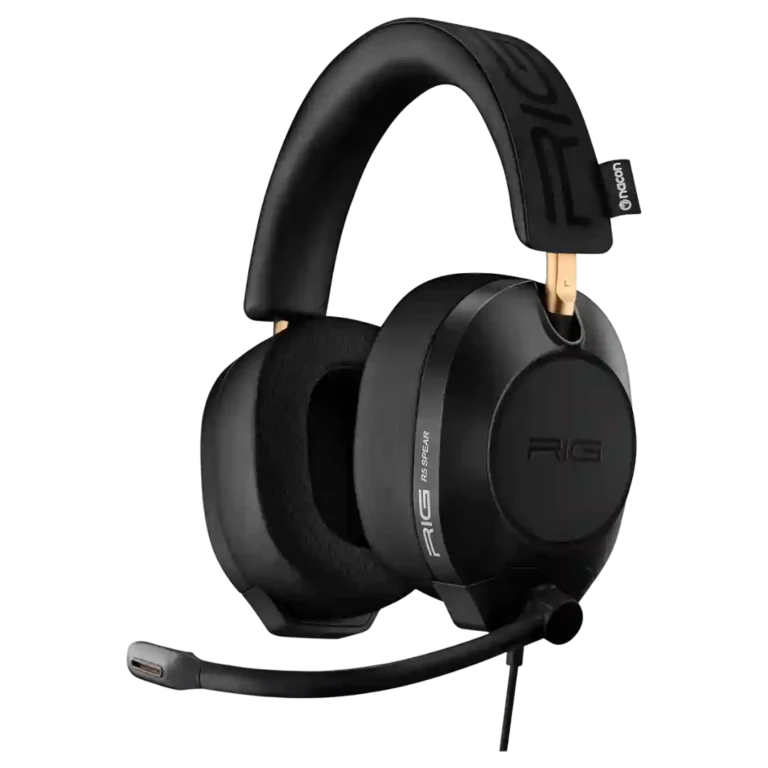
The RIG R5 Spear MAX HD is best understood as a wired audio-first gaming headset with unusually strong modular hardware. Reviewers repeatedly praise its clear sound, low distortion, useful USB-C DAC, passive isolation, and comfortable long-session fit. The Snap+Lock system also gives it rare practical customization, especially for moving or removing the mic and replacing pads or plates. The tradeoff is convenience: there is no Bluetooth, no battery-powered ANC, no touch or smart features, and controls depend heavily on the mic cable. Microphone impressions also vary from better-than-average to tinny or merely serviceable. At $150, the value depends on whether wired fidelity and DAC support matter more than wireless freedom.
Compared in Reviews
Products reviewers directly compared with this model, grouped into quick takeaways.
Drop PC38X
- Worse: bass power handling and noisy environments Gatry Tech argues the R5 Max HD is better when isolation, bass, and higher-volume power handling matter.
- Compared: open-back natural sound versus isolation Gatry Tech says the Drop PC38X sounds more natural for music and voices, while the R5 Max HD has stronger isolation and competitive FPS advantages.
Beyerdynamic MMX 330 Pro
- Compared: frequency response and microphone TechRadar notes that some audiophile gaming competitors offer similar high-end frequency-response claims and built-in mics.
Feature Scorecards
Pros
-
Because the headset is wired and unpowered, reviewers treat battery life as a non-issue rather than a feature to manage.
-
The wired design is repeatedly framed as latency-free, making audio timing a strength for gaming.
-
Wireless latency is effectively avoided because the headset is wired, with reviewers explicitly noting no audio lag.
-
Multi-platform compatibility is consistently strong across PC, Mac, PlayStation, Xbox, Nintendo, mobile, and controller use cases.
-
Detachable microphone convenience is one of the clearest strengths, with the mic removable and swappable between left and right sides.
-
Comfort is a strong point, with several reviewers reporting hours or full workday use without major discomfort.
-
Earpad replacement is easy because reviewers repeatedly note magnetic removable pads or cushions.
-
The bundled USB-C DAC is a major strength, offering 32-bit/384kHz support, clean output, and hi-res playback potential.
-
Replaceable ear plates are a core Snap+Lock feature, with magnetic mod plates, personalization, and even 3D-print options.
-
Positional audio accuracy is a standout for gaming, with reviewers repeatedly praising directional cues and competitive awareness.
-
Setup simplicity is strong because the headset is plug-and-play and does not require software for basic operation.
-
Soundstage width is strong for a closed-back headset, with reviewers describing a wider and more spacious presentation, especially with spatial audio.
-
Volume output is strong because reviewers describe it as loud and easy to drive.
-
Xbox compatibility is directly supported, including controller use and Dolby-related Xbox mentions.
-
Spatial audio support is strong through Dolby Atmos and related positional rendering, with some platform dependence.
-
Build quality is praised for a solid mostly plastic housing, metal headband or sliders, and a durable modular construction.
-
Ear cup padding earns strong praise for deep, plush, breathable pads that fit around the ears comfortably.
-
Included accessories are a strength, with mod plates, cables, adapter, mic module, and DAC repeatedly noted.
-
Connectivity is versatile for a wired headset thanks to 3.5mm, adapters, USB-C DAC use, aux input, and broad device support.
-
Maximum-volume clarity is strong because reviewers describe low distortion and loud playback without obvious breakup.
-
Charging is not needed for the headset itself, but the DAC power passthrough is repeatedly presented as useful for phones and handhelds.
-
The design is viewed as clean and professional, with black/gold styling and optional mod plates adding a more gamer-oriented look.
-
Replaceable earpads are a strong feature because the cushions attach magnetically and can be swapped or replaced easily.
-
Android support is backed by USB-C DAC compatibility, with reviewers explicitly testing or naming Android phone use.
-
Stability is strong because the headset clamps securely and stays on during movement.
-
Footstep cue emphasis is specifically noted in gaming impressions, suggesting the tuning helps surface footsteps.
-
Headband adjustment feels smooth and controlled, with damped sliders called out positively.
-
Sound quality is the central strength, praised for crisp detail, rich game audio, and strong wired performance, though one lab score lands closer to standard gaming-headset territory.
-
USB-C support is central through the DAC, passthrough charging, and mobile or laptop compatibility.
-
Packaging quality is supported by repeated praise for the black-and-gold retail presentation.
-
Ear cup rotation is supported and useful for neck resting, though evidence is limited to a few hands-on comments.
-
Fit and seal reliability is strong, with reviewers describing secure clamp, stable fit, and isolation benefits.
-
Instrument separation is supported by layered-audio comments, especially when the headset runs through the DAC.
-
Passive isolation is a strength, with lab and subjective evidence around 60% noise reduction and strong earcup sealing.
-
There is no required companion app for basic use, but Dolby Access is the main software path for Atmos and EQ adjustments.
-
The integrated boom mic is removable, unidirectional/cardioid, and includes flip-to-mute behavior.
-
Bass is generally described as clean and sufficient rather than exaggerated, with some reviewers praising tight rumble and others noting it is not especially thumpy.
-
Clamp force is generally secure and moderate, though some reviewers notice the pressure more than on looser headsets.
-
Hinge and structural durability look good overall due to metal reinforcement, though some plastic fork areas remain a caveat.
-
Preset EQ profile quality is supported by Dolby Access profiles such as detailed, balanced, and warm, with useful but preference-dependent results.
-
Frequency-response evidence is mixed: reviewers praise the wide 20Hz–40kHz spec and decent tracking, while lab measurements show tuning deviations.
-
Weight comfort is acceptable to good; reviewers notice the moderate weight but generally do not find it uncomfortable.
-
Detachable cable convenience is a tradeoff: magnetic Snap+Lock cables are easy and side-swappable, but the proprietary connection is less universal.
-
Portability is acceptable because the headset can be carried in a backpack, but the lack of a pouch limits travel readiness.
-
EQ customization is available mainly through Dolby Access, though direct headset EQ options are limited.
-
Midrange clarity is mixed: reviewers hear clear mid/high cues and dialogue, while lab notes mention de-emphasized lower mids and vocal coloration.
-
Cable feedback is mixed because the package includes useful cable options, but the proprietary/soldered Snap+Lock connection limits easy third-party replacement.
-
Console support is broad, but the strongest DAC and Dolby benefits are described as depending more on USB-C audio or Windows use.
-
Value is debated: reviewers like the sound and DAC package, but several call out the $150 wired price as high or preference-dependent.
-
Treble clarity is mixed: some reviewers like the smooth, non-screechy highs, while lab testing shows reduced upper-mid/treble energy.
Cons
-
The DAC dongle adds real connection and audio benefits, but size, platform behavior, and one failed sample keep the score from being uniformly high.
-
Call and voice-chat quality is mixed, from tinny telecommunications to better-than-average plug-and-play microphone sound.
-
Microphone impressions vary from decent or surprisingly good to quiet, tinny, or merely serviceable depending on reviewer and setup.
-
Physical controls are mixed: the mic module gives an inline volume slider and flip mute, but cable-only use lacks convenient onboard controls and one reviewer disliked the slider behavior.
-
Microphone noise handling is a weakness overall: background noise can be picked up, though one reviewer notes analog noise gating can help.
-
Sound leakage is a repeated caveat in written reviews despite the thick cushions.
-
Carry protection is weak because at least one reviewer found no included travel pouch or case.
-
Reviewers consistently note that the headset has no active noise cancellation; isolation comes from the earcups rather than powered ANC.
-
Bluetooth is absent; reviewers repeatedly emphasize that this is a wired-only headset with no wireless connectivity.
-
RGB customization is absent; reviewers note the headset has no RGB lighting.
-
Water or sweat resistance is not a strength because the product has no IP rating.
Compared With Category Average
Compared with other Headsets, this product is above average in Xbox compatibility, Detachable microphone convenience, Noise isolation (passive), below average in Bluetooth, Microphone noise reduction, RGB lighting customization.
| Attribute | This product | Category average | Difference |
|---|---|---|---|
| Bluetooth | 1.0 | 3.1 | -2.1 |
| Microphone noise reduction | 2.7 | 4.0 | -1.3 |
| Xbox compatibility | 4.5 | 3.2 | +1.3 |
| RGB lighting customization | 1.0 | 2.2 | -1.2 |
| Detachable microphone convenience | 4.6 | 3.8 | +0.9 |
| Sound leakage | 2.4 | 3.4 | -1.0 |
| Noise isolation (passive) | 4.2 | 3.3 | +0.9 |
| Portability/foldability | 3.8 | 2.8 | +1.0 |
FAQ
Does the RIG R5 Spear MAX HD support Bluetooth?
No. Reviewers repeatedly describe it as a wired-only headset with no Bluetooth or wireless playback.
Is the included USB-C DAC useful?
Yes, especially on PC or USB-C devices. Reviewers highlight 32-bit/384kHz support, Dolby Atmos access, aux input, and charging passthrough, though one reviewer had a faulty DAC sample and some found console gains limited.
Is it comfortable for long gaming sessions?
Generally yes. Multiple reviewers wore it for many hours or full workdays, praising the deep pads and secure fit, although some noticed moderate clamp and a slightly heavier build.
How good is the microphone?
It is usable but inconsistent across reviews. Some found it decent or better than average, while others heard tinny, quiet, or background-noise-prone performance.
Does it have active noise cancellation?
No. The headset relies on passive earcup isolation, which reviewers generally found helpful, but it does not have powered ANC.
What makes the Snap+Lock system useful?
It lets users remove or move the microphone, swap cables between sides, change exterior plates, and replace ear cushions with magnetic parts.
Is it good value at $150?
Value is mixed. Reviewers liked the sound, comfort, DAC, and customization, but several noted the price is high for a wired headset without Bluetooth or ANC.
Consider This Instead
If you want better Bluetooth
Choose Razer BlackShark V3 Pro. It scores 4.7 vs 1.0 for Bluetooth, with a 4.0 overall score.
If you want better Active noise cancellation
Choose Sony INZONE H9 II Wireless Gaming Headset. It scores 4.4 vs 1.0 for Active noise cancellation, with a 3.7 overall score.
If you want better RGB lighting customization
Choose RIG Spectre R8 Pro. It scores 3.9 vs 1.0 for RGB lighting customization, with a 4.0 overall score.
If you want better Sound leakage
Choose SteelSeries Arctis Nova Elite. It scores 5.0 vs 2.4 for Sound leakage, with a 4.2 overall score.
Overall Top Headsets Alternatives
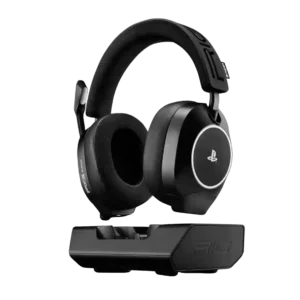
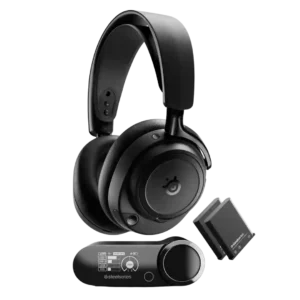
Good if you want top-tier wireless sound, ANC, battery swapping, and four-source mixing across a serious multi-platform setup. Skip it if $600 feels steep or you mostly play one console.
Pros: Audio-video sync accuracy, Hinge durability
Cons: aptX, Smudge resistance
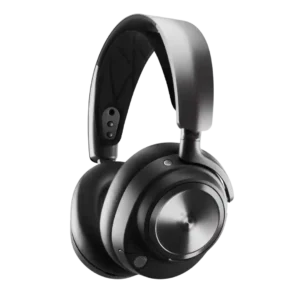
Choose the Arctis Nova Pro Wireless for do-everything connectivity and a no-downtime swappable-battery system; Skip it if the premium price and only middling stock boom-mic quality are dealbreakers.
Pros: Replaceable battery, Simultaneous wireless + Bluetooth audio
Cons: aptX, LDAC
Best for clear positional gaming audio, 60+ hour battery life, and a convenient charging dock. Skip it if you need ANC, a removable mic, wired 3.5mm use, or seamless Xbox-and-PS5...
Pros: Earpad replacement ease, Wireless latency
Cons: Active noise cancellation, Carry case quality
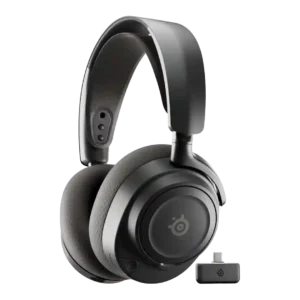
Choose the MMX 150 Wireless for all-day comfort and long battery life; Skip if you want bass-heavy tuning without EQ or a more premium, non-plasticky build.
Pros: Battery, Multipoint connectivity reliability
Cons: Active noise cancellation effectiveness, Xbox compatibility