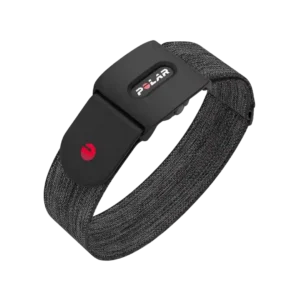
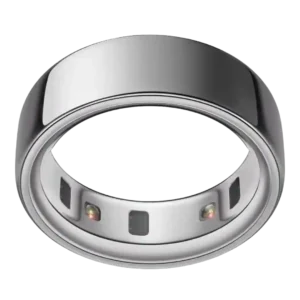
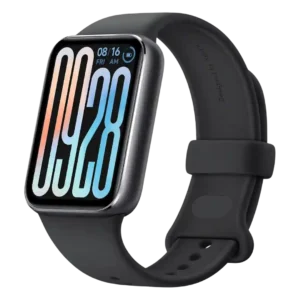
- Similar: fall-asleep time logging Reviewer said RingConn fall-asleep times stayed close to Garmin Fenix 8.
RingConn Gen 2 Review
Bottom Line
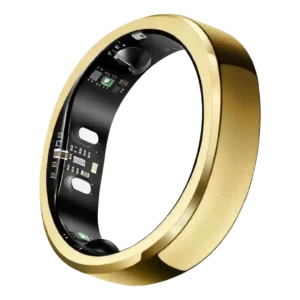
Choose the RingConn Gen 2 for a light, comfortable smart ring with excellent battery life, no subscription, and strong sleep/recovery basics. Skip it if you need reliable workout tracking, automatic exercise detection, polished coaching, or medical-grade sleep apnea confidence.
Best for people who want a discreet, comfortable, subscription-free smart ring for sleep, recovery, stress, basic activity, and long battery life. It fits users who prefer passive health tracking over smartwatch-style workout tools.
Not for serious runners, gym users, or data-heavy athletes who need robust workout modes, reliable exercise heart-rate data, built-in GPS, notifications, or a highly polished coaching app.
Review evidence paints the RingConn Gen 2 as a comfort-first smart ring with exceptional battery life, a highly convenient charging case, and standout subscription value. Most reviewers liked its slim design, light weight, water resistance, sleep tracking, and broad wellness data. The tradeoff is that RingConn is better as a passive health and sleep tracker than as a serious fitness device: workout modes are sparse, automatic workout detection is missing, and exercise heart-rate accuracy drew some of the harshest criticism. The app also splits opinion, ranging from simple and intuitive to dense, basic, or not personalized enough. Sleep apnea monitoring adds appeal, but reviewers repeatedly treated it as useful wellness context rather than a medical-grade answer.
Compared in Reviews
Products reviewers directly compared with this model, grouped into quick takeaways.
Oura ring
- More expensive: price and subscription Reviewer framed RingConn as doing Oura-like tracking for far less money and no fee.
- Better: app clarity and shape Reviewer said Oura had a smoother shape and clearer app.
- Worse: battery life Reviewer said both RingConn models exceeded Oura Ring battery life.
Samsung Galaxy Ring
- More expensive: price Reviewer said Samsung Galaxy Ring costs more than RingConn Gen 2.
- More expensive: price Reviewer said RingConn Gen 2 was cheaper than Samsung Galaxy Ring.
- More expensive: price Reviewer noted RingConn Gen 2 was cheaper than Samsung Galaxy Ring.
Feature Scorecards
Summary
49 reviewed features- Very positive 4.5-5.0 14% 7 features
- Positive 3.5-4.4 57% 28 features
- Neutral 2.5-3.4 20% 10 features
- Negative 1.5-2.4 8% 4 features
- Very negative below 1.5 0% 0 features
Pros
-
Subscription value was an overwhelming strength: reviewers consistently praised full feature access with no monthly fee.
-
Weight was a standout positive, with reviewers repeatedly praising how thin, light, and barely noticeable the ring feels.
-
Battery life was the strongest consensus point, repeatedly described as excellent, impressive, and far longer than competing smart rings.
-
Charging convenience was heavily praised because the portable case enables travel charging, many recharges, and less outlet dependence.
-
Google Fit compatibility was positive where tested, with reviewers saying Google Fit syncing was flawless or straightforward.
-
Reliability was positive where discussed, with reviewers saying the ring worked quietly in the background, stayed reliable, and exceeded expectations.
-
Pairing reliability was praised as seamless, easy, and quick in the reviews that discussed setup.
-
Value for money was strongly positive overall, driven by low relative pricing, no subscription, strong battery life, and competitive core tracking.
-
Comfort was a major strength, with many reviewers saying the ring was light, unobtrusive, easy to forget, or comfortable enough for 24/7 wear.
-
Design and appearance were widely praised as sleek, subtle, minimalist, stylish, and closer to normal jewelry than obvious tech.
-
Water resistance was widely praised, with reviewers reporting successful showers, swimming, handwashing, dishes, and everyday wet use.
-
Goal tracking was positively received, especially the clear wellness view and satisfying activity-ring style progress.
-
Recovery insights were viewed positively by reviewers who wanted broader wellness and recovery context rather than pure workout metrics.
-
Apple Health compatibility was mostly positive, with reviewers reporting working iPhone use, ecosystem support, or straightforward syncing.
-
Build quality was generally strong, with titanium and premium feel praised, though one reviewer said the finish felt less premium than pure titanium rivals.
-
General activity tracking was viewed as good for basic health use, with some reviewers saying metrics were accurate, but not positioned as a serious training tool.
-
Bluetooth reliability was supported by one setup review where the ring quickly found the phone once Bluetooth was enabled.
-
Data syncing was generally reliable and fast, with only occasional delays or mild issues reported.
-
The user interface was mostly easy to understand, especially for casual users, though one reviewer found the app less intuitive.
-
Habit tracking was useful for awareness and healthy behavior nudges, including badges and stress/sleep reflection.
-
Sleep tracking was broadly liked and often matched other wearables, but one scientific review and a few comparisons raised concerns about exact sleep accuracy.
-
Stress tracking was generally useful and interesting for spotting patterns, though one reviewer saw false stress during fast walking.
-
Activity reminders and vital alerts were viewed as useful for goal plans and abnormality prompts, though evidence was limited to a few app-focused reviews.
-
Customization options were praised in one review for letting users rearrange busier app menus to prioritize the data they care about.
-
Menstrual cycle tracking was useful for period awareness and predictions, though one privacy-conscious reviewer disabled it.
-
Reviewers treated sleep apnea monitoring as a standout differentiator, often valuing the peace of mind, while several cautioned that trust is limited without medical approval or consistent accuracy proof.
-
Fit was mostly positive when sized correctly, though reviewers emphasized using the sizing kit and noted swelling or removal discomfort in some cases.
-
Step counts were usually close enough for daily tracking, though a few reviews noted undercounting, overcounting from hand movement, or smart-ring limits for exact step totals.
-
Durability was mixed: some reviewers saw no wear after use, while others reported scratches or expected finish deterioration over time.
-
Resting heart rate tracking was one of the safer metrics, with reviewers saying overnight resting heart rate matched closely or was probably still decent.
-
Blood oxygen tracking was mixed, with one reviewer finding it on point across key metrics and another saying SpO2 estimates were off during sleep apnea checks.
-
Companion app quality was mixed: several reviewers praised simplicity and clarity, while others called it dense, basic, cluttered, or less polished than rivals.
-
Health trend insights were mixed: trend views and outlier alerts helped some reviewers, while others wanted friendlier summaries and more personalized advice.
-
GPS accuracy evidence was limited and mixed, with one reviewer saying it sometimes had problems but was usually fine.
-
Fitness coaching was mixed: reviewers liked AI planning potential, but others found the advice basic or still underused.
Cons
-
Charging speed was acceptable but not exceptional, with 90-minute charging described as a bit long by one reviewer.
-
The Wellness Balance/readiness-style score was useful for one reviewer but less clear and less glanceable for another.
-
Heart rate accuracy was split: overnight or casual readings often looked close, but workout heart rate drew serious criticism for being too high, too low, or unreliable.
-
Sleep stage tracking was mixed to weak: some reviews found it close, while others reported wakefulness errors, stage disagreements, and poor REM agreement.
-
Workout tracking accuracy was the clearest weakness, especially for serious exercise; reviewers found it limited, spotty with movement, or poor for training data.
-
Calorie tracking was considered only approximate, with one reviewer saying calorie burn can struggle without stronger workout tracking.
-
Connected GPS reliability was limited because reviewers had to bring a phone for accurate outdoor distance tracking.
-
Data privacy evidence was limited but cautious, with one reviewer disabling cycle data because of privacy concerns.
-
Distance tracking drew a limitation because accurate distance depends on bringing a phone, weakening the minimal standalone fitness experience.
-
Route tracking was limited by the lack of built-in GPS and the need to carry a phone for run or ride routes.
-
Automatic workout detection was consistently weak or absent, with reviewers repeatedly noting that workouts must be started manually.
-
Workout mode variety was consistently criticized because the ring supports only a small set of running, walking, and cycling modes.
-
Third-party compatibility was a weakness in two reviews, including missing platform sync claims and limited integrations.
-
Strava compatibility was a clear missing integration for one reviewer who relied on Strava to help interpret activity levels.
Compared With Category Average
Compared with other Activity & Fitness Trackers, this product is above average in subscription value, GPS accuracy, charging convenience, below average in Strava compatibility, automatic workout detection, workout mode variety.
Summary
8 compared features- Above average 0.4+ pts higher 50% 4 features
- Same as average within 0.3 pts 0% 0 features
- Below average 0.4+ pts lower 50% 4 features
| Attribute | This product | Category average | Difference |
|---|---|---|---|
| Strava compatibility | 1.5 | 4.4 | -2.9 |
| subscription value | 5.0 | 3.3 | +1.7 |
| automatic workout detection | 2.0 | 3.6 | -1.6 |
| workout mode variety | 2.0 | 3.5 | -1.5 |
| third-party app compatibility | 1.8 | 3.3 | -1.5 |
| GPS accuracy | 3.5 | 2.1 | +1.4 |
| charging convenience | 4.7 | 3.8 | +0.9 |
| data syncing reliability | 4.2 | 3.0 | +1.2 |
FAQ
Does RingConn Gen 2 require a subscription?
Reviewers consistently praised that the app and health data are available without a monthly fee. Subscription value was one of the strongest points across the reviews.
How good is the battery life?
Battery life was the strongest consensus. Reviewers repeatedly described it as excellent, often around 10 to 12 days, with the charging case adding major convenience.
Is RingConn Gen 2 good for workouts?
It is better for casual activity than serious training. Reviews criticized the limited workout modes, lack of automatic workout detection, and unreliable exercise heart-rate data.
Is the app good?
Opinions were mixed. Some reviewers found it simple, clean, and easy to use, while others said it was dense, basic, less polished, or short on personalized insights.
How accurate is sleep tracking?
Most reviewers liked the sleep tracking and found it broadly close to other wearables. Sleep stage tracking was less consistent, with one scientific-style review finding poor agreement.
Is sleep apnea monitoring reliable?
Reviewers saw sleep apnea monitoring as a valuable differentiator and peace-of-mind feature, but several cautioned that it should not be treated as a medical diagnosis.
Sample Expert Reviews We Analyzed
These are a few of the reviews included in our analysis.
Video Reviews
- Review score
- 2.6/5
- Review score
- 4.6/5
- Review score
- 4.1/5
- Review score
- 4.7/5
Article Reviews
Consider This Instead
If you want better Strava compatibility
Choose Fitbit Charge 6. It scores 5.0 vs 1.5 for Strava compatibility, with a 3.6 overall score.
If you want better companion app quality
Choose Fitbit Inspire 3. It scores 4.6 vs 3.6 for companion app quality, with a 3.9 overall score.
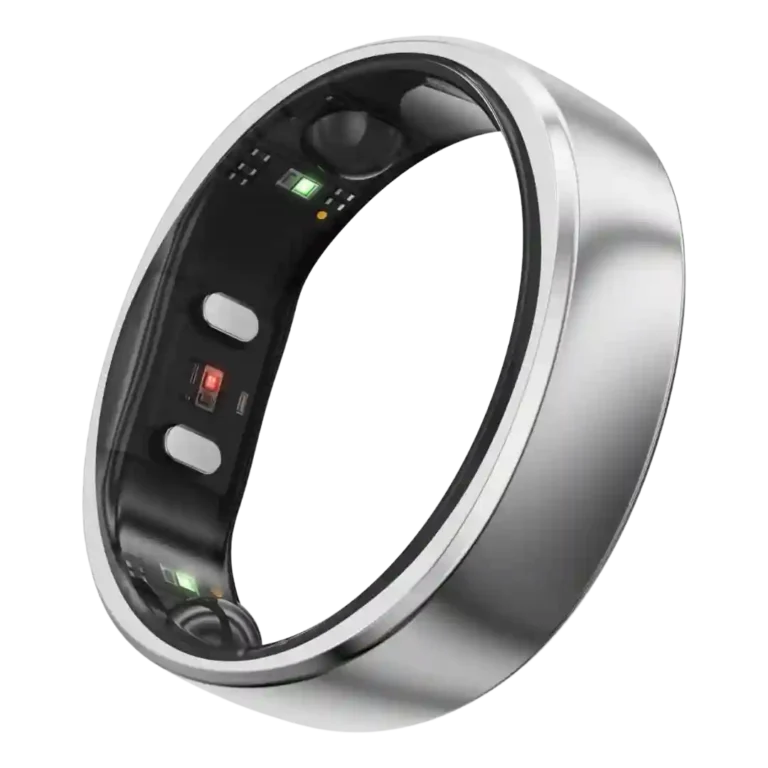
If you want better water resistance
Choose RingConn Gen 2 Air. It scores 4.9 vs 4.4 for water resistance, with a 3.6 overall score.
Overall Top Activity & Fitness Trackers Alternatives
Good if you want a light, comfortable tracker with long battery life and strong sleep/activity basics. Skip it if you need built-in GPS, a larger screen, advanced training data, or...
Pros: fitness coaching, Strava compatibility
Cons: music controls, third-party app compatibility
Best for a light, comfortable smart ring with excellent battery life, no subscription, and strong sleep/recovery basics. Skip it if you need reliable workout tracking, automatic exercise detection, polished coaching,...
Pros: subscription value, weight
Cons: Strava compatibility, third-party app compatibility
Good if you want a comfortable, long-lasting, subscription-free smart ring at a low price. Skip it if accurate workout heart rate, rich coaching, or a travel charging case matters more.
Pros: pairing reliability, subscription value
Cons: smartphone notifications, workout mode variety
Best for a comfortable, affordable tracker with strong battery life, sleep tracking and everyday health stats. Skip it if you need dependable built-in GPS, advanced running metrics, broad music controls...
Pros: Strava compatibility, workout mode variety
Cons: elevation tracking, data syncing reliability