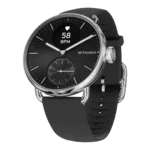
Withings ScanWatch 2 Feature Scores
Explore all 50 feature scores for Withings ScanWatch 2, organized into pros and cons.
Scores by Feature
Summary
50 reviewed features-
Very positive 4.5-5.010 (20%)
-
Positive 3.5-4.420 (40%)
-
Neutral 2.5-3.414 (28%)
-
Negative 1.5-2.46 (12%)
Pros
Sort
-
Style and design were the strongest consensus points: reviewers repeatedly called it gorgeous, classic, premium, and one of the best-looking hybrids.
-
Battery life was the clearest strength, with reviewers repeatedly reporting weeks of use and often calling the 30-day claim realistic or conservative depending on settings.
-
ECG functionality was consistently praised as simple, useful, medically oriented, and easy to share with a doctor.
-
Materials quality was one of the strongest themes, with stainless steel, sapphire glass, and premium finishing repeatedly praised.
-
Comfort was usually strong for daytime wear, especially with the lighter case, but some reviewers found sleep wear or the stock strap uncomfortable.
-
Durability was a strength, helped by sapphire glass, stainless steel, water resistance, and reports of the watch resisting scratches and wear.
-
Build quality was a consistent strength, with reviewers describing solid construction, premium finishing, and a watch that did not feel cheap.
-
Reviewers treated temperature tracking as a distinctive upgrade, useful for illness warnings, workout heat awareness, and recovery context, though some found its alerts or presentation limited.
-
Display quality was polarizing: reviewers praised sharpness and readability, but the tiny monochrome screen limited notifications and fitness data at a glance.
-
The crown controls were simple and sometimes satisfying, but the lack of touch input made some interactions slower or more menu-driven.
-
Charging speed was generally acceptable, with most reviewers reporting roughly 90 minutes to two hours for a full charge.
-
Pairing reliability was a bright spot in the limited evidence, with reviewers describing setup as quick, straightforward, or almost instant.
-
Wellness insights were broad and useful for health-oriented users, but some reviewers wanted clearer interpretation, deeper baseline analysis, or fewer paywalls.
-
Blood oxygen tracking was useful but mixed: reviewers praised alignment with other devices, while one noted readings could be tricky and sometimes inconclusive.
-
The companion app drew mixed reactions: reviewers liked its health focus and integrations, but criticized glitches, clutter, paywalled insights, and uneven data presentation.
-
Recovery insights benefited from HRV and temperature data, but implementation was still simpler than more performance-oriented ecosystems.
-
Water resistance was treated positively when discussed, with reviewers comfortable using it in showers, pools, swimming, or wet workouts.
-
The broader Withings ecosystem was a plus for reviewers who used scales, Health Connect, Google Fit, or multiple Withings devices in one health dashboard.
-
Cross-platform support was positive where discussed, with reviewers noting iPhone/Android support and easy links to Apple Health, Google services, and fitness platforms.
-
Safety-oriented health features were viewed positively, especially temperature warnings, respiratory disturbance tools, and ECG-related alerts.
-
Connection stability received limited but positive evidence, especially from a reviewer who reported the watch-app connection stayed rock solid.
-
Brightness was generally praised when reviewers mentioned it, though one reviewer found the display harder to see in bright light.
-
Outdoor visibility was mixed: some found the OLED readable in all conditions, while others found bright light made the tiny screen harder to see.
-
Fitness tracking was adequate for casual users but not serious athletes, with some accurate outdoor data and several complaints about incomplete or basic workout metrics.
-
Reviewers appreciated size flexibility, especially the 38mm and 42mm options, though larger color choices were more limited.
-
Step counting drew mixed but mostly acceptable feedback, from precise and conservative to variable or slightly trigger-happy depending on the reviewer.
-
Overall health tracking was considered broad and useful, but confidence dropped when reviewers saw sleep errors, missing data, or weaker analysis than rivals.
-
Watch-face flexibility was weak because the hybrid design does not support changing digital watch faces like fuller smartwatches.
-
The watch interface was considered simple and readable for basic tasks, but its tiny display and crown-only control made deeper interactions limited.
-
Fit depended on wrist size and strap choice: some reviewers found it light and well-sized, while one found the 42mm model too large.
Cons
Sort
-
Contactless payment support was a recurring absence, and reviewers who expected full smartwatch features treated the lack of payments as a clear limitation.
-
Reliability concerns centered on inconsistent raise-to-wake, missed notifications, syncing glitches, and sleep-detection errors.
-
GPS was a common limitation because the watch relies on connected GPS; reviewers found that inconvenient or frustrating at this price, even when connected performance was acceptable.
-
Reviewers repeatedly noted the lack of music controls as part of the watch’s limited smart feature set.
-
Third-party app support was essentially absent, a limitation reviewers emphasized when comparing the ScanWatch 2 to fuller smartwatches.
-
Smartwatch functionality was intentionally minimal; reviewers liked the calm hybrid approach but warned it lacks apps, calls, payments, music, and deep interaction.
-
Notifications were useful for quick alerts but widely limited by the tiny scrolling screen, inconsistency, and lack of reply or message history.
-
Call handling was very limited: the watch can alert users, but reviewers who wanted call interaction or message replies treated that absence as a drawback.
-
Menu navigation was workable but often clunky; reviewers liked the crown after adjustment but criticized long scrolling and tedious submenu exits.
-
Coaching and Withings+ features were often viewed as optional or underwhelming, though reminders and some health guidance were appreciated by a few reviewers.
-
Auto-detection was inconsistent overall: one reviewer said it worked well, but several found it flaky, inaccurate, or less automatic than expected.
-
Value was mixed: reviewers saw premium design and battery life, but many questioned the price because smart features, GPS, and app insights were limited.
-
Software smoothness was only lightly supported and mixed, with a simple app experience offset by confusing or jumpy data presentation.
-
Customization was mixed: straps, menus, and notification choices helped, but reviewers disliked the limited watch-face and home-screen customization.
-
Calorie and activity totals were only lightly discussed; one reviewer found the data broadly correct but somewhat pessimistic versus other devices.
-
Band opinions were split: some praised the supplied strap as comfortable or high quality, while others found it itchy, slippery, or worth replacing.
-
Heart rate accuracy was inconsistent: some reviewers saw strong averages or spot-on readings, while others reported high readings, poor workout tracking, or unreliable swim data.
-
Sleep tracking was mixed: some reviewers found it comparable or strong, while others reported missed sleep, overestimation, or poor stage interpretation.
-
Workout variety was acceptable for casual exercise, but reviewers noted missing sports, basic workout data, and fewer tracked options than Garmin or Apple.
-
Charging convenience varied by reviewer: some liked the secure newer cradle, while others found the proprietary cradle flimsy, fiddly, clunky, or inelegant.