- Better: workout control reliability WIRED found accidental crown presses during workouts more annoying than with an Apple Watch.
Withings ScanWatch 2 Review
Bottom Line
Choose the Withings ScanWatch 2 if you want a stylish hybrid watch with ECG, temperature tracking, and multiweek battery life. Skip it if you need rich apps, calls, payments, built-in GPS, or serious workout analytics.
Best for people who want a stylish, low-distraction analog-style watch that quietly tracks health metrics, ECG, temperature, sleep, and basic activity for weeks between charges.
Not for users who want a full smartwatch experience with rich apps, touch controls, calls, payments, onboard GPS, music features, or advanced training analytics.
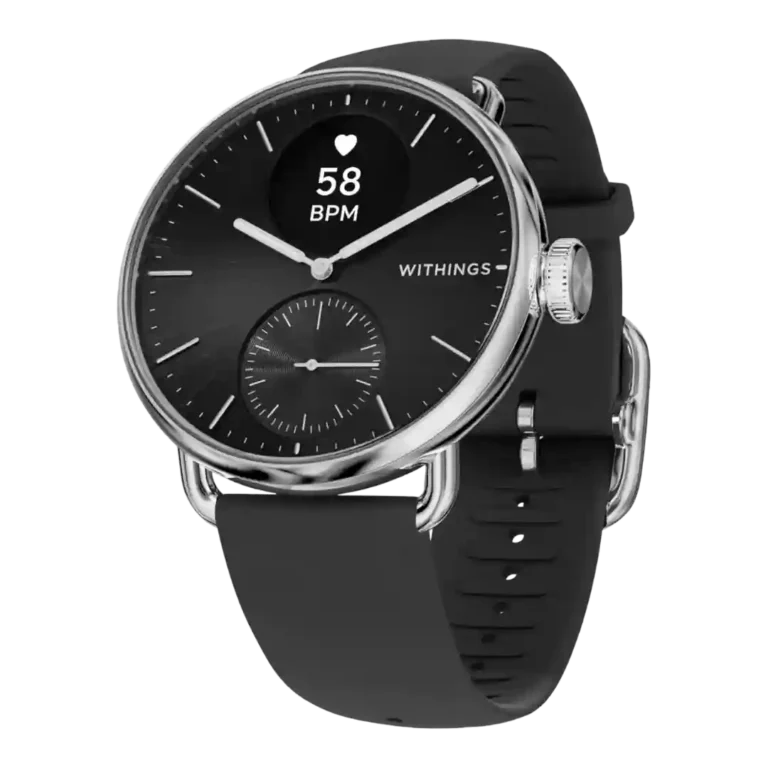
The Withings ScanWatch 2 stands out as a premium hybrid watch that hides serious health tools inside a classic analog design. Reviewers consistently praised its style, materials, ECG support, temperature tracking, water resistance, and unusually long battery life. The tradeoff is that it behaves more like a passive health tracker than a full smartwatch: notifications are cramped, apps, payments, calls, touch input, and music controls are absent or minimal, and GPS usually depends on a phone. Fitness and sleep data can be useful for casual tracking, but several reviewers found accuracy and app reliability uneven. Its best case is quiet, low-distraction health monitoring; its weakest case is demanding smartwatch or training use.
Compared in Reviews
Products reviewers directly compared with this model, grouped into quick takeaways.
- Better: apps, integration, and display Android Authority says dedicated smartwatches beat hybrid watches for integration, apps, and display.
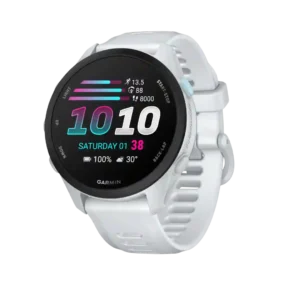
- Worse: battery life PCMag says the ScanWatch 2 lasts longer than the Garmin Forerunner 265 in battery testing.
Feature Scorecards
Pros
-
Durability was praised thanks to sapphire glass, stainless steel, water resistance, and reports of no visible scratches after use.
-
Pairing and connection reliability were praised in the reviews that discussed setup, including instant pairing, straightforward setup, and a rock-solid app connection.
-
Materials quality was consistently strong, with repeated praise for stainless steel, sapphire glass, premium build materials, and high-grade construction.
-
Battery life was the most consistently praised attribute, with reviewers regularly getting multiple weeks and sometimes close to a month between charges.
-
Style and design were the strongest consensus positives, with reviewers repeatedly praising the traditional analog look, premium elegance, and subtle hybrid design.
-
Build quality was a clear strength, with repeated praise for the stainless case, solid feel, and premium analog-watch construction.
-
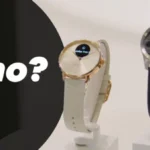
The watch face quality was praised for its traditional analog appearance, secondary step dial, and discreet hybrid integration.
-
ECG functionality was one of the strongest health features, repeatedly described as medical-grade, easy to use, FDA-approved, or shareable with doctors.
-
Water resistance is a clear plus, with reviewers repeatedly citing 5ATM protection, swimming, shower, or 50-meter suitability.
-
Size options were well covered, with repeated mentions of 38mm and 42mm cases, though reviewers differed on which size best fit smaller wrists.
-
Comfort was usually good for all-day wear, helped by the lighter hybrid design, though sleep comfort and strap fit were not consistent for everyone.
-
Cross-platform support is a strength, with reviewers citing iOS, Android, Apple Health, Google Fit or Health Connect compatibility.
-
Safety features are a strength, with reviewers citing temperature alerts, overheating warnings, sleep-apnea detection, AFib/ECG support, and related health alerts.
-
Charging speed was consistently acceptable, with reviewers generally reporting roughly 90 minutes to two hours for a full charge.
-
The HealthSense software platform was presented as modern and health-focused, supporting the newer temperature and wellness tracking features.
-
Recovery insights are a meaningful upgrade, especially through HRV and temperature tracking, though some recovery-related features or analysis remain basic or subscription-tied.
-
The crown-based controls were usually seen as simple and tactile, though the one-button design can feel limiting compared with touch-first smartwatches.
-
Blood oxygen support was widely noted as a useful health feature, though reviewers varied from calling readings accurate to noting occasional inconclusive or basic behavior.
-
Wellness insights are broad and health-focused, but reviewers split on whether the free app and Withings+ make the data actionable enough.
-
Health tracking accuracy was broadly promising for core metrics, but confidence varied due to sleep, heart-rate, and app-data inconsistencies.
-
Display quality is sharp and readable for its size, but the tiny grayscale screen remains a major limitation for messages and rich fitness data.
-
The broader ecosystem is strongest for people already using Withings or health-platform integrations, though app changes and paid layers made the experience less universally satisfying.
-
The user interface is simple and elegant for basic health data, but constrained by the small screen and crown-only interaction.
-
Brightness was generally adequate and sometimes praised, but one reviewer found the small screen harder to see in bright light.
-
Workout variety is respectable for casual users, with 30 to around 50 activities mentioned, but the depth and athlete-focused metrics remain limited.
-
Fitness tracking accuracy was mixed, with some strong heart-rate and pace comparisons but enough missing, incomplete, or high-intensity issues to keep it from sports-watch territory.
-
Step counting was generally acceptable but not perfectly aligned with other devices, with reviewers describing it as precise, conservative, or occasionally uneven.
-
Outdoor visibility was serviceable overall, with some reviewers calling the display readable outdoors and others finding bright-light viewing harder.
-
The companion app drew mixed reviews: it can show detailed health data and reports, but reviewers also criticized glitches, busy layout, and unclear insights.
-
Charging convenience was mixed: the newer cradle is more secure for some reviewers, while others found the proprietary dock flimsy, fiddly, or clunky.
Cons
-
Customization is decent for bands, sizes, colors, menus, and app-controlled screens, but limited for watch faces and deeper interface changes.
-
Band impressions were split: several reviewers liked the fluoroelastomer or silicone strap, while others found it itchy, slippery, or poorly fitted enough to replace.
-
Reviewers found auto-detection useful in concept but inconsistent in practice, with some praising automatic walking/running recognition and others reporting flaky, false, or missing detection.
-
Calorie data appears as part of workout or activity summaries, but reviewers treated it as basic supporting information rather than a standout coaching metric.
-
Menu navigation was understandable once learned, but reviewers often described scrolling, submenus, or crown-only navigation as clunky or tedious.
-
Heart-rate accuracy was inconsistent: some tests matched straps or other devices closely, while others found daytime, swim, or high-intensity readings unreliable.
-
Bluetooth-connected use is functional for phone pairing and connected GPS, but the watch depends on the phone/app rather than offering a fully independent connection experience.
-
Sleep tracking accuracy was mixed: some reviewers found it comparable or useful, while others reported missed sleep, overestimates, or poor handling of wake periods.
-
Coaching features mostly live in the app or Withings+; reviewers liked some gentle prompts and sleep tips but often questioned the subscription's value.
-
Stress tracking is indirect rather than a full stress platform, relying on HRV, recovery, and breathing data while lacking richer readiness-style stress features.
-
Fit depended heavily on wrist size and strap choice: some reviewers found it lighter and comfortable, while others found the case or supplied strap awkward.
-
Value for money was mixed to weak: reviewers liked the premium health-watch concept but often questioned the price versus smarter or cheaper alternatives.
-
Software smoothness received limited direct evidence, with one reviewer finding the app decent but inconsistent enough to need fixes.
-
Smartphone notifications are limited by the small scrolling display and inconsistent delivery, useful for quick glances but poor for long messages or interaction.
-
GPS was a recurring weakness because most reviewers reported no built-in GPS and reliance on phone-connected GPS, despite some acceptable connected-GPS results.
-
Reliability was a concern in several reviews, especially around app syncing, missed notifications, sleep misclassification, and confidence in sensor output.
-
Smartwatch features are intentionally sparse, with reviewers repeatedly describing the ScanWatch 2 as more watch or tracker than full smartwatch.
-
Call handling is minimal: reviewers repeatedly noted that the watch can show or alert for calls but cannot take or answer them from the wrist.
-
Touchscreen responsiveness scores low because the ScanWatch 2 does not have a touchscreen; interaction relies on the crown and small display.
-
Contactless payments are effectively absent, with multiple reviewers explicitly noting no payment support.
-
Third-party app support is essentially absent on the watch itself, even though the phone app can share health data with outside platforms.
-
Music controls are absent, and reviewers repeatedly mentioned the lack as part of the watch's limited smartwatch feature set.
-
Onboard music storage is not supported; the only direct reviewer mention grouped offline music among missing smartwatch features.
Compared With Category Average
Compared with other Smart Watch, this product is above average in ECG functionality, below average in touchscreen responsiveness, music controls, third-party app support.
| Attribute | This product | Category average | Difference |
|---|---|---|---|
| touchscreen responsiveness | 1.0 | 3.7 | -2.7 |
| music controls | 1.0 | 3.5 | -2.5 |
| ECG functionality | 4.4 | 2.3 | +2.2 |
| third-party app support | 1.0 | 3.1 | -2.1 |
| GPS accuracy | 2.3 | 4.0 | -1.7 |
| contactless payments | 1.0 | 2.9 | -1.9 |
| call handling | 1.3 | 3.1 | -1.8 |
| onboard music storage | 1.0 | 2.9 | -1.9 |
FAQ
Is the Withings ScanWatch 2 a full smartwatch?
No. Reviewers repeatedly described it as a hybrid watch or health tracker first, with limited notifications and no real app, payment, call, or music-control experience.
How long does the battery last?
Battery life was one of the strongest points. Reviewers commonly reported multiple weeks, with several seeing roughly 20 to 30 days depending on GPS, notifications, and sleep/oxygen settings.
Does the ScanWatch 2 have built-in GPS?
Most reviewers said outdoor route tracking depends on connected GPS from a phone. That makes it fine for casual tracking, but less appealing for runners who want to leave their phone behind.
Are the health features useful?
Yes, especially ECG, temperature tracking, blood oxygen, respiratory insights, and general wellness data. The evidence is strongest for health monitoring, though some reviewers wanted better app interpretation.
Is sleep tracking accurate?
Reviews were mixed. Some found sleep data broadly comparable to Oura or useful, while others reported missed sleep, overestimates, or poor handling of awake periods.
Is it good for serious fitness training?
Not really. Reviewers found enough workout modes and basic activity data for casual use, but criticized the lack of built-in GPS, limited live feedback, and uneven heart-rate or workout accuracy.
Consider This Instead
If you want better touchscreen responsiveness
Choose Fitbit Sense 2. It scores 4.9 vs 1.0 for touchscreen responsiveness, with a 3.5 overall score.
If you want better contactless payments
Choose Apple Watch SE 3. It scores 4.8 vs 1.0 for contactless payments, with a 4.1 overall score.
If you want better third-party app support
Choose Samsung Galaxy Watch 8. It scores 4.8 vs 1.0 for third-party app support, with a 4.0 overall score.
If you want better onboard music storage
Choose Huawei Watch Fit 4. It scores 4.7 vs 1.0 for onboard music storage, with a 4.1 overall score.
Overall Top Smart Watch Alternatives
Good if you want the most rugged Apple Watch, brighter outdoor screen, better battery, LTE, and top apps. Skip it if you need Garmin-like mapping, recovery analytics, smaller sizing, or...
Pros: display quality, heart rate accuracy
Cons: cross-platform compatibility, recovery insights
Choose the Galaxy Watch 6 for a polished Android smartwatch with a bright screen, strong apps, and broad health tracking. Skip it if battery life, iPhone support, or full non-Samsung...
Pros: outdoor visibility, workout tracking variety
Cons: cross-platform compatibility, battery life
Good if you need a rugged Garmin with deep outdoor, tactical, GPS, training, and battery features. Skip it if you want a cheaper lifestyle watch or do not need the...
Pros: materials quality, durability
Cons: LTE connectivity, value for money
Good if you want premium golf maps, virtual caddie tools, health metrics, music, notifications, and long battery life in one watch. Skip it if you only need basic yardages or...
Pros: pairing reliability, brightness
Cons: software smoothness, user interface