Best for Energy efficiency (kWh)
eufy E25 Robot Vacuum and Mop Combo
4.5 feature score
Highest scored product for this feature based on supporting review evidence.
Highest scored product for this feature based on supporting review evidence.
Balances feature score, supporting reviews, and overall product strength.
Has the broadest review evidence for this feature.
Strongest overall product among items with scored evidence for this feature.
Showing Robotic Vacuums only. Switch back to all Vacuums anytime.
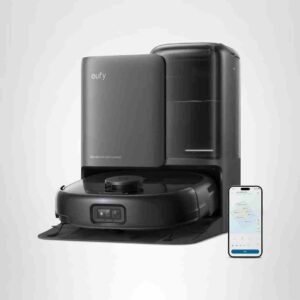
Off-peak charging and energy-conscious features are highlighted as a nice touch, though most owners will notice it mainly in scheduling rather than day-to-day cleaning.
Pros: Self-cleaning cycle, Wool carpet compatibility
Cons: Automatic standby switch, Cord management
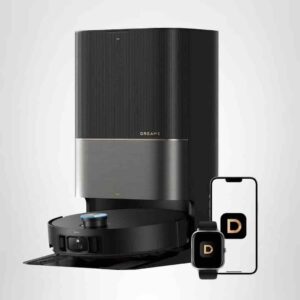
In comparative testing, energy use for mopping/drying is reported in the same ballpark as other premium robot mops (around a few tenths of a kWh for a run). No reviews...
Pros: Adaptive chassis lift, Innovation compared to competitors
Cons: Support &, Reliability
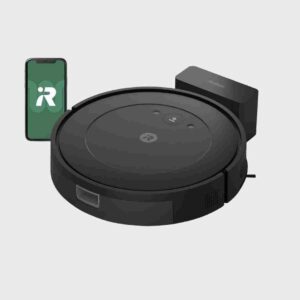
Energy efficiency is highlighted as a relative strength: it can deliver decent runtime and cleaning for a smaller battery compared with many competitors.
Pros: Packaging quality, Under-Furniture Pickup
Cons: Scratch resistance, Stuck resistance
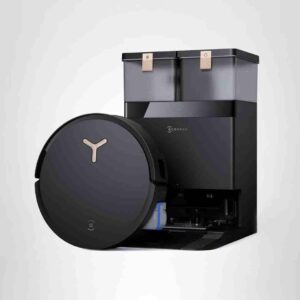
Measured energy use is described as typical for this class in at least one comparison, with no major efficiency red flags called out beyond normal dock drying/cleaning cycles.
Pros: Hair‑Wrap / Tangle Resistance, Ease of use
Cons: Dirty water sensor, Bin &
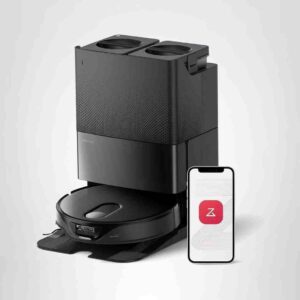
Energy use is manageable; off‑peak charging and disabling drying help, and one test estimates ~12 kWh/month for daily runs with drying.
Pros: Low-profile design, Overall durability/longevity
Cons: Clogging &, debris prevention
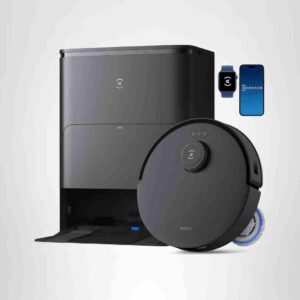
One test-based source measured moderate energy use for daily cleaning, with additional consumption during long charging and mop-drying cycles. Energy draw will vary with cleaning frequency, area, and drying duration...
Pros: Maintenance requirements, Hard Floor — Large Debris Intake
Cons: Storage footprint &, upright-stand stability
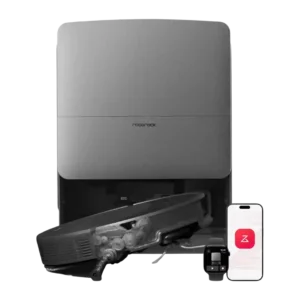
Energy-efficiency evidence was narrow, limited to off-peak charging controls rather than measured kWh use.
Pros: Under-Furniture Pickup, Tool-change simplicity
Cons: Support and Reliability, Automatic shutoff for obstructions
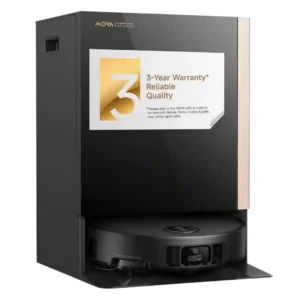
Energy comments are limited, but one reviewer noted water heating consumes noticeable power.
Pros: Sanitizing performance, Versatility
Cons: Steam Cleaning, Weight
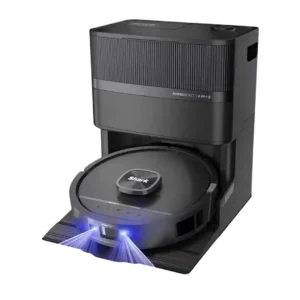
Only one critical review discusses energy use, framing the scrubbing process as energy intensive.
Pros: Ongoing ownership costs (bags, filters
Cons: Value-for-money, Build quality and durability
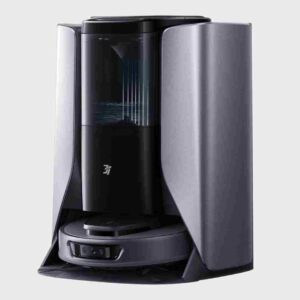
Water capture and distillation can significantly increase energy use versus typical mop docks, with one comparison measuring markedly higher kWh for a full mop-and-dry cycle.
Pros: Clogging &, debris prevention
Cons: Energy efficiency (kWh), Weight