Best for wired
Eufy E340 Floodlight Camera
4.9 feature score
Highest scored product for this feature based on supporting review evidence.
Highest scored product for this feature based on supporting review evidence.
Balances feature score, supporting reviews, and overall product strength.
Has the broadest review evidence for this feature.
Strongest overall product among items with scored evidence for this feature.
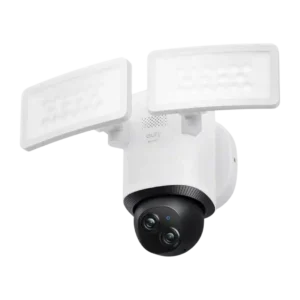
The E340 is a wired floodlight camera that requires mains or hardwired power, trading flexibility for always-on operation.
Pros: wired, Color accuracy
Cons: HomeKit integration, Power options (battery)
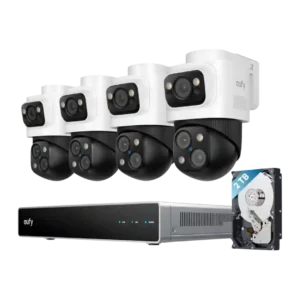
The wired design is central to the system, bringing PoE reliability and avoiding battery swaps or Wi-Fi dropouts.
Pros: Notification speed, wired
Cons: Power options (battery), Power options (solar panel)
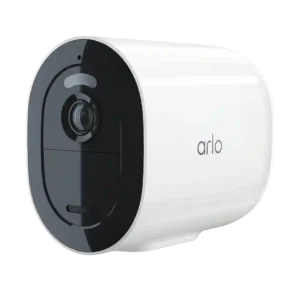
The Go 2 is repeatedly described as wire-free or completely wireless, making it useful where power cabling is difficult.
Pros: IFTTT/automation compatibility, Connectivity options
Cons: HomeKit integration, Replacement part availability
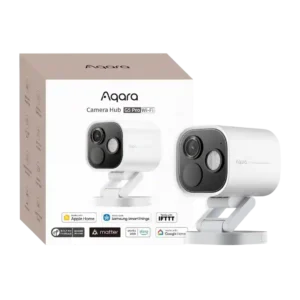
Wired operation is central to the product, with USB-C and Ethernet/PoE models providing constant powered operation.
Pros: Connectivity options, Notification speed
Cons: Power options (battery), Power options (solar panel)
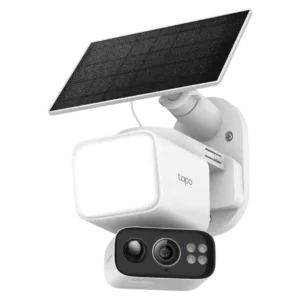
The product is primarily valued as wire-free rather than wired: reviews repeatedly emphasize no household wiring, no outlets, and flexible placement without cables.
Pros: Articulation range, Power options (solar panel)
Cons: Optical zoom performance, Continuous recording capability
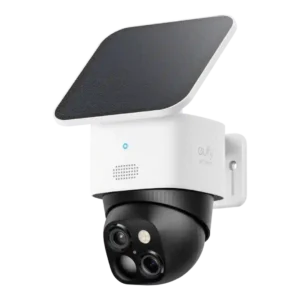
Reviewers emphasize the S340 as wire-free, with no power or data wire needed apart from the solar-panel cable.
Pros: Cloud storage plan value, Mobile app reliability
Cons: HomeKit integration, Continuous recording capability
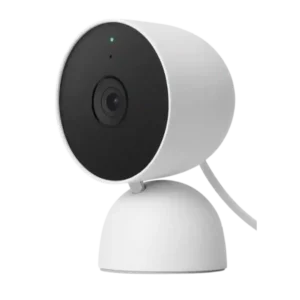
The wired design avoids battery charging and supports constant power, but it limits placement compared with battery cameras.
Pros: On-device features, Installation and Mounting
Cons: Optical zoom performance, HomeKit integration
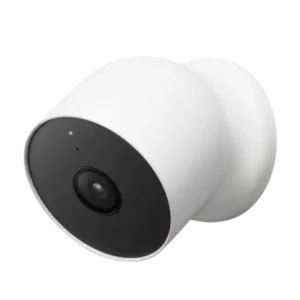
Wired use is possible through power cables and enables constant power or continuous recording, but it depends on optional accessories and setup.
Pros: On-device processing (AI), On-device features
Cons: IFTTT/automation compatibility, Web portal access
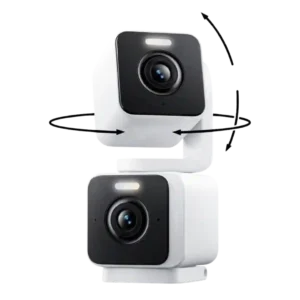
The camera is clearly a wired-powered device, using an indoor adapter, USB cable, and single power source rather than battery operation.
Pros: Articulation range, Dual-camera design
Cons: ONVIF/RTSP support, On-device processing (AI)
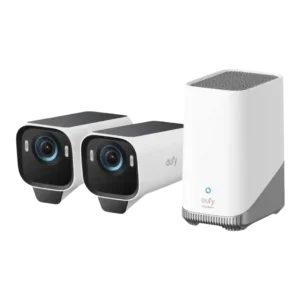
Wired power support exists through USB-C/direct power and enables 24/7 recording, but some wiring requirements apply to HomeBase or powered mode.
Pros: Low-light performance, Recording start-time lag
Cons: Dual-band (2.4/5GHz) performance, Hub requirement
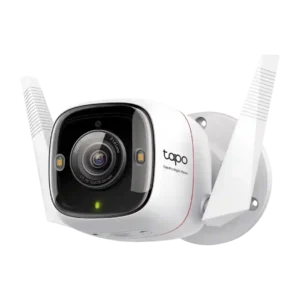
The camera is clearly a wired-power model, which helps responsiveness but limits placement compared with battery cameras.
Pros: Hub requirement, Low-light performance
Cons: HomeKit integration, Power options (battery)
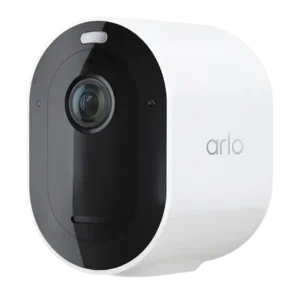
Wired use is possible through optional power accessories, but the camera is fundamentally battery-first and custom-cable limitations make hardwiring less ideal.
Pros: Notification speed, Field of view
Cons: Continuous recording capability, On-device processing (AI)
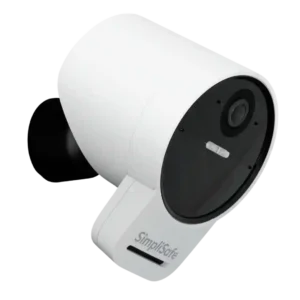
Wired operation enables the full Active Guard feature set, but it also limits placement and sometimes requires cable routing or a nearby outlet.
Pros: Echo/noise cancellation, Detection features
Cons: HomeKit integration, Pre-event recording length
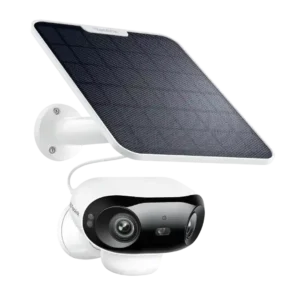
The product is primarily wireless, though reviewers noted USB power and recommended wired PoE alternatives for 24/7 reliability.
Pros: Dual-camera design, Detection range
Cons: HomeKit integration, Continuous recording capability
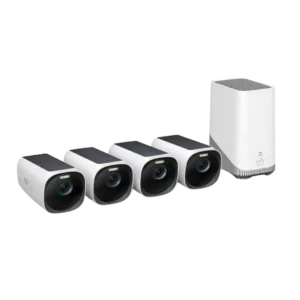
The cameras are wire-free, but the HomeBase needs Ethernet; reviewers treated that hub wiring as a small but real setup constraint.
Pros: Connectivity options, Weather resistance rating (IP code)
Cons: HomeKit integration, IFTTT/automation compatibility
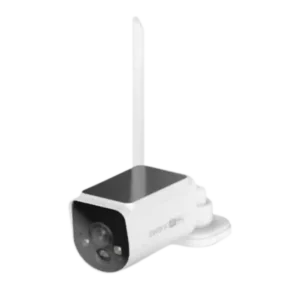
The cameras are primarily wireless; the main wired element is the hub Ethernet connection.
Pros: Operating temperature range, Connectivity options
Cons: Continuous recording capability, wired
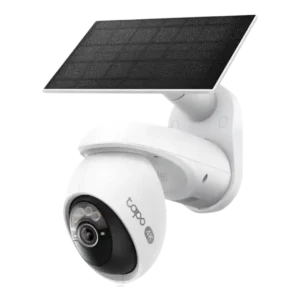
Wired capability is weak because reviewers primarily described the camera as wire-free or preferred other models when fixed power is available.
Pros: Mobile app reliability, Local storage option convenience
Cons: ONVIF/RTSP support, Optical zoom performance
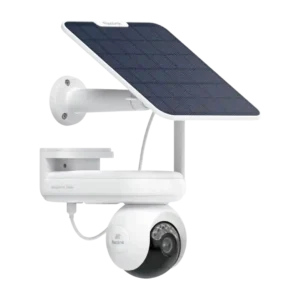
The camera is fundamentally wireless and battery-powered, with reviewers noting the lack of a wired power option.
Pros: Pre-event recording length, Hub requirement
Cons: Optical zoom performance, HomeKit integration
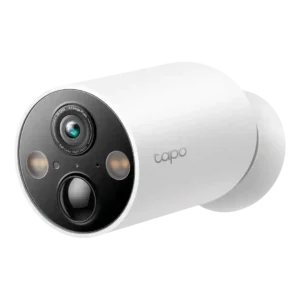
The camera is positioned as wire-free rather than a wired-power solution.
Pros: Hub requirement, Weather resistance rating (IP code)
Cons: Continuous recording capability, HomeKit integration