Access logs
P1
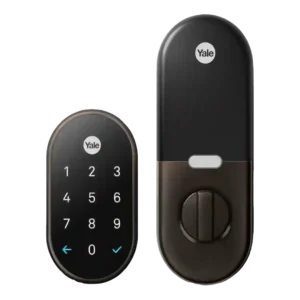
Product 1: Google Nest x Yale Smart...
4.4
Reviewers consistently liked the event history and activity timeline, which showed lock use, code use, and who came or went.
P2
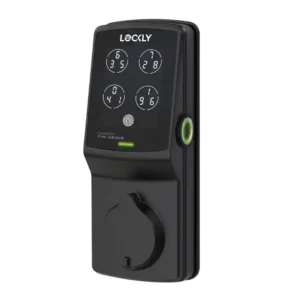
Product 2: Lockly Secure Plus Smart Lock
4.5
Access logs are well supported, with multiple reviews citing event history, user access logs, and activity records extending back a year.
App
P1
Product 1: Google Nest x Yale Smart...
4.3
The Nest app was usually praised as simple and capable, though one review reported early crashes and hangs during setup and control.
P2
Product 2: Lockly Secure Plus Smart Lock
4.2
The app is generally described as easy, intuitive, and useful for setup and control, though one review ties app-based user code workflows to some complexity.
Auto-lock
P1
Product 1: Google Nest x Yale Smart...
4.3
Auto-lock was a reliable strength, especially with Home/Away Assist or configurable delay options, but it does not auto-unlock.
P2
Product 2: Lockly Secure Plus Smart Lock
4.4
Auto-lock is widely supported and generally positive, with reviewers noting configurable relocking intervals and successful auto-lock performance.
Battery
P1
Product 1: Google Nest x Yale Smart...
4.2
Battery coverage was strong, with AA batteries lasting around a year or longer and 9V emergency power available when depleted.
P2
Product 2: Lockly Secure Plus Smart Lock
4.1
Battery coverage is strong, with four AA batteries, 9-volt emergency backup options, and one long-term reviewer reporting stellar remaining battery life after about a year.
Bluetooth
P1
Product 1: Google Nest x Yale Smart...
1.9
Bluetooth-style proximity unlocking was a weakness because reviewers noted the lock lacks approach-based or Bluetooth auto-unlock behavior.
P2
Product 2: Lockly Secure Plus Smart Lock
3.9
Bluetooth is core to local control and is usually responsive or stable, but one review reports trouble finding the lock on some mobile devices.
Build quality and durability
P1
Product 1: Google Nest x Yale Smart...
4.3
Build quality was generally strong, with reviewers calling the hardware sturdy, sleek, solid, stylish, and high quality.
P2
Product 2: Lockly Secure Plus Smart Lock
4.1
Build quality is generally positive, with reviewers calling the lock sturdy, well-built, high quality, and hefty, though one also notes its larger-than-most footprint.
Camera and doorbell performance
P1
Product 1: Google Nest x Yale Smart...
3.0
Nest camera and doorbell ties were useful inside the Nest app, but reviewers wanted tighter Hello/video-feed integration.
P2Product 2: Lockly Secure Plus Smart Lock
No score yetDoor-sense
P1
Product 1: Google Nest x Yale Smart...
1.8
Door-sense evidence was negative: reviewers wanted a door sensor and noted auto-lock could throw the bolt while the door was open.
P2
Product 2: Lockly Secure Plus Smart Lock
3.3
Door-sense evidence is mixed: reviewers mention an added or optional door sensor, but Digital Trends encountered status-reporting calibration problems.
Door compatibility (deadbolt fit)
P1
Product 1: Google Nest x Yale Smart...
3.7
Deadbolt fit was mostly standard-door friendly, but several reviewers had to adjust frames, holes, or strike plates for smooth operation.
P2
Product 2: Lockly Secure Plus Smart Lock
4.2
Reviewers describe broad door-fit flexibility through standard exterior-door compatibility, deadbolt or latch-style options, and multiple lock-style choices, though one basement-door install required extra side-bracket work.
Existing hardware reuse
P1
Product 1: Google Nest x Yale Smart...
3.7
The lock reuses the door conceptually as a deadbolt replacement and can preserve the doorknob, but it replaces the existing deadbolt hardware.
P2
Product 2: Lockly Secure Plus Smart Lock
4.0
Two reviews support replacing existing hardware, including removing an old lock and swapping in Lockly in under fifteen minutes in one test.
Feature additions via updates
P1
Product 1: Google Nest x Yale Smart...
3.4
Feature-update evidence was mixed but promising, with Google Assistant and Nest integrations described as arriving or promised through software.
P2
Product 2: Lockly Secure Plus Smart Lock
3.8
Feature additions are supported by evidence that Lockly added a Wi-Fi hub and door sensor, plus a later reviewer mentioning a possible backward-compatible Matter controller.
Fingerprint
P1Product 1: Google Nest x Yale Smart...
No score yet
P2
Product 2: Lockly Secure Plus Smart Lock
4.6
Fingerprint unlocking is the clearest consensus strength: every review cites the reader, and most describe it as fast, responsive, accurate, effective, or unusually convenient.
Finish durability
P1
Product 1: Google Nest x Yale Smart...
4.1
Finish evidence was limited but positive, supported by finish options and a lifetime limited warranty for finish and mechanical issues.
P2
Product 2: Lockly Secure Plus Smart Lock
4.5
Finish durability is supported through Digital Trends' warranty evidence, which cites lifetime protection for exterior finishes.
Guest Codes and Access
P1
Product 1: Google Nest x Yale Smart...
4.2
Guest codes were a major strength, with expiring, scheduled, or temporary codes praised, though one test saw frequent keycode-generation errors.
P2
Product 2: Lockly Secure Plus Smart Lock
4.2
Guest access is feature-rich, including access codes, eKeys, one-time codes, offline codes, and eBadges, though TechHive found temporary PIN creation convoluted.
Hub requirement
P1
Product 1: Google Nest x Yale Smart...
3.9
A Nest Connect or Nest Guard is central to the experience; reviewers accepted it but consistently flagged it as a required extra hub.
P2
Product 2: Lockly Secure Plus Smart Lock
2.3
Hub requirement is a key limitation because reviewers say remote access and network/smart-home features require the Secure Link Wi-Fi hub.
Installation and Setup
P1
Product 1: Google Nest x Yale Smart...
4.0
Installation was usually straightforward with app or voice guidance, but several reviewers needed alignment, frame, or setup troubleshooting.
P2
Product 2: Lockly Secure Plus Smart Lock
3.7
Installation evidence is split: several reviewers completed setup in about 15-35 minutes or found app-guided directions simple, while TechHive called installation unusually difficult and Digital Trends noted the lock's size made it trickier.
Key override reliability
P1
Product 1: Google Nest x Yale Smart...
1.7
Key override reliability was weak because the lock has no physical key; reviewers relied instead on keypad access or 9V emergency power.
P2
Product 2: Lockly Secure Plus Smart Lock
4.1
Key backup is consistently present: reviews mention a physical key, traditional key access, and a covered mechanical key slot for fallback entry.
Keypad
P1
Product 1: Google Nest x Yale Smart...
3.9
The keypad was convenient and glove-friendly, but some reviewers disliked the required checkmark step or found touch feedback inconsistent.
P2
Product 2: Lockly Secure Plus Smart Lock
4.6
The keypad is one of the strongest features, with repeated praise for randomized number positions, Pin Genie shuffling, and shoulder-surfing protection.
Lock/unlock speed
P1Product 1: Google Nest x Yale Smart...
No score yet
P2
Product 2: Lockly Secure Plus Smart Lock
4.8
Lock and unlock speed is a strength, with instant app response, a deadbolt that activates within seconds, and fast fingerprint unlocking.
Locking motor
P1
Product 1: Google Nest x Yale Smart...
4.1
The locking motor was smooth and quiet, with chimes or audible confirmation and one review calling it among the quietest locks tested.
P2
Product 2: Lockly Secure Plus Smart Lock
4.5
The motor is only directly described by PCMag, which found the lock extremely quiet in testing.
Locking reliability
P1
Product 1: Google Nest x Yale Smart...
4.3
Locking reliability was one of the strongest themes, with multiple reviewers reporting dependable locking and unlocking once installed correctly.
P2
Product 2: Lockly Secure Plus Smart Lock
3.9
Reliability is mostly positive, including smooth operation and strong physical stability, but Digital Trends reported incorrect locked/unlocked status calibration.
Notifications
P1
Product 1: Google Nest x Yale Smart...
4.4
Notifications were strong, with reviewers receiving alerts for lock events, battery status, offline status, and failed lock behavior.
P2
Product 2: Lockly Secure Plus Smart Lock
1.5
Notification support is a weakness because PCMag specifically says push notifications were missing compared with other smart locks.
Physical attack resistance
P1
Product 1: Google Nest x Yale Smart...
4.2
Physical resistance evidence was positive, from ANSI Grade 2 mentions, sturdy construction, and stronger strike-plate screw installation.
P2Product 2: Lockly Secure Plus Smart Lock
No score yetPick/drill resistance (if rated)
P1
Product 1: Google Nest x Yale Smart...
4.0
Pick resistance was supported by the keyless design and fingerprint-resistant touchscreen, but drill resistance was not directly evaluated.
P2Product 2: Lockly Secure Plus Smart Lock
No score yetRemote access
P1
Product 1: Google Nest x Yale Smart...
4.4
Remote access was a core advantage through the app once Nest Connect or Nest Guard enabled internet connectivity.
P2
Product 2: Lockly Secure Plus Smart Lock
2.7
Remote access is context-dependent: reviewers say it works with the hub, but without that extra hardware the lock cannot be controlled remotely.
Security features (encryption)
P1
Product 1: Google Nest x Yale Smart...
4.1
Security features centered on privacy mode, keypad disabling, passcode limits, tamper or wrong-code alerts, and Grade 2 hardware rather than encryption details.
P2
Product 2: Lockly Secure Plus Smart Lock
4.4
Security features are a major strength, with AES256 Bluetooth encryption, hack-resistant design claims, anti-code-theft measures, and secure account setup evidence.
Smart-home integration (Alexa, Google, Siri, HomeKit, Matter, Thread)
P1
Product 1: Google Nest x Yale Smart...
3.1
Smart-home integration was the main tradeoff: it works best in Nest, but Alexa, HomeKit, SmartThings, IFTTT, and Z-Wave support were limited or absent.
P2
Product 2: Lockly Secure Plus Smart Lock
2.2
Smart-home integration is limited out of the box: some Alexa/Google support is possible with the hub, but reviewers cite missing HomeKit, IFTTT, and wider ecosystem support.
Tamper detection sensitivity
P1
Product 1: Google Nest x Yale Smart...
4.0
Tamper detection had direct evidence from CNET, which noted alerts for tampering and repeated incorrect password attempts.
P2Product 2: Lockly Secure Plus Smart Lock
No score yetTouchscreen
P1
Product 1: Google Nest x Yale Smart...
4.1
The touchscreen looked premium and lit up clearly, but some reviewers found it resistive, fiddly, or lacking button feedback.
P2
Product 2: Lockly Secure Plus Smart Lock
4.3
The touchscreen is described positively as seamless, capacitive, and large, with its value tied closely to the randomized keypad behavior.
Two-factor authentication availability
P1Product 1: Google Nest x Yale Smart...
No score yet
P2
Product 2: Lockly Secure Plus Smart Lock
3.8
Two-factor-style account verification appears in setup evidence through mobile-number/email verification and SMS plus email verification codes.
User access management
P1
Product 1: Google Nest x Yale Smart...
4.2
User access management was generally strong with scheduled, expiring, and revocable codes, though one review hit app errors during sharing.
P2
Product 2: Lockly Secure Plus Smart Lock
4.5
User access management is robust, with trusted users, family fingerprints, revocable permissions, and access that can be limited or removed.
Value and Price
P1
Product 1: Google Nest x Yale Smart...
3.4
Value depended heavily on the Nest ecosystem: reviewers saw the lock as pricey but worthwhile for Nest users who prize reliability.
P2
Product 2: Lockly Secure Plus Smart Lock
2.7
Value is mixed-to-negative: reviewers like the features, but repeatedly call out high price, paid hub costs, and cheaper competing alternatives.
Voice control
P1
Product 1: Google Nest x Yale Smart...
2.6
Voice control was mixed across review timing: some reviews found no assistant support, while later evidence described Google Assistant lock-only support.
P2
Product 2: Lockly Secure Plus Smart Lock
2.6
Voice control depends on hub-enabled Alexa or Google integration; reviews also note no built-in voice support and no Apple voice ecosystem support.
Warranty and support
P1
Product 1: Google Nest x Yale Smart...
4.2
Warranty and support evidence was positive but sparse, with warranty coverage and Nest Pro installation support mentioned.
P2
Product 2: Lockly Secure Plus Smart Lock
4.5
Warranty evidence is strong but only appears in one review, which cites lifetime finish coverage and two-year electronics protection.
Weather resistance
P1
Product 1: Google Nest x Yale Smart...
4.7
Weather resistance was supported by wide temperature ratings, glove use, and reviewers contrasting it with conventional locks freezing.
P2
Product 2: Lockly Secure Plus Smart Lock
4.5
Weather resistance is directly supported by one review that says the casing can withstand conditions from below freezing to extremely hot days.
Wi-Fi
P1
Product 1: Google Nest x Yale Smart...
3.5
Wi-Fi was indirect through Nest Connect or Nest Guard, and reviewers sometimes reported distance or connection caveats.
P2
Product 2: Lockly Secure Plus Smart Lock
2.5
Wi-Fi is not built in on the reviewed Secure Plus; reviewers repeatedly say it depends on an extra hub or adapter, though hub-connected operation can be fast.