If you want better ECG functionality
Choose Apple Watch Series 11. It scores 4.8 vs 2.1 for ECG functionality, with a 4.2 overall score.
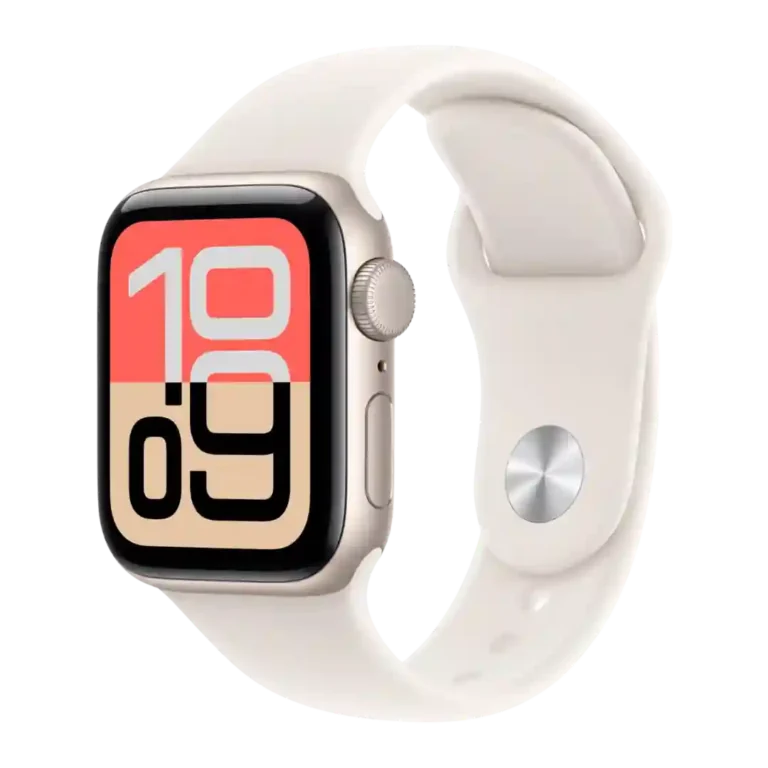
Choose the Apple Watch SE 3 if you want the core Apple Watch experience, smooth performance, strong value, and reliable basics. Skip it if you need multi-day battery life, ECG, blood oxygen, brighter screens, or a newer design.
Best for iPhone users buying a first Apple Watch, replacing an older model, or shopping for a child or family member who mainly needs notifications, safety tools, fitness basics, Apple Pay, apps, and strong value.
Not for Android users, data-focused athletes, or buyers who need ECG, blood oxygen, hypertension alerts, dual-band GPS, a brighter modern display, rugged materials, or truly multi-day battery life.
The Apple Watch SE 3 lands as a unusually strong entry-level Apple Watch because reviewers consistently praised its S10 speed, always-on display, watchOS polish, app ecosystem, notifications, safety tools, and overall value. It feels close to the Series experience for everyday iPhone users, and its fitness, heart-rate, GPS, and sleep tracking were generally good enough to reliable in testing. The tradeoff is clear: Apple keeps the older design, thicker bezels, limited colors, and a smaller, dimmer screen, while holding back ECG, blood oxygen, hypertension alerts, and more rugged hardware. Battery life is the most context-dependent weakness, ranging from excellent in some tests to a daily charging hassle in others, though faster charging softens the problem.
Compared with other Smartwatches, this product is above average in LTE connectivity, contactless payments, third-party app support, near average in display quality, charging speed, below average in blood oxygen tracking, cross-platform compatibility, style and design.
| Attribute | This product | Category average | Difference |
|---|---|---|---|
| LTE connectivity | 4.0 | 2.3 | +1.8 |
| contactless payments | 4.5 | 2.7 | +1.8 |
| blood oxygen tracking | 2.1 | 3.4 | -1.3 |
| third-party app support | 4.8 | 3.2 | +1.7 |
| cross-platform compatibility | 2.0 | 3.6 | -1.6 |
| value for money | 4.9 | 3.8 | +1.1 |
| app ecosystem | 5.0 | 3.6 | +1.4 |
| smartwatch features | 4.8 | 3.5 | +1.3 |
Choose Apple Watch Series 11. It scores 4.8 vs 2.1 for ECG functionality, with a 4.2 overall score.
Choose Apple Watch Ultra 2. It scores 5.0 vs 3.0 for fit, with a 3.9 overall score.
Choose OnePlus Watch 3. It scores 4.9 vs 2.1 for blood oxygen tracking, with a 4.0 overall score.
Choose Google Pixel Watch 4. It scores 4.9 vs 4.2 for charging speed, with a 4.2 overall score.
Products reviewers directly compared with this model, grouped into quick takeaways.
Yes. Reviewers repeatedly described it as the best-value or best-for-most Apple Watch because it delivers the core Apple Watch experience at a much lower price.
Battery life is mixed. Some reviewers got a full day or even close to two days, while others said it remains a daily-charge device, especially with sleep tracking.
No. Reviewers repeatedly noted the lack of ECG and blood oxygen tracking as the biggest health-feature tradeoff versus the Series and Ultra models.
Reviewers treated the always-on display as one of the biggest upgrades because it makes checking the time, notifications, and workout stats easier without raising the wrist.
Generally yes. Multiple reviewers praised heart-rate, workout, and GPS accuracy for everyday use, though single-band GPS can be less precise in dense city streets or other difficult conditions.
Reviewers said the SE 3 feels close to the Series 11 for daily use and performance, but the Series 11 offers a newer design, brighter/larger display, faster charging, and advanced health sensors.
Buyers who need ECG, blood oxygen, hypertension alerts, tougher materials, better screen brightness, more rugged features, or longer battery life may be better served by the Series or Ultra models.
These are a few of the reviews included in our analysis.
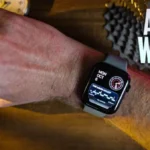
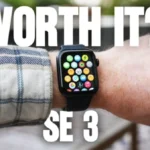
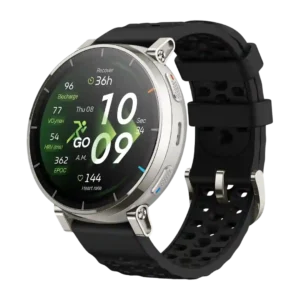
Good if you want premium running features, long battery life, and maps for under $200. Skip it if you need flawless heart-rate data, multiband GPS, LTE, or richer app support.
Pros: pairing reliability, brightness
Cons: Wi-Fi connectivity, Bluetooth connectivity
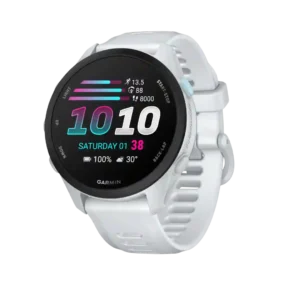
Best for accurate running metrics, excellent coaching tools, a bright AMOLED display, and dependable battery life. Skip it if you need offline maps, music storage, contactless payments, multi-band GPS, or...
Pros: step counting accuracy, app ecosystem
Cons: Bluetooth connectivity, pairing reliability
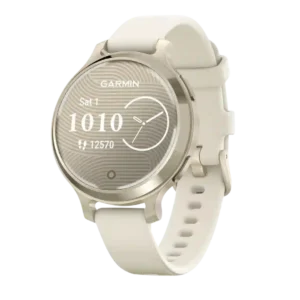
Good if you want a compact, stylish Garmin with strong GPS, comfort, and week-plus battery life. Skip it if you need richer smartwatch apps, onboard music, bright always-on display, or...
Pros: health tracking accuracy, blood oxygen tracking
Cons: ECG functionality, onboard music storage
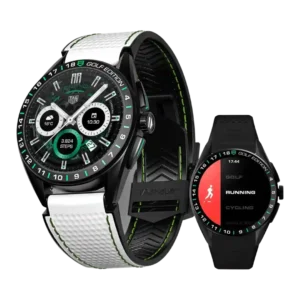
Best for luxury-watch styling, vivid TAG faces, solid build, and casual smartwatch use. Skip it if you need top fitness accuracy, call handling, LTE, or strong value.
Pros: contactless payments, pairing reliability
Cons: LTE connectivity, call handling