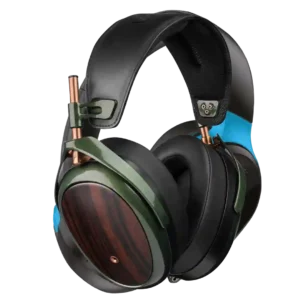
- More expensive: price and wireless features A reviewer frames the ATH-R70xa as cheaper than the Sony WH-1000XM5 but less convenient because the Sony has Bluetooth.
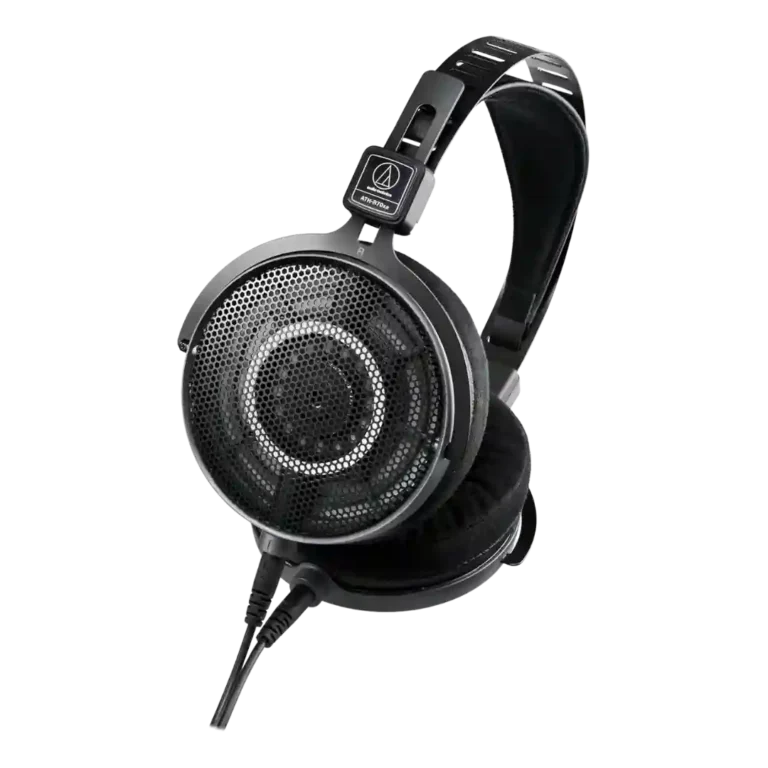
Audio-Technica ATH-R70XA Headphones Review
Bottom Line
Choose the ATH-R70xa for airy, detailed open-back sound, mixing clarity, and featherweight comfort. Skip it if you need isolation, public-use headphones, strong sub-bass without EQ, or a rugged premium build.
Best for mixing, mastering, and quiet critical listening where spacious imaging, midrange clarity, and featherweight long-session comfort matter more than isolation or wireless convenience.
Not for commuting, tracking vocals, shared rooms, bass-heavy genres that need strong sub-bass headroom, or buyers who want wireless features, ANC, or a more rugged premium build.
Across reviews, the ATH-R70xa comes across as a highly capable open-back reference headphone built around spacious, clean, mid-forward sound and exceptionally low weight. Reviewers consistently praise its natural presentation, detail retrieval, instrument separation, and comfort during long sessions, especially for mixing, mastering, and quiet critical listening. The tradeoff is that its open design leaks sound, blocks little outside noise, and makes it poor for commuting or shared spaces. Bass earns divided reactions: some hear tight, extended, accurate low end with enough power, while others want more punch, fullness, or sub-bass headroom. Build impressions also split sharply, ranging from solid and high-quality to flimsy, rattly, and less premium than similarly priced alternatives.
Compared in Reviews
Products reviewers directly compared with this model, grouped into quick takeaways.
ATH-R70x
- Older model: model lineage The ATH-R70xa is described as the successor to the ATH-R70x.
- Older model: model lineage The ATH-R70xa is identified as an updated version of the ATH-R70x.
6XX
- Better: tone and dynamics The reviewer preferred the 6XX for tone, timbre, and weightier dynamics.
Feature Scorecards
Summary
38 reviewed features- Very positive 4.5-5.0 29% 11 features
- Positive 3.5-4.4 29% 11 features
- Neutral 2.5-3.4 29% 11 features
- Negative 1.5-2.4 13% 5 features
- Very negative below 1.5 0% 0 features
Pros
-
Setup simplicity is praised because the wired, app-free design is plug-and-play.
-
Weight comfort is the strongest point of agreement: reviewers repeatedly describe the headphones as extremely light and easy to forget during wear.
-
Spatial performance is praised for impressive imaging and positional cues, including mixing placement and gaming directionality.
-
Clamping force is praised as light and low-pressure, including for eyeglass users, while still staying usable on at least one reviewer’s head.
-
Soundstage width is a consistent highlight, with reviewers describing the presentation as wide, spacious, airy, large, and open.
-
Long-session comfort is a major strength thanks to the light build and soft contact points, though fit can be poor for smaller heads.
-
Reviewers broadly praise the ATH-R70xa for natural, detailed, clean open-back sound, with only one dissenting review calling it merely fine and not personally compelling.
-
Instrument separation and imaging are repeatedly praised, especially for stereo placement, mix decisions, and hearing individual elements clearly.
-
Immersive audio impressions are positive, with reviewers describing an entrancing and surrounding presentation.
-
One reviewer praises the overall design as professional-looking and good-feeling.
-
Frequency response is mostly praised as neutral, flat, even, and suitable for critical listening, though one reviewer heard a warm-but-lean tonal balance.
-
The left/right-independent cable routing is repeatedly treated as useful, clever, or cool.
-
Aesthetics are generally praised as stylish, sleek, discreet, professional, or modern.
-
Overall recommendations are mostly positive for critical listening, mixing, and mastering, but fit, bass needs, build expectations, and use case shape the verdict.
-
Midrange clarity is usually a strength, with vocals and mids described as clear, present, and revealing, though one reviewer found the mids shouty and honky.
-
Treble is generally praised as clear, smooth, detailed, and not harsh, with caveats about slight restraint or peakiness in a few reviews.
-
The ear pads are generally described as soft, comfortable, breathable, and well padded, with one caveat that they can feel slightly shallow.
-
One review positively notes the included long lead as a useful standard accessory.
-
Value is generally positive for sound quality and flagship-level pricing, though reviewers still note that the headphones are not cheap.
-
Build quality is sharply split, ranging from flimsy, rattly, and delicate to solid, sturdy, excellent, and well constructed.
-
Bass is the most divided sound attribute: some reviewers hear tight, extended, accurate lows, while others want more punch, richness, or sub-bass headroom.
-
Premium feel is mixed: some reviewers praise the finish and feel, while another says the simple build lacks premium materials.
Cons
-
Cable quality is mixed: reviewers like the useful length and dual cable in some contexts, but others criticize the split design, length, memory, and ergonomics.
-
The detachable cable system is convenient for some because it locks, removes, and routes either way, but others dislike the proprietary or over-complicated design.
-
Headband padding feedback is split between one complaint that the pad collapses into the metal and one praise for comfort.
-
Carry case feedback is mixed: one reviewer liked the soft carry case, while another wanted a harder protective case.
-
Connectivity is limited to wired use; one review frames that as a drawback versus wireless options, while another appreciates having no wireless complexity.
-
Stability depends on fit: one reviewer with a smaller head had slippage, while another found the light clamp still secure.
-
Feature depth is limited, with one review calling the features sparse despite a few useful extras.
-
One reviewer found resolution and clarity weaker at low levels, saying the headphone opens up more when played louder.
-
Headband adjustability is inconsistent, with serious complaints about fit and the strap design alongside one reviewer who found adjustment easy.
-
Volume output is a practical weakness because several reviewers note the 470-ohm load needs a capable amplifier and can be too quiet from weaker sources.
-
Passive isolation is limited by the open-back design, making the headphones unsuitable for recording or noisy environments despite one reviewer finding outside sounds not too distracting.
-
One reviewer raises a clear durability concern, saying the light construction did not inspire confidence for longevity.
-
One review criticizes the ear cup swivel for not rotating enough to help the fit and seal.
-
One review criticizes the hinge/swivel area as weak and a source of rattles.
-
Sound leakage is a consistent downside because the open-back design lets others hear the music.
-
Travel friendliness is poor because reviewers repeatedly say the open-back design is bad for commuting, public listening, and shared spaces.
Compared With Category Average
Compared with other Over-Ear Headphones, this product is below average in Sound leakage, Travel friendliness, Ear cup swivel/rotation range.
Summary
8 compared features- Above average 0.4+ pts higher 0% 0 features
- Same as average within 0.3 pts 0% 0 features
- Below average 0.4+ pts lower 100% 8 features
| Attribute | This product | Category average | Difference |
|---|---|---|---|
| Sound leakage | 1.9 | 4.2 | -2.3 |
| Travel friendliness | 1.7 | 3.9 | -2.2 |
| Ear cup swivel/rotation range | 2.0 | 4.2 | -2.2 |
| Durability over time | 2.0 | 3.8 | -1.8 |
| Hinge durability | 2.0 | 3.8 | -1.8 |
| Headband adjustability | 2.6 | 4.2 | -1.7 |
| Volume output | 2.5 | 3.9 | -1.4 |
| Noise isolation (passive) | 2.5 | 4.0 | -1.5 |
FAQ
Are the Audio-Technica ATH-R70xa good for mixing and mastering?
Yes. Multiple reviewers describe them as strong for mixing, mastering, and critical listening because of their neutral-leaning tuning, separation, and spacious imaging.
Do the ATH-R70xa leak sound?
Yes. Reviewers repeatedly note that the open-back design spills sound outward, so they are a poor fit for commuting, shared rooms, or listening near someone else.
Do they need a headphone amp?
Usually, yes. Several reviews point to the 470-ohm impedance and say phones, laptops, or weaker outputs may not drive them well enough.
Are they comfortable for long sessions?
For most reviewers, yes. The very low weight and soft pads make them easy to wear for long sessions, but one reviewer with a smaller head found the fit uncomfortable and unstable.
How is the bass?
Bass impressions are mixed. Some reviewers praise it as tight, accurate, and extended, while others say it lacks punch, richness, or sub-bass headroom for bass-heavy work.
Is the build quality good?
The evidence is split. Some reviewers call the construction solid or excellent, while another criticizes the thin metal, rattles, weak swivel, and uncertain longevity.
Consider This Instead
If you want better Sound leakage
Choose Sony WH-1000XM5 Premium Noise Canceling Headphones. It scores 5.0 vs 1.9 for Sound leakage, with a 4.1 overall score.
If you want better Travel friendliness
Choose Bose QuietComfort Bluetooth Headphones. It scores 4.8 vs 1.7 for Travel friendliness, with a 3.7 overall score.
If you want better Hinge durability
Choose Cambridge Audio Melomania P100 SE Headphones. It scores 5.0 vs 2.0 for Hinge durability, with a 4.2 overall score.
If you want better Ear cup swivel/rotation range
Choose Marshall Major V. It scores 5.0 vs 2.0 for Ear cup swivel/rotation range, with a 3.8 overall score.
Overall Top Over-Ear Headphones Alternatives
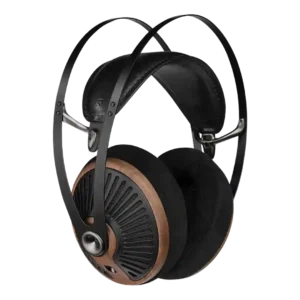
Choose the 105 Silva for premium comfort, repairable build, musical mids, and immersive home listening. Skip it if you need ANC, Bluetooth, strong isolation, or the most neutral sound at...
Pros: Sustainability and repairability, Replaceable pads/headband
Cons: Noise isolation (passive), Travel friendliness
Choose the Px7 S3 if sound quality, premium build, and a slim stylish design matter most. Skip it if you need the strongest ANC, fold-flat travel compactness, LDAC, or feature-heavy...
Pros: Frequency response accuracy, Multipoint connectivity reliability
Cons: LDAC, Wear detection performance
Choose the P100 SE for huge battery life, strong sound, useful EQ, and standout value. Skip it if you need class-leading ANC, the lightest comfort, spatial audio, or a compact...
Pros: Codec support, aptX
Cons: LDAC, Water/sweat resistance rating
Choose the WH950NB Gen 2 for strong value, long battery life, comfortable padding, useful app control and effective everyday ANC. Skip it if heavy-bass clarity, simple onboard controls or guaranteed...
Pros: Instrument separation, USB-C
Cons: Button control usability, Maximum volume clarity