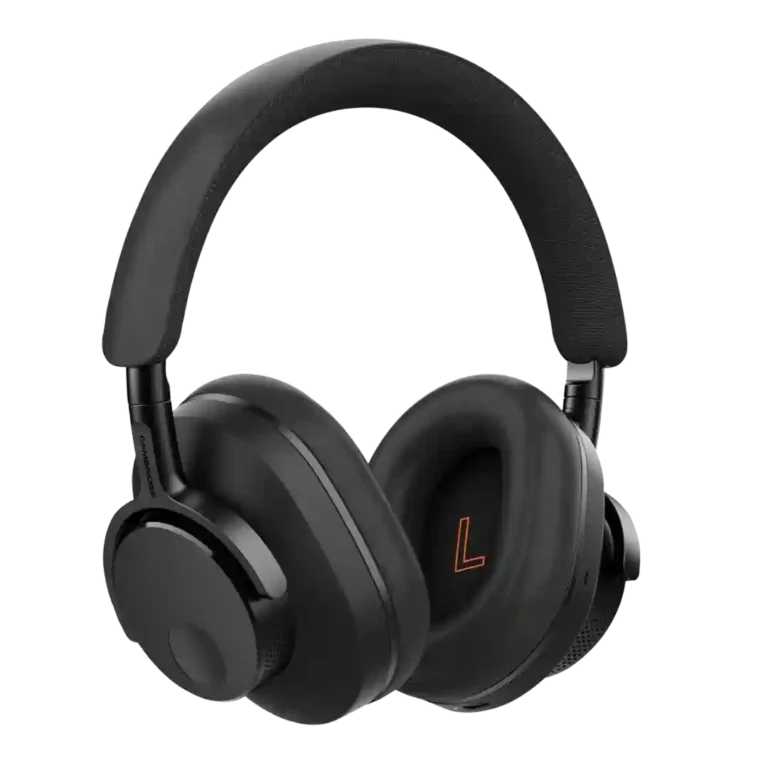
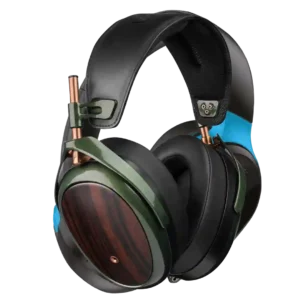
Cambridge Audio Melomania P100 SE Headphones Review
Bottom Line
Choose the Melomania P100 SE if you want audiophile-leaning sound and truly huge battery life for under $300. Skip if you need class-leading ANC or a lighter, less headband-heavy fit.
Listeners who prioritize sound quality and marathon battery life, and who will use the app EQ to dial in the stock tuning to taste. Also great for buyers who value long-term repairability via replaceable battery and earpads.
Anyone chasing the strongest ANC/transparency performance, or a lighter headset for all-day wear. Also not ideal if you need LDAC, spatial audio, or a compact folding design for tight bags.
Cambridge Audio’s Melomania P100 SE delivers a rare mix: genuinely hi-fi-leaning detail and punch, plus a battery that reviewers repeatedly verified at around 60 hours with ANC on and up to 100 hours off. The app and 7-band EQ are effective, and the premium build with user-replaceable battery and earpads supports long ownership. The tradeoff is that ANC and transparency are good, not best-in-class, and some listeners feel the stock SE tuning can get bass-forward without EQ. It is also a heavier headset with a big travel case and no LDAC or spatial audio.
Scored Features
Pros
-
Across reviews, battery life is repeatedly described as class-leading and is often verified in real use: around 60 hours with ANC on and up to 100 hours with ANC off. The user-replaceable battery is repeatedly singled out as a big longevity and sustainability win, uncommon among mainstream ANC headphones.
-
Replaceable earpads are called out as easy to swap, supporting long-term comfort and maintenance.
-
aptX support (including Adaptive/Lossless where source devices allow) is consistently mentioned as a key differentiator at this price.
-
Codec support is repeatedly cited as a strength, with broad compatibility including aptX Adaptive and aptX Lossless alongside standard Bluetooth codecs.
-
Sustainability is a recurring positive: recyclable packaging, recycled materials, and end-user replaceable battery/earpads are emphasized.
-
Fast charging is consistently highlighted as useful, with claims of a brief charge (around 5 minutes) delivering multiple hours of playback depending on ANC use.
-
Build quality is repeatedly described as premium and sturdy for the price, with only occasional mentions of minor creaking.
-
USB-C is the core port for charging and wired audio; reviews generally like the flexibility, though some note it means there is no traditional analog 3.5mm jack on the headphone itself.
-
Sound quality is a standout theme: detailed, engaging, and competitive with more expensive headphones; however, several note the SE stock tuning can lean bass-forward and benefits from EQ to taste. Wired listening via USB-C (and via included USB-C to 3.5mm cable) is described as a strong option, often sounding excellent and sometimes driving higher volume than Bluetooth.
-
Physical button controls are consistently praised for being responsive and reliable, with clear mappings for playback, volume, ANC modes and assistant access.
-
Multi-device use across iOS, Android and computers is reported as smooth overall, helped by Bluetooth 5.3, multipoint and app support on both mobile platforms.
-
Treble performance is repeatedly praised for clarity and detail, with some noting extra sparkle/brilliance when DynamEQ is enabled.
-
EQ control is repeatedly called effective and highly responsive, enabling meaningful tuning changes; a minor recurring gripe is limited granularity/labeling of EQ steps.
-
Midrange is widely described as clear and well-rounded, keeping vocals present and intelligible even with elevated bass.
-
Included wired options (USB-C to USB-C and USB-C to 3.5mm) are viewed as convenient for travel and hi-res playback without relying on Bluetooth.
-
Instrument separation and layering are highlighted as strong, contributing to a more hi-fi style presentation and easy-to-follow mixes.
-
Earpads are described as plush and spacious with a good seal; a recurring minor note is that they can get warm during long listening.
-
Earcup rotation is frequently praised as flexible enough to lie flat and to fit a range of head shapes comfortably.
-
Included accessories are routinely noted as generous for the price, especially the hard case plus multiple cables and documentation.
-
Passive isolation is frequently praised thanks to the seal and pads, with some reviewers saying it blocks a lot even before ANC is enabled.
-
Included cables are generally described as good quality and part of a well-considered accessory bundle.
-
At higher volumes, clarity is generally reported as holding up well with strong dynamics and little audible strain or distortion.
-
The Melomania app is typically described as clean and functional for firmware, battery, ANC and EQ; the SE adds DynamEQ, and most find it easy to navigate.
-
Many reviews describe a wide, immersive stage, though a minority characterize the presentation as more intimate than the widest options in the category.
-
The hard travel case is frequently described as sturdy and premium, with helpful cable storage, but it can be larger than rivals because the headphones do not fold especially small.
-
Overall loudness is usually sufficient and can get very loud, but some reviewers still wish for a bit more headroom over Bluetooth compared to wired use.
-
Bass is commonly described as impactful and powerful, especially with DynamEQ, but a few reviewers find it can get boomy or overpowering on the stock SE tuning and can vary by track.
-
Adjustability is reported as sufficient for a range of head sizes, but comfort outcomes depend more on headband cushioning and weight distribution than on range.
-
Bluetooth connectivity is generally stable in daily use, though a few reports mention pairing friction when switching between the original P100 and the SE model.
-
Voice assistant integration is available via button shortcuts and is generally reported to work as expected.
-
Clamping force is commonly described as well-judged or slightly reduced on the SE, though a few listeners still find the fit snug.
-
Tonal balance is often described as slightly warm rather than strictly neutral; DynamEQ and the SE retune can shift bass/treble balance, so accuracy depends on settings.
-
Preset EQ profiles are seen as useful starting points, though some reviewers say differences can be subtle and custom EQ is where the headphones shine.
-
Design is usually described as clean and upscale with a new blue option, but at least one reviewer finds the headband look wide or goofy when worn.
-
Wear detection/sensors are generally convenient and responsive, but a few users report occasional pause/resume glitches.
-
Low-latency or gaming mode is mentioned as helpful for video and gaming, reducing perceived lip-sync issues to a generally acceptable level.
-
Setup and software are usually described as straightforward, but there are a few reports of pairing or sensor quirks that may require firmware updates or re-pairing.
-
Comfort is generally good and improved with the SE headband updates for some users, but weight and a sometimes-stiff headband cushion can create pressure over long sessions.
-
Hinges and moving parts are generally viewed as robust, though a small number of users report slight creaks when moving around.
-
Multipoint is widely reported to work, but switching behavior is sometimes manual (for example, pausing on one device before playing on another) and auto-switching is not always present.
-
Call quality is usually rated as good in quiet environments and acceptable overall, though not typically viewed as best-in-class.
-
ANC is generally rated as strong for the price and improved versus the original P100 in several comparisons, but most reviewers still stop short of calling it class-leading versus Sony or Bose. Reviewers note multiple ANC strength levels plus quick switching via button/app, making it easy to tailor noise reduction to the environment.
-
Transparency mode is considered usable and sometimes very natural, but multiple reviewers say it is not as airy/clear as top competitors and can suffer from wind noise.
-
Weight is repeatedly cited around 330g, which is heavier than many peers and can impact comfort for those sensitive to top-of-head pressure.
-
Background noise reduction for calls is described as decent but behind top rivals, with some reviewers noting more noise leaks through in loud settings.
Cons
-
Portability is a mixed point: the headphones can travel fine in the included case, but limited foldability and case size make them less packable than some competitors.
-
Sidetone/voice passthrough during calls is mentioned as an area for improvement, with at least one reviewer wanting clearer amplification of their own voice.
-
Spatial audio is commonly noted as absent, but several reviewers say the natural soundstage is wide enough that many listeners may not miss it.
-
Multiple reviewers explicitly note there is no LDAC support, which may matter to users invested in that ecosystem.
-
At least one reviewer notes there is no water/sweat resistance rating, so these are not ideal for workouts or wet conditions.
FAQ
Where do these scores come from?
They are synthesized only from the supplied review transcripts in the attached reviews.json file.
What battery life should I expect with ANC on?
Multiple reviews cite roughly 60 hours with ANC enabled, with up to about 100 hours possible if you turn ANC off.
Does the P100 SE support LDAC?
No. Several reviewers explicitly call out that LDAC is not supported, even though aptX Adaptive/Lossless are.
Are the battery and earpads replaceable?
Yes. Reviews repeatedly highlight user-replaceable battery and earpads as a major longevity and sustainability advantage.
Is the noise cancelling top-tier?
It is widely considered strong for the price and improved versus the original P100, but most reviewers still rate Sony and Bose as better for pure ANC.
Does it have spatial audio?
No proprietary spatial audio is included, but several reviewers say the natural soundstage is wide enough that many listeners will not miss it.
Video Reviews
Article Reviews
Best Over-Ear Headphones Alternatives
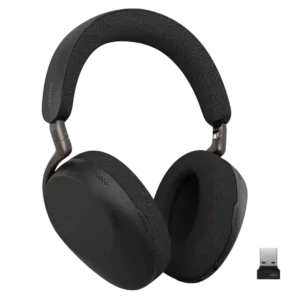
Choose the PX7 S3 for class-leading sound and premium comfort with strong-enough ANC; Skip if you want Sony/Bose-level noise canceling or a lighter, cooler-fit headset for long flights.
Pros: aptX, Multipoint connectivity reliability, Codec support, Volume output, Android compatibility, Maximum volume clarity, Design and Aesthetics
Cons: Replaceable battery, LDAC, Spatial audio, Portability/foldability, Preset EQ profile quality
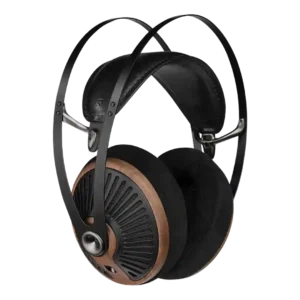
Choose the Meze 105 Silva for gorgeous, comfy open-back listening with strong imaging and a warm-yet-detailed tuning; Skip if you need isolation for commuting or you’re sensitive to...
Pros: Sustainability materials, Replaceable earpads, Design and Aesthetics, Headband adjustability, Hinge durability, Build quality, Volume output
Cons: Noise isolation (passive), Portability/foldability
Choose the Soundcore Space 2 for huge battery life, comfort, and strong value. Skip it if you need flagship-level ANC polish or a protective hard case.
Pros: Bluetooth version, Charging, Battery, Weight comfort, Ear cup padding quality, Comfort during long use, Equalizer customization
Cons: Water/sweat resistance rating, Wind noise handling, ANC background noise level, Carry case quality, Smudge resistance, Immersive audio quality, Spatial audio
Choose these for travel-first flexibility, long battery life, and very strong ANC. Skip them if you want the most premium feel or perfectly polished touch controls.
Pros: Battery, Connectivity options, Included accessories, Features at launch, ANC background noise level, Instrument separation, Equalizer customization
Cons: Water/sweat resistance rating, Replaceable earpads, Maximum volume clarity, Smart Pause performance, Premium feel, Preset EQ profile quality, ANC effect on sound signature