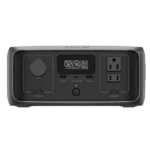
EcoFlow River 3 Feature Scores
Explore all 101 feature scores for EcoFlow River 3, organized into pros and cons.
Scores by Feature
Summary
101 reviewed features-
Very positive 4.5-5.037 (37%)
-
Positive 3.5-4.432 (32%)
-
Neutral 2.5-3.420 (20%)
-
Negative 1.5-2.411 (11%)
-
Very negative below 1.51 (1%)
Pros
Sort
-
Reviewers regularly carry it between rooms, vehicles, campsites, work locations, and outdoor events. The integrated design makes grab-and-go use a major strength.
-
Near-silent operation is the River 3’s most universally praised trait, suitable for bedrooms, offices, tents, and TV rooms.
-
Its low, compact body is one of the most praised traits, fitting under seats, in bags, and on crowded desks. A small minority expected an even smaller unit.
-
At roughly eight pounds, the River 3 is easy to lift, carry, and reposition, even for frequent daily use.
-
Fast recharging makes it easy to top up between outages, trips, or daily use.
-
Logical controls, a clear screen, and a strong app make the River 3 easy for beginners.
-
One-hour wall charging is a standout strength and repeatedly matches real-world testing.
-
The sleek, low-profile design looks more at home in bedrooms, offices, and RVs than typical industrial-looking power stations.
-
Sale pricing is repeatedly described as excellent value for the feature set, charging speed, and build. At full price, a few shoppers feel larger or better-equipped alternatives may justify spending more.
-
The casing, controls, and overall assembly usually feel solid, sturdy, and premium for the price.
-
Light loads can run for many hours or even days, while CPAPs, TVs, fridges, and other larger loads drain the battery much faster.
-
Measured AC efficiency around the mid-80% range is strong, and reviewers often note low heat loss.
-
LiFePO4 chemistry and a 3,000-cycle rating promise a long service life, supported by several positive ownership reports.
-
Most reviewers see the River 3 as an excellent small power station for everyday backup, travel, and light outdoor use. A minority report frustrating hardware or UPS faults that materially lower confidence.
-
The short, compact body stores easily under seats, tables, cabinets, and inside gear bins or backpacks.
-
The EcoFlow app is widely considered one of the best in the category, with useful controls and polished monitoring. Documentation gaps, missing history, and occasional navigation bugs frustrate some users.
-
The 3,000-cycle specification is repeatedly highlighted as a major long-term advantage over lead-acid UPS batteries.
-
The app makes it easy to check battery level, load, and status from another room or away from home.
-
Reviewers value the LFP battery for safety, stability, and long cycle life.
-
The integrated handle is generally comfortable and keeps the profile tidy, though one reviewer disliked how the shape encourages setting the unit on its face.
-
Network pairing and initial operation are typically quick, requiring little effort.
-
The squat footprint fits neatly in vehicles, cabinets, and tight home-office spaces. Plug spacing and the wide shape are less ideal for some setups.
-
Its AC, USB, and DC ports can support several low-draw devices at once, making it useful as a shared charging hub.
-
At low loads and in UPS use, the fan often stays off and the unit disappears into the background.
-
The fire-retardant housing and solid shell add confidence for home and outdoor use.
-
The stated drop resistance and rugged field use suggest the unit can tolerate normal bumps and handling.
-
Independent tests commonly recover about 83–86% of rated energy, a solid result for this class.
-
The unit can power devices while charging and works well as a continuously connected backup source.
-
Pairing is usually quick, and day-to-day connectivity is reliable through Bluetooth or Wi-Fi.
-
For routers, modems, computers, and network gear, UPS performance is usually seamless and excellent. A smaller but important group reports random AC shutdowns or failed transfers.
-
The River 3 is excellent for localized backup of routers, lights, computers, and medical accessories, not whole-home power.
-
The lithium iron phosphate chemistry is considered safer and longer-lived than older lithium-ion designs.
-
Bluetooth provides dependable local setup and control, including third-party local integrations for advanced users.
-
Live draw, usage charts, and historical graphs help users understand consumption and plan runtime.
-
The AC, USB-C, USB-A, and 12V mix is versatile for a compact station, with only minor omissions.
-
Even during charging or near rated output, it remains unusually quiet for a power station.
-
The 100W USB-C output is excellent for laptops and modern devices, although a few owners report underpowered behavior or port failures.
-
Owners already using EcoFlow products appreciate the shared app, panels, cables, and broader product lineup.
-
Front-facing ports, logical buttons, and an uncluttered panel make the unit straightforward to operate.
-
Reviewers describe the plastics and finish as robust and well fitted rather than flimsy.
-
Standard panels can work through the solar input, but buyers may need the correct XT60-style adapter and must stay within voltage limits.
-
The unit is suitable for sheltered outdoor use and light splashes, not prolonged rain or full exposure.
-
The IP54-rated battery system tolerates splashes, but the exposed ports are not waterproof.
-
Fast charging is well controlled and generally does not create excessive heat or apparent battery stress.
-
The 300W output is excellent for electronics and small appliances, not heaters, large refrigerators, or other sustained high-wattage loads.
-
Owners who discuss the battery directly describe strong charge retention, flawless use, and confidence in dependable performance.
-
Owners report stable operation in hot climates and vehicles, within normal ventilation limits.
-
Charging limits, output sections, schedules, and timeouts can be adjusted remotely through the app.
-
Fire-resistance, drop testing, IP54 protection, and battery safeguards add confidence for everyday use.
-
The fan runs infrequently and quietly under normal loads while maintaining stable temperatures.
-
Compatible electronics run smoothly, while high-startup or borderline loads expose the limits quickly.
-
Wi-Fi enables convenient remote status checks, though occasional disconnects are reported.
-
Drop resistance, rugged construction, and longer-term ownership reports are reassuring, but the small input-port door looks vulnerable to eventual breakage.
-
Vehicle charging is slower than wall charging but practical for topping up the small battery while driving.
-
GaN-based efficiency usually keeps heat low, though one owner reported substantial warming and another found a car cable dangerously hot.
-
Two AC outlets are useful for the unit’s size, although bulky plugs may block the neighboring socket.
-
The unit shuts down when loads exceed safe limits, protecting the station even when that interrupts the application.
-
The IP54-rated battery system is viewed as useful protection against dust during outdoor use.
-
The remaining-time estimate is useful for planning and often tracks real use reasonably well.
-
Most devices remain online through the sub-20ms transfer, though chained UPS systems and especially sensitive loads may notice or expose failures.
-
The rated and tested temperature range covers ordinary camping and home-backup conditions.
-
The 12V outlet works well for coolers and some vehicle accessories, but several owners found it unreliable with compressors and surge-heavy devices.
-
A five-year warranty is unusually strong for this price and supports long-term confidence.
-
The AC inverter is exceptionally efficient in positive tests, although one chained UPS setup reported an alarming high-voltage condition.
-
The display and app clearly show incoming power, outgoing load, and battery status.
-
The app-controlled silent charging mode is valuable for overnight and office use.
-
One EV owner found it ideal for powering a parked dash cam without draining the vehicle’s main battery.
-
The built-in MPPT controller generally captures available solar power effectively when panel voltage and cabling are correct.
-
Two USB-A ports remain practical for older cables and smaller devices.
Cons
Sort
-
Charging-source flexibility is a weak spot: the unit cannot recharge through USB-C, may require specific solar cabling, and rejected one vehicle’s stepped-sine AC outlet.
-
This is not a high-demand appliance station; heaters, large fridges, hair dryers, and similar loads are poor matches.
-
The printed and in-app documentation does not explain every scheduling or power-management function clearly.
-
One owner reported severe charge loss while the unit was switched off, making standby storage unreliable in that case.
-
The base River 3 omits a built-in light, unlike some larger models and competitors.
-
Capacity cannot be expanded on the base River 3.
-
The base model is fixed at 245Wh and cannot accept expansion batteries; buyers needing growth should consider a higher model.
-
Only one USB-C port is provided, and several reviewers would prefer a second high-power connection.
-
Normal operation is stable, but reports of high line voltage and X-Boost voltage reduction show that some modes are not ideal for sensitive equipment.
-
Despite its portability on the ground, the unit is too large and high-capacity for convenient airline travel.
-
Many units run for months or years without trouble, but repeated early display faults and random AC shutdowns create a meaningful reliability caveat.
-
The 245Wh battery is well matched to phones, laptops, routers, lights, fans, and brief appliance use. It is plainly too small for long high-draw backup.
-
The screen is crisp and informative when working, but repeated owner reports of gibberish or failed displays are the clearest hardware-quality concern.
-
Charging inputs cannot be combined, so there is no simultaneous wall-and-solar or multi-source charging.
-
Owners describe warranty or RMA steps as inconvenient when hardware faults appear.
-
Some devices above 300W will start and run, but compressors, pumps, OLED TVs, and other surge-heavy loads can overload immediately.
-
One owner says it holds charge well for emergencies, while another reports severe self-discharge that undermines unattended storage.
-
Cold weather can slow charging and reduce LFP performance, so winter users should temper expectations.
-
Compatible loads stay powered cleanly, but isolated voltage spikes and unexpected shutdowns make critical use worth testing carefully.
-
The 110W solar cap suits a 245Wh battery but feels restrictive to users who want faster off-grid charging.
-
There is no wireless charging pad, a minor omission that some users notice and others consider unnecessary.
-
One reviewer found the included AC lead higher quality than another cable, but a separate owner reported a dangerously hot car plug.
-
One owner questioned whether the displayed runtime estimate would hold through a full discharge.
-
An expert praises low standby losses, but one owner reports major charge depletion while the unit was switched off.
-
Large, clear runtime and wattage information is useful, although some screens are hard to read or fail entirely.
-
Solar setups often require a specific adapter or cable, which adds friction for campers using third-party panels.
-
Front access is convenient, but the two AC outlets can be too close for bulky plugs.
-
One privacy-conscious owner isolated the app on a guest network, while another valued local Bluetooth control without cloud dependence.
-
With a suitable panel and good sun, solar charging is workable in roughly three hours. The low input ceiling, small bundled panel, and a few reliability complaints keep it from being a universal strength.
-
Several buyers received prompt, useful first-line help, but escalation and repair processes can be slow or burdensome.
-
Firmware updates arrive through the app and can add features or address minor bugs, though some owners are still waiting for specific fixes.
-
Capacity, charging speed, and quietness often match the claims, although X-Boost and some reliability promises do not hold in every setup.