- Worse: cross-platform phone compatibility The same reviewer valued the Vivomove Style's iOS and Android flexibility over Apple Watch.
- Better: overall smart functionality The YouTube reviewer said the Apple Watch offers substantially more functionality.
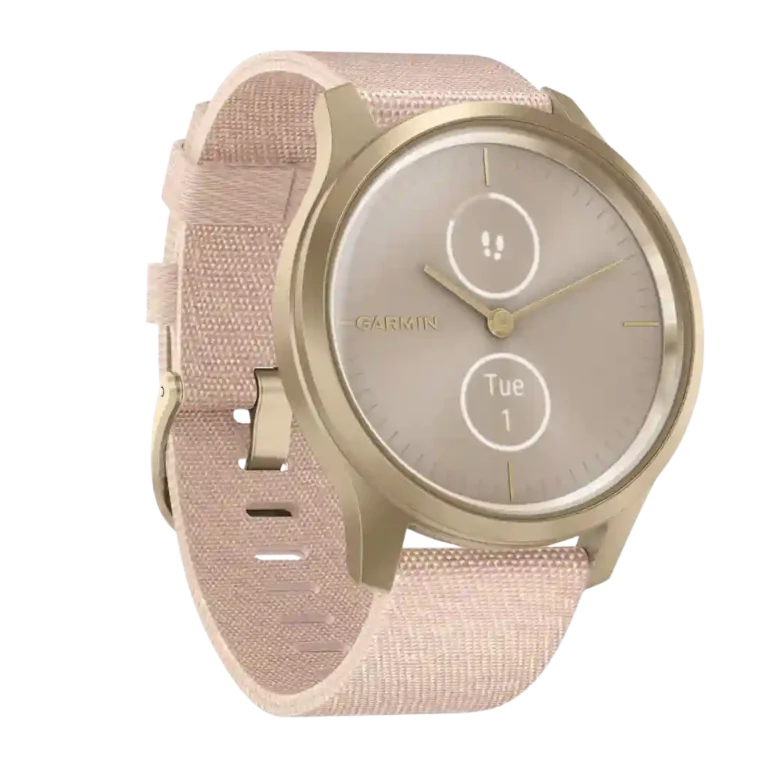
Garmin Vivomove Style Review
Bottom Line
Choose the Garmin Vivomove Style if you want a discreet, dressy hybrid watch with solid Garmin health tracking and multi-day battery life. Skip it if you need bright outdoor visibility, built-in GPS, rich apps, or reliable touch controls.
Best for people who want a dressy, traditional-looking watch that quietly tracks steps, workouts, sleep, stress, heart rate, Body Battery, and notifications. It suits casual fitness users who value style and battery life more than advanced smart features.
Not for buyers who want a full smartwatch, bright always-readable screen, built-in GPS, onboard music, robust apps, or serious training features. It is also a poor fit for people who dislike touch-only controls.
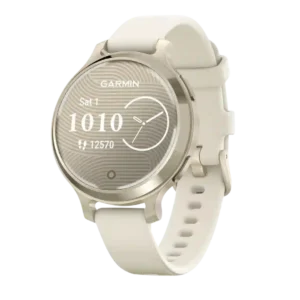
The Garmin Vivomove Style succeeds most when judged as a fashion-first hybrid watch: reviewers consistently praised its traditional analog look, hidden display, comfort, battery life, and Garmin Connect health data. The tradeoff is that its clean design limits the experience. Multiple reviews found the screen dim outdoors, the touch controls or lift-to-wake gesture finicky, and the fitness side less complete because there is no built-in GPS, no onboard music storage, no Connect IQ app support, and only limited workout depth. It works best as a subtle daily watch that tracks steps, heart rate, sleep, stress, Body Battery, notifications, and workouts well enough for everyday users, but it does not replace a fuller Apple Watch, Samsung watch, or Garmin fitness watch for people who want richer smart features or serious training tools.
Compared in Reviews
Products reviewers directly compared with this model, grouped into quick takeaways.
Garmin Vivoactive 4
- Better: screen brightness and readability PCMag said the Vivoactive 4 has a brighter, easier screen, especially outdoors.
- Better: smartwatch and fitness features PCMag found the Vivomove Style less feature-rich than the Vivoactive 4.
Fossil Hybrid Smartwatch HR
- Worse: hybrid watch capability Digital Trends said Fossil's closest hybrid alternative falls short on Garmin's feature set.
Feature Scorecards
Pros
-
Water resistance is a clear strength, with 5ATM coverage and safe showering/swimming use cited.
-
Cross-platform compatibility is a clear advantage over Apple Watch because one reviewer used it across both iOS and Android.
-
Style and design are the standout strengths, with every review emphasizing the attractive analog look, subtle smart display, or compliments received.
-
Comfort was strongly praised, especially the light feel and the ability to wear it for long periods.
-
The Garmin ecosystem was viewed positively because its metrics and Connect app make the watch more useful than the hardware alone.
-
Durability received limited but positive evidence from one reviewer who expected it to last for years.
-
Pairing looked reliable in the PCMag review because the app automatically found the watch during setup.
-
The watch face is a highlight because reviewers liked the hidden display, analog hands, and screen that blends into the face.
-
Battery life is a major strength, usually described as several days to about a week depending on use, plus analog timekeeping reserve.
-
Wellness insights are a strong point, with sleep, stress, Body Battery, Pulse Ox, VO2 max, and rest data repeatedly highlighted.
-
The Garmin Connect app was one of the most consistently praised parts, giving digestible charts, metrics, and health context.
-
Recovery-style insights are a strength, with reviewers finding Body Battery and rest/sleep interpretation useful for understanding energy levels.
-
Step counting was praised by one reviewer, especially after calibration, making it useful as a daily pedometer.
-
Customization is strong for a hybrid watch, with standard bands, widgets, watch-face controls, and styling choices repeatedly mentioned.
-
Materials quality was mostly good, with aluminum and Gorilla Glass noted, though strap material quality was a separate concern.
-
Build quality was generally positive, supported by Gorilla Glass, aluminum casing, and a clean watch-like construction.
-
Safety features are present through abnormal heart-rate alerts and related health monitoring.
-
Stress tracking appears as part of Garmin's broader wellness package, alongside sleep, Body Battery, and VO2 max data.
-
Blood oxygen tracking is consistently presented as an included Garmin health sensor through Pulse Ox or blood oxygen monitoring.
-
Bluetooth setup was straightforward in PCMag's test, with the watch connecting through Garmin Connect via Bluetooth.
-
Fitness tracking was generally good for casual workouts, though outdoor accuracy depends on a phone and the device is not positioned as a serious training watch.
-
Heart-rate accuracy was described as accurate enough for workout and health-tracking purposes, but the evidence is limited to one long-term user impression.
-
Heart-rate accuracy was considered good enough for workouts, suggesting useful everyday monitoring rather than lab-grade precision.
-
Notifications are useful and often convenient, but evidence is mixed because some apps and message layouts caused problems.
-
Display quality is mixed: the hidden color/OLED display impressed visually, but some reviewers found it dull or less clear than expected.
-
Calorie tracking is present in Garmin's data set and app, but the evidence supports availability more than deep usefulness.
Cons
-
The interface is visually appealing but uneven: reviewers liked the look while also wanting more polish or easier learning.
-
Smartwatch features are intentionally limited: reviewers liked the basics, but repeatedly contrasted it with fuller Apple, Samsung, and Garmin watches.
-
Garmin Pay is supported, but contactless payment usefulness is limited by bank support in at least one market.
-
Workout variety covers common activities, but reviewers repeatedly noted the profiles and training depth are more limited than fuller fitness watches.
-
Sleep tracking was mixed: it detected sleep and wake times reasonably well, but the reviewer questioned the deeper sleep-stage accuracy.
-
Reliability is mixed: notifications could arrive seamlessly, but wake gestures and screen activation were inconsistent.
-
Size evidence is limited; the watch is described around a 42mm case rather than a broad size range.
-
Brightness splits sharply by context: one review found vibrant color, while several found the display dull or not bright enough.
-
Value for money is mixed to weak because reviewers liked the design but repeatedly described the price as high for the limited feature set.
-
GPS is the main fitness limitation: the watch lacks built-in GPS and depends on a smartphone, though connected GPS can still be accurate.
-
Band quality is mixed to weak: the standard strap options are convenient, but multiple reviewers criticized nylon or scratchy straps.
-
Menu navigation takes practice and was often called fiddly, especially because it relies on taps, swipes, and a hidden screen.
-
Software smoothness is mixed to weak, with reviewers citing finicky gestures, notification failures, and music-control bugs.
-
Charging convenience is a mild weakness because one reviewer disliked relying on a proprietary cable instead of wireless charging.
-
Touchscreen responsiveness is one of the most common complaints, with missed taps, inconsistent double-taps, and finicky gestures.
-
Fit evidence was negative from one reviewer who found the included band too small for his wrist.
-
Music controls were a weak point in one long-use review, with lag and playback-state problems.
-
Outdoor visibility is a repeated weakness, with reviewers saying the screen is hard or impossible to read in bright sunlight.
-
Coaching features are weak because reviewers specifically noted the absence of personalized training plans, animations, and deeper training tools.
-
Button controls are a weakness because the buttonless design made multiple reviewers wish for a physical button.
-
Call handling is very limited, with one reviewer explicitly saying calls cannot be made from the watch.
-
Onboard music storage is absent, which reviewers treated as one of the missing smart features.
-
Third-party app support is poor because the watch lacks Connect IQ compatibility.
Compared With Category Average
Compared with other Smart Watch, this product is below average in outdoor visibility, coaching features, button controls.
| Attribute | This product | Category average | Difference |
|---|---|---|---|
| outdoor visibility | 2.0 | 4.3 | -2.3 |
| coaching features | 1.9 | 4.0 | -2.1 |
| button controls | 1.8 | 3.9 | -2.1 |
| fit | 2.2 | 3.9 | -1.7 |
| third-party app support | 1.5 | 3.1 | -1.6 |
| call handling | 1.5 | 3.1 | -1.6 |
| music controls | 2.0 | 3.5 | -1.5 |
| software smoothness | 2.5 | 3.9 | -1.4 |
FAQ
Does the Garmin Vivomove Style look like a regular watch?
Yes. Reviewers repeatedly described it as a traditional-looking analog watch with real hands and a hidden display, and style was the most consistent praise.
How long does the battery last?
Most reviewer evidence points to multi-day battery life, commonly around three to five days and up to about a week depending on use. Several reviews also liked that the analog watch function can continue after the smart battery is drained.
Does it have built-in GPS?
No. Reviews consistently say it relies on connected smartphone GPS for route, distance, and speed data, which can be accurate but requires carrying a phone.
Are notifications reliable?
Notifications are useful for quick glances, and some reviewers found them seamless. The main caveats were app-specific notification failures, awkward email/message layout, and limited interaction.
Is it good for workouts?
It works well for everyday fitness tracking, steps, heart rate, and common activities. Reviewers who wanted deeper workout metrics, built-in GPS, auto pause, training plans, or advanced swim data found it limited.
Is the screen easy to read outdoors?
Outdoor visibility is one of the clearest weaknesses. Multiple reviewers found the hidden display dull, hard to see in bright sunlight, or even impossible to read without shading it.
Consider This Instead
If you want better third-party app support
Choose Samsung Galaxy Watch 8. It scores 4.8 vs 1.5 for third-party app support, with a 4.0 overall score.
If you want better onboard music storage
Choose Huawei Watch Fit 4. It scores 4.7 vs 1.5 for onboard music storage, with a 4.1 overall score.
If you want better outdoor visibility
Choose Google Pixel Watch 3. It scores 5.0 vs 2.0 for outdoor visibility, with a 4.2 overall score.
If you want better call handling
Choose Apple Watch Ultra 3. It scores 4.6 vs 1.5 for call handling, with a 4.2 overall score.
Overall Top Smart Watch Alternatives
Good if you want the most rugged Apple Watch, brighter outdoor screen, better battery, LTE, and top apps. Skip it if you need Garmin-like mapping, recovery analytics, smaller sizing, or...
Pros: display quality, heart rate accuracy
Cons: cross-platform compatibility, recovery insights
Choose the Galaxy Watch 6 for a polished Android smartwatch with a bright screen, strong apps, and broad health tracking. Skip it if battery life, iPhone support, or full non-Samsung...
Pros: outdoor visibility, workout tracking variety
Cons: cross-platform compatibility, battery life
Good if you need a rugged Garmin with deep outdoor, tactical, GPS, training, and battery features. Skip it if you want a cheaper lifestyle watch or do not need the...
Pros: materials quality, durability
Cons: LTE connectivity, value for money
Good if you want premium golf maps, virtual caddie tools, health metrics, music, notifications, and long battery life in one watch. Skip it if you only need basic yardages or...
Pros: pairing reliability, brightness
Cons: software smoothness, user interface