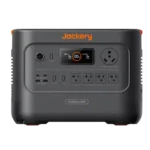
Jackery Explorer 3000 v2 Feature Scores
Explore all 107 feature scores for Jackery Explorer 3000 v2, organized into pros and cons.
Scores by Feature
Summary
107 reviewed features-
Very positive 4.5-5.076 (71%)
-
Positive 3.5-4.413 (12%)
-
Neutral 2.5-3.45 (5%)
-
Negative 1.5-2.47 (7%)
-
Very negative below 1.56 (6%)
Pros
Sort
-
Kettles, heaters, induction hobs, compressors, and other power-hungry appliances are comfortably within its reach.
-
Capacity is one of the clearest strengths, providing enough stored energy for serious home backup, off-grid work, and long equipment sessions.
-
The compact body is one of the product's strongest differentiators, fitting 3kWh capacity and 3,600W output into a surprisingly small enclosure.
-
The 3,600W inverter is a standout strength, powering demanding household appliances and production gear without feeling constrained by the compact chassis.
-
The 3,072Wh battery offers meaningful endurance: mixed essential loads can last through an outage, while lighter single loads run much longer.
-
Overall sentiment is highly positive, centered on exceptional output, compact dimensions, and serious backup capability despite a few ecosystem limitations.
-
Home backup is a major strength, with enough output for demanding appliances and enough capacity to carry essential circuits through shorter outages.
-
The inverter handles high combined loads smoothly, from kitchen appliances to power tools and filming equipment.
-
Its milk-crate or suitcase-like footprint is easy to store and vehicle-friendly, though still oversized for casual family camping.
-
Portability is exceptional for a 3kWh station. It is still heavy, but far easier to move than many similarly powerful competitors.
-
Long battery life is a core selling point, with the LFP pack expected to remain useful for many years.
-
Cycle-life claims are unusually strong, generally pointing to thousands of cycles before major capacity loss.
-
Most accounts put a full AC recharge around 1.7–1.8 hours, excellent for restoring power between outages; one test reported a slower but still acceptable result.
-
Wall and hybrid charging are impressively quick for a 3kWh battery, though one comparison found it slower than the fastest rivals.
-
Combining wall and solar input produces the fastest recharge times and is especially useful when charging windows are short.
-
Up to 1,000W of solar input gives the station strong off-grid potential, though reaching that ceiling may require several panels and adapters.
-
Quiet operation is a notable advantage, with fan noise staying unobtrusive even during demanding use.
-
Appliance testing found clean, steady delivery without noticeable interruptions or voltage swings.
-
The 3,600W rated output feels unusually strong for such a compact station and comfortably sustains demanding household and professional loads.
-
The mix of AC and USB outputs can support several devices together, with ample headroom for typical backup and production setups.
-
Construction feels solid and robust, with the cell-to-body structure adding strength while reducing bulk.
-
The display is clear and information-rich, showing the essential battery and power-flow details at a glance.
-
A bright, easy-to-read screen makes remaining charge and operating status simple to check.
-
Off-peak charging and stored solar energy can lower operating costs, while a full wall recharge remains relatively inexpensive.
-
At roughly 59 pounds, it feels heavy in isolation yet remarkably light for its capacity and output class.
-
LiFePO4 chemistry brings strong safety, thermal stability, and lifespan advantages over older lithium-ion designs.
-
The battery management system provides broad protection against electrical faults and overheating.
-
The LFP pack is positioned as highly dependable, with long cycle life and years of expected service.
-
The familiar orange-accented design looks polished, compact, and thoughtfully arranged.
-
The structural design and robust shell inspire confidence for transport, job-site use, and repeated handling.
-
Basic setup is simple: connect wall power, solar, or both, and the station is ready with little configuration.
-
The housing feels sturdy and durable enough for mobile work, vehicle transport, and regular backup use.
-
Input and output wattage are presented clearly on both the front display and app.
-
The inverter earns high marks for clean delivery, stable voltage, and protective shutdown after a severe temporary overload.
-
The LFP battery is a major upgrade for buyers who value safer chemistry and years of repeated use.
-
LFP chemistry and high cycle ratings support strong long-term reliability for backup and professional use.
-
The enclosure materials feel robust, while the integrated cell-to-body construction adds structural strength without excess bulk.
-
Overheating is actively monitored, adding confidence during fast charging and heavy output.
-
The 7,200W peak gives the station enough headroom for brief, demanding startup loads.
-
Power quality is consistently described as clean and safe for electronics, with stable operation under load.
-
Quiet charging mode is particularly useful for campsites, bedrooms, studios, and sound-sensitive film sets.
-
As a solar generator, it delivers quiet, emission-free power with enough capacity for serious off-grid use.
-
Compressors, pumps, and power tools start confidently, with surge performance repeatedly described as a major advantage.
-
Real-world use suggests a large share of the 3,072Wh pack is practically available, with long appliance runtimes and modest drain during tool work.
-
Controls and connections are grouped logically on the front, giving the station a simple, thoughtful layout.
-
App quality ranges from clean and intuitive to somewhat laggy. Monitoring is strong, but remote commands may take several seconds to register.
-
Two people can move it comfortably, and stronger users may carry it alone, but loading it into a vehicle can still be difficult.
-
Value depends heavily on sale pricing. The performance-to-weight ratio is excellent, but full retail pricing carries a premium and rivals may offer expansion.
-
Off-peak scheduling and battery-saving features can improve everyday energy use and reduce unnecessary battery wear.
-
The app can track power flow, solar generation, and related energy savings, making it useful beyond basic battery monitoring.
-
The claimed 20ms transition is fast enough for many devices, but it trails the quickest dedicated UPS-style competitors.
-
UPS behavior is generally useful for backup electronics, though one account warned that sensitive desktop computers may notice the switchover.
-
The AC and USB mix covers most everyday needs, but three AC sockets and no 240V output can restrict larger backup setups.
-
The LFP pack supports a broad practical temperature range, though extreme cold can still reduce performance.
-
Pairing the unit with the app is quick and straightforward.
-
Low standby loss helps the battery remain ready after long storage, an important benefit for emergency use.
-
Everyday operation is straightforward, with simple AC charging and clearly organized controls.
-
Battery power provides generator-level capability without exhaust fumes, making indoor and close-quarters use far more practical than fuel equipment.
-
The rigid cell-to-body chassis is designed to improve structural strength during transport and repeated handling.
-
Even under heavy load, fan noise was reported below normal conversational volume.
-
A fuel generator can restore the battery quickly, making extended outages easier to manage while returning to silent battery power afterward.
-
Large ergonomic side handles improve grip comfort and make two-person carries straightforward.
-
Smart charging controls monitor overheating and balance fast performance with long-term battery health.
-
The LFP chemistry is well suited to hot garages, attics, and storage conditions thanks to its wider safe temperature range.
-
At ordinary loads, the cooling fans can be virtually inaudible from a few feet away.
-
Compared with a petrol generator, the battery station avoids fuel-system servicing and routine engine upkeep.
-
There are no oil changes, spark-plug jobs, or recurring engine-maintenance intervals to manage.
-
The inverter tolerated a severe temporary overload before shutting down, showing useful protective headroom.
-
Pure sine wave output makes the station well suited to sensitive electronics and production equipment.
-
Estimated runtime in the app helps users judge how long the connected setup can continue operating.
-
The app gives useful remote visibility into battery level, power flow, and estimated runtime.
-
ZeroDrain-style standby performance is presented as excellent, with minimal need for periodic top-ups.
-
Short-circuit protection is included within the comprehensive battery management system.
-
Standby losses are exceptionally low, reducing the need to recharge the unit periodically while it waits for an outage.
-
Compressors and power tools with demanding startup spikes engage without immediately tripping the station.
-
Demanding startup loads such as compressors and power tools engage reliably without immediate tripping.
-
The compact form can fit in a closet, under a desk, or in a vehicle without claiming a permanent garage corner.
-
Manual transfer-switch support makes selected hardwired home circuits practical during an outage without installing a full stationary battery system.
-
Voltage stayed stable during multi-device testing, including demanding household loads.
-
A five-year warranty adds meaningful reassurance for a high-priced power station.
-
The large surge reserve is described as capable of supporting EV charging, though no detailed vehicle-charging test was provided.
-
Two USB-A ports add useful legacy-device charging alongside the AC and USB-C outputs.
-
Two USB-C ports make laptops, phones, and modern production equipment easy to power directly.
-
The pair of 100W USB-C outputs is strong enough for laptops and other higher-power USB-C devices.
-
Three UK AC outlets are adequate for many uses, yet several accounts wished for the four outlets common on competing models.
-
Jackery's SolarSaga panels are easy to deploy and well designed, but their high price weakens bundle value.
-
Front-mounted outlets and controls are easy to reach during everyday use.
-
The layered packaging and built-in box handles make safe removal of the heavy unit easier.
-
Transfer-switch compatibility expands home use, yet the lack of 240V output and battery expansion keeps it from being a complete whole-home solution.
Cons
Sort
-
Capacity is fixed at 3,072Wh; buyers cannot add expansion batteries later, which limits multi-day backup growth.
-
The system cannot grow beyond its built-in battery, a serious limitation for buyers planning multi-day or scalable home backup.
-
Solar cable compatibility is poor out of the box because common MC4 and XT-style setups generally require a DC8020 adapter.
-
Solar compatibility is a recurring weakness because Jackery's proprietary connector complicates third-party panel use.
-
Jackery offers useful panels, cables, and a trolley, but proprietary connectors and separately sold accessories make the ecosystem restrictive and costly.
-
Charging from a standard vehicle socket is painfully slow and is unsuitable as the primary refill method.
-
Uncovered ports leave the unit vulnerable to dust and debris in workshops or outdoor settings.
-
There is no meaningful water protection around the uncovered sockets.
-
The exposed sockets have no ingress protection, so the station should be kept sheltered from weather.
-
Charging flexibility is broad in theory, but the proprietary DC8020 solar input makes third-party panel integration unnecessarily difficult.
-
The included kit is sparse. The AC cable is supplied, but car and solar charging cables may need to be purchased separately.
-
Remote switching works, although one test found commands laggy and slow to confirm.
-
Built-in wheels are absent, an awkward omission for a unit this heavy; an optional trolley is available.
-
The front lamp has been removed; it is a minor disappointment rather than a deal breaker.
-
Bluetooth control works reliably nearby, but the range requirement limits true remote access.
-
Three-season use should be dependable, but output is expected to fall in very cold conditions.
-
Jackery's dramatic size-and-weight claims appear plausible, but one tester could not independently confirm the exact percentages.
-
Solar charging is workable but highly setup-dependent. A large array can recharge it quickly, while one or two 200W panels may take most of a day or longer.