- Review score
- 4.8
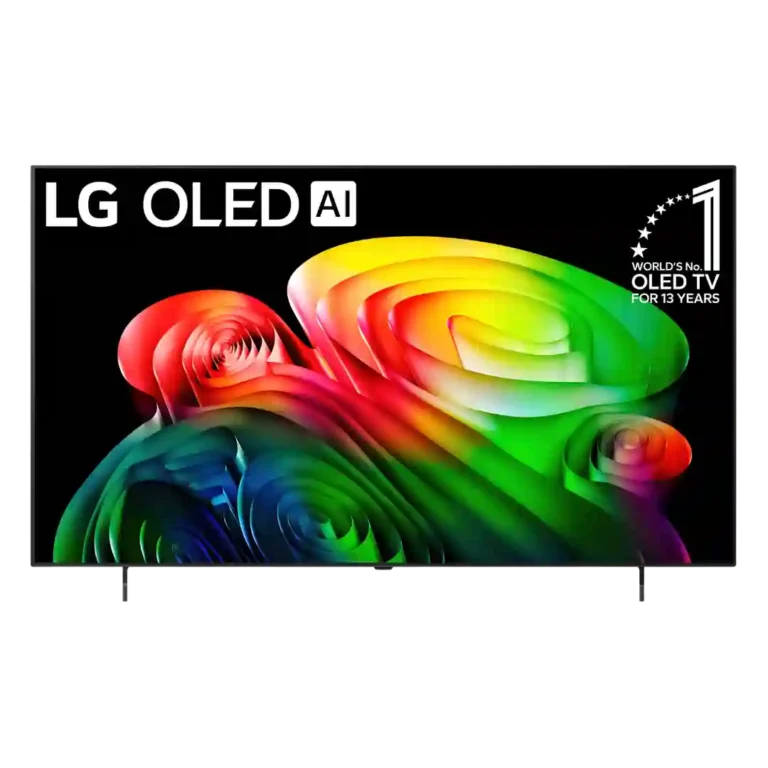
LG B6 TV Review
Bottom Line
Choose the LG B6 for excellent OLED gaming, deep blacks, and a polished smart platform. Skip it at full launch pricing if the cheaper B5 remains available, or if you need strong bright-room reflection control and built-in cinematic sound.
Best for console and PC gamers who want 4K 120Hz, VRR, low input lag, and OLED contrast without paying flagship prices. It also suits movie viewers in dimmer rooms who value deep blacks and vivid color.
Skip it for a strongly lit room with difficult reflections, or when built-in cinematic sound is a priority. Launch-price buyers should also compare remaining B5 stock and the local C6 price gap.
The LG B6 is a highly capable entry-level OLED whose strongest case is gaming: four HDMI 2.1 ports, 4K 120Hz, full VRR support, and exceptionally low input lag make it unusually complete at this tier. Its OLED blacks, contrast, color volume, and improved peak brightness also produce an impressive picture, especially in darker rooms. The compromises are meaningful rather than fatal. Reflection handling varies by environment, one unit showed a green tint, and the built-in speakers lack bass and width. Value is also price-sensitive: discounted B6E offers are excellent, but the older B5 can be smarter while stock lasts, and the C6 is the stronger upgrade where the price gap is small. Once discounted, the B6 becomes an easy recommendation for gamers and movie fans who plan to add a soundbar.
Feature Scorecards
Summary
75 reviewed features- Very positive 4.5-5.0 60% 45 features
- Positive 3.5-4.4 16% 12 features
- Neutral 2.5-3.4 12% 9 features
- Negative 1.5-2.4 11% 8 features
- Very negative below 1.5 1% 1 feature
Pros
-
Gaming performance is one of the TV’s clearest strengths, combining excellent picture quality, smooth movement, and highly responsive controls.
-
4K at 120Hz is supported across all four HDMI 2.1 ports and works smoothly with current consoles.
-
Four HDMI 2.1 ports are a major advantage, matching more expensive models and supporting advanced gaming features on every input.
-
All four HDMI inputs support HDMI 2.1 gaming features, an unusually complete setup for an entry-level OLED.
-
OLED pixel response is exceptionally fast, giving games sharp, immediate movement and highly responsive control.
-
VRR performs cleanly and removes visible tearing without adding perceptible lag.
-
The TV is an excellent 4K gaming display, supporting 4K at 120Hz while maintaining detailed, responsive gameplay.
-
Auto low-latency mode is included across the full gaming connection set, helping the TV switch into responsive play automatically.
-
The OLED panel is a major strength, delivering self-emissive contrast and image quality that reviewers consider superior to similarly priced LCD and QLED alternatives.
-
Game Optimizer is highly effective, reducing lag, improving frame-rate handling, and keeping controls smooth.
-
Input lag is superb, measured around 8.9ms at 4K 60Hz in boost mode, with no noticeable delay during play.
-
AMD FreeSync is included as part of the TV’s comprehensive VRR support.
-
Nvidia G-SYNC compatibility is included alongside FreeSync, making the TV well suited to PC and console gaming.
-
High-refresh-rate gaming works extremely well, with one reviewer sustaining 120 frames per second in a demanding PS5 title.
-
Operating-system performance is excellent, with fast navigation and no sluggishness reported.
-
webOS reliability is excellent, with no bugs encountered during extended testing.
-
The range includes large-screen options up to 83 inches, which reviewers praised for immersive viewing.
-
Black levels are outstanding, staying deep even in lit rooms while preserving visible detail within dark areas.
-
Colors look bold, deep, and highly vibrant, with animation and HDR material producing especially strong pop.
-
Four HDMI inputs provide ample connectivity, and reviewers considered the overall port selection sufficient for most setups.
-
OLED contrast is a standout, with bright highlights and dark tones balancing cleanly in demanding scenes.
-
The native 120Hz panel keeps fast sports and games smooth, and reviewers achieved stable high-frame-rate playback.
-
Motion stays clear and fluid, with little visible blur in games and smooth frame delivery in sports.
-
Remote response is excellent, with seamless device control and quick pointer-based navigation.
-
Major streaming services, local catch-up platforms, and apps such as Plex are well supported.
-
The trim, nearly bezel-less frame keeps attention focused on the picture.
-
AI search is genuinely helpful for finding settings and answers inside the TV’s user guide.
-
The VRR implementation is described as full-featured, though the reviews do not provide a precise operating range.
-
Fast sports and action are handled smoothly, with minimal artifacts and confident control during rapid gameplay.
-
Shadow detail is well preserved, allowing texture and subtle information to remain visible inside very dark scenes.
-
The thin panel mounts neatly on a wall and looks especially clean in that configuration.
-
Picture quality is consistently strong, with rich color, deep blacks, crisp detail, and an attractive OLED presentation. A green tint on one test unit keeps it from being uniformly excellent.
-
Dark-room viewing is excellent, where the OLED blacks, contrast, and Filmmaker Mode presentation look their best.
-
webOS 26 is fast, intuitive, and easy to navigate, with useful refinements and AI tools. Setup complexity and advertising are the main drawbacks.
-
Fine textures and skin tones look natural and refined. The presentation favors realism over the exaggerated brightness of some higher-end models.
-
Dolby Vision content looks vibrant and detailed, with strong highlights and saturated colors.
-
The gaming dashboard provides useful extra controls, including settings aimed at minimizing input delay.
-
Judder reduction is effective for both movies and sports, with different presets suiting each type of content.
-
LG’s motion interpolation works well when used selectively, reducing film judder without needing the strongest settings.
-
Value depends heavily on price and region. Deep discounts make it exceptional, but at launch the cheaper B5 or modestly pricier C6 can be smarter purchases.
-
The TV looks thin, elegant, and modern, with a premium OLED profile that fits easily into most rooms.
-
HDR has satisfying impact, with punchy highlights and rich color. It cannot match the brighter C6, but it remains convincing for this price tier.
-
The app catalog covers nearly everything most viewers are likely to need.
-
Picture and audio customization is flexible, and LG’s guided options make it easy to choose a preferred presentation.
-
Menus feel smooth and easier to navigate after the webOS 26 layout changes.
-
HDR support is broad, covering Dolby Vision, HDR10, and HLG. The main omission is HDR10+.
-
HDR brightness rises meaningfully over the B5 and reaches roughly 695–895 nits depending on mode and test method. Premium competitors remain much brighter.
-
HD and SDR material is sharpened effectively, producing crisper textures and stronger perceived contrast.
-
Two USB-A ports complement the generous HDMI selection and should be adequate for typical accessory use.
-
Build quality is generally good and close to the higher-end C series, though the rear finish and feet feel less substantial.
-
Dialogue is generally clear and easy to follow. The speech enhancement mode can help difficult mixes, though it degrades other frequencies.
-
Peak brightness is clearly improved over the B5, but opinions depend on context. It is brighter than prior budget OLEDs yet still noticeably dimmer than the C6 and other premium sets.
-
Image processing is useful overall, especially automatic picture adjustments, but aggressive sharpening can look artificial.
-
Lower-resolution video receives a useful boost in texture and color, but it does not approach true 4K detail.
-
The Magic Remote is capable and customizable, but opinions vary on its pointer and premium feel.
-
Color accuracy is mixed. One reviewer measured better accuracy than the C6, while another saw a noticeable green tint compared with the B5.
-
Personalized recommendations may become useful over time, but one reviewer did not test them long enough to judge their full value.
Cons
-
Daytime performance is usable thanks to improved brightness, especially in Standard or Vivid mode. Strong overhead lighting can still expose the reflective screen.
-
Fullscreen brightness improves only modestly and can vary by picture mode. Small highlights benefit more than sustained bright scenes.
-
Color gamut coverage is still good, but one measured result was unexpectedly lower than the B5.
-
Stand stability is disputed: one reviewer found the feet sturdy enough, while another lacked confidence around active pets.
-
Reflection handling drew conflicting impressions. One reviewer found the screen highly mirror-like under lab lights, while another thought it remained quite good in a harsh showroom.
-
The remote layout has avoidable annoyances, including missing dedicated input and mute buttons, though the customizable favorite button provides workarounds.
-
Dolby Atmos is supported, but the built-in speakers produce limited height and spatial effects.
-
HDR10+ is not supported, making it the one notable gap in an otherwise solid HDR format lineup.
-
The rear-firing speakers lose some volume and detail against the wall, reducing impact at louder levels.
-
The dual-foot stand is the weakest part of the physical design, feeling cheaper and less reassuring than a central pedestal.
-
Built-in sound is serviceable for everyday viewing but clearly trails the picture. Reviewers recommend a soundbar for fuller, more cinematic audio.
-
The widely spaced legs occupy more media-console space than the C6’s central stand.
-
Advertising remains intrusive, including a large home-screen banner and ad-heavy LG apps.
-
Bass is limited and thin, with only modest rumble during effects-heavy scenes.
-
The soundstage is narrow and rarely extends beyond the screen.
-
Glare resistance is a weakness under strong room lighting, with reflections remaining visible even during brighter content.
-
Account setup can be frustrating; app-assisted Google login failed for one reviewer and required manual completion.
-
Initial setup can be unusually frustrating, especially when pairing the ThinQ app and Google login.
FAQ
Is the LG B6 good for gaming?
Yes. All four HDMI 2.1 ports support 4K at 120Hz, VRR, ALLM, FreeSync, and G-SYNC, while measured input lag is about 8.9ms in boost mode.
Is the LG B6 bright enough for daytime viewing?
Brightness is improved over the B5, and Standard or Vivid mode can work during the day. Strong lights may still create distracting reflections, and the C6 is substantially brighter.
Does the LG B6 need a soundbar?
A soundbar is recommended for movies. Dialogue is generally clear, but bass is thin, the soundstage is narrow, and Dolby Atmos effects have limited impact through the built-in speakers.
Is the LG B6 better value than the LG B5?
That depends on current pricing. Reviewers prefer the much cheaper B5 while stock remains, but a discounted B6 or B6E becomes a strong value once the price gap narrows.
How good is webOS 26 on the LG B6?
webOS 26 is fast, intuitive, reliable, and well stocked with streaming apps. Its main drawbacks are prominent advertising and a setup process that can be frustrating.
Sample Expert Reviews We Analyzed
These are a few of the reviews included in our analysis.

Video Reviews
Article Reviews
Each year we see TV manufacturers release new models with new features, improved displays and an overall better package. After checking out...
- Review score
- 4.0
The best World Cup TV deal so far?
- Review score
- 4.5
A great OLED TV, but not the upgrade I was looking for
- Review score
- 4.1
LG’s B6 OLED is an impressive mid-budget TV that stacks up well against its more powerful counterpart, the C6. And while the C6 is certainly...
- Review score
- 4.3
Compared in Reviews
Products reviewers directly compared with this model, grouped into quick takeaways.
LG B5
- Worse: SDR brightness The B6 measures brighter than the previous B5 in SDR.
- Better: launch value The B5 offers similar performance for much less while remaining in stock.
LG C6
- Better: brightness The B6 is noticeably dimmer than the step-up C6.
- Better: overall upgrade and picture quality The C6 is the preferred upgrade for buyers who can afford its higher price.
C6
- Worse: measured color accuracy The B6 posts a slightly better measured Delta-E result than the C6.