If you want better Stability
Choose EarFun Wave Life Wireless Headphones. It scores 5.0 vs 2.0 for Stability, with a 3.6 overall score.
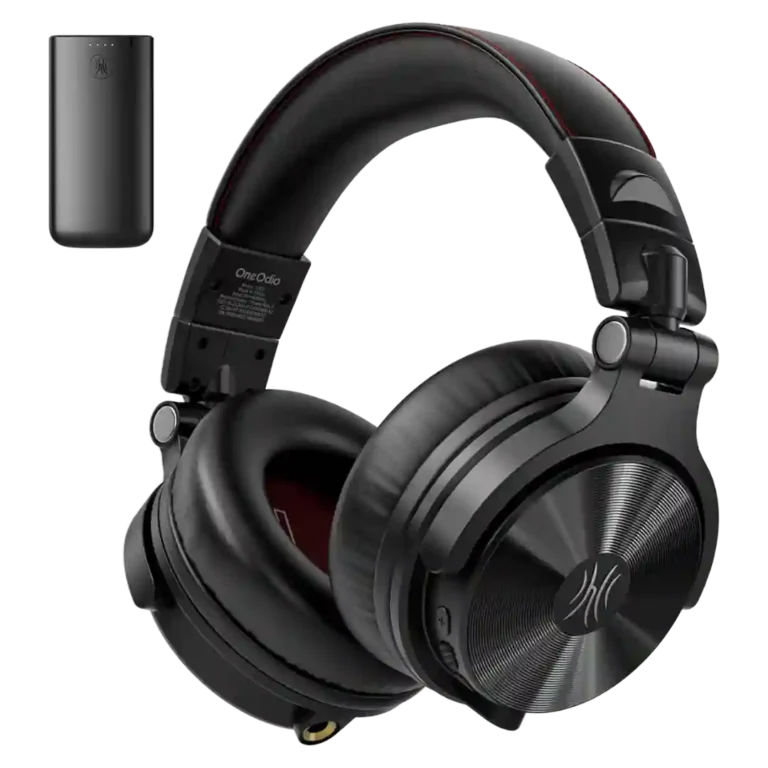
Choose the OneOdio Studio Max 2 if you need low-latency wireless monitoring, huge battery life, and flexible wired/Bluetooth use. Skip it if you need neutral pro mixing sound, ANC, compact travel cans, or all-day light comfort.
Best for DJs, producers, musicians and gamers who specifically need wireless monitoring with very low latency, long battery life and wired fallback. It also suits creators who value one headset that can move between instruments, mixers, computers and phones.
Not for buyers who want neutral reference headphones for critical mixing, compact lifestyle headphones, ANC travel cans or the cleanest sound for the money. Several reviews also warn that comfort, bulk and tuning can be dealbreakers for everyday listening.
The OneOdio Studio Max 2 is a specialist hybrid headphone, not a universal crowd-pleaser. Across reviews, its strongest wins are the 9ms transmitter mode, huge battery life, hard case, analog inputs and broad connectivity, all of which make it useful for DJs, producers, gamers and musicians who move around gear. The tradeoff is that the sound tuning is polarizing: some reviewers heard punch, detail and usable monitoring, while others heard static, muddiness, harsh highs or weak neutrality. Comfort and portability are similarly split because the soft pads and swiveling cups help, but the large plastic frame, headband pressure and lack of ANC limit everyday and travel appeal.
Compared with other Over-Ear Headphones, this product is above average in Dongle, Carry case quality, 3.5mm analog input availability, near average in Overall recommendation, Value for money, below average in Active noise cancellation, Replaceable pads/headband, Transparency mode quality.
| Attribute | This product | Category average | Difference |
|---|---|---|---|
| Active noise cancellation | 1.0 | 4.0 | -3.0 |
| Replaceable pads/headband | 1.5 | 4.0 | -2.5 |
| Transparency mode quality | 1.5 | 3.9 | -2.4 |
| Aesthetics / discreet profile | 2.2 | 4.1 | -1.9 |
| Integrated microphone | 2.0 | 3.9 | -1.9 |
| Headband padding quality | 2.2 | 3.9 | -1.7 |
| Stability | 2.0 | 3.8 | -1.8 |
| Volume output | 2.4 | 4.0 | -1.6 |
Choose EarFun Wave Life Wireless Headphones. It scores 5.0 vs 2.0 for Stability, with a 3.6 overall score.
Choose Yamaha YH-L500A Headphones. It scores 4.5 vs 3.5 for Comfort during long use, with a 4.1 overall score.
Choose 1MORE SonoFlow-Pro Headphones. It scores 4.5 vs 2.2 for Aesthetics / discreet profile, with a 3.8 overall score.
Choose DALI IO-12 Headphones. It scores 4.5 vs 1.5 for Replaceable pads/headband, with a 4.1 overall score.
Products reviewers directly compared with this model, grouped into quick takeaways.
Yes. Multiple reviewers praised the 9ms transmitter mode, and one measured it as matching the claim after accounting for interface latency.
It can help with tracking, DJing and monitoring, but reviewers repeatedly said it is not a flat reference headphone for critical mix or mastering decisions.
Battery life is one of the clearest strengths. Reviews repeatedly described the 120-hour Bluetooth rating as remarkable, absurd or something they rarely had to think about.
Review evidence indicates no active noise cancellation. Transparency evidence was limited and weak, with one reviewer struggling to understand a nearby person.
The app helps with EQ and settings, and custom EQ can tame the sound. However, reviewers also called it basic, barebones, unattractive or occasionally unstable.
Only in a limited way. The hard case and battery help, but several reviewers found the headphones bulky, large, non-discreet and less suitable without ANC.
These are a few of the reviews included in our analysis.





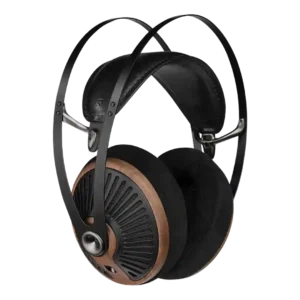
Choose the 105 Silva for beautiful, repairable construction, superb comfort, easy driveability, and an engaging spacious sound. Skip it if you need isolation, balanced connectivity, heavy sub-bass, or consistently smooth...
Pros: Volume output, Carry case quality
Cons: Connectivity options, Noise isolation (passive)
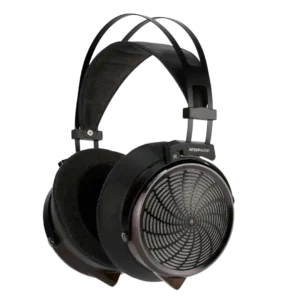
Best for spacious, detailed home listening, excellent comfort, and premium construction. Skip it for commuting, private shared-space use, built-in voice chat, or subwoofer-like bass impact.
Pros: Overall satisfaction, Glasses and hat compatibility
Cons: Travel friendliness, Sound leakage
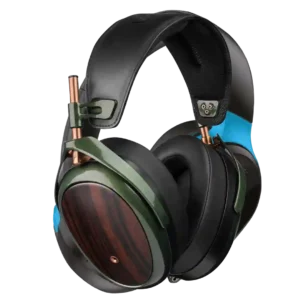
Choose the Strada for premium build, long-session comfort, strong isolation and an unusually spacious closed-back presentation. Skip it if you have a small head, dislike energetic treble, or want consistently...
Pros: Hinge durability, Durability over time
Cons: Ear cup swivel/rotation range, Portability/foldability
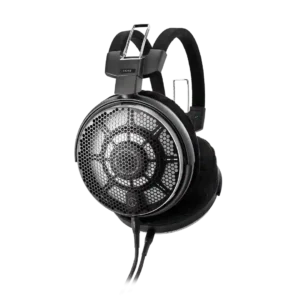
Best for huge open-back bass, spacious imaging, and featherweight comfort with a serious amplifier. Skip it if $3,499, proprietary cables, or headband hotspots outweigh its rare bass-and-space combination.
Pros: Instrument separation, Weight comfort
Cons: Travel friendliness, Sound leakage