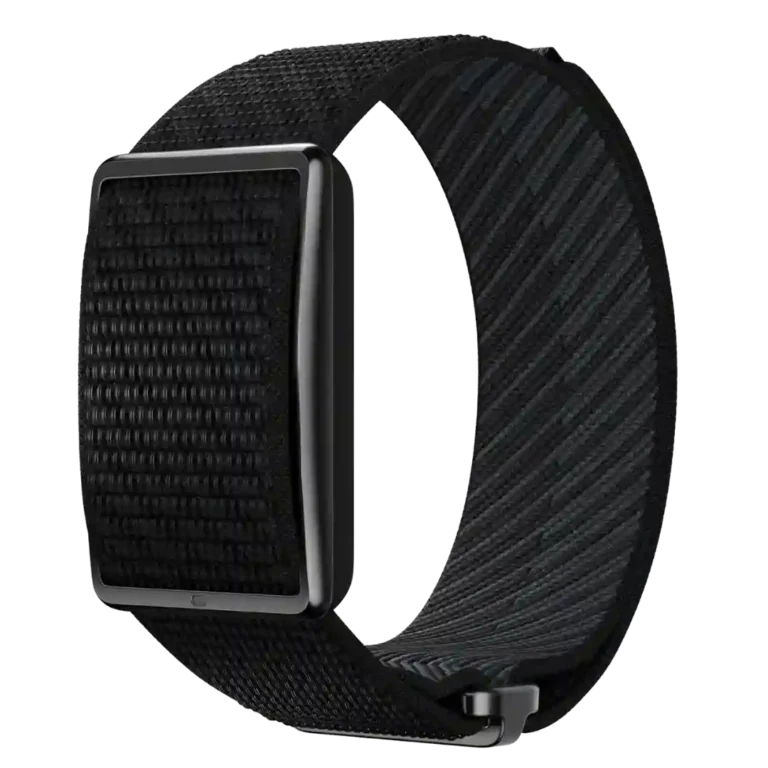
- Cheaper: price and alternative choice The reviewer points to the Amazfit Helio Strap as a cheaper subscription-free alternative.
- Cheaper: price The Loop costs more than the Amazfit Helio Strap, which is cited as a lower-priced subscription-free option.
- Better: software and overall experience The reviewer says the cheaper Amazfit Helio Strap exposes the Loop's app and experience weaknesses.
Polar Loop Review
Bottom Line
Choose the Polar Loop for a comfortable, screen-free tracker with weeklong battery life and no subscription. Skip it if you need polished app guidance, reliable automatic workout logging, or wrist HR precision for hard training.
Best for casual wellness users or existing Polar watch owners who want a discreet, comfortable band for sleep, daily activity, and recovery trends without another subscription.
Not for serious athletes who need reliable automatic workout logs, polished coaching, real-time training feedback, or dependable wrist heart-rate accuracy during intense sessions.
Across reviews, the Polar Loop lands as a comfortable, attractive, subscription-free band that works best as a quiet daily health companion. Battery life is consistently praised, sleep timing is often solid, and several reviewers like the lightweight, screenless design. The tradeoff is that a screenless device depends heavily on its app, and Polar Flow repeatedly draws criticism for dated presentation, weak trend surfacing, confusing navigation, and less actionable guidance than Whoop-style rivals. Workout tracking is the biggest functional weakness: automatic detection can miss starts, split sessions, create duplicates, or mislabel ordinary activity, while wrist heart-rate accuracy ranges from solid to poor depending on workout intensity and placement. The overall evidence points to promising hardware held back by software and training-tracking reliability.
Compared in Reviews
Products reviewers directly compared with this model, grouped into quick takeaways.
- More expensive: long-term cost The reviewer argues the Loop becomes cheaper over time because Whoop 5.0's subscription cost adds up.
- Better: battery life and health monitoring The Loop is cheaper, but Whoop 5.0 is credited with stronger battery life and broader monitoring.
- More expensive: price The Loop is positioned as considerably cheaper than buying into Whoop 5.0.
- Similar: sleep timing Polar's sleep timing is said to align with Apple Watch Ultra 3 during testing.
- Similar: heart rate accuracy during running During a steady run, the Loop aligned with Apple Watch Ultra 3 and the reference strap.
Feature Scorecards
Summary
42 reviewed features- Very positive 4.5-5.0 7% 3 features
- Positive 3.5-4.4 40% 17 features
- Neutral 2.5-3.4 24% 10 features
- Negative 1.5-2.4 26% 11 features
- Very negative below 1.5 2% 1 feature
Pros
-
The no-subscription model was the strongest value driver and was repeatedly praised as the Loop’s biggest advantage over Whoop-style rivals.
-
Comfort was one of the strongest positives, with reviewers repeatedly saying the Loop is light, soft, forgettable, and comfortable for all-day and sleep wear.
-
Build quality was praised for solid hardware, stainless steel elements, premium feel, and a well-built case.
-
Charging speed was viewed positively, with reviewers reporting fast or roughly one-hour charging.
-
Weight was consistently positive where discussed, with reviewers emphasizing its light, low-profile feel.
-
Battery life was consistently praised, usually landing around a week and sometimes longer, even if rivals like Whoop can last longer.
-
Design and appearance were mostly praised as sleek, stylish, premium, or attractive, though one reviewer disliked how it looked with dressier clothing.
-
Water resistance was generally viewed positively for showering, swimming, sweat, rain, and quick drying, though it was not framed as advanced swim tracking.
-
Durability was lightly but positively discussed through rugged design language and WR30 water-resistance framing.
-
Resting or low heart-rate data drew limited but positive evidence, with reviewers saying it matched other trackers or showed nothing unusual.
-
Size options received limited positive evidence because reviewers appreciated the spare or two included strap sizes.
-
Recovery insights such as Nightly Recharge were often considered useful, especially for sleep-based recovery, though app presentation and workout-data gaps weakened confidence.
-
Sleep timing was widely praised as useful or accurate, but a few reviewers reported inconsistent or basic sleep tracking, especially in negative video reviews.
-
Band quality was mostly positive for softness, stretch, security, and included straps, but the swapping mechanism and initial adjustment caused some complaints.
-
Charging convenience was generally acceptable, helped by a good magnetic cable or shared Polar cable, though removing the band to charge was a drawback.
-
Fit was mostly positive once adjusted, including reliable sensor fit, though one reviewer found buckle fitting a little painful.
-
Step counts were often close enough for daily trends, though some reviewers saw a few-hundred-step variance or cautioned that workout step equivalents may distort true counting.
-
Readiness-style scoring through Nightly Recharge was praised by several reviewers, but others found the chart simplistic or missed HRV-style guidance.
-
Sleep-stage tracking was seen as useful enough for trends by some reviewers, but others warned consumer sleep-stage precision should be treated cautiously.
-
Calorie estimates were usually treated as useful or close to other trackers, with one reviewer calling the numbers wildly different from Apple’s approach.
Cons
-
Heart-rate accuracy was the most split metric: some runs and steady sessions matched references well, while wrist use, intervals, weights, and high-intensity efforts produced misses or spikes.
-
Value for money was divided: no subscription and lower Whoop cost helped, but the app, automatic tracking, and cheaper alternatives made several reviewers hesitate.
-
Reviewers generally found daily activity data acceptable for casual lifestyle tracking, but several noted limits or odd behavior in the broader activity-tracking experience.
-
Workout mode variety is broad when started manually, but reviewers disliked the limited feature set, lack of shortcuts, or failure to apply labels automatically.
-
Customization was mixed: color and strap options were appreciated, but reviewers repeatedly wanted official bicep bands, more accessories, or easier swapping.
-
Overall reliability was mixed: some reviews called it capable or good enough, while others found it limited, not ready, or half-tested.
-
App alerts were mixed; battery and inactivity alerts could help, but reviewers disliked that reminders rely on the phone and lack on-band vibration.
-
Fitness coaching evidence was mixed: Polar’s training-load science impressed some, while others found guidance too basic, confusing, or not beginner-friendly.
-
Activity reminders were lightly discussed and split: app-based inactivity nudges could be useful, strict, or ineffective because the band itself does not vibrate.
-
Pairing reliability was mixed: setup could be easy, but reviewers also cited pairing/sync problems or confusing sensor-pairing steps.
-
Companion app quality was the clearest consensus problem: Polar Flow contains data, but reviewers repeatedly found it dated, disjointed, poorly optimized, or not useful enough.
-
Health trend insight was a repeated app weakness, with reviewers wanting better dashboards, long-term trends, wellness guidance, and easier access to important metrics.
-
The user interface was one of the most criticized areas, repeatedly described as dated, clumsy, cluttered, hard to read, or less polished than rivals.
-
Automatic workout detection was inconsistent: a few reviewers found it usable, but many reported late starts, false positives, duplicate logs, missed portions, or unusable behavior.
-
Workout tracking accuracy was a major weakness, with frequent reports of missed workout portions, duplicate sessions, misclassified activity, and limited manual workout usefulness.
-
Swimming support was weak beyond water exposure; one review noted missing swim metrics and another found open-water HR performance poor.
-
Blood oxygen tracking was a recurring omission, and reviewers framed the lack of SpO2 as a limitation versus other wearables.
-
Data syncing drew limited but negative evidence, including stopped syncing, forum reports of syncing issues, and mobile/web mismatch during test data export.
-
Controls are limited by the no-button design, and one reviewer specifically saw the lack of tap or gesture controls as a missed opportunity.
-
Goal tracking received limited negative evidence, with one reviewer finding activity goals too easy to exceed and wanting step count included more directly.
-
Strava compatibility worked but was hurt by automatic detection noise, with one reviewer turning off auto-sync after too many unwanted activities.
-
Alarm function was a clear weakness because multiple reviewers criticized the absence of vibration or a wake alarm.
Compared With Category Average
Compared with other Activity & Fitness Trackers, this product is below average in alarm function, goal tracking, user interface.
Summary
8 compared features- Above average 0.4+ pts higher 0% 0 features
- Same as average within 0.3 pts 0% 0 features
- Below average 0.4+ pts lower 100% 8 features
| Attribute | This product | Category average | Difference |
|---|---|---|---|
| alarm function | 1.0 | 3.6 | -2.6 |
| goal tracking | 2.0 | 4.2 | -2.2 |
| user interface | 2.3 | 4.0 | -1.7 |
| companion app quality | 2.4 | 3.9 | -1.6 |
| Strava compatibility | 2.0 | 3.8 | -1.8 |
| pairing reliability | 2.7 | 4.3 | -1.7 |
| health trend insights | 2.4 | 3.8 | -1.4 |
| blood oxygen tracking | 2.2 | 3.8 | -1.6 |
FAQ
Does the Polar Loop require a subscription?
No. Reviewers repeatedly praised the one-time purchase model and the fact that core tracking does not require a mandatory monthly subscription.
How good is the battery life?
Battery life was one of the strongest positives. Most reviewers saw about a week or the advertised eight days, and one reported 10 days on a charge.
Is the Polar Loop comfortable to wear all day and night?
Yes. Comfort was widely praised, with reviewers describing the Loop as light, soft, forgettable, and easy to wear during sleep.
Is the heart-rate tracking accurate?
It depends. Some reviewers saw strong results on steady runs or when worn higher on the arm, while others found wrist accuracy unreliable during intervals, weights, cycling, or rapid heart-rate changes.
How reliable is automatic workout detection?
This was a major weakness. Reviewers reported late starts, missed workout sections, duplicated sessions, false positives, and generic workout labels.
Is the Polar Flow app good enough for a screenless tracker?
Most reviewers said no. The app contains useful data, but it was repeatedly described as dated, clumsy, disjointed, or not tailored enough to make the screenless experience feel polished.
Is it better for fitness training or casual wellness?
The evidence favors casual wellness. It can track sleep, activity, and recovery trends, but reviewers often recommended a running watch, chest strap, or more mature ecosystem for serious training.
Sample Expert Reviews We Analyzed
These are a few of the reviews included in our analysis.
Video Reviews
- Review score
- 1.7/5
- Review score
- 3.9/5
- Review score
- 3.8/5
- Review score
- 3.4/5
Article Reviews
Consider This Instead
If you want better alarm function
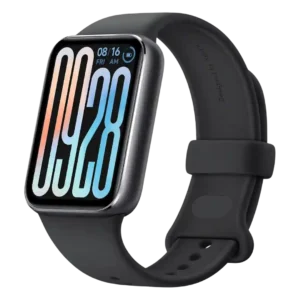
Choose Xiaomi Smart Band 9. It scores 4.4 vs 1.0 for alarm function, with a 4.0 overall score.
If you want better data syncing reliability
Choose Oura Ring 4. It scores 5.0 vs 2.0 for data syncing reliability, with a 4.1 overall score.
If you want better companion app quality
Choose Fitbit Inspire 3. It scores 4.6 vs 2.4 for companion app quality, with a 3.9 overall score.
If you want better user interface
Choose Xiaomi Smart Band 10. It scores 4.4 vs 2.3 for user interface, with a 3.9 overall score.
Overall Top Activity & Fitness Trackers Alternatives
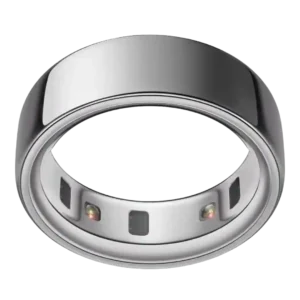
Best for comfortable, screen-free sleep and recovery insight with a polished app. Skip it if you want subscription-free value, serious training metrics, or a ring that stays pristine.
Pros: GPS accuracy, swimming tracking
Cons: alarm function, calorie tracking usefulness
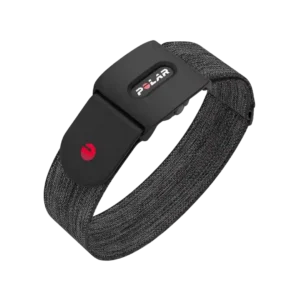
Best for chest-strap-like heart-rate data in a comfortable armband with long battery life. Skip it if you need smartwatch features, effortless app guidance, built-in GPS, or flawless high-intensity lifting response.
Pros: charging speed, subscription value
Cons: size options, data syncing reliability
Best for long battery life, comfort, sleep/apnea insights, haptic health nudges, and no subscription. Skip it for serious workout heart-rate accuracy, full phone notifications, or a true silent alarm.
Pros: pairing reliability, charging speed
Cons: alarm function, Strava compatibility
Best for a cheap, light tracker with great battery life, a bright display, and solid basic fitness data. Skip it if you need built-in GPS, advanced smartwatch features, or consistently...
Pros: subscription value, cadence tracking
Cons: fit, GPS accuracy