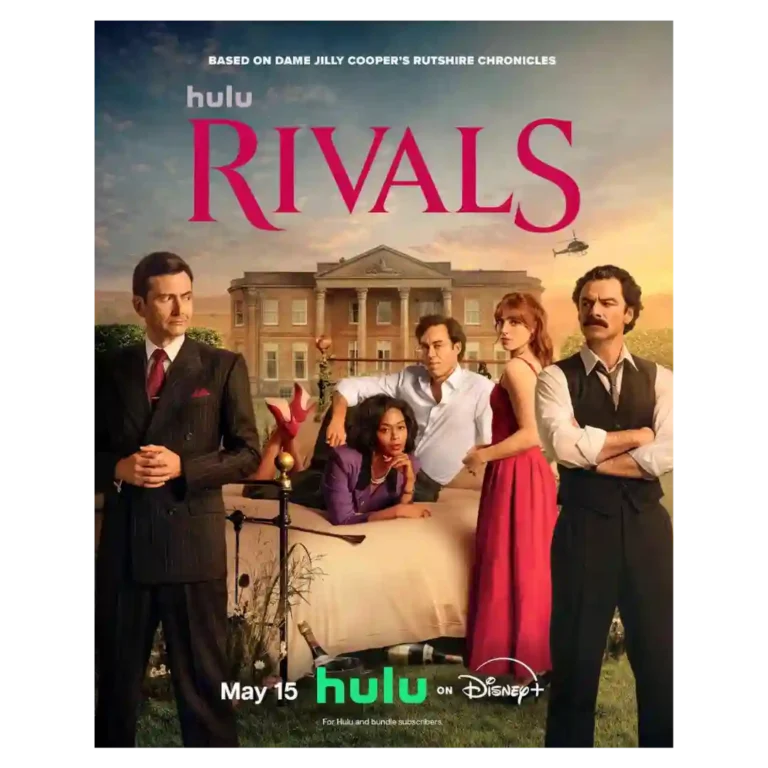
Rivals, Season 2

Rivals, Season 2 Review

Brand: Hulu
Released: May 15, 2026
Updated: 1 hour ago
4.1
Overall review score
179
Review evidence points
49
Scored features
25
Expert reviews

Bottom Line

Choose it for exuberant acting, sharp comedy, lavish 1980s style, and richer character drama. Skip it if crowded storylines, abundant sex, or a frustrating split-season release outweigh the fun.

Best for

Best for adults who enjoy glossy ensemble soaps, outrageous British comedy, tangled romance, 1980s style, and morally messy character drama.

Not for

Not ideal for viewers seeking restrained sexual content, realistic drama, simple plotting, or a complete season that can be watched without a long release interruption.

Verdict

Rivals Season 2 largely improves on its breakout first run by giving the ensemble more emotional depth without sacrificing the outrageous comedy, sex, glamour, and corporate scheming that define Rutshire. David Tennant, Alex Hassell, Emily Atack, Claire Rushbrook, and the broader cast earn strong praise, while the costumes, sets, soundtrack, and dialogue make the 1980s world feel vivid and distinctive. The main tradeoffs are structural: too many simultaneous relationships can blur together, several supporting stories feel rushed, and the split weekly release interrupts a naturally bingeable soap. Most critics embrace the excess, though one finds it vapid, and Monica’s midseason death draws serious criticism for mishandling queer representation.

Feature Scorecards

Summary

49 reviewed features
  • Very positive 4.5-5.0
    24 (49%)
  • Positive 3.5-4.4
    16 (33%)
  • Neutral 2.5-3.4
    9 (18%)

Pros

  • 5.0
    based on 3 reviews
    critic appeal: 5.0, based on 3 reviews
    The season drew overwhelmingly enthusiastic notices, including several maximum-score reactions and claims that it improves on the first season.
  • 5.0
    based on 1 review
    score quality: 5.0, based on 1 review
    The playful operatic vocal score gives the show a distinctive comic voice that comments on the onscreen excess.
  • 4.9
    based on 5 reviews
    production design: 4.9, based on 5 reviews
    Lavish estates, pastel pools, polo fields, television studios, and tactile period details create an immersive, affluent 1980s world.
  • 4.9
    based on 5 reviews
    renewal interest: 4.9, based on 5 reviews
    Enthusiasm for more episodes is very high, with several critics eager for the second half and a future season.
  • 4.8
    based on 7 reviews
    humor: 4.8, based on 7 reviews
    The comedy ranges from sharp dialogue to full physical farce, with many critics highlighting the season’s relentless laughs and eccentric English silliness.
  • 4.8
    based on 6 reviews
    main cast performance: 4.8, based on 6 reviews
    The leads bring swagger, menace, vulnerability, romance, and comic warmth to an intentionally exaggerated world. David Tennant and Alex Hassell receive especially strong praise.
  • 4.8
    based on 3 reviews
    cast chemistry: 4.8, based on 3 reviews
    The strongest romantic pairings feel unexpectedly tender and emotionally charged, especially Lizzie and Freddie and the scenes between Rupert and Taggie.
  • 4.8
    based on 3 reviews
    dialogue quality: 4.8, based on 3 reviews
    The dialogue is consistently witty, cheeky, and packed with knowingly outrageous period jokes.
  • 4.8
    based on 2 reviews
    audience appeal: 4.8, based on 2 reviews
    This is exuberant grown-up escapism for viewers who enjoy glamorous soap, broad comedy, and unapologetic excess.
  • 4.7
    based on 5 reviews
    episode structure: 4.7, based on 5 reviews
    Large comic set pieces, interlocking secrets, and multiple revelations are handled with impressive control, particularly in the dinner-party episode.
  • 4.7
    based on 3 reviews
    soundtrack quality: 4.7, based on 3 reviews
    Carefully chosen 1980s songs reinforce the period, sharpen jokes, and heighten romance and conflict.
  • 4.7
    based on 3 reviews
    world-building: 4.7, based on 3 reviews
    Rutshire feels expansive and lived-in, with interlocking homes, companies, political circles, and social hierarchies that support the sprawling ensemble.
  • 4.6
    based on 10 reviews
    acting quality: 4.6, based on 10 reviews
    The ensemble is widely praised for committing fully to the show’s heightened tone while keeping its characters human. One sharply negative take found some performances embarrassed by the material.
  • 4.6
    based on 5 reviews
    supporting cast performance: 4.6, based on 5 reviews
    The expanded ensemble is a major strength, with Claire Rushbrook, Emily Atack, Lisa McGrillis, Bella Maclean, and others turning quieter roles into memorable highlights.
  • 4.5
    based on 4 reviews
    costume design: 4.5, based on 4 reviews
    Big hair, crushed velvet, bright florals, and deliberately tacky fashion make the 1980s setting vivid, funny, and instantly recognizable.
  • 4.5
    based on 4 reviews
    faithfulness to source material: 4.5, based on 4 reviews
    The adaptation preserves Jilly Cooper’s wit, sensuality, class satire, and larger-than-life characters while making thoughtful modernizing changes.
  • 4.5
    based on 3 reviews
    writing quality: 4.5, based on 3 reviews
    The writing successfully juggles comedy, melodrama, romance, satire, and character depth. Occasional overcrowding and rushed subplots are the main weaknesses.
  • 4.5
    based on 2 reviews
    drama quality: 4.5, based on 2 reviews
    The corporate feud, affairs, betrayals, and emotional fallout create rich soapy drama without abandoning the show’s playful tone.
  • 4.5
    based on 2 reviews
    plot twists: 4.5, based on 2 reviews
    Reversals, betrayals, scandals, and romantic shifts remain juicy and frequently jaw-dropping.
  • 4.5
    based on 1 review
    directing quality: 4.5, based on 1 review
    The best set pieces, especially the crowded dinner-party farce, are staged with precise comic timing and escalating visual chaos.
  • 4.5
    based on 1 review
    lore depth: 4.5, based on 1 review
    Rutshire expands beyond the central feud, adding new histories, families, social layers, and links to other Cooper stories.
  • 4.5
    based on 1 review
    media scrutiny portrayal: 4.5, based on 1 review
    Rupert’s public destruction shows how scandal, broadcasting, and political image can be weaponized to dismantle a person’s career and relationships.
  • 4.5
    based on 1 review
    plot originality: 4.5, based on 1 review
    Its unusual blend of 1980s broadcasting politics, country-house soap, sexual farce, and social commentary gives the series a distinctive identity.
  • 4.5
    based on 1 review
    season length: 4.5, based on 1 review
    The expanded episode order gives the story more room to deepen characters and broaden Rutshire beyond the first season.
  • 4.3
    based on 11 reviews
    character development: 4.3, based on 11 reviews
    Rupert, Monica, Maud, Taggie, Sarah, and several supporting women receive richer, more mature arcs. The season is strongest when it lets the glamorous surface give way to vulnerability and consequence.
  • 4.3
    based on 7 reviews
    theme depth: 4.3, based on 7 reviews
    Beneath the glossy debauchery, the season explores class, power, sexism, hidden sexuality, loyalty, consequences, and the fragility of love.
  • 4.3
    based on 3 reviews
    bingeability: 4.3, based on 3 reviews
    The tangled romances and escalating feuds are highly compulsive. The fragmented release schedule makes the season less satisfying to consume week by week.
  • 4.2
    based on 11 reviews
    entertainment value: 4.2, based on 11 reviews
    Most critics find the season irresistibly funny, glamorous, and addictive. A small minority sees the same excess as vapid, exhausting, or empty.
  • 4.2
    based on 5 reviews
    genre satisfaction: 4.2, based on 5 reviews
    As a glossy bonkbuster and heightened prime-time soap, the season delivers sex, scandal, comedy, romance, and melodrama with confidence.
  • 4.1
    based on 8 reviews
    story quality: 4.1, based on 8 reviews
    The season is widely regarded as a confident, richer continuation that adds darker consequences and more complex relationships. A few critics find it looser or less substantial.
  • 4.0
    based on 3 reviews
    modern political framing: 4.0, based on 3 reviews
    The 1987 election, class hierarchy, workplace sexism, and Thatcher-era prejudice add context and sharper stakes, though the satire can remain soft.
  • 4.0
    based on 2 reviews
    visual style: 4.0, based on 2 reviews
    The hyper-saturated palette, sweeping countryside, playful camerawork, and extravagant interiors create a bold look, though some flourishes can be too much.
  • 4.0
    based on 1 review
    cinematography: 4.0, based on 1 review
    Inventive camera movement and bold compositions add energy and emotional emphasis. A few flourishes are so obvious that they feel heavy-handed.
  • 4.0
    based on 1 review
    continuity: 4.0, based on 1 review
    Season 2 resumes the established feuds, romances, and Rutshire tone smoothly, making the expanded story feel like a confident continuation.
  • 4.0
    based on 1 review
    franchise connection: 4.0, based on 1 review
    Hints from the wider Rutshire Chronicles suggest an appealing path toward a broader Jilly Cooper television universe.
  • 4.0
    based on 1 review
    screenplay quality: 4.0, based on 1 review
    The scripts balance sharp dialogue, eccentric jokes, emotional turns, and complicated ensemble plotting with considerable skill.
  • 4.0
    based on 1 review
    suspense: 4.0, based on 1 review
    Escalating revenge, political scandal, and unresolved relationships keep the season tense and leave viewers eager for the remaining episodes.
  • 3.8
    based on 2 reviews
    realism: 3.8, based on 2 reviews
    The show is knowingly cartoonish and occasionally implausible, but most critics see that unreality as part of its charm rather than a flaw.
  • 3.6
    based on 5 reviews
    emotional impact: 3.6, based on 5 reviews
    Greater vulnerability and consequence give the season more heart, especially in its romances and family conflicts. Monica’s death lands as anger and disappointment rather than satisfying tragedy.
  • 3.5
    based on 5 reviews
    cultural representation: 3.5, based on 5 reviews
    The show gives women and marginalized characters more space while engaging with period sexism and homophobia. Monica’s death is a major exception, criticized as a dated queer-character trope.

Cons

  • 3.4
    based on 9 reviews
    sexual content level: 3.4, based on 9 reviews
    The abundant sex and nudity are central to the show’s comic identity and are often embraced as part of the fun. Some critics find the excess tiring, while others miss the first season’s freer erotic energy.
  • 3.3
    based on 2 reviews
    accountability handling: 3.3, based on 2 reviews
    The season generally deepens its moral stakes by making selfish choices carry consequences. Monica’s abrupt death, however, is criticized for cutting off her agency rather than completing her arc.
  • 3.0
    based on 2 reviews
    accent authenticity: 3.0, based on 2 reviews
    Hayley Atwell fits Helen well, but her American accent is inconsistent and occasionally slips.
  • 3.0
    based on 2 reviews
    cliffhanger effectiveness: 3.0, based on 2 reviews
    The season creates strong anticipation and memorable shocks, but Monica’s episode-six ending is criticized as harmful and dramatically unjustified.
  • 3.0
    based on 2 reviews
    episode pacing: 3.0, based on 2 reviews
    The central rivalry moves well, but some secondary relationships are rushed or denied enough screen time.
  • 3.0
    based on 1 review
    editing quality: 3.0, based on 1 review
    Most scenes move briskly, but one ambitious dinner-party sequence interrupts its own rhythm with distracting asides.
  • 2.8
    based on 6 reviews
    plot clarity: 2.8, based on 6 reviews
    The many affairs, business loyalties, family histories, and new characters can be difficult to track. The central Tony-Rupert-Cameron conflict remains clear enough to anchor the chaos.
  • 2.8
    based on 6 reviews
    season pacing: 2.8, based on 6 reviews
    Story momentum is generally strong, but the hybrid weekly and split-season release pattern is repeatedly criticized as confusing and frustrating.
  • 2.5
    based on 1 review
    character consistency: 2.5, based on 1 review
    Most characters retain recognizable flaws while gaining depth, though Taggie’s repeated pining can feel tiresome and overly static.

Cast & Creators

  • Author / Executive Producer
    5.0
    based on 2 reviews
    Jilly Cooper: 5.0, based on 2 reviews
    Cooper’s influence is felt throughout the adaptation’s wit, sensuality, class detail, and character depth. The season is viewed as a fitting continuation of her world.
  • Composer
    5.0
    based on 1 review
    Jack Halama: 5.0, based on 1 review
    Halama’s cod-operatic vocal score gives the series a playful, distinctive musical commentary on its sexual and social chaos.
  • Composer
    5.0
    based on 1 review
    Natalie Holt: 5.0, based on 1 review
    Holt’s cod-operatic vocal score gives the series a playful, distinctive musical commentary on its sexual and social chaos.
  • Rupert Campbell-Black
    4.9
    based on 4 reviews
    Alex Hassell: 4.9, based on 4 reviews
    Hassell is repeatedly singled out for making Rupert charismatic, vulnerable, and increasingly three-dimensional. His chemistry and emotional transparency turn the reformed-cad arc into a season highlight.
  • Sarah Stratton
    4.8
    based on 3 reviews
    Emily Atack: 4.8, based on 3 reviews
    Atack receives some of the season’s strongest praise for making Sarah sympathetic, devastating, and hilarious, particularly during the dinner-party farce.
  • Tony Baddingham
    4.8
    based on 5 reviews
    David Tennant: 4.8, based on 5 reviews
    Tennant enthusiastically embraces Tony’s full villain turn, chewing scenery with enough charisma and humor to make the character’s cruelty entertaining.
  • Monica Baddingham
    4.5
    based on 5 reviews
    Claire Rushbrook: 4.5, based on 5 reviews
    Rushbrook’s Monica is widely praised as quietly moving, wounded, manipulative, and increasingly dangerous. Her controlled performance makes Monica one of the season’s standout supporting characters.
  • Taggie O’Hara
    4.5
    based on 3 reviews
    Bella Maclean: 4.5, based on 3 reviews
    Maclean keeps Taggie as the show’s quiet heart while adding maturity and new shades to a previously passive character.
  • Freddie Jones
    4.5
    based on 3 reviews
    Danny Dyer: 4.5, based on 3 reviews
    Dyer brings comic relief, warmth, and unexpected romantic tenderness to Freddie, especially opposite Katherine Parkinson.
  • Lizzie Vereker
    4.5
    based on 1 review
    Katherine Parkinson: 4.5, based on 1 review
    Parkinson remains a major emotional asset, making Lizzie’s secret romance with Freddie unexpectedly tender and moving.
  • Valerie Jones
    4.5
    based on 1 review
    Lisa McGrillis: 4.5, based on 1 review
    McGrillis is highlighted as a comic supporting standout, turning Val’s vulgarity and social striving into memorable entertainment.
  • James Vereker
    4.5
    based on 1 review
    Oliver Chris: 4.5, based on 1 review
    Chris is praised for making James brilliantly repellent, using committed comic unpleasantness to sharpen the farce.
  • Helen Gordon
    4.0
    based on 2 reviews
    Hayley Atwell: 4.0, based on 2 reviews
    Atwell is considered an excellent fit for Helen and integrates smoothly into the ensemble, although her American accent is inconsistent.
  • Malise Gordon
    4.0
    based on 1 review
    Rupert Everett: 4.0, based on 1 review
    Everett slots smoothly into the ensemble as Malise and adds useful history and pressure to Rupert’s storyline.
  • Declan O’Hara
    3.3
    based on 2 reviews
    Aidan Turner: 3.3, based on 2 reviews
    Turner gives Declan a grounded, sensible presence that steadies the show’s excess, though one hostile review felt he looked embarrassed by the material.
  • Maud O’Hara
    3.3
    based on 2 reviews
    Victoria Smurfit: 3.3, based on 2 reviews
    Smurfit is praised for Maud’s stage work and charged scenes with Declan, though one strongly negative critic thought she seemed embarrassed by the material.

Compared With Category Average

Compared with other TV Shows, this product is above average in dialogue quality, episode structure, season length, near average in sexual content level, acting quality, below average in cliffhanger effectiveness, character consistency, editing quality.

Summary

48 compared features
  • Above average 0.4+ pts higher
    29 (60%)
  • Same as average within 0.3 pts
    15 (31%)
  • Below average 0.4+ pts lower
    4 (8%)

Largest category differences

Attribute This product Category average Difference
dialogue quality 4.8 3.4 +1.4
episode structure 4.7 3.4 +1.3
season length 4.5 3.1 +1.4
humor 4.8 3.7 +1.1
critic appeal 5.0 3.8 +1.2
writing quality 4.5 3.4 +1.1
score quality 5.0 3.9 +1.1
cliffhanger effectiveness 3.0 4.0 -1.0

Consider This Instead

If you want better sexual content level

Choose Dark Winds, Season 4. It scores 4.8 vs 3.4 for sexual content level, with a 4.4 overall score.

Compare

If you want better emotional impact

Choose Human Vapor, Season 1. It scores 4.5 vs 3.6 for emotional impact, with a 3.8 overall score.

Compare

Compared in Reviews

Products reviewers directly compared with this model, grouped into quick takeaways.

Succession

  • Compared: class conflict and comic style Its wealthy power struggle is framed as Succession filtered through broader British sex comedy.
  • Compared: tone and corporate rivalry The show is likened to Succession with a wilder, more comedic 1980s personality.

Bridgerton

  • Similar: split-season release schedule Its release pattern is compared with Bridgerton’s split-season approach, but judged less viewer-friendly.

Killing Eve

  • Compared: queer-character death trope The Monica storyline is compared with Killing Eve as another example of the criticized trope.

FAQ

Is Season 2 better than Season 1?

Most critics consider it at least as entertaining and often richer, with stronger character development and broader world-building. A few miss the first season’s lighter, more concentrated energy.

Is it still very sexually explicit?

Yes. Sex, nudity, and bawdy humor remain central to the show’s identity, although reactions range from enthusiastic approval to fatigue with the excess.

What are the strongest parts of the season?

The acting, witty dialogue, comic set pieces, period costumes, production design, soundtrack, and deeper character arcs receive the most consistent praise.

What are the main weaknesses?

The crowded ensemble can make relationships difficult to track, some supporting stories feel rushed, and the split weekly release schedule repeatedly frustrates critics.

Does it stay faithful to Jilly Cooper’s books?

It preserves Cooper’s sensuality, wit, class satire, and larger-than-life characters while making modernizing changes that several critics feel add useful depth.

Sample Expert Reviews We Analyzed

These are a few of the reviews included in our analysis.

Video Reviews

Article Reviews

telltaletv.com

Corinium and Venturer's competition heats up the market and the sheets on Rivals Season 2 Episode 4. Read on for our review.

Review score
4.4

Top TV Shows to Consider

#1 The Pitt, Season 2
4.7

Choose The Pitt Season 2 for a gripping, realistic medical drama with superb acting and emotional depth. Skip it if graphic procedures, unresolved arcs, or slower character-driven pacing bother you.

Pros: episode structure, main cast performance

Cons: age appropriateness, plot clarity
#2 Kylie, Season 1
4.5

Choose Kylie for a heartfelt, candid music documentary with rich archives, sharp editing, and big emotional payoff. Skip it if you need a fully exhaustive career chronology or dislike authorized...

Pros: episode pacing, season finale quality

Cons: episode structure, season pacing

#3 It's Not Like That, Chapter 1
4.5

Best for heartfelt family drama, strong performances, natural faith themes, and an easy binge. Skip it if you need fast pacing, strict doctrinal portrayals, or a satisfying romantic resolution.

Pros: season finale quality, screenplay quality

Cons: character consistency, continuity

#4 Dark Winds, Season 4
4.4

Choose Dark Winds Season 4 for moody noir suspense, excellent acting, and richer Native-centered themes. Skip it if uneven pacing, thin conspiracy plotting, or a stranger L.A. detour would frustrate...

Pros: costume design, directing quality

Cons: family friendliness, age appropriateness