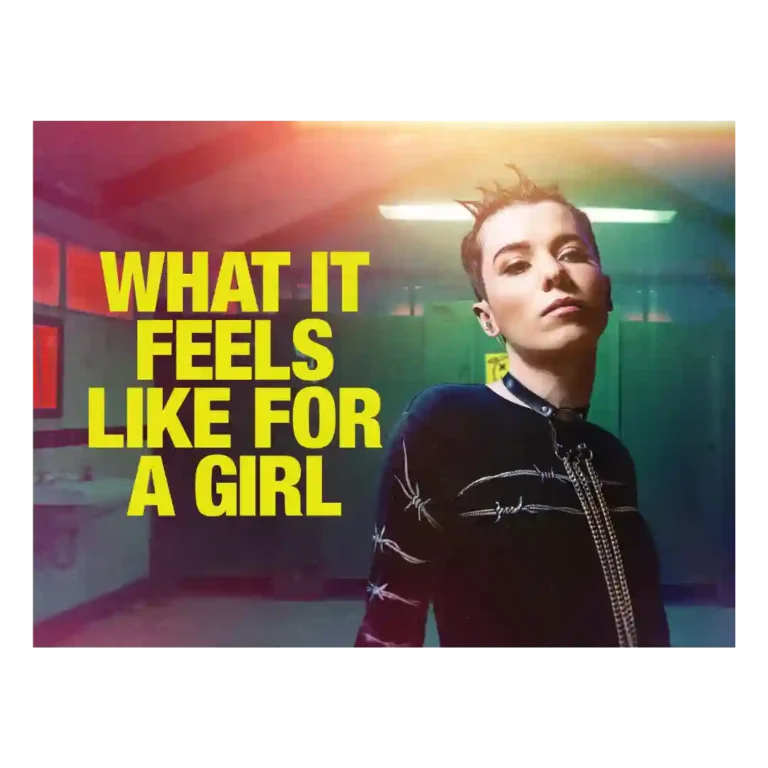
What It Feels Like For A Girl, Season 1

What It Feels Like For A Girl, Season 1 Review

Released: June 3, 2025
Updated: 16 hours ago
4.0
Overall review score Expert score: 4.0 Customer score: 3.9
181
Review evidence points
51
Scored features
28
Total reviews
14 expert / 14 customer

Bottom Line

Choose this if you want a bold, funny, bruising queer coming-of-age drama with standout performances. Skip it if explicit sex, violence, or messy pacing will overwhelm the story for you.

Best for

Best for viewers who want bold queer coming-of-age drama with sharp humor, Y2K atmosphere, and a lead performance that carries messy emotional material. It will especially click with audiences interested in trans, working-class, and chosen-family stories.

Not for

Not for viewers looking for gentle comfort TV, family-friendly viewing, or a clean inspirational arc. The frequent explicit sex, violence, drugs, and morally abrasive characters are central to the experience.

Verdict

What It Feels Like For A Girl, Season 1 lands as a fiercely performed, emotionally volatile coming-of-age drama. The strongest through-line is Ellis Howard’s lead performance, backed by a vivid supporting cast, sharp dialogue, Y2K club energy, and a story that treats working-class trans life as messy, funny, dangerous, and deeply human. Its tradeoff is intensity: several reviews flag explicit sex, violence, and a middle stretch that can feel repetitive or overextended. For viewers open to discomfort, the season’s mix of camp humor, family pain, and self-discovery is powerful; for others, the abrasiveness may eclipse the craft.

Feature Scorecards

Summary

51 reviewed features
  • Very positive 4.5-5.0 57% 29 features
  • Positive 3.5-4.4 16% 8 features
  • Neutral 2.5-3.4 18% 9 features
  • Negative 1.5-2.4 10% 5 features
  • Very negative below 1.5 0% 0 features

Pros

  • 5.0
    based on 1 review
    genre satisfaction: 5.0, based on 1 review
    For queer-TV fans, the response can be extremely strong. One viewer called it one of the best queer shows they had seen in a while.
  • 4.9
    based on 11 reviews
    main cast performance: 4.9, based on 11 reviews
    Ellis Howard is the clearest consensus standout. The performance is repeatedly called brilliant, magnetic, fearless, stunning, and worth watching on its own.
  • 4.8
    based on 7 reviews
    theme depth: 4.8, based on 7 reviews
    The show’s themes run deeper than identity alone, tying trans experience to class, morality, trauma, forgiveness, and survival. It is strongest when it refuses easy answers.
  • 4.8
    based on 3 reviews
    writing quality: 4.8, based on 3 reviews
    The writing is praised for warmth, empathy, humor, and thematic reach. It balances class, sex work, trauma, and trans identity without sanding off the characters’ rough edges.
  • 4.8
    based on 1 review
    media scrutiny portrayal: 4.8, based on 1 review
    The show is praised for pushing past headlines and statistics to humanize trans experience. It turns media-scrutinized identity debates back into a story about real people.
  • 4.8
    based on 1 review
    screenplay quality: 4.8, based on 1 review
    Screenplay praise is narrower but positive, with the forum response calling the script amazing. It reinforces the broader sense that the show’s voice is one of its strengths.
  • 4.8
    based on 1 review
    suspense: 4.8, based on 1 review
    The show’s suspense registers for viewers who describe it as gripping. Its tension comes less from mystery and more from watching volatile choices and risky situations escalate.
  • 4.7
    based on 3 reviews
    bingeability: 4.7, based on 3 reviews
    Bingeability is strong for viewers who connect with the tone. The show is called addictive, snappy, and tempting to continue straight through on iPlayer.
  • 4.7
    based on 6 reviews
    acting quality: 4.7, based on 6 reviews
    Acting quality is consistently strong across the ensemble. Howard gets the loudest praise, but the wider cast is also described as top-notch, specific, and full of energy.
  • 4.7
    based on 6 reviews
    entertainment value: 4.7, based on 6 reviews
    Entertainment value is high for most positive viewers, who call it brilliant, addictive, gripping, and worth watching. The appeal depends on being open to a messy, explicit, emotionally intense ride.
  • 4.7
    based on 2 reviews
    cast chemistry: 4.7, based on 2 reviews
    The chemistry is especially strong around Byron’s relationships and the Fallen Divas. Viewers singled out Calam Lynch’s pairing with Howard and the group dynamic as electric.
  • 4.6
    based on 7 reviews
    supporting cast performance: 4.6, based on 7 reviews
    The supporting cast is a major strength, from Michael Socha’s terrifying father to Hannah Walters, Jake Dunn, and the Fallen Divas. Several responses describe the ensemble as excellent with no weak link.
  • 4.6
    based on 3 reviews
    interview and source material quality: 4.6, based on 3 reviews
    The source material is treated as a major asset. Paris Lees’ memoir is described as brilliant, beautifully written, and strong enough to support a fearless adaptation.
  • 4.6
    based on 4 reviews
    realism: 4.6, based on 4 reviews
    The setting and social world feel grounded, especially the working-class Nottinghamshire and early-2000s details. Reviewers also valued how the story stays rooted in truth and context.
  • 4.6
    based on 4 reviews
    soundtrack quality: 4.6, based on 4 reviews
    The soundtrack is a standout nostalgia engine, with references to UK garage, 2000s dance music, and Blackberry-era pop texture. It helps make the club scenes feel infectious and specific.
  • 4.5
    based on 10 reviews
    emotional impact: 4.5, based on 10 reviews
    The emotional range is broad: moving, heartbreaking, disturbing, tragic, funny, and sometimes heartwarming. Several reactions point to tears, lingering impact, and a strong sense of survival against the odds.
  • 4.5
    based on 7 reviews
    character development: 4.5, based on 7 reviews
    Character growth is messy and often painful, especially for Byron and Sasha. The strongest praise goes to the way the show lets people grow without making them instantly likable or cleanly redeemed.
  • 4.5
    based on 7 reviews
    humor: 4.5, based on 7 reviews
    Humor is a major part of the show’s appeal, even when the material is grim. Camp moments, bawdy jokes, and cutting one-liners keep the series from becoming purely bleak.
  • 4.5
    based on 4 reviews
    plot originality: 4.5, based on 4 reviews
    The series earns praise for avoiding a familiar coming-of-age template and pushing into riskier, rougher territory. Its trans girlhood story is framed as anything but generic.
  • 4.5
    based on 4 reviews
    production design: 4.5, based on 4 reviews
    Production design strongly sells the Y2K Nottingham world. The clubs, flats, period details, and nostalgic backdrop are often described as vivid, accurate, and polished.
  • 4.5
    based on 3 reviews
    critic appeal: 4.5, based on 3 reviews
    Critic appeal is strong, with the series called urgent, necessary, compelling, and exactly the kind of TV needed now. Its best reviews respond to both the craft and cultural timing.
  • 4.5
    based on 3 reviews
    renewal interest: 4.5, based on 3 reviews
    Renewal interest is clear among fans who wanted to keep watching. Some wished it was not over and one customer was disappointed there was no second season.
  • 4.5
    based on 3 reviews
    visual style: 4.5, based on 3 reviews
    The visual style is bold and memorable, from shifting color palettes to dreamlike flourishes. Even short viewer reactions singled out the visuals as a selling point.
  • 4.5
    based on 2 reviews
    episode pacing: 4.5, based on 2 reviews
    When the pacing works, the show feels propulsive and hard to look away from. Dream sequences and a fast-moving club-life rhythm help keep the episodes lively.
  • 4.5
    based on 1 review
    accountability handling: 4.5, based on 1 review
    The show handles accountability by making Byron flawed, not saintly. It presents a self-critical story where survival, harm, and responsibility can coexist.
  • 4.5
    based on 1 review
    cinematography: 4.5, based on 1 review
    The cinematography uses color expressively, especially in relation to Byron’s moods. This gives the drama a polished, mood-driven visual language.
  • 4.5
    based on 1 review
    faithfulness to source material: 4.5, based on 1 review
    The adaptation feels closely tied to lived experience, with specific performances that one critic described as documentary-adjacent. That gives the show a truth-based texture rather than a generic issue-drama feel.
  • 4.5
    based on 1 review
    pilot episode quality: 4.5, based on 1 review
    The first episode made a strong impression, with early viewers calling it great and fantastic. It sets up the tone quickly: dark, witty, sad, and engaging.
  • 4.5
    based on 15 reviews
    story quality: 4.5, based on 15 reviews
    The story is usually described as raw, beautiful, gripping, and chaotic, with one sharply negative take calling the plot pathetic. Its strongest appeal is as a bruising coming-of-age tale rather than a tidy uplift arc.
  • 4.4
    based on 11 reviews
    cultural representation: 4.4, based on 11 reviews
    Cultural representation is one of the show’s defining strengths, especially in its working-class trans and queer perspective. The praise is broad, though a small number of viewers reject its framing.
  • 4.3
    based on 6 reviews
    drama quality: 4.3, based on 6 reviews
    The drama hits hardest in family rejection, exploitation, and self-destruction. It is praised for staying joyful and funny while still letting the darker streak return.
  • 4.2
    based on 5 reviews
    dialogue quality: 4.2, based on 5 reviews
    The dialogue is sharp, sarcastic, and often caustically funny, with savage put-downs adding bite. The main drawback is audibility, as at least one viewer had to rewind to decipher lines.
  • 4.2
    based on 1 review
    score quality: 4.2, based on 1 review
    The score gets a smaller but positive mention for using opera to sharpen a dramatic scene. Music choices generally deepen the show’s heightened emotional atmosphere.
  • 4.0
    based on 2 reviews
    directing quality: 4.0, based on 2 reviews
    Direction is more divisive than the performances: raw scenes and formal play are praised, while heavy visual motifs had mixed success. The show works best when style serves Byron’s inner life.
  • 3.9
    based on 2 reviews
    costume design: 3.9, based on 2 reviews
    Costuming adds fun and personality, especially around the Fallen Divas and noughties culture. One critic, however, felt the Y2K styling looked a little too polished and rose-tinted.
  • 3.7
    based on 4 reviews
    character consistency: 3.7, based on 4 reviews
    Byron is intentionally difficult: clever, vicious, selfish, funny, and morally questionable. That complexity is admired by many, though some viewers found the main character hard to like.
  • 3.6
    based on 4 reviews
    modern political framing: 3.6, based on 4 reviews
    The political framing is timely and unavoidable, especially around trans rights in Britain. Most reactions see that urgency as a strength, though one customer dismisses the show as ideological.

Cons

  • 3.4
    based on 4 reviews
    audience appeal: 3.4, based on 4 reviews
    Audience appeal is passionate but not universal. Enthusiastic viewers call it a favorite, while others warn that its hard-to-watch material and topic fatigue make it unsuitable for everyone.
  • 3.2
    based on 1 review
    editing quality: 3.2, based on 1 review
    The editing style can be brash, with fast cuts grouped alongside music and narration that may make some viewers cringe. It adds energy but is not the show’s smoothest element.
  • 3.0
    based on 2 reviews
    season length: 3.0, based on 2 reviews
    Season length is mixed: fans wanted more story, but some felt the same material might have been tighter as six episodes. The eight-part run gives depth at the cost of occasional drag.
  • 3.0
    based on 1 review
    continuity: 3.0, based on 1 review
    Continuity is a minor weakness, with one critic finding the timeline hard to follow. The jumps between hours, days, and weeks can blur in the season’s longer stretch.
  • 3.0
    based on 1 review
    episode length: 3.0, based on 1 review
    Episode length becomes a problem for at least one critic, who felt eight 50-minute installments dragged in places. The individual episodes may feel heavier in the middle stretch.
  • 3.0
    based on 1 review
    episode structure: 3.0, based on 1 review
    Episode structure is more uneven in the middle of the season, where some scenes were seen as repetitive or under-motivated. The show’s strongest parts appear to be its opening and closing runs.
  • 3.0
    based on 1 review
    season pacing: 3.0, based on 1 review
    The middle stretch drew the clearest pacing complaint, with some feeling that not enough happened in several episodes. The beginning and ending landed better for those viewers.
  • 2.9
    based on 2 reviews
    finale satisfaction: 2.9, based on 2 reviews
    The ending is one of the more mixed pieces of the season. Some saw the redemptive final note as conventional or trite after a much harsher, less sentimental story.
  • 2.5
    based on 1 review
    season finale quality: 2.5, based on 1 review
    The season finale’s happy-ending impulse did not work for everyone. One critic felt the final episode healed damaged people too neatly because the script demanded it.
  • 2.3
    based on 2 reviews
    plot clarity: 2.3, based on 2 reviews
    Clarity is one of the weaker areas: one critic found the passage of time hard to track, and one viewer rejected the premise entirely. The show asks viewers to live with ambiguity rather than explaining every step.
  • 2.2
    based on 3 reviews
    sexual content level: 2.2, based on 3 reviews
    Sexual content is frequent, explicit, and divisive. Some see it as essential to the story’s rawness, while others felt a few scenes were excessive or repetitive.
  • 2.1
    based on 3 reviews
    age appropriateness: 2.1, based on 3 reviews
    Age appropriateness skews firmly mature because of sex work, violence, drugs, and disturbing scenes. Multiple reactions warn that it is not for squeamish or younger audiences.
  • 2.0
    based on 1 review
    violence level: 2.0, based on 1 review
    The violence level is part of what makes the show uncomfortable and visceral. Predatory encounters and physical danger are presented as harrowing rather than sanitized.
  • 1.8
    based on 1 review
    family friendliness: 1.8, based on 1 review
    This is not family-friendly viewing. The material is explicitly adult, and one critic says directly that it is definitely not for family viewing.

Compared With Category Average

Compared with other TV Shows, this product is above average in writing quality, screenplay quality, realism, below average in season finale quality.

Summary

8 compared features
  • Above average 0.4+ pts higher 88% 7 features
  • Same as average within 0.3 pts 0% 0 features
  • Below average 0.4+ pts lower 13% 1 feature
Attribute This product Category average Difference
writing quality 4.8 3.3 +1.5
screenplay quality 4.8 3.3 +1.5
season finale quality 2.5 3.9 -1.4
realism 4.6 3.3 +1.2
accountability handling 4.5 3.2 +1.3
story quality 4.5 3.6 +0.9
cultural representation 4.4 3.5 +0.9
episode pacing 4.5 3.4 +1.1

FAQ

Is What It Feels Like For A Girl, Season 1 mostly positive or bleak?

It is both. The season is frequently described as raw, disturbing, and heartbreaking, but also funny, camp, joyful, and ultimately hopeful.

Is Ellis Howard good in the lead role?

Yes. Howard is the most consistently praised element, with critics and viewers calling the performance brilliant, magnetic, fearless, stunning, and worth watching on its own.

Is the show suitable for younger viewers or families?

No. The reviews repeatedly point to explicit sexual content, sex work, violence, drugs, and uncomfortable scenes, with one critic saying it is definitely not family viewing.

Does the show focus only on gender identity?

No. Many reactions emphasize that it also explores class, family rejection, social mobility, chosen family, survival, and accountability.

How is the pacing?

The pacing is mixed. Several viewers found it addictive and pacy, while others thought the middle episodes dragged and could have been tightened.

Will viewers want a second season?

Some definitely will. Fans wished it was not over, looked forward to more, and one customer specifically said the lack of a Season 2 was their only disappointment.

Sample Expert Reviews We Analyzed

These are a few of the reviews included in our analysis.

Compared in Reviews

Products reviewers directly compared with this model, grouped into quick takeaways.

Conviction

  • Similar: BBC Three aesthetic The series is likened to edgy BBC Three dramas millennials grew up on, with a brassy style that may divide viewers.

It's A Sin

  • Similar: LGBTQ coming-of-age audience appeal A forum viewer recommends it to people who liked It's A Sin.

Lip Service

  • Similar: BBC Three aesthetic The show is compared with Lip Service for its edgy BBC Three feel and stylistic lineage.

Consider This Instead

If you want better violence level

Choose From, Season 4. It scores 4.5 vs 2.0 for violence level, with a 3.7 overall score.

Compare

If you want better season finale quality

Choose Dark Winds, Season 4. It scores 4.8 vs 2.5 for season finale quality, with a 4.3 overall score.

Compare

If you want better episode structure

Choose The Pitt, Season 2. It scores 5.0 vs 3.0 for episode structure, with a 4.6 overall score.

Compare

Overall Top TV Shows Alternatives

#1 The Pitt, Season 2
4.6

Choose The Pitt Season 2 for a gripping, realistic medical drama with superb acting and emotional depth. Skip it if graphic procedures, unresolved arcs, or slower character-driven pacing bother you.

Pros: episode structure, main cast performance

Cons: age appropriateness, plot clarity
#2 Dark Winds, Season 4
4.3

Choose Dark Winds Season 4 for moody noir suspense, excellent acting, and richer Native-centered themes. Skip it if uneven pacing, thin conspiracy plotting, or a stranger L.A. detour would frustrate...

Pros: costume design, directing quality

Cons: family friendliness, age appropriateness

#3 The Agency, Season 2
4.3

Choose The Agency Season 2 for adult spy drama with superb acting, tense intrigue, and a stronger pace. Skip it if you want simple plotting, constant action, or a Fassbender-only...

Pros: directing quality, bingeability

Cons: none

#4 Silo, Season 3
4.3

Choose Silo Season 3 for revealing, ambitious sci-fi with strong performances and a rewarding finale. Skip it if slow-burn pacing, amnesia plots, or dense mystery-box storytelling test your patience.

Pros: drama quality, finale satisfaction

Cons: character development, season pacing