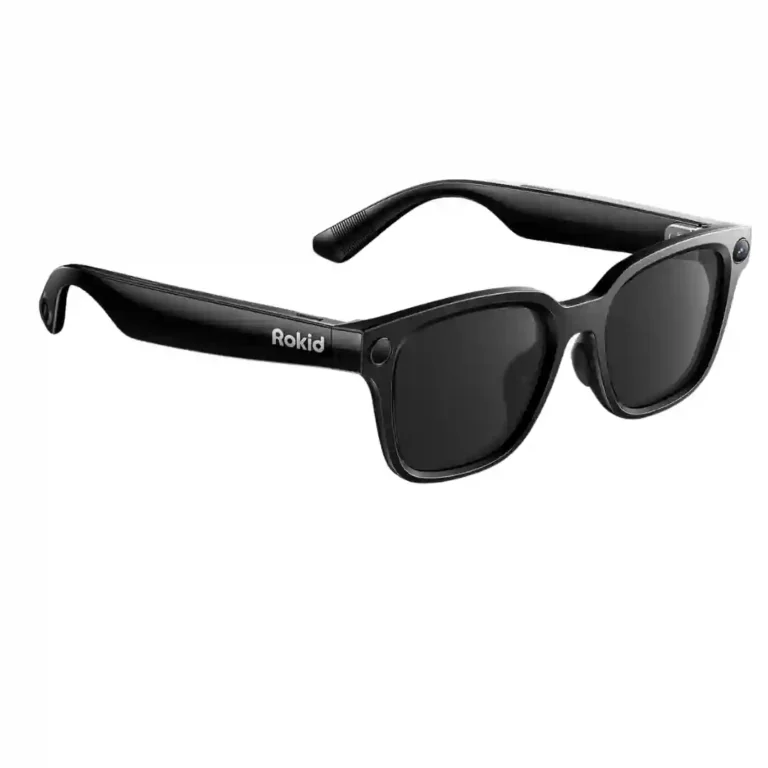
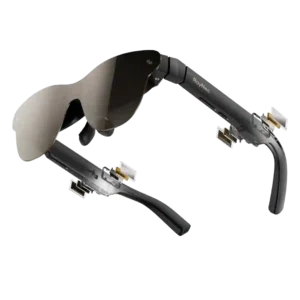
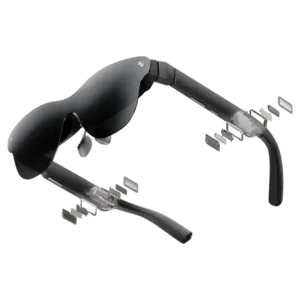
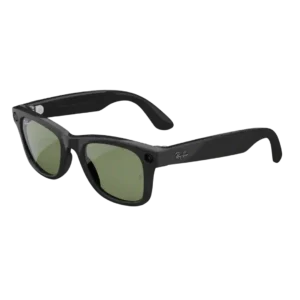
Choose these for flexible POV recording, broad AI and translation tools, and lightweight all-day wear. Skip them if you want premium frames, an included charging case, consistent software, or stronger privacy controls.
Best for
Best for travelers, creators, and hands-free AI users who value horizontal and vertical POV capture, long clips, translation, and prescription lens flexibility.
Not for
Not ideal for buyers who prioritize premium frame materials, reliable low-light video, private audio, a bundled charging case, or polished and predictable software.
Verdict
The Rokid AI Glasses Style stand out through useful multimodel AI, broad translation, flexible horizontal and vertical capture, and a 10-minute recording limit that creators repeatedly praised. Most testers also found them light and comfortable enough for long wear, while daylight photos and video were generally sharp and shareable. The tradeoffs are substantial: the glossy frame can feel cheap, fit is limited to one wide size, low-light capture is weak, and software responsiveness varies. Charging is the clearest frustration because the standard package lacks a charging case and relies on a proprietary magnetic dongle. They offer strong capability for the base price, but paid lens options, charging accessories, and a future AI subscription can narrow that value advantage.
The 10-minute clip limit is one of the most universally praised features, giving creators and families far more room to capture complete moments than three-minute rivals.
Lens choice is one of the clearest advantages, spanning clear, tinted, polarized, prescription, blue-light, and photochromic options. Reviewers consistently valued the flexibility.
Multiple vertical and horizontal aspect ratios are a major creator advantage and reduce cropping in post. One reviewer reported being unable to switch formats, but the broader consensus is highly positive.
The glasses consistently feel light in real use, even though the advertised 38.5g figure excludes lenses. Most reviewers still noticed a comfort advantage over heavier competitors.
Hands-free POV capture is one of the product’s strongest uses, letting people preserve spontaneous moments, travel scenes, and creator footage without holding a phone.
Photochromic lenses make the glasses far more practical across indoor and outdoor use. They may not become dark enough in shade or inside a car, but reviewers still preferred them for everyday wear.
Some reviewers favored Rokid’s account-based AI approach and claimed content is not automatically used for model training, making it feel more private than Meta.
Scene description and object identification were accurate enough to offer meaningful help for low-vision users, though important information should still be verified.
The voice assistant is responsive, capable, and substantially improved over earlier Rokid attempts. Reviewers especially liked its usefulness compared with simpler rival assistants.
Hands-free scene description and visual translation can reduce barriers for travelers and people with limited vision, though the AI should not be treated as infallible.
AI is the product’s defining strength, offering detailed answers, visual understanding, translation, navigation, and a choice of major models. Early sluggishness and occasional errors remain the main caveats.
Translation is a major strength, with broad language coverage, useful live conversation support, and strong visual text translation. Quality can vary by language and local mode may be slower.
Most reviewers found the glasses comfortable for long sessions, helped by low weight and cushioned nose pads. A minority reported nose fatigue or an awkward bridge.
Overall sentiment is strongly positive but not unanimous. Reviewers love the AI, camera flexibility, comfort, and price, while design quality, charging, privacy, and software polish keep it from being an automatic recommendation.
Most reviewers see strong value in the camera, long recording, AI choice, and lens flexibility at the base price. Extra lenses, proprietary charging accessories, and the missing case can quickly erode the bargain.
Photos are usually sharp, bright, and shareable in daylight, with enough detail for casual use and AI analysis. They still trail a good phone and soften noticeably in darker conditions.
Video looks crisp and competitive for smart glasses, often described as good enough for social posts and everyday memories. It is not a replacement for a dedicated camera.
Most reviewers heard clear, loud calls and reported that callers could understand them easily. One test found disruptive echo, so call performance may vary with volume and software.
Quiet-room recordings were transcribed accurately and organized into useful speaker-based notes. Exportable summaries add practical value for meetings.
Battery life is generally a strength, ranging from roughly five or six hours under heavier mixed use to a full day with lighter use. Translation, music, and video reduce runtime quickly.
Audio capture, transcription, summaries, and meeting notes can reduce phone use and manual note-taking. Some workflows still require extra steps rather than starting directly by voice.
camera quality: 3.9, 7 reviews, moderate consensus
The 12MP camera is widely considered good for smart glasses and well suited to casual POV capture. Results are strongest in good light, with some reviewers calling it excellent and others merely adequate.
The screen-free design keeps distractions and visual clutter away, which some reviewers preferred for driving and daily use. Others missed glanceable instructions for navigation, translation, and step-by-step tasks.
style and appearance: 3.7, 10 reviews, low consensus
Style opinions are sharply divided. Some reviewers called the frames fashionable and normal-looking, while others compared the glossy black design to cheap 3D glasses.
video stabilization: 3.7, 9 reviews, low consensus
Stabilization drew mixed results: several active tests looked impressively smooth, while others showed noticeable wobble and shake when walking. App post-processing can help but may take time.
App quality ranges from polished and easy to use to buggy, slow, or prone to freezing. Video processing and Android stability are the most common complaints.
Open-ear playback keeps the wearer aware of the surroundings and works well for casual music, calls, and assistant feedback. It lacks the fullness and isolation of dedicated earbuds.
Fit depends heavily on face shape. Nose pads help many wearers keep the glasses secure, while others experienced slipping, oversized frames, or poor alignment.
Spoken navigation is useful for walking, biking, and driving, and several reviewers relied on it regularly. Misheard destinations and outdated map results occasionally reduce trust.
included accessories: 3.4, 4 reviews, low consensus
The package is functional but inconsistent in perceived quality: extra nose pads and a pouch are useful, while the basic cardboard-like case feels cheap.
The speakers are clear enough for AI, calls, and podcasts, but music quality varies. Several reviewers found them thinner and less immersive than Meta’s audio.
Privacy signaling is inconsistent. One reviewer found the LED far too dim to warn bystanders, while another confirmed recording stops when the indicator is covered.
Sound leakage remains a recurring concern, especially in quiet rooms or at higher volume. Normal outdoor use is more private, but nearby people may still hear calls or music.
AI speed is inconsistent: some reviewers received answers within seconds, while others experienced long delays tied to connectivity and early software.
The magnetic connector attaches securely, but the proprietary dongle is easy to lose and inconvenient for travel. Reviewers repeatedly wished for standard USB-C or a bundled case.
Bass is usually the weak point, with music often sounding thin or lacking low-end impact. One highly positive test found it punchier, but that was not the dominant view.
The dark lenses work well in strong sun but are often too tinted indoors, in winter, or under clouds. Some reviewers also reported distracting reflections and edge light.
The single, relatively wide frame suits larger heads but can feel oversized on narrower faces. Limited frame and color choices are a repeated drawback.
The standard package usually lacks a charging case, making on-the-go charging a common complaint. Optional cases and capsules add substantial endurance but also meaningful cost.
low-light camera performance: 2.0, 2 reviews, limited evidence
Indoor and nighttime captures become grainy, noisy, or blurry unless the wearer keeps very still. Bright environments are clearly the camera’s comfort zone.
Privacy controls are a weak point because there is no physical off switch and cloud processing creates uncertainty. Several reviewers would avoid wearing them in sensitive settings.
Products reviewers directly compared with this model, grouped into quick takeaways.
first-gen Meta Ray-Bans
Worse: battery lifeRokid lasted longer in a comparable usage window.
Meta Ray Ban Gen 2 glasses
Worse: weightRokid is slightly lighter, although its weight marketing was criticized.
Meta Ray-Ban AI Glasses Gen 2
Alternative: price and overall packageRokid is recommended as an affordable non-display alternative.
FAQ
How long does the battery last?
Heavy mixed use often lands around five to six hours, while lighter intermittent use can stretch through a full day. Translation, music, and video drain it faster.
Is the camera good enough for everyday photos and video?
Yes in good light: reviewers found daylight photos sharp and video competitive for smart glasses. Low-light scenes become noisier, grainier, and more prone to blur.
Does a charging case come in the box?
Usually no. The standard package relies on a proprietary magnetic charging dongle, while charging cases and battery capsules cost extra.
Are they comfortable for all-day wear?
Most reviewers found them light and comfortable, especially because of the cushioned nose pads. The single wide frame may slip or feel oversized on narrower faces.
How useful are the AI and translation features?
They are among the product’s strongest features, offering detailed answers, visual recognition, broad online translation, and several offline language packs. Speed and accuracy can still vary.
Will AI features require a subscription?
Reviewers reported that the first year is included and that a paid subscription is expected afterward. Final ongoing pricing was not clear in the supplied reviews.
What are the main privacy concerns?
There is no physical power switch, cloud AI processes some audio and images, and one reviewer found the recording light too dim. Avoid using them in sensitive settings.
Sample Expert Reviews We Analyzed
These are a few of the reviews included in our analysis.

Choose these for stylish hands-free photos, social video, calls, and improved battery life. Skip them if Meta privacy, app clutter, open-ear leakage, or a modest Gen 1 upgrade outweigh the...