Choose it for colorful animation, short episodes, and more time with the young Hawkins crew. Skip it if canon gaps, repetitive monster fights, softened horror, or replacement voices will keep pulling you out.
Best for
Best for younger viewers, franchise completionists, and fans who mainly want more time with the original kids in a lighter, visually vivid monster adventure.
Not for
Not for viewers who need tight canon, serious horror, major consequences, or a fresh expansion of the universe rather than another story centered on the same characters.
Verdict
Tales From '85 works best as a bright, low-stakes return to the friendship-driven early years of Stranger Things. Its snowy Hawkins setting, vivid production design, energetic creature action, strong cliffhangers, and familiar group chemistry give fans plenty to enjoy, while younger viewers get the franchise’s most approachable entry. The tradeoff is that the interquel format sharply limits suspense and character growth. Nikki’s importance, the new threats, and repeated arcs create persistent continuity questions, and many critics find the ten-episode story repetitive, sanitized, or unnecessary. The voice cast and human character designs are especially divisive. Taken as optional nostalgic side content, it can be warm and entertaining; treated as essential canon, its weaknesses become much harder to ignore.
Production design is a standout strength. Hawkins, the Palace Arcade, homes, snowy streets, and action locations are recreated with rich detail, neon color, and convincing 1980s atmosphere.
Animated Hawkins is richly realized, preserving familiar locations while adding snowy streets, vivid interiors, and a slightly heightened storybook quality.
The back half and finale are among the most praised parts of the season, with positive viewers saying the ending improves dramatically and creates excitement for what could come next.
The best twists genuinely catch viewers off guard, especially the revelations around the central threat. Even mixed reviews often acknowledge that the season finds a few effective surprises.
Brad Breeck’s score successfully carries over the synth-driven feeling of the main series while adding enough new material to give the spin-off its own sound.
Mike’s overprotectiveness is confronted rather than ignored, allowing the characters to acknowledge the problem, understand one another, and learn from it.
The strongest creative direction is streamlined and energetic, keeping the kids-versus-monsters adventure focused and free from much of the parent show’s later sprawl.
The principal voice cast is convincing at its best, especially when the performers capture the youthful energy and personalities of the original group.
The strongest appeal is the return to kids on bikes, small-town mysteries, early friendships, and 1980s atmosphere. Even skeptical viewers often agree that it reconnects with the parts of Stranger Things they once loved.
The core group’s chemistry is one of the clearest strengths. The friendships, early romances, and familiar pairings often feel warm, convincing, and closer to the early seasons than the franchise has in years.
The cleaner language, lighter tone, and younger focus make this the franchise’s most family-friendly entry. It keeps enough monsters and peril to avoid feeling completely toothless.
faithfulness to source material: 4.3, based on 2 reviews
Familiar locations, aesthetics, relationships, and early-season tone are recreated with considerable care. The surface details feel faithful even when the larger continuity does not.
As a small-town kids-versus-monsters adventure, the series generally satisfies. Its contained scale, blend of horror, humor, and heart, and winter setting fit the animated format well.
The soundtrack effectively restores the franchise’s 1980s identity through recognizable rock and pop songs, though one viewer feels the middle episodes need more memorable needle drops.
The identity-focused material is woven into Will and Nikki’s friendship with a light touch, extending themes that became more explicit in the live-action series.
Creature and power effects are often inventive, especially the glowing monsters, expanded action, and animated use of Eleven’s telekinesis. A few harsh reactions find some monsters cheap or poorly designed.
The TV-PG approach works well for older children and families, especially viewers not ready for the live-action series. Sensitive kids may still find the monsters, kidnappings, and jump scares intense.
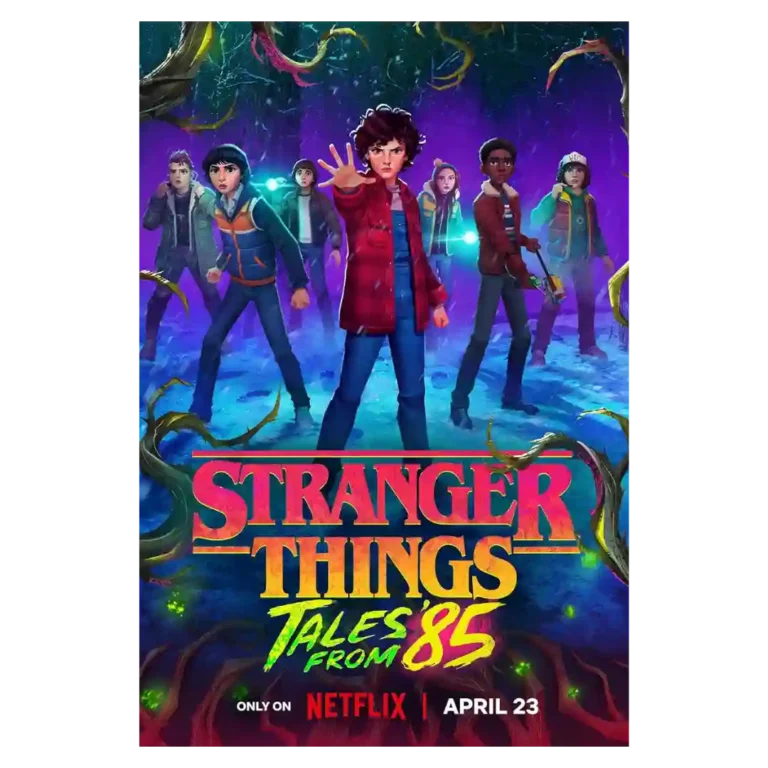
Animation is the show’s most polarizing feature. Environments, lighting, monsters, and action earn frequent praise, while the stiff, doll-like human designs and borrowed Spider-Verse-style movement draw equally strong criticism.
The visual style is bold, colorful, and often cinematic, with luminous lighting and strong environmental design. The human faces are more divisive, ranging from gorgeous and dreamy to cheap, doll-like, or lifeless.
The season is entertaining when treated as a light, nostalgic side adventure, and several viewers call it fun or even great. Others find it dull, irritating, or unnecessary, making overall enjoyment strongly dependent on tolerance for repetition and canon issues.
Familiar friendships and quieter interpersonal scenes provide the strongest emotion. The returning characters can feel comforting and heartfelt, though rushed or repetitive arcs weaken some dramatic moments.
The ending lands differently depending on the viewer: some find the relationship closure and final resolution satisfying, while another calls the payoff anticlimactic after ten episodes.
Language is much cleaner than in the live-action show, which improves family suitability. Some adult fans feel the missing profanity makes the characters sound less natural and overly sanitized.
Violence is noticeably toned down and less bloody than the parent series, but the creatures still threaten, chase, and abduct people. Most find the level suitable for a PG adventure rather than harmless children’s fare.
Season pacing is sharply divided: one enthusiastic take calls the ten-episode flow excellent, while others find the five-hour run bloated and say the strongest material arrives far too late.
Strong cliffhangers make the show easy to continue, but bingeing the entire season can become tiring when the middle episodes repeat similar conflicts.
Themes of acceptance, friendship, and embracing difference give Nikki and Will’s relationship meaning, though some feel the show repeats ideas already handled by the main series.
Interest in another season is cautious and conditional. The finale gives some viewers reasons to continue, but others want the concept to move beyond Hawkins, change structure, or stop altogether.
Voice acting splits opinion almost evenly. Braxton Quinney, Jolie Hoang-Rappaport, and several other performers receive strong praise, but harsher takes describe the cast as uneven imitations lacking the original actors’ nuance.
Rewatch appeal depends heavily on affection for the characters. Some viewers rediscover what they love about the group, while others expect the disposable story and disliked character designs to fade quickly.
supporting cast performance: 3.0, based on 21 reviews
Nikki is the biggest supporting-cast divider: some call her funny, charming, and an excellent addition, while others feel she dominates the story or never fits the established group. Older characters are also frequently missed or sidelined.
Character growth is uneven. Mike, Will, and the newer relationships receive some heartfelt development, but the fixed timeline also forces several arcs to repeat lessons the characters learn again later.
The lighter humor works for viewers who enjoy the Saturday-morning-cartoon tone, but others find the banter loud, forced, or overly childish. Nikki and the slapstick action provide some of the better comic moments.
The creature science and early-season mystery add some appealing lore, but the show avoids deeper exploration and creates questions it cannot answer cleanly within the established timeline.
The central mystery earns praise from a few viewers for its twists and monster-driven momentum, but the broader reaction is that it feels thin, repetitive, and less consequential than the live-action series.
Suspense is highly inconsistent. Several reviews praise creepy set pieces and a strong finale, but many say plot armor, toned-down monsters, and foreknown outcomes make most danger feel muted.
As a spin-off, the season is deeply divisive. Supporters enjoy a colorful return to the franchise’s early charm, while detractors see a safe, repetitive, and commercially driven extension that never justifies its existence.
Individual episodes often repeat the same chase, rescue, and monster-fight pattern. A few brisk stretches work well, but the dominant feeling is that the middle of the season circles familiar beats.
Writing quality varies from cleverly authentic to aggressively weak. The best reactions praise how closely it captures early Stranger Things, while the harshest call it lazy, contrived, and far below the original.
The continuous ten-chapter structure is widely seen as a missed opportunity. Many wanted shorter standalone mysteries or a true monster-of-the-week format, though one positive take likes the focused, kid-centered episodes.
The target audience is unclear: longtime fans may find it too juvenile and canon-constrained, while newcomers may lack the context from the first two seasons. Its clearest audience is younger franchise fans and completionists.
Dialogue is frequently criticized as sanitized, over-explanatory, and too much like a children’s adventure game. A small amount of witty banter stands out, but most reactions find the characters’ voices less authentic.
For critics who dislike the story, ten episodes feel excessive, especially when the finale offers limited payoff. The season is often described as material better suited to six episodes or a film.
Continuity is the most repeated complaint. Nikki’s importance, the new monsters, altered character arcs, and the lack of later references make the story difficult for many viewers to accept as canon.
Character consistency is a major weakness. Many critics say the kids feel sanitized, less intelligent, or simply unlike their live-action counterparts, although one positive review finds most familiar traits intact.
Originality is one of the weakest areas. The interquel repeatedly reuses familiar monsters, character beats, and season formulas instead of taking advantage of animation to explore a genuinely new direction.
A’zion’s scratchy, distinctive delivery helps make Nikki the season’s most praised new character. Even mixed critics often describe her as charming, engaging, or the ensemble’s bright spot.
Quinney’s Dustin is praised by several critics as uncannily accurate and instantly engaging, though one strongly negative take finds the performance awkward and mismatched.
Robles is widely credited with understanding the early-series tone, bringing playful energy, and richly rebuilding Hawkins. One harsh critic instead includes him in the blame for the misguided serialized structure.
Norstedt earns praise for reproducing Eleven’s stiff cadence, though another viewer finds the performance slightly off and partly constrained by inconsistent writing.
Gipson’s Hopper is one of the less convincing vocal matches, with his voice specifically criticized for sounding unlike David Harbour.
Compared With Category Average
Compared with other TV Shows, this product is above average in family friendliness, age appropriateness, CGI quality, near average in animation quality, visual style, below average in continuity, audience appeal, plot originality.
Summary
57 compared features
Above average0.4+ pts higher
19(33%)
Same as averagewithin 0.3 pts
12(21%)
Below average0.4+ pts lower
26(46%)
Largest category differences
Attribute
This product
Category average
Difference
family friendliness
4.4
2.2
+2.2
continuity
1.7
3.4
-1.7
audience appeal
1.9
3.9
-2.0
plot originality
1.7
3.5
-1.8
suspense
2.6
4.1
-1.5
realism
1.5
3.5
-2.0
dialogue quality
1.8
3.5
-1.6
spin-off quality
2.5
3.8
-1.3
Consider This Instead
If you want better spin-off quality
Choose Spider-Noir, Season 1. It scores 4.4 vs 2.5 for spin-off quality, with a 3.9 overall score.
Products reviewers directly compared with this model, grouped into quick takeaways.
The Real Ghostbusters
Compared: polish versus charmIt is more polished than the older cartoon but also judged blander.
Compared: animation styleThe newer 3D animation is technically advanced but considered less charming than its retro inspiration.
Camp Cretaceous
Better: child-friendly suspenseCamp Cretaceous is judged more successful at making children's peril feel serious.
Jurassic World: Chaos Theory
Better: danger and suspenseTales From '85 feels less dangerous because its story is more constrained by canon.
FAQ
Does it feel like early Stranger Things?
Often, yes. The kids-on-bikes focus, small-town mystery, friendships, and 1980s atmosphere repeatedly remind viewers of the first two seasons.
Is it suitable for children?
It is the franchise’s most kid-friendly entry, with cleaner language and less blood. Monsters, kidnappings, jump scares, and peril may still be intense for sensitive children.
Is the animation good?
The environments, lighting, colors, monsters, and action are widely praised. The human faces and movement are much more divisive, with some viewers finding them beautiful and others stiff or doll-like.
Do the new voice actors work?
Opinions are split. Braxton Quinney and Jolie Hoang-Rappaport receive frequent praise, but several critics feel the cast sounds like uneven imitations of the original performers.
Does the story fit established canon?
That is the biggest point of criticism. Nikki, the new monsters, repeated character arcs, and the lack of later references make the timeline difficult for many viewers to accept.
Is the season bingeable?
Strong cliffhangers and short episodes make it easy to continue, but repeated chase-and-rescue patterns can make the middle stretch feel tiring.
Does the ending leave room for another season?
Yes. The finale leaves threads open, and some viewers found that promising, while others felt the canon problems gave them little reason to continue.
Sample Expert Reviews We Analyzed
These are a few of the reviews included in our analysis.
Choose The Pitt Season 2 for a gripping, realistic medical drama with superb acting and emotional depth. Skip it if graphic procedures, unresolved arcs, or slower character-driven pacing bother you.
Choose Kylie for a heartfelt, candid music documentary with rich archives, sharp editing, and big emotional payoff. Skip it if you need a fully exhaustive career chronology or dislike authorized...
Best for heartfelt family drama, strong performances, natural faith themes, and an easy binge. Skip it if you need fast pacing, strict doctrinal portrayals, or a satisfying romantic resolution.
Choose Dark Winds Season 4 for moody noir suspense, excellent acting, and richer Native-centered themes. Skip it if uneven pacing, thin conspiracy plotting, or a stranger L.A. detour would frustrate...