The Alters Review
Bottom Line
Choose The Alters if you want a bold, emotional sci-fi survival-management game with replayable choices. Skip it if heavy stress, mature themes, resource busywork, or technical rough edges will outweigh the story for you.
Best for players who enjoy narrative-heavy survival management, tense time-and-resource decisions, and morally complicated sci-fi stories with replayable branching outcomes.
Not for players who dislike stress, resource juggling, repetitive gathering loops, mature themes, or games where technical rough edges can interrupt momentum.
The Alters stands out for its unusual cloning premise, rich moral dilemmas, and a strong blend of base management, resource pressure, and character-driven storytelling. Reviewers repeatedly praised the narrative, voice acting, atmosphere, replay value, and the distinct personalities of Jan’s alternate selves. The tradeoff is that the same pressure making the experience memorable can also become stressful, repetitive, or cumbersome, especially during exploration and resource gathering. Technical reports also varied, from smooth performance and zero bugs to crashes, shader waits, and stuck characters. Overall, the evidence points to a bold, emotionally resonant survival-management game with some friction around pacing, polish, and busywork.
Feature Scorecards
Summary
56 reviewed features- Very positive 4.5-5.0 38% 21 features
- Positive 3.5-4.4 36% 20 features
- Neutral 2.5-3.4 21% 12 features
- Negative 1.5-2.4 5% 3 features
- Very negative below 1.5 0% 0 features
Pros
-
Sound design evidence was strongly positive, emphasizing exceptional audio, tension-building environmental sound, and fantastic sound design.
-
Art direction received strong praise for the alien planet, visual design, and Jan/Alter presentation.
-
Side character depth was praised in the reviews that addressed it, with the Alters described as distinct and fully realized.
-
One reviewer specifically praised the controls on both controller and mouse/keyboard, with no conflicting control-responsiveness evidence.
-
Facial animation evidence was positive, with one reviewer specifically praising how faces reflect current attitude.
-
Onboarding was praised for introducing many systems without overwhelming the player.
-
Atmosphere was consistently praised as isolating, eerie, tense, symbolic, and thrilling.
-
Emotional impact was consistently strong, with reviewers describing thought-provoking, personal, vulnerable, and resonant moments.
-
Value for money was praised, especially around the $35 price and replayable mid-sized scope.
-
Voice acting was strongly praised across many reviews, especially Alex Jordan’s work differentiating the many Jans, with only one mild delivery caveat.
-
Frame rate stability was generally strong, with reviewers citing consistent 60+ fps, 120 fps, or stable 60 fps with only occasional drops.
-
Environmental detail was praised for adorable base rooms, dinky detail, and visually distinct alien landscapes.
-
Innovation was praised through the game’s unusual genre blend and standout sci-fi structure.
-
Narrative quality was one of the strongest areas, with many reviewers praising the story as compelling, thoughtful, philosophical, or emotionally resonant.
-
Graphics were praised repeatedly, with reviewers calling the game gorgeous, detailed, good-looking, or visually distinctive.
-
Originality was strongly praised, with reviewers calling the concept unique, uncategorizable, ambitious, or unlike anything else.
-
Fun factor was positive, with reviewers describing the game as entertaining, a blast, hard to put down, or excellent from start to finish.
-
Soundtrack quality was praised for its synth mood, Piotr Musial’s work, and enjoyable/chill music.
-
World-building was praised for its strange sci-fi setting, cultural detail, and labor/corporate themes.
-
Immersion was strong but intense, with reviewers describing deep involvement and a claustrophobic, absorbing feel.
-
The crafting and production automation earned positive evidence for reducing food and essential-goods micromanagement.
-
Most reviewers praised the blended survival, management, and narrative mechanics as polished or inventive, though a few found the underlying gameplay basic.
-
Character development was broadly praised for distinct, evolving Jans, though one reviewer felt the alters leaned into caricature.
-
Replay value was widely praised because alternate Alters, choices, endings, and remembered dialogue paths encourage repeat runs, though a few reviewers saw replay fatigue.
-
The core loop was often described as compelling, addictive, or well-designed, with one dissenting review arguing the hybrid systems failed to cohere.
-
Reviewers generally praised the variety created by survival, puzzles, exploration, branching side quests, and genre mixing, with one caveat about restrictive base building.
-
Performance optimization was mostly praised on reviewed builds, though one PC review reported dreadful performance.
-
Animation quality was mostly praised for character design and subtle idle movement, though one reviewer found some animations rough.
-
Map and navigation design was praised for clever fast travel and tense maze-like routing that reduced backtracking.
-
The Alter roster was mostly praised for distinct variants, though one reviewer felt not all Alters were equally useful or nuanced.
-
Level and map design were praised for dense, hand-crafted layouts and well-crafted act-specific maps.
-
UI design was mostly praised as clean, tactile, and not intrusive, with some interface quirks noted.
-
Resource balance was mostly praised for satisfying pressure and strong management hooks, though some reviewers found it irritating or overly punishing.
-
Writing was mostly praised as authentic, human, or excellent, though one negative review called it shallow and another noted occasional creaking.
-
Enemy or hazard variety had limited but positive evidence, with anomaly variants helping keep exploration tense.
-
Handheld suitability had limited but positive evidence, with Steam Deck described as playable with decent image quality.
-
Menu usability was generally positive thanks to quality-of-life tools, though some reviewers found navigation old or menu-jumping cumbersome.
-
Jan’s appeal was mixed: some found him more complete, plausible, and sympathetic, while one reviewer found him unpleasant.
-
Exploration divided reviewers: several found it atmospheric, tactile, or satisfying, while others found it basic, repetitive, or chore-like.
-
Bug evidence was mixed: several reviewers saw minor bugs, glitches, or stuck characters, while one reported zero bugs and another saw more disruptive issues.
-
Puzzle evidence was mixed: environmental puzzles earned praise, but the probe-based resource puzzle was criticized as fiddly and low-value.
Cons
-
Dialogue quality was mixed: some praised meaningful character conversations, while others found the script or conversations flat and stilted.
-
Difficulty balance was mixed: several reviewers valued the pressure, but others found the stress overwhelming or the economy hard for newcomers.
-
Pacing was mixed, with praise for quick days and well-timed beats offset by complaints about cyclical acts, clocks, and difficult bad-end pressure.
-
Polish was mixed, with notes about lacking presentation and unskippable scenes despite otherwise strong execution.
-
Combat-like anomaly encounters were generally seen as simple or secondary; some found them fitting, while others called them weak or uneven.
-
Accessibility evidence was limited and mixed, with reviewers noting useful settings but also describing the overall accessibility approach as limited.
-
Save reliability was mixed: one reviewer lost progress due to daily saves and crashes, while another appreciated nightly/location auto-saves.
-
Mission design received mixed evidence because one reviewer felt survival objectives and narrative goals could work against each other.
-
Visual effects evidence was mixed-to-negative in one review because close-up scenes sometimes became pixelated.
-
Movement drew mixed-to-negative notes, with one reviewer calling traversal cumbersome and another saying Jan could feel awkward or get stuck.
-
Load-time evidence was mixed-to-negative because shader precompilation was called long or repeatedly required on launch.
-
Progression drew criticism from one reviewer who felt unlocks mostly reduced earlier friction rather than adding exciting new capabilities.
-
Grind level drew negative evidence, with reviewers criticizing repetitive busywork and mindless material loops.
-
Age appropriateness evidence points to mature themes, with one reviewer warning about substance abuse, suicide, and self-harm.
-
Crash stability was a major issue in one PC review, which reported frequent crashes around the Quantum Computer.
Compared With Category Average
Compared with other Video Games, this product is above average in narrative quality, facial animations, below average in crash stability, load times, progression system.
Summary
8 compared features- Above average 0.4+ pts higher 25% 2 features
- Same as average within 0.3 pts 0% 0 features
- Below average 0.4+ pts lower 75% 6 features
| Attribute | This product | Category average | Difference |
|---|---|---|---|
| crash stability | 1.5 | 3.4 | -1.9 |
| load times | 2.5 | 4.1 | -1.6 |
| narrative quality | 4.7 | 3.7 | +1.0 |
| progression system | 2.5 | 3.9 | -1.4 |
| age appropriateness | 2.0 | 3.3 | -1.3 |
| visual effects quality | 3.0 | 4.3 | -1.3 |
| movement feel | 2.8 | 4.0 | -1.3 |
| facial animations | 5.0 | 3.8 | +1.2 |
FAQ
Is The Alters more story-driven or systems-driven?
Reviewers generally describe it as both: a survival-management game built around a strongly praised sci-fi narrative, moral choices, and relationships with Jan's alternate selves.
Is The Alters stressful?
Yes. Many reviewers highlight the constant pressure of time, resources, storms, and Alter morale; some loved that tension, while others found it overwhelming.
How replayable is The Alters?
Replay value is one of the most repeated positives. Reviewers point to different Alters, branching choices, alternate endings, and dialogue tracking as reasons to replay.
Does the exploration hold up?
Exploration is divisive. Several reviewers found the planet atmospheric and tactile, while others thought resource gathering, pylons, and traversal became repetitive or chore-like.
How good is the voice acting?
Voice acting is strongly praised, especially Alex Jordan's performance as multiple versions of Jan with distinct personalities, tones, and emotional registers.
Are there technical problems?
Reports are mixed. Some reviewers had smooth performance or zero bugs, while others cited crashes, shader waits, stuck characters, glitches, or visual issues.
Sample Expert Reviews We Analyzed
These are a few of the reviews included in our analysis.

Video Reviews
- Review score
- 4.1
- Review score
- 4.7
Article Reviews
- Review score
- 4.4
- Review score
- 3.4
Compared in Reviews
Products reviewers directly compared with this model, grouped into quick takeaways.
Alan Wake 2
- Compared: musical sequence tone The reviewer favorably compares a musical number's energy to Alan Wake 2.
Fallout Shelter
- Similar: management assignments The reviewer says the crew-assignment management recalls Fallout Shelter.
Frost Punk
- Compared: challenging decision design The review references Frost Punk alongside This War of Mine as part of 11 bit's decision-making lineage.
Consider This Instead
If you want better crash stability
Choose South of Midnight. It scores 4.8 vs 1.5 for crash stability, with a 3.7 overall score.
If you want better progression system
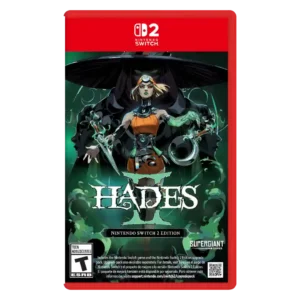
Choose Hades II. It scores 4.9 vs 2.5 for progression system, with a 4.5 overall score.
If you want better combat system
Choose Clair Obscur: Expedition 33. It scores 4.7 vs 3.1 for combat system, with a 4.3 overall score.
If you want better core gameplay loop
Choose Cronos: The New Dawn. It scores 5.0 vs 4.3 for core gameplay loop, with a 3.8 overall score.
Top Video Games to Consider
Good if you want fast, tactical roguelite combat with huge progression depth, striking art, and standout music. Skip it if repetition, resource micromanagement, or a less emotionally satisfying sequel story...
Pros: skill tree depth, dialogue quality
Cons: emotional impact, economy and resource balance
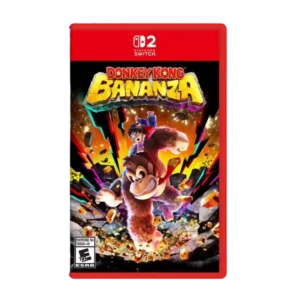
Best for joyful destruction, dense exploration, and a charming DK-Pauline adventure. Skip it if camera quirks, frame-rate dips, easy bosses, or premium Switch 2 pricing are dealbreakers.
Pros: gameplay mechanics, world interactivity
Cons: economy and resource balance, enemy variety
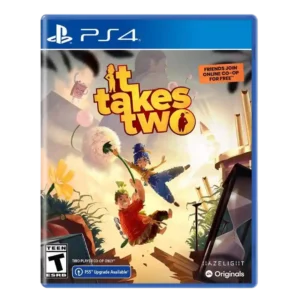
Best for joyful, inventive co-op with a partner, especially on couch. Skip it if divorce themes, uneven story tone, or Switch visual compromises would distract you.
Pros: core gameplay loop, movement feel
Cons: character development, dialogue quality
Best for tense Grace-led horror, slick Leon action, and lavish franchise callbacks. Skip it if you want a bolder reinvention, evenly mixed pacing, or substantial post-game modes.
Pros: driving mechanics, protagonist appeal
Cons: platform-specific feature support, checkpoint system