- Compared: overall inspiration The review saw Cronos as mixing Silent Hill and Dead Space.
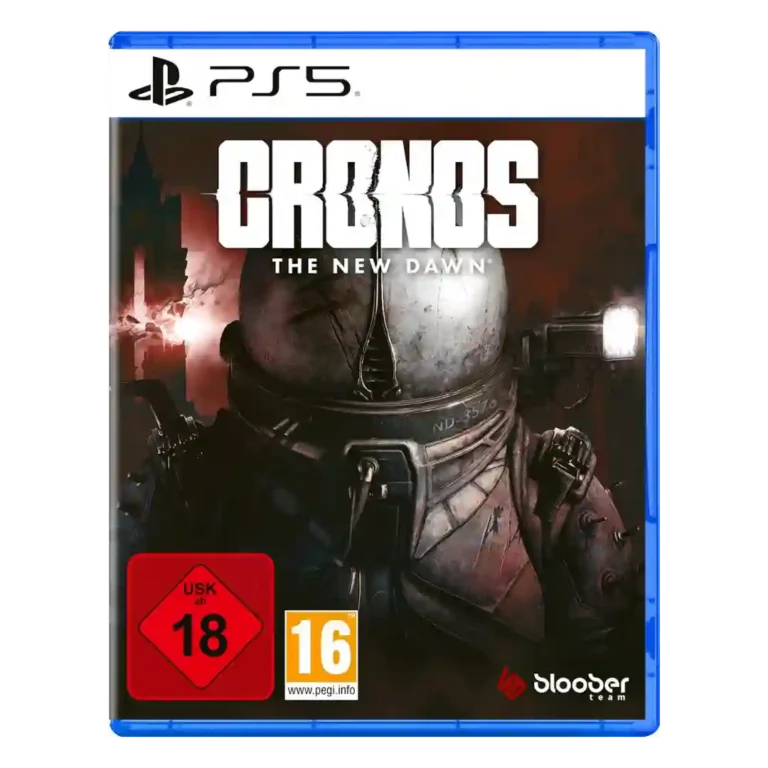
Cronos: The New Dawn Review
Bottom Line
Choose Cronos for oppressive atmosphere, scarce-resource survival, and strong sci-fi horror world-building. Skip it if clunky combat, difficulty spikes, technical rough edges, or slow pacing ruin horror for you.
Best for survival-horror fans who enjoy oppressive atmosphere, scarce resources, methodical combat, lore-driven storytelling, and careful inventory decisions. It particularly suits players who like Dead Space-style sci-fi body horror but want a stranger Polish setting.
Not for players who need adjustable difficulty, fast movement, forgiving checkpoints, or frictionless action. It is also a poor fit if repeated resource stress, derivative genre beats, or technical jank quickly become dealbreakers.
Cronos: The New Dawn earns its strongest praise as an oppressive survival-horror experience built around atmosphere, sound, scarce resources, and a striking Polish sci-fi setting. Reviewers repeatedly admired its environmental detail, art direction, world-building, and tense economy of bullets, fuel, crafting, and upgrades. The tradeoff is that the same design can become abrasive: combat is deliberately heavy and resource-starved, boss encounters vary from thrilling to tedious, and several reviews mention bugs, frame dips, checkpoint frustration, or padded pacing. Its story and writing land best for players who enjoy piecing together lore from notes, logs, and ambiguity, but some found the execution emotionally distant or overly derivative.
Compared in Reviews
Products reviewers directly compared with this model, grouped into quick takeaways.
Dead Space
- Similar: sci-fi body horror appeal The review says Dead Space fans get similar immersive sci-fi body horror in Cronos.
- Better: combat creativity The review finds Cronos less dynamic than Dead Space in combat.
- Compared: world-building and atmosphere The review says Cronos fares well despite obvious Dead Space comparisons.
Resident Evil 4
- Compared: genre shadow The review says Cronos sits under the shadows of Resident Evil 4 and Dead Space.
- Compared: survival horror ingredients The review says Cronos draws heavily from Resident Evil 4 and other classics.
Feature Scorecards
Summary
54 reviewed features- Very positive 4.5-5.0 15% 8 features
- Positive 3.5-4.4 52% 28 features
- Neutral 2.5-3.4 30% 16 features
- Negative 1.5-2.4 4% 2 features
- Very negative below 1.5 0% 0 features
Pros
-
Emotional impact was strong in reviews that described lingering questions, sleep disruption, or being haunted after finishing.
-
The loop of scarce resources, tense routes, and repeated survival decisions was praised by reviewers who found it tough, fair, and replayable.
-
Sound design was one of the strongest areas, repeatedly praised for unsettling effects, directionality, ambience, and its role in horror tension.
-
World-building was a major strength, with reviewers praising how the setting, documents, and historical framing build a broken society.
-
Environmental detail was widely praised for dead spaces, viscera, ruined architecture, and apocalyptic scenery that invited close inspection.
-
Atmosphere was the strongest consensus positive, with reviewers repeatedly praising oppressive, moody, grotesque, and dreadful environments.
-
Art direction was one of the clearest strengths, especially the retro-futuristic, brutalist, Polish, and body-horror visual identity.
-
One review praised environmental hazards and time-restored barrels for adding tactical interaction to combat.
-
Shooting and basic controls were generally praised for feel and playability, though one review noted combat clunkiness around movement and responsiveness.
-
Lore depth was praised by reviewers who enjoyed piecing together codex entries, worldbuilding, and background clues.
-
The soundtrack was praised for synth, drones, ambience, and memorable mood-setting, with only occasional minor reservations.
-
Crafting was widely framed as useful and survival-focused, often acting as a lifeline when ammo and healing were tight.
-
Graphics were generally praised as strong or gorgeous, though Switch 2 and some visual issues kept the score from being uniformly perfect.
-
Voice acting was mostly praised, especially the Traveler and Warden, though a few reviewers found the monotone delivery initially grating or uneven.
-
Replay value was supported by New Game+, multiple endings, optional collection goals, and reviewers saying they wanted to return.
-
Narrative quality was broadly praised for mystery, time travel, and world intrigue, but several reviews found its execution muddled, emotionally distant, or over-complicated.
-
DualSense haptics were positively noted in one PS5 review as adding meaningful tactile feedback.
-
Upgrades were generally praised as meaningful because scarce cores, suit boosts, and weapon improvements forced real tradeoffs.
-
Fun factor was positive among reviewers who enjoyed the survival challenge, loop, and reward of overcoming fights.
-
Value for money was limited but positive overall, with one aggregate mention of willingness to pay high and one first-impression caveat.
-
Weapons were usually praised for distinct roles and tactical options, though some reviews found variants subtle or less transformative than expected.
-
Horror tension was strong but not universal; some reviewers found it deeply tense and paranoia-inducing, while others wished it were scarier.
-
Writing quality was praised when it delivered strong scripts and breadcrumbs, but criticized for proper-noun overload or uneven dialogue support.
-
Level design was usually praised for shortcuts, layout, and environmental flow, but a few reviewers noted padding, repetition, or a lack of meaningful puzzle-like structure.
-
Enemy variety was usually viewed positively thanks to different Orphan forms and behaviors, though a few reviewers thought designs could feel samey.
-
Progression through essence buffs and character shaping was considered interesting, though not always transparent.
-
Save reliability was positively tied to safe rooms by one review, which found reaching one felt like a victory.
-
Resource economy was central to the experience and heavily discussed; most praised the tension of scarcity, while some found it stingy, nuisance-heavy, or frustrating.
-
Performance optimization varied by platform and build; many found it smooth or solid, while others reported stutters, performance spikes, or technical issues.
-
Exploration was commonly seen as rewarding and atmospheric, especially for resources and world detail, though backtracking and inventory friction hurt the flow for some.
-
Combat was the most divisive attribute: many found it tense, strategic, and satisfying, while several called it rote, grating, clunky, or too derivative.
-
Originality was mixed: reviewers praised the fresh setting and unique spin, but several stressed how derivative it remains.
-
Reviewers saw the merge, burning, and time-manipulation mechanics as interesting but unevenly exploited; some praised the concept while others felt the central idea was underused.
-
Character development evidence was limited to one review noting the Traveler becomes more likable despite limited development.
-
Crash stability was only directly judged by one reviewer, who reported a single crash.
-
Difficulty was consistently described as demanding, with reviewers split between rewarding survival-horror challenge and frustrating spikes or inconsistent tuning.
Cons
-
Puzzle design drew mixed responses: several praised time and environmental puzzles as a good break from combat, while others found them simple, padded, or underdeveloped.
-
Frame rate stability was mixed, from smooth 60fps praise to random frame-rate tanks and repeated one-second stutters.
-
Boss design was mixed: some reviewers found bosses thrilling and intimidating, while others called them tedious, repetitive, or too easy.
-
Innovation was split between praise for the survival-action hybrid and criticism that Cronos rarely pushes its ideas far enough.
-
Accessibility evidence was limited and mixed: one review criticized no softening option, while another noted a standard range of accessibility settings.
-
Pacing was mixed: several reviewers admired the slow-burn structure, while others felt the campaign dragged, repeated sections, or delayed its strongest story material.
-
User interface and inventory usability drew mixed evidence, with some one-button convenience but repeated irritation around inventory management and reloading.
-
Navigation was mixed: one reviewer found the lack of a map confounding, while another rarely got lost.
-
Movement was intentionally heavy and divisive; some accepted the vulnerability it created, while others criticized slow, clunky traversal and the lack of quick evasive options.
-
Dialogue quality received a mixed note from one reviewer who found character dialogue inconsistent.
-
Switch 2 handheld suitability was cautioned against by one reviewer who said it was not the ideal way to experience the game.
-
Immersion evidence was limited to a Switch 2 review where dated human models detracted from immersion.
-
Polish was mixed: some reviewers called it well-crafted, while others pointed to rough edges, jank, or unwanted technical nasties.
-
The protagonist divided reviewers: some found the Traveler fascinating, while others said the faceless, wooden presentation limited emotional connection.
-
One review criticized aggressive weapon sway, making aiming feel more annoying than scary in some fights.
-
Animation quality was only clearly judged in one review, which noted weird animation bugs among the technical issues.
-
Bug frequency was a recurring caveat, with reports of wall glitches, terrain sticking, animation issues, bugged achievements, and cutscenes not ending properly.
-
The checkpoint system was criticized for punishing loops or lost progress in two reviews.
Compared With Category Average
Compared with other Video Games, this product is below average in checkpoint system, animation quality, aiming precision.
Summary
8 compared features- Above average 0.4+ pts higher 0% 0 features
- Same as average within 0.3 pts 0% 0 features
- Below average 0.4+ pts lower 100% 8 features
| Attribute | This product | Category average | Difference |
|---|---|---|---|
| checkpoint system | 1.8 | 3.8 | -2.0 |
| animation quality | 2.5 | 4.3 | -1.8 |
| aiming precision | 2.5 | 4.0 | -1.5 |
| immersion | 3.0 | 4.4 | -1.4 |
| bug frequency | 2.2 | 3.5 | -1.2 |
| protagonist appeal | 2.8 | 4.0 | -1.2 |
| polish | 2.8 | 3.9 | -1.1 |
| movement feel | 3.0 | 3.9 | -0.9 |
FAQ
Is Cronos: The New Dawn scary?
Most reviewers found it tense, oppressive, and atmospheric, especially because of sound design and scarce resources. A few said it was not as frightening as they hoped, so the fear lands more as dread than constant shock.
How hard is Cronos: The New Dawn?
Reviewers consistently describe it as demanding. Limited ammo, healing, inventory space, and tough Orphan encounters make it rewarding for survival-horror players but frustrating for those who dislike punishing fights.
Is the combat good?
Combat is divisive. Many reviewers liked the strategic pressure of charged shots, burning corpses, and resource management, while others found it clunky, one-note, or frustrating during bosses and arena fights.
Does Cronos have a good story?
The story earned a mostly positive response for its mystery, time travel, world-building, and lore breadcrumbs. Some reviewers criticized its slow start, emotional distance, proper-noun overload, or late-game ambiguity.
How are the visuals and audio?
Visual identity, environmental detail, soundtrack, and especially sound design were among the most praised parts of the game. Reviewers highlighted brutalist spaces, body horror, synth music, and unsettling directional audio.
Are there technical problems?
Several reviews reported stutters, frame drops, animation issues, terrain sticking, bugged achievements, or cutscene problems. Other reviewers reported smooth performance, so the evidence varies by platform and build.
Consider This Instead
If you want better checkpoint system
Choose Lego Voyagers. It scores 5.0 vs 1.8 for checkpoint system, with a 3.9 overall score.
If you want better bug frequency
Choose Hades II. It scores 5.0 vs 2.2 for bug frequency, with a 4.6 overall score.
If you want better animation quality
Choose Street Fighter 6. It scores 5.0 vs 2.5 for animation quality, with a 3.9 overall score.
If you want better polish
Choose Final Fantasy Tactics: The Ivalice Chronicles. It scores 5.0 vs 2.8 for polish, with a 4.1 overall score.
Overall Top Video Games Alternatives
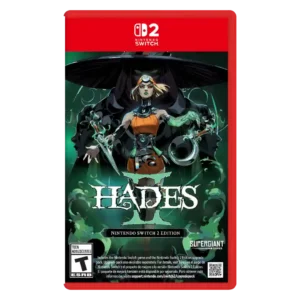
Good if you want deeper Hades-style roguelite combat, huge build variety, polished art, and rewarding progression. Skip it if repetition, resource tracking, or a less intimate story than the original...
Pros: world interactivity, side character depth
Cons: grind level
Best for a stylish, emotional RPG with deep timed combat and exceptional music. Skip it if tight parry timing, weak maps, or awkward platforming would frustrate you.
Pros: world-building, crash stability
Cons: platforming precision, map and navigation design
Choose it if you want classic turn-based Dragon Quest modernized with richer stories, gorgeous HD-2D visuals, and helpful quality-of-life options. Skip it if random encounters, grinding, or occasional difficulty spikes...
Pros: visual effects quality, environmental detail
Cons: AI behavior, level design
Best for gorgeous beat-em-up combat, standout music, strong co-op, and replayable buildcrafting. Skip it if grind-heavy roguelite progression, repeated routes, or thin endgame content will wear you down.
Pros: mission design, world interactivity
Cons: quest design, endgame content