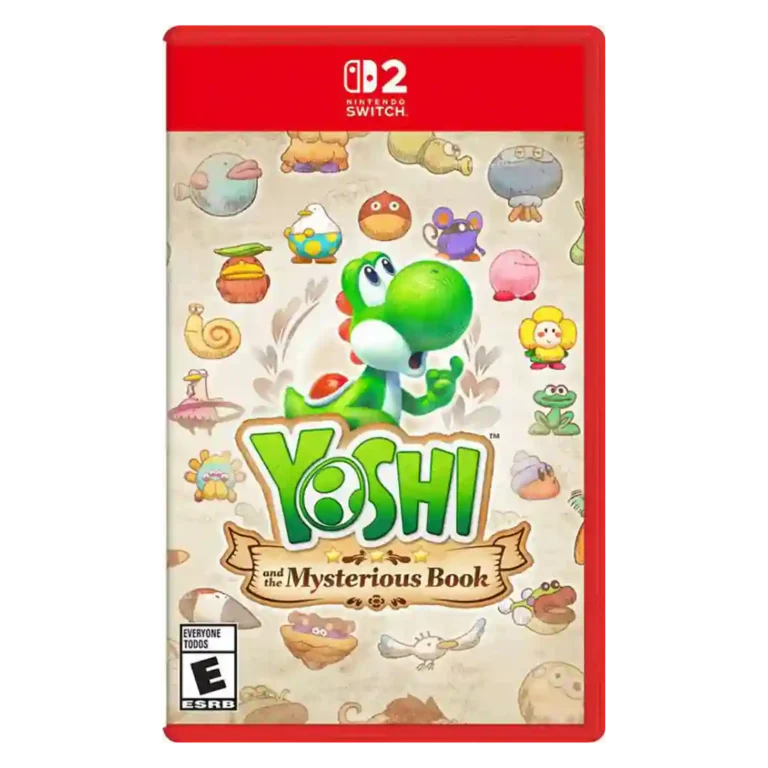
- Review score
- 4.4
Yoshi and the Mysterious Book Review
Bottom Line
Choose it for charming creature experiments, relaxed exploration, and family-friendly puzzle play. Skip it if you want demanding platforming, substantial co-op, or a long story-driven campaign.
Best for younger players, families, completionists, and anyone who enjoys cozy experimentation, hidden interactions, and low-pressure exploration. It also suits longtime Yoshi fans open to a major structural change.
Not ideal for players seeking difficult platforming, meaningful combat stakes, deep narrative, or cooperative play. Those who dislike collectathons, repeated experimentation, or short campaigns may lose interest.
Yoshi and the Mysterious Book succeeds by replacing conventional stage-clearing with curiosity. Its compact pages are packed with creatures whose abilities, reactions, and environmental interactions turn exploration into a playful science experiment. The hand-drawn presentation, expressive animation, and gentle atmosphere make it especially inviting for children, families, and adults seeking a low-pressure game. Completionists also get meaningful reasons to revisit earlier pages as new discoveries and tools appear. The tradeoff is that the main path offers almost no danger, bosses lack tension, and some puzzles rely on overly specific solutions or weak hints. A short campaign, repetitive musical loops, occasional finicky physics, and the absence of co-op may further limit its appeal. It is inventive, polished, and frequently delightful, but best approached as a cozy discovery toybox rather than a demanding traditional platformer.
Feature Scorecards
Summary
40 reviewed features-
Very positive 4.5-5.018 (45%)
-
Positive 3.5-4.417 (43%)
-
Neutral 2.5-3.45 (13%)
-
Negative 1.5-2.40 (0%)
-
Very negative below 1.50 (0%)
Pros
-
Yoshi remains exceptionally expressive, adorable, and easy to root for. His reactions to creatures and discoveries give the otherwise light story much of its personality.
-
The presentation, character reactions, and discovery feedback show considerable care and Nintendo-style polish. Even critical reviewers often acknowledged the game’s crafted charm.
-
The gentle tone, absence of harsh failure, and playful experimentation make this a strong family-friendly choice. It is especially welcoming for younger or less experienced players.
-
Performance is generally smooth, including busy scenes with many creatures. Reviewers noted only rare dips, with docked play usually presenting the most consistent results.
-
The bright storybook imagery looks attractive and distinctive, particularly in docked mode. A minority of reviewers thought handheld image quality looked softer than expected.
-
Loading is quick and unobtrusive, helping the game maintain its relaxed flow between pages and discoveries.
-
Basic movement and flutter jumping feel dependable and rarely cause frustration. Precision is intentionally de-emphasized, though a few specialized interactions can be awkward.
-
The creature-research concept gives the game a distinctive identity within both the Yoshi series and 2D platformers. Its unusual mix of sandbox play, puzzles, and observation feels genuinely fresh.
-
The game boldly reframes a Yoshi platformer as an interactive creature study built around experimentation. Reviewers widely praised its willingness to prioritize discovery over conventional stage completion.
-
New creatures continually introduce different abilities, interactions, and level gimmicks, so the adventure rarely runs out of ideas. Some reviewers wished the best mechanics were developed across more stages.
-
Exploration is the heart of the game, rewarding curiosity with secrets, creature reactions, and unexpected solutions. Reviewers consistently found the discovery process satisfying and inviting.
-
Cheerful creature noises, discovery cues, and familiar Yoshi effects reinforce the playful tone. The audio feedback gives interactions extra personality.
-
The hand-drawn, watercolor storybook presentation is one of the game’s clearest strengths. Reviewers repeatedly praised its bright environments, imaginative creatures, and warm illustrated look.
-
This is a cozy, whimsical, low-pressure adventure designed for relaxed play. Its sweetness is comforting for most reviewers, though a few found the tone overly sugary or sleepy.
-
For players who enjoy curiosity-driven play, the constant small surprises are joyful and frequently smile-inducing. The fun is quieter and more experimental than a traditional action platformer.
-
Choosing Yoshi colors and naming discovered creatures adds a playful personal touch. Customization is charming but relatively limited beyond those options and a few interface settings.
-
The story is light and secondary to the creature experiments, offering just enough context to connect the chapters. Players seeking a strong plot or dramatic stakes may find it thin.
-
Creature names, visual jokes, and gentle humor add personality throughout the book. Dialogue and plot writing are simple, serving the playful experiments rather than carrying the experience.
-
The forgiving main path and playful creature experiments are well suited to children, while hidden discoveries give curious adults more to do. A few puzzles may still require help from an older player.
-
Stars, discoveries, and newly appearing creatures provide frequent rewards and steadily open more chapters. Revisiting earlier pages with new knowledge adds satisfying layers, though late completion can require persistence.
-
Frame-skipped, stop-motion-like animation gives Yoshi and the creatures a handmade personality that fits the living-book theme. Character reactions are expressive and often part of the charm.
-
The strongest puzzles reward observation, experimentation, and lateral thinking rather than reflexes. Some solutions are overly specific or poorly hinted, creating occasional frustration.
-
Revisited pages gain new creatures, interactions, collectibles, and postgame objectives, giving completionists substantial extra work. Players focused only on the main story will finish much sooner.
-
Creatures, foods, terrain, water, temperature, and other systems combine in surprising ways, making pages feel reactive. Occasional physics problems keep the interactions from feeling consistently seamless.
-
Docked play benefits from sharp presentation, smooth performance, and strong use of the Switch 2 display output. Handheld mode remains playable but drew occasional criticism for softer visuals or minor dips.
-
The no-fail structure, optional hints, and multiple control layouts make the game unusually approachable. Some reviewers still wanted stronger visual accessibility options and clearer guidance when puzzles become obscure.
-
The single-player focus lets stages avoid multiplayer compromises, but families looking for local cooperative play receive no couch co-op mode.
-
Most stages work as compact, open-ended sandboxes filled with interactions rather than simple left-to-right courses. The best pages feel dense and clever, while weaker ones can seem small, empty, or unclear.
-
Creature abilities transform Yoshi’s familiar moves into a wide range of playful experiments and puzzle solutions. A few mechanics feel underdeveloped or awkward, but the overall system is inventive.
-
Yoshi’s familiar moves, cheerful personality, and visual nostalgia remain intact, but the structure is a major departure from traditional stage-based platforming. That reinvention delighted many reviewers and disappointed some series purists.
-
The inventive concept and extensive completion goals can justify the purchase for cozy-game fans and completionists. The short, easy main story may feel light for players judging value by campaign length or challenge.
-
The living encyclopedia and its connected ecosystems create an inviting storybook world with memorable creatures. Lore and dramatic context remain intentionally light.
-
The music is gentle, cheerful, and well matched to the cozy environments. Several reviewers felt the recurring themes or short loops became repetitive during longer searches.
-
Yoshi generally feels smooth, familiar, and responsive, especially during ordinary movement and flutter jumping. Certain physics-heavy creatures, throws, and ground-pound inputs can feel finicky or chaotic.
-
Optional exploration tools can expose useful information and help track secrets, with flexible placement on screen. They arrive late and can make the display feel cluttered if too many are enabled.
Cons
-
Experimenting with creatures, earning discoveries, and revisiting pages creates a rewarding feedback loop. Players who do not enjoy repeated trial-and-error or collectathon structure may find it repetitive.
-
Boss encounters provide colorful action breaks and inventive creature-based set pieces. Their impact is softened by the lack of real danger or failure, making some finales feel anticlimactic.
-
The main story is extremely forgiving, with no meaningful death penalty and little platforming pressure. Hidden discoveries and completion goals add thoughtfulness, but challenge-focused players may still feel underserved.
-
The complete absence of co-op was a recurring disappointment, especially for families who enjoyed earlier Yoshi games together. One reviewer appreciated the focused single-player design, but the broader response favored having an option.
-
The relaxed rhythm works well in short sessions and suits the bedtime-story atmosphere. For some reviewers, repeated dialogue, backtracking, or stop-start puzzle solving made the adventure drag.
Compared With Category Average
Compared with other Video Games, this product is above average in platforming precision, protagonist appeal, age appropriateness, below average in co-op experience.
Summary
8 compared features-
Above average 0.4+ pts higher7 (88%)
-
Same as average within 0.3 pts0 (0%)
-
Below average 0.4+ pts lower1 (13%)
| Attribute | This product | Category average | Difference |
|---|---|---|---|
| platforming precision | 5.0 | 3.2 | +1.8 |
| protagonist appeal | 5.0 | 3.9 | +1.1 |
| age appropriateness | 4.4 | 3.3 | +1.1 |
| co-op experience | 2.8 | 4.3 | -1.5 |
| family friendliness | 5.0 | 3.6 | +1.4 |
| originality | 4.9 | 3.9 | +1.0 |
| polish | 5.0 | 3.9 | +1.1 |
| innovation | 4.9 | 4.1 | +0.9 |
FAQ
Is it a traditional Yoshi platformer?
Not really. It keeps Yoshi’s familiar movement and egg-throwing abilities, but the main focus is exploring small sandbox-like pages and discovering how creatures react.
Is it suitable for children?
Yes. The main path has no meaningful death penalty and is designed to be approachable, though some hidden discoveries may require lateral thinking or adult help.
Is the game challenging?
The main story is very easy, including most boss encounters. The greater challenge comes from finding hidden flowers, completing creature entries, and solving less obvious optional interactions.
Does it have co-op multiplayer?
No. The game is built as a single-player experience, and the missing co-op mode was a recurring complaint among reviewers.
How much replay value is there?
The main campaign is relatively short, but completionists can revisit pages for new creature combinations, hidden discoveries, postgame chapters, collectibles, and exploration tools.
Sample Expert Reviews We Analyzed
These are a few of the reviews included in our analysis.

Video Reviews
- Review score
- 4.1
- Review score
- 4.1
Article Reviews
Curiosity and play are embraced in this fantastic experimental adventure, but Yoshi and the Mysterious Book is more of a brief read than a...
- Review score
- 4.4
Anthony takes a look at what’s in a book, with a dinosaur.
- Review score
- 4.3
Yoshi and the Mysterious Book review for Nintendo Switch 2. Rated 7/10. Creativity bursts from every page of this imaginative and relaxing...
- Review score
- 4.7
Yoshi is a character that I have loved ever since I played Super Mario World on the Super Nintendo.
- Review score
- 3.9
You know how a good book can suck you right in and not let go until you finish? Well, our green dinosaur friend Yoshi stumbled upon one just...
- Review score
- 3.4
Consider This Instead
If you want better core gameplay loop
Choose It Takes Two. It scores 5.0 vs 3.3 for core gameplay loop, with a 4.4 overall score.
If you want better faithfulness to franchise
Choose Pokémon Pokopia. It scores 4.8 vs 3.8 for faithfulness to franchise, with a 4.2 overall score.
If you want better co-op experience
Choose Split Fiction. It scores 4.8 vs 2.8 for co-op experience, with a 4.0 overall score.
If you want better replay value
Choose Donkey Kong Bananza. It scores 4.9 vs 4.2 for replay value, with a 4.4 overall score.
Top Video Games to Consider
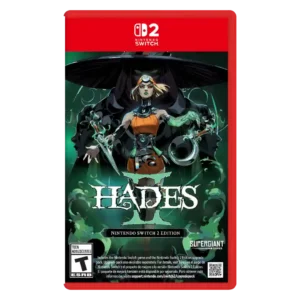
Good if you want fast, tactical roguelite combat with huge progression depth, striking art, and standout music. Skip it if repetition, resource micromanagement, or a less emotionally satisfying sequel story...
Pros: skill tree depth, dialogue quality
Cons: emotional impact, economy and resource balance

Best for joyful destruction, dense exploration, and a charming DK-Pauline adventure. Skip it if camera quirks, frame-rate dips, easy bosses, or premium Switch 2 pricing are dealbreakers.
Pros: gameplay mechanics, world interactivity
Cons: economy and resource balance, enemy variety
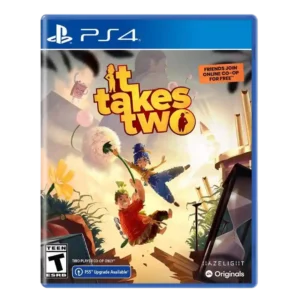
Best for joyful, inventive co-op with a partner, especially on couch. Skip it if divorce themes, uneven story tone, or Switch visual compromises would distract you.
Pros: core gameplay loop, movement feel
Cons: character development, dialogue quality
Best for tense Grace-led horror, slick Leon action, and lavish franchise callbacks. Skip it if you want a bolder reinvention, evenly mixed pacing, or substantial post-game modes.
Pros: driving mechanics, protagonist appeal
Cons: platform-specific feature support, checkpoint system