Best for optical
Bluesound Pulse Cinema Soundbar
4.8 feature score
Highest scored product for this feature based on supporting review evidence.
Highest scored product for this feature based on supporting review evidence.
Balances feature score, supporting reviews, and overall product strength.
Has the broadest review evidence for this feature.
Strongest overall product among items with scored evidence for this feature.
Showing Sound Bars only. Switch back to all Speakers anytime.
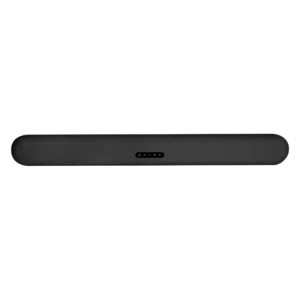
Optical input is available for legacy TVs, but Dolby Atmos playback depends on HDMI eARC rather than optical.
Pros: Wired input availability, Dialogue clarity (for TV/soundbar use)
Cons: Chromecast compatibility, EQ customization
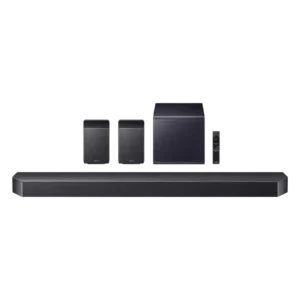
An optical input is included for older TVs and devices, providing a simple fallback when HDMI eARC/ARC is unavailable.
Pros: Audio format support, Cohesive presentation
Cons: none
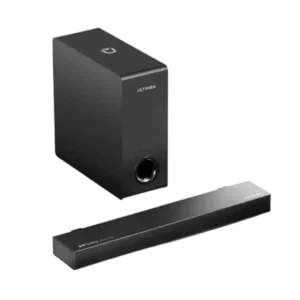
Optical input is included and meaningfully broadens compatibility with older TVs and sources. Reviews did not report a clear sound-quality advantage over HDMI, but the connection itself is a useful...
Pros: Setup simplicity, Wired input availability
Cons: Smart features, Low-volume performance
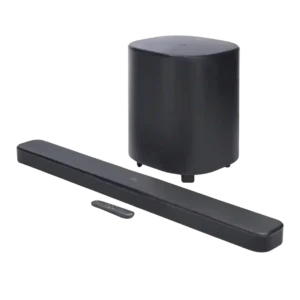
Optical input is mentioned as an available fallback connection. Reviewers also note optical can be limiting for carrying Atmos compared with HDMI eARC.
Pros: Spotify Connect reliability, Frequency response balance
Cons: Smart assistant integration (Alexa
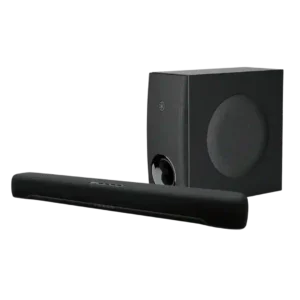
Optical input is repeatedly mentioned as a useful fallback for older TVs and as an easy, reliable way to get up and running when HDMI/ARC is inconvenient.
Pros: Wired input availability, Low-volume performance
Cons: Wi-Fi streaming reliability, AirPlay compatibility
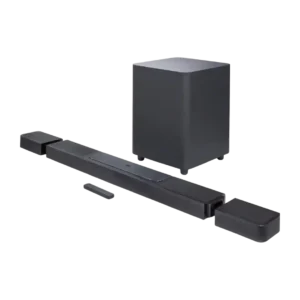
Reviews consistently mention an optical input as part of the connection set.
Pros: Loudness / maximum volume, Detail retrieval
Cons: HDMI 2.1 gaming, Cabinet construction / bracing
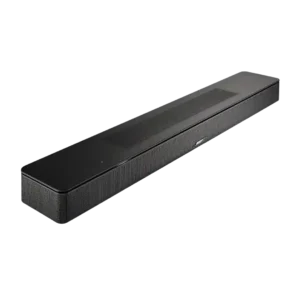
Optical input is a useful fallback for older TVs, but reviewers repeatedly noted that HDMI is the better connection for full capability.
Pros: Weight convenience, Setup simplicity
Cons: Gaming HDMI passthrough, HDMI 2.1 gaming
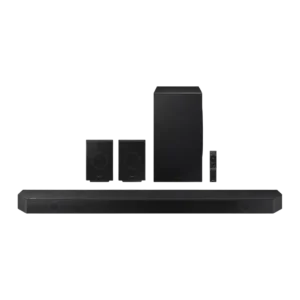
Optical input is available as a legacy fallback, but multiple sources note it limits advanced formats like Dolby Atmos compared with HDMI eARC.
Pros: Multi-speaker pairing reliability, Audio format support
Cons: Status indicators
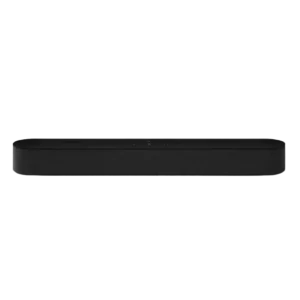
Optical support is available through an adapter, which helps older TVs even though HDMI ARC is the preferred connection.
Pros: Weight convenience, Dialogue clarity (for TV/soundbar use)
Cons: Bluetooth codec support, Dolby Atmos height effects
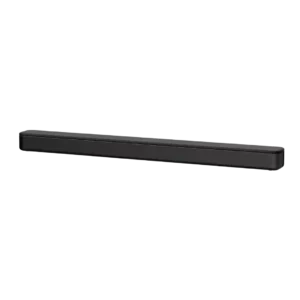
Optical input support is a practical backup for TVs without ARC, though reviewers generally prefer HDMI ARC for better convenience and control.
Pros: Setup simplicity, Dialogue clarity (for TV/soundbar use)
Cons: Wi-Fi streaming reliability, Smart assistant integration (Alexa
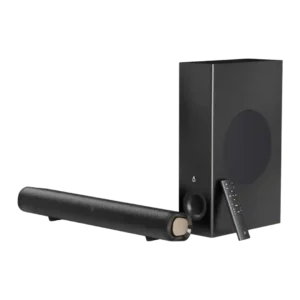
Optical input is commonly used as a stable fallback for TVs, though it may require separate remote control handling depending on the source device.
Pros: Value for money, Setup simplicity
Cons: Wi-Fi streaming reliability, App reliability
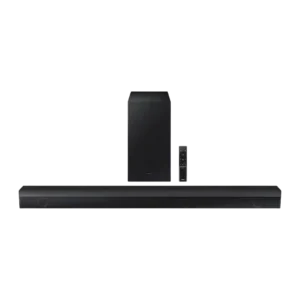
One review directly lists optical among the available connections.
Pros: Setup simplicity, Value for money
Cons: Wi-Fi streaming reliability, AirPlay compatibility

Optical connectivity is typically handled via an adapter for older TVs, but it is generally positioned as a compatibility fallback rather than the best route for Atmos.
Pros: Inter-speaker connectivity, Loudness / maximum volume
Cons: Bluetooth codec support, Video passthrough support

Optical support exists through an adapter, but reviewers caution that using optical removes Dolby Atmos capability.
Pros: Smart assistant integration (Alexa, Dialogue clarity (for TV/soundbar use)
Cons: Bluetooth codec support, Gaming HDMI passthrough