Best for local dimming performance
MSI MPG 322URX QD-OLED
5.0 feature score
Highest scored product for this feature based on supporting review evidence.
Highest scored product for this feature based on supporting review evidence.
Balances feature score, supporting reviews, and overall product strength.
Has the broadest review evidence for this feature.
Strongest overall product among items with scored evidence for this feature.
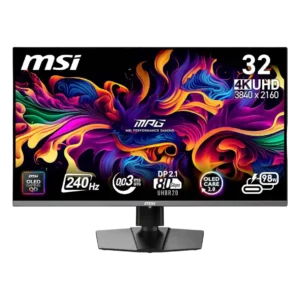
Because each OLED pixel controls its own light, bright objects appear without blooming or halos. Reviewers described dark-scene separation as essentially ideal.
Pros: response time, motion clarity
Cons: warranty and support service, sleep and wake behavior
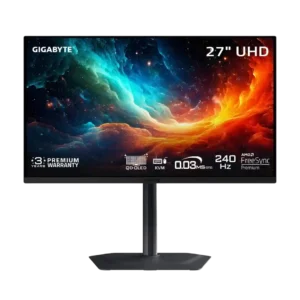
Per-pixel lighting eliminates zone transitions and sharply limits blooming around bright objects. High-contrast scenes look cleaner than on zone-lit LCDs.
Pros: input lag, viewing angles
Cons: color accuracy, software support
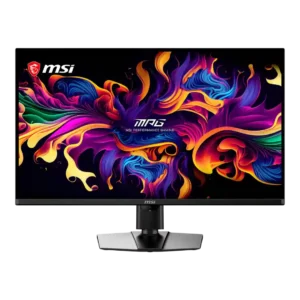
Per-pixel local dimming produces precise highlights without halos or blooming. Reviewers consider it fundamentally superior to even full-array local-dimming LCDs for dark HDR scenes.
Pros: panel type, response time
Cons: built-in speakers, curved screen immersion
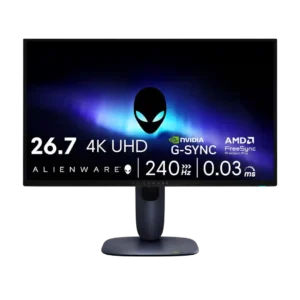
Local dimming was treated as a strength because OLED’s per-pixel control minimized blooming in high-contrast scenes.
Pros: response time, contrast
Cons: built-in speakers, software support
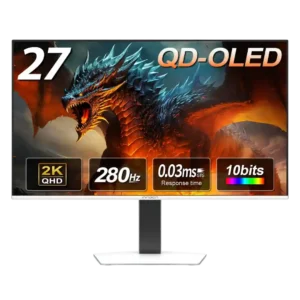
Per-pixel OLED lighting produces clean dark scenes without the halos associated with zone-based backlights.
Pros: screen size, panel type
Cons: KVM switch performance, USB hub functionality
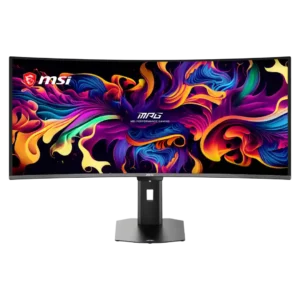
Per-pixel OLED lighting is more precise than even full-array local dimming, eliminating blooming and preserving tiny bright details against black backgrounds.
Pros: screen size, panel type
Cons: Resolution, cable management
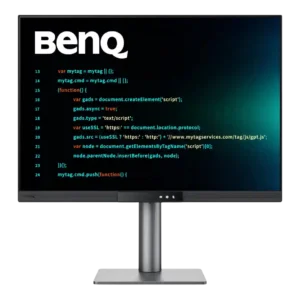
The static backlight cannot provide meaningful local dimming. Dark HDR scenes lose depth and highlights lack the separation available from OLED or advanced mini-LED displays.
Pros: VESA mount compatibility, productivity versatility
Cons: HDR performance, local dimming performance