If you want better Resolution
Choose Dell UltraSharp 52 Thunderbolt Hub Monitor, U5226KW. It scores 4.8 vs 2.5 for Resolution, with a 4.3 overall score.
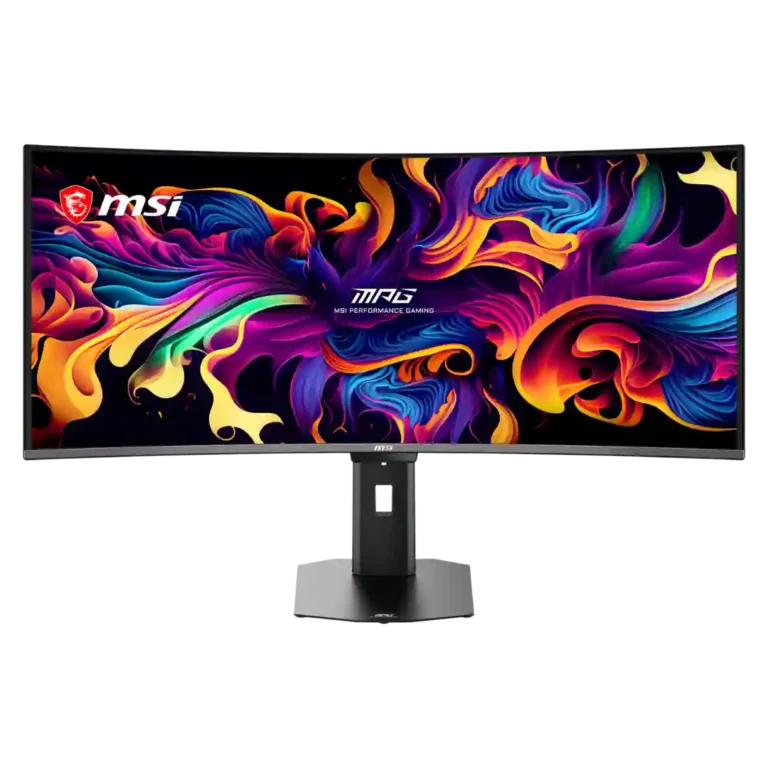
Choose it for class-leading 360Hz ultrawide motion, spectacular HDR, deep blacks, and unusually strong work-and-play connectivity. Skip it if you want 4K-like text sharpness, a matte screen, or the best value over cheaper 240Hz OLEDs.
Best for PC gamers who want the fastest 34-inch OLED ultrawide, cinematic HDR, and enough USB-C, KVM, and color capability to use one display for gaming and productivity.
Skip it if you prioritize 4K-level text sharpness, work in strong direct light, mainly play esports on 16:9, or can get everything you need from a cheaper 240Hz OLED.
The MSI MPG 341CQR QD-OLED X36 pushes the 34-inch ultrawide format forward with a fifth-generation QD-OLED panel that meaningfully improves brightness, ambient-light black depth, text rendering, and durability. Its biggest strengths are spectacular HDR, effectively perfect blacks, near-instant response, and outstanding 360Hz motion clarity, backed by HDMI 2.1, DisplayPort, 98W USB-C, KVM, and extensive OLED Care features. It is also far more credible for productivity than older QD-OLED ultrawides because colored text fringing is largely gone. The tradeoffs are familiar but real: 3440×1440 across 34 inches still looks soft beside 4K, the glossy coating can reflect strong light, VRR may flicker in dark unstable scenes, and early firmware or sensor behavior sometimes needs tuning. It is a premium purchase, but one of the most complete ultrawide gaming monitors available.
Compared with other Monitors, this product is above average in sleep and wake behavior, HDR performance, warranty and support service, near average in sharpness, overall satisfaction, below average in Resolution, cable management, design and aesthetics.
| Attribute | This product | Category average | Difference |
|---|---|---|---|
| Resolution | 2.5 | 4.7 | -2.2 |
| sleep and wake behavior | 4.0 | 2.7 | +1.4 |
| HDR performance | 4.2 | 3.1 | +1.1 |
| warranty and support service | 4.7 | 3.3 | +1.4 |
| cable management | 2.8 | 3.9 | -1.1 |
| competitive gaming suitability | 4.7 | 3.7 | +1.0 |
| delivery condition | 5.0 | 3.9 | +1.1 |
| design and aesthetics | 3.7 | 4.5 | -0.9 |
Choose Dell UltraSharp 52 Thunderbolt Hub Monitor, U5226KW. It scores 4.8 vs 2.5 for Resolution, with a 4.3 overall score.
Choose MSI MPG 322URX QD-OLED. It scores 4.8 vs 4.4 for sharpness, with a 4.1 overall score.
Choose MSI MPG 322UR QD-OLED X24. It scores 5.0 vs 4.1 for screen uniformity, with a 4.4 overall score.
Choose Gigabyte MO27U2 Gaming Monitor. It scores 4.5 vs 3.7 for design and aesthetics, with a 4.1 overall score.
Products reviewers directly compared with this model, grouped into quick takeaways.
It is a large upgrade from 120Hz or 175Hz and a visible improvement over 240Hz, especially in fast games. The 240Hz-to-360Hz jump is meaningful but not transformative enough by itself to justify upgrading for everyone.
HDR is one of the monitor’s strongest features, with perfect blacks, vivid color, and small highlights reaching roughly 1,300 nits. EOTF Boost usually gives the best balance, though large bright scenes remain less luminous than the best LCD or Tandem WOLED displays.
The RGB stripe subpixel layout largely eliminates the colored text fringing found on earlier QD-OLED monitors. Text is cleaner and practical for daily work, but 3440×1440 at 34 inches still looks softer than a 4K monitor.
Yes. Dual HDMI 2.1 ports, VRR, ALLM, CEC, and a console mode support modern systems, including acceptance of 4K HDR signals. Consoles typically render in a 16:9 area rather than filling the full 21:9 screen.
OLED Care 3.0 combines pixel shifting, static-logo and taskbar dimming, panel refresh cycles, and presence-based dimming or shutoff. The three-year warranty also includes burn-in coverage, though no OLED can eliminate the risk entirely.
It is compelling for buyers who value 360Hz, improved text rendering, stronger HDR, and the full USB-C/KVM feature set. A discounted 240Hz QD-OLED remains the better value when those upgrades are not important.
These are a few of the reviews included in our analysis.
![I tried the new Ultrawide 360Hz MSI OLED gaming monitor [MSI MPG 341CQR X36 Review]](https://servicedig.com/wp-content/uploads/2026/05/59399_thumb-150x150.webp)
![QD-OLED vs Regular Monitors - 95% perfect, The Truth After 3 Months [MSI MPG 341CQR X36]](https://servicedig.com/wp-content/uploads/2026/05/59401_thumb-150x150.webp)

![MSI MPG 341CQR QD-OLED X36 Monitor - The Ultrawide PC OLED Has Come of Age [Sponsored]](https://servicedig.com/wp-content/uploads/2026/03/59388_thumb-150x150.webp)
The MSI MPG 341CQR QD-OLED X36 features a brand-new 5th generation panel with improved subpixel layout, brightness, coating and more!
The MSI MPG 341CQR QD-OLED X36 delivers stunning visuals and exceptional speed in a 360Hz ultra-wide monitor package.
MSI MPG 341CQR QD-OLED X36 34" pros and cons. Liked: New V-Stripe (RGB Stripe) subpixel layout gives much better text clarity compared to...
The MSI MPG 341CQR isn’t quite perfect, but it delivers great image quality and plenty of features at an attractive price. That makes it easy...
The MSI MPG 341CQR QD-OLED X36 is a stunning gaming monitor featuring a large curved screen and a 21:9 aspect ratio. The new 5th-generation...
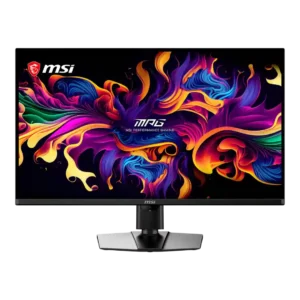
Best for exceptional 4K HDR, accurate color, fast 240Hz gaming, and strong work connectivity. Skip it if you need built-in speakers, ultrawide immersion, television-level HDR brightness, or a budget-friendly upgrade.
Pros: panel type, response time
Cons: built-in speakers, curved screen immersion
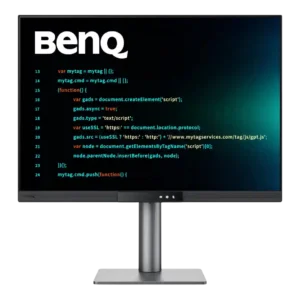
Choose the RD280UG for coding, trading, writing, or creative work that benefits from a tall, sharp 3:2 screen and strong eye-care features. Skip it for serious HDR, color-critical creation, esports,...
Pros: VESA mount compatibility, productivity versatility
Cons: HDR performance, local dimming performance
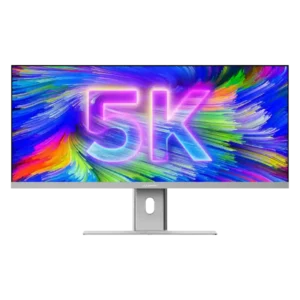
Best for a single, expansive Mac-friendly workspace with excellent color, sharp 5K2K detail, and one-cable docking. Skip it if you need strong HDR, competitive-gaming response, powerful speakers, or a stand...
Pros: productivity versatility, aspect ratio
Cons: HDR performance, HDMI 2.1 support
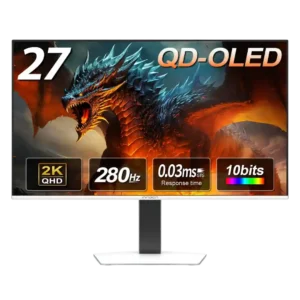
Best for fast 1440p OLED gaming, deep blacks, and a flexible stand at a bargain sale price. Skip it for bright rooms, USB-C/KVM productivity, or the reassurance of a three-year...
Pros: screen size, panel type
Cons: KVM switch performance, USB hub functionality