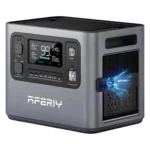
AFERIY P280 Feature Scores
Explore all 112 feature scores for AFERIY P280, organized into pros and cons.
Scores by Feature
Summary
112 reviewed features-
Very positive 4.5-5.069 (62%)
-
Positive 3.5-4.419 (17%)
-
Neutral 2.5-3.417 (15%)
-
Negative 1.5-2.47 (6%)
Pros
Sort
-
Overall sentiment is strongly positive because the P280 combines high output, fast charging, efficient usable capacity, expansion, and aggressive pricing. The app, weight, and voltage behavior are the main reservations.
-
Expansion is one of the clearest strengths: up to four extra packs can raise storage to about 10.24kWh. The main caveats are added cost, bulk, and the need to confirm compatible components.
-
Discount prices around the mid-$600s to mid-$700s were repeatedly called exceptional for the output and features. Value is less compelling near the full list price.
-
The 2,800W inverter successfully ran kettles, air fryers, heaters, saws, washing machines, and other demanding appliances. Loads near or above the limit require caution because voltage can sag.
-
Runtime is strong for the class: tests included roughly 28 hours on a refrigerator, extensive cooking and charging, and days of light-duty mobile use.
-
The P280 can run a broad mix of AC, DC, and USB devices together, including household appliances and full camper electrical systems.
-
UPS operation is one of the P280’s strongest features, with rapid, seamless transfers that kept PCs and networking equipment online.
-
Long-life cells, charge-limit controls, and the high cycle rating give owners confidence that the battery can remain useful for many years.
-
AC charging is consistently fast, typically reaching most of a charge in about an hour and a full charge in roughly 90 minutes to two hours. A few tests ran slower than Aferiy’s headline claim.
-
The 2,800W continuous output is the defining strength, providing enough headroom for serious appliances, tools, RV loads, and selected backup circuits.
-
With enough panel capacity, solar charging can be very fast and approached 1kW in imperfect conditions. Small bundled panels require far longer.
-
Measured transfer times of roughly 8–9.5ms kept desktop computers and other sensitive electronics running through simulated outages.
-
Within its rating, the P280 handled large appliances and tools reliably, often running several loads together without shutting down.
-
Two 600W inputs provide up to 1,200W of solar charging, one of the strongest capabilities in this size and price class.
-
Two 140W USB-C PD ports are repeatedly praised for fast-charging laptops and other demanding devices without bulky AC adapters.
-
The 25A XT60 output earns strong praise for powering demanding 12V equipment and multiple camper loads without needing the AC inverter.
-
AC and DC or solar charging can operate together, substantially increasing recharge speed. Some tests found the combined input fluctuated rather than remaining perfectly steady.
-
Large, sturdy side handles make two-person lifting secure and give a good grip when moving the heavy unit.
-
The app can switch AC, DC, USB, and lighting functions and adjust charging behavior, useful when the station is installed out of reach.
-
Independent XT90 controllers accept different arrays and work well with portable or residential panels, provided the 55V limit is respected.
-
The large, bright screen is consistently praised for presenting battery level, power flow, active outputs, and timing information clearly.
-
The station is generally quiet in ordinary use and much more pleasant than a fuel generator. Fan and inverter noises become more noticeable at maximum load or in silent rooms.
-
The P280 is well suited to short outages, keeping refrigeration, internet, lights, and selected appliances running. Expansion batteries make longer backup periods far more practical.
-
The charging cables, solar lead, cable pouch, and protective cover form a useful package that many competing stations do not include.
-
Measured usable capacity was generally strong, ranging from about 85% to over 92% depending on output and test method.
-
The 12V system is a standout for camper and RV use, with reviewers successfully running fridges, heaters, lights, pumps, and other vehicle loads.
-
The 4,000-plus-cycle rating is a major selling point and supports expectations of roughly a decade of regular use.
-
Several owners used the station daily for weeks or months without faults, including sustained RV, boat, and winter use.
-
Warranty coverage is potentially generous at five to seven years, though terms varied between reviews and confidence in long-term support remains cautious.
-
Cooling is highly effective, with low measured internal temperatures and good airflow even under heavy loads. Fan loudness depends on load and conditions.
-
The display and app provide detailed live information on incoming power, outgoing loads, active ports, battery level, and estimated time remaining.
-
Scheduled charging can take advantage of off-peak electricity, while solar use and low idle draw can reduce the cost of running household or mobile equipment.
-
Remote status checks are valuable in boats, vans, garages, or outbuildings, showing charge level, loads, and power flow without visiting the unit.
-
The integrated RV connection is a major advantage, letting owners plug in a trailer directly and run most or all normal RV loads.
-
AC idle draw of roughly 15W and very low DC idle consumption rank among the better results for a station this powerful.
-
The station can power devices while charging and can pass grid power directly through in UPS use. Heavy AC loads may shut down the inverter while DC and charging continue.
-
The station lacks a formal dust rating, but the included cover is widely appreciated for protecting vents and ports during storage.
-
The hardware generally feels solid, sturdy, and well assembled for the price. It lacks some of the refinement and premium materials found on established-brand competitors.
-
Large percentages and bold input/output figures make the display easy to read from a useful distance.
-
The all-in-one design is far simpler than assembling batteries, an inverter, charge controllers, fuses, and heavy cabling separately.
-
Owners describe the station as straightforward and convenient, especially compared with custom RV or van electrical systems.
-
The two built-in MPPT controllers tracked panels effectively and remove the need for a separate controller in many RV or off-grid setups.
-
The advertised 5,600W peak capability is viewed as a strong specification, although high-inrush behavior still involves voltage throttling.
-
High AC input replenishes the battery quickly, which is especially useful when generator or grid availability is brief.
-
High solar input, dual controllers, expansion, and quiet operation make the P280 particularly capable for RV, van, and off-grid energy use.
-
The clean industrial styling looks purposeful and well suited to backup or worksite use.
-
Dual XT90 inputs offer excellent flexibility for solar, batteries, and vehicle charging, but the 55V ceiling restricts series-panel configurations and requires careful array planning.
-
It is relatively portable for a 2kWh station and easier to move than many rivals, but nearly 50 pounds still limits frequent solo carrying.
-
The combination of AC, high-power USB-C, USB-A, regulated 12V, and high-current XT60 outputs covers a wide range of home, RV, and mobile devices.
-
Oscilloscope testing confirmed pure sine wave output, making the station suitable for normal electronics, though distortion appeared at maximum load.
-
The 30A-style connection makes whole-RV hookup simple, but available current is ultimately capped by the inverter’s 2,800W limit.
-
LiFePO4 chemistry is seen as a major safety and durability upgrade over older lithium-ion designs.
-
Adjustable charge and discharge limits, low-battery shutdown, and UPS settings provide strong control over battery care.
-
Multi-week testing and extended daily use produced no battery failures, supporting strong early confidence in reliability.
-
The modular system can grow from 2,048Wh to roughly 10.24kWh, making it adaptable from portable use to extended backup.
-
The high AC input makes brief generator runs productive, allowing substantial energy to be captured before fuel-powered charging is stopped.
-
Thermal performance is excellent under sustained load, with fans keeping internal temperatures comfortably controlled.
-
The LiFePO4 pack is valued for its safer thermal behavior, long cycle life, and suitability for years of backup use.
-
Double-boxed packaging provided strong shipping protection and made a good first impression.
-
The P280 sustained its full 2,800W rated load for 15 minutes without shutting down.
-
The station sustained its full 2,800W rating for a 15-minute test without shutting down.
-
The included XT90-to-MC4 cable makes it easy to connect common portable or residential solar panels.
-
The TT-30 connection successfully fed a manual transfer switch and powered selected building circuits.
-
The 30A RV connection let one owner power an entire trailer directly, demonstrating simple integration for mobile-home electrical use.
-
Wi-Fi enables monitoring and output control beyond Bluetooth range, including remote checks on boats and other unattended installations.
-
The app offers useful monitoring, scheduling, charge limits, and remote switching, but experiences vary sharply. Some found it convenient, while others reported failed connections, inaccurate settings, slow responses, or rough localization.
-
Firmware support adds useful maintenance potential and may improve app or voltage behavior, though some fixes were still pending during testing.
-
The inverter delivers strong real-world performance and generally clean power, but faint electrical noise and voltage throttling prevent it from feeling fully polished.
-
Usable-energy and low-load tests were generally solid, with efficient operation across both AC and DC use.
-
The 2,048Wh base battery is considered ample for shorter outages, RV use, and several hours of demanding household loads.
-
Despite its 2kWh capacity, the unit was considered fairly compact and practical for vehicle-based travel.
-
Front-facing controls, a large display, and logically separated side ports make the station easy to understand at a glance.
-
The chassis feels robust and well assembled, giving confidence for regular backup, workshop, and travel use.
-
AC and DC outputs shut down when their tested limits were exceeded, while unaffected outputs often remained available.
-
Listed PSE, CE, FCC, and RoHS certifications add confidence that the unit has undergone recognized safety and emissions testing.
-
The included cover and cable pouch help keep the station and accessories organized and protected between uses.
-
The TT-30 connection is highly useful for RVs and manual-transfer setups, though total output remains limited by the 2,800W inverter.
-
Four USB-C ports provide a useful mix of two 140W laptop-class outputs and two 20W ports for smaller devices.
-
Grid charging returned roughly 90% efficiency in testing, a solid result for a large battery system.
-
The station operated normally around freezing in one outdoor test, though there was no deeper extreme-cold evaluation.
-
Rubber covers and a sturdy enclosure add useful protection, though the station is not built as a fully ruggedized outdoor unit.
-
Default standby behavior can turn off unloaded DC outputs, but app settings allow owners to prevent unwanted shutdowns.
-
Rubber port flaps provide useful splash protection, but the unit does not have a full waterproof rating.
-
Noise results varied with conditions: one test measured a noticeable 57dB, while another stayed around 50dB and called the unit quiet.
-
At nearly 50 pounds, the unit is awkward for one person to lift from the floor but well suited to a coordinated two-person carry.
-
The inverter normally supplies clean pure-sine power, but slight distortion and voltage sag appear near maximum output.
-
Individual tools with high startup demand generally ran, but combining large inductive loads produced delay and substantial voltage drop.
-
Fans on both ends provide good airflow, but the station should not be pressed against a wall or enclosed tightly during heavy operation.
Cons
Sort
-
The largest technical concern is voltage throttling above or near the inverter limit. Tests recorded severe sag, so sensitive electronics should not be used when pushing beyond 2,800W.
-
Connection reliability is a weak point, especially on iOS, where pairing and reconnection failures were repeatedly encountered.
-
Voltage stays acceptable at rated loads but can fall sharply once demand exceeds the limit, creating risk for sensitive electronics and motors.
-
Protective flaps help shield ports but can make sockets fiddly to reach, particularly when an expansion battery cable is attached.
-
Bluetooth control is limited to close range, and one iOS test could not establish a reliable connection even with the phone beside the unit.
-
Charging from a basic 12V vehicle socket is very slow—around 17–18 hours in one estimate—so it is best used only for topping up.
-
Silent charging reduces input power, but one test found the fans still cycled at roughly the same volume, falling short of the claimed quiet experience.
-
The screen’s runtime estimate is helpful early in a discharge but became significantly inaccurate near empty in one test.
-
A faint ticking or pulsing sound can appear with the AC inverter on, which may be distracting in very quiet rooms or audio setups.
-
The front light is convenient for finding connections during an outage, but several testers found it too small or dim to serve as a serious work light.
-
Aferiy offers expansion batteries, covers, and app controls, but the broader ecosystem and brand support network feel less established than premium competitors.
-
It can add emergency range to an electric car, but the roughly 15–20 miles reported makes this a last-resort feature rather than routine charging.
-
Basic setup information is available, but the expansion path and compatible components need clearer documentation.
-
Most of the chassis feels sturdy, but the faux-chrome power button was singled out as less rugged and confidence-inspiring than premium competitors.
-
The USB-A ports work for basic charging but are limited to standard 5V output rather than modern fast-charging protocols.
-
Aferiy’s shorter track record creates some uncertainty around long-term service and warranty handling compared with established brands.
-
Port flaps provide limited splash protection, but the lack of a formal waterproof or dustproof rating calls for sheltered use.
-
At roughly 21.6kg or 48 pounds, the P280 is manageable for its capacity but still heavy enough to discourage frequent solo lifting.
-
Some claims were met, including 1,800W charging and sub-10ms UPS transfer, but charging-time and inverter-output listings were inconsistent in other tests.
-
Motors and tools often started, but delays and deep voltage sag appeared with high-inrush loads. Some machinery would not start at all.
-
The P280 is reasonably compact for 2kWh but larger than some direct rivals, so vehicle or home placement still needs planning.
-
Unlike a predecessor, the P280 lacks an onboard cable compartment; the omission is noticeable but not a major drawback.
-
Aferiy responded to a reported software issue and discussed a firmware fix, but the brand’s longer-term support record remains relatively unproven.
-
The bundled 200W panel is portable and useful for topping up, but it is far too small to exploit the station’s 1,200W solar capability.