If you want better output stability
Choose EcoFlow Delta 3 Plus Review. It scores 5.0 vs 1.8 for output stability, with a 4.6 overall score.
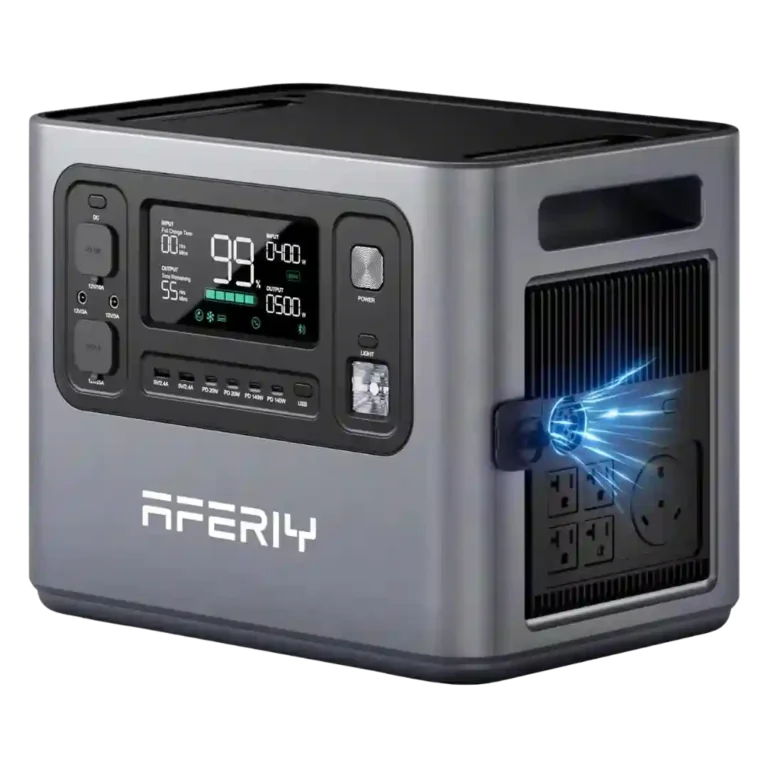
Choose the P280 for high-output home, RV, or off-grid backup with fast charging, strong usable capacity, UPS protection, and expansion. Skip it if you need lightweight portability, polished app control, or safe operation above 2,800W without voltage throttling.
Best for home-backup buyers, RV and van users, boat owners, and off-grid setups that need serious appliance output, rapid recharging, UPS protection, and future battery expansion.
Skip it for backpack-style portability, a polished established-brand software ecosystem, or workloads that regularly push beyond 2,800W and require tightly regulated voltage.
The AFERIY P280 stands out by combining a 2,800W inverter, fast AC and solar charging, strong measured usable capacity, sub-10ms UPS transfers, and expansion to roughly 10.24kWh at an aggressive price. It repeatedly ran demanding appliances, tools, RV systems, and multiple devices, while low idle draw and effective cooling strengthen its backup credentials. The tradeoff is refinement: the app ranges from useful to unreliable, the nearly 50-pound body is only relatively portable, and loads near or above the inverter limit can trigger severe voltage sag instead of a clean overload shutdown. For buyers who stay within the rated output and value raw capability over ecosystem polish, it offers unusually strong performance for the money.
Compared with other Generators, this product is above average in whole-home integration, battery expandability, runtime at full load, near average in overall product satisfaction, battery longevity, below average in quiet mode, output stability, app connectivity.
| Attribute | This product | Category average | Difference |
|---|---|---|---|
| quiet mode | 2.0 | 4.8 | -2.8 |
| output stability | 1.8 | 4.4 | -2.6 |
| app connectivity | 1.5 | 3.7 | -2.2 |
| whole-home integration | 5.0 | 2.8 | +2.2 |
| remaining runtime estimate | 2.0 | 4.1 | -2.1 |
| battery expandability | 4.9 | 3.1 | +1.8 |
| runtime at full load | 5.0 | 3.0 | +2.1 |
| Bluetooth connectivity | 2.0 | 4.0 | -2.0 |
Choose EcoFlow Delta 3 Plus Review. It scores 5.0 vs 1.8 for output stability, with a 4.6 overall score.
Choose Jackery Explorer 1000 V2. It scores 5.0 vs 1.8 for voltage regulation, with a 4.4 overall score.
Choose Bluetti Elite 200 V2. It scores 5.0 vs 2.0 for remaining runtime estimate, with a 4.4 overall score.
Choose Pecron E3600. It scores 4.5 vs 2.0 for Bluetooth connectivity, with a 4.1 overall score.
Products reviewers directly compared with this model, grouped into quick takeaways.
Yes. Tests successfully ran kettles, air fryers, heaters, washing machines, and power tools up to the 2,800W rating. Avoid exceeding that limit because the inverter may reduce voltage sharply.
Most tests reached 80% in roughly 55–70 minutes and full charge in about 90 minutes to just under two hours, depending on settings and conditions.
The two independent XT90 inputs support up to 600W each, or 1,200W total. Panel arrays must remain below the 55V input limit.
Yes. Measured transfer times ranged from about 8ms to 9.5ms, and connected desktop computers stayed running during simulated outages.
Yes. Up to four expansion batteries can raise total storage from 2,048Wh to about 10.24kWh.
Experiences are mixed. It provides useful monitoring, scheduling, charge limits, and output controls, but several testers reported connection failures, slow responses, or inaccurate charging settings.
It is manageable for a 2kWh station, but it weighs about 21.6kg or 48 pounds. The sturdy side handles help, though two-person lifting is preferable.
These are a few of the reviews included in our analysis.


AFERIY P280 2800W review: detailed look at 2048Wh LiFePO4 power station with 200W solar panel, UPS, fast charging and expandable to 10kWh for...
My interest has been piqued by everything electronic since a young age, with a penchant for the dark art of tearing things apart. My daily...
In the rapidly evolving market for portable power stations, a new contender has emerged that challenges established players with a compelling...
The Aferiy P280 is engineered to be the perfect power hub for your RV or home backup.
The Aferiy P280 impresses with a good price-performance ratio, but also reveals a serious problem in the test.
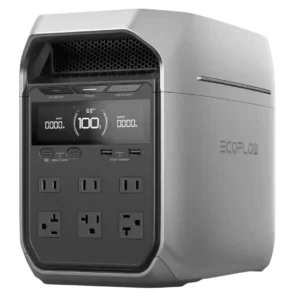
Best for rapid charging, versatile ports, excellent app control, and portable backup for appliances or electronics. Skip it for unattended low-load use or sustained heavy loads unless fan behavior and...
Pros: rated output, peak output
Cons: 30-amp output, parallel operation support
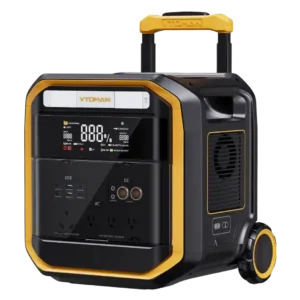
Best for fast-charging, high-output backup power that can run major appliances and roll easily between locations. Skip it if you need frequent lifting, a small footprint, or a screen that...
Pros: power output, surge capacity
Cons: specification accuracy, peak output
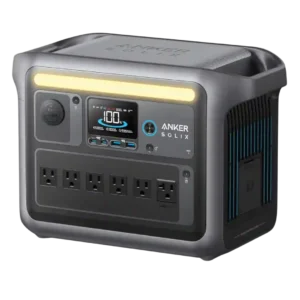
Best for fast charging, strong portable output, and short outage or camping duty. Skip it for quiet rooms, multi-day whole-home backup, or solar-only use with small panels.
Pros: power output, rated output
Cons: dual-input charging, cable storage
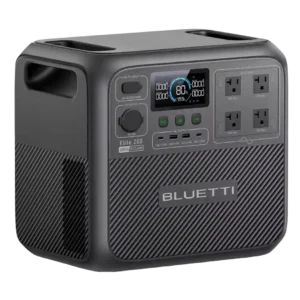
Best for compact, quiet, fast-charging backup power that can run serious appliances. Skip it if you need easy one-person carrying, waterproof outdoor use, battery expansion, or a built-in 30-amp RV...
Pros: output stability, pure sine wave output
Cons: specification accuracy, startup reliability