
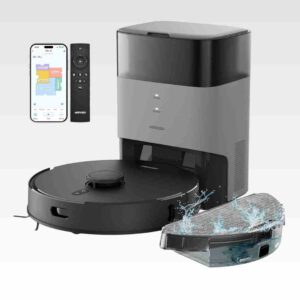
Review: AIRROBO T20+ Robot Vacuum and Mop Combo
Updated: 2 months ago
3.9
Based on methodology below
183
Insights analyzed
41
Grouped by key features
9
From expert reviews
Scores below reflect consolidated expert coverage across these features.
Bottom Line
Choose the AIRROBO T20+ if you want a compact, budget self-emptying robot that’s strong on hard floors and decent at mopping. Skip it if you need reliable cable/sock avoidance or deep-cleaning on thick, high-pile rugs.
Best for
Apartment and small-home owners who want a compact self-empty dock, strong hard-floor pickup, and solid app-based room/zone control without paying premium-brand prices.
Not for
Homes with lots of cables, socks, or clutter on the floor, or anyone relying on a robot to deep-clean thick rugs and high-pile carpet rather than do surface maintenance.
Verdict
The T20+ stands out as a value-focused LiDAR robot with a genuinely space-saving auto-empty dock and consistently strong surface pickup, especially on hard floors where it handles fine dust and larger crumbs well. Mapping and app controls are robust for the price, with room selection, no-go/no-mop zones, scheduling, and multi-map support called out across reviews. The main tradeoff is refinement: obstacle avoidance can be clumsy around cables, socks, and lightweight items, and deep carpet cleaning or thick rugs expose its limited airflow and stuck risk. Mopping is best viewed as maintenance cleaning—some tests praise stain removal, while others report smearing sticky spills—so expectations matter.
Pros
-
4.7based on 2 reviewsHair Pickup — Hard Floors: 4.7, based on 2 reviewsHair pickup on hard floors earns strong feedback, especially for pet households, with the auto-empty dock helping keep day-to-day maintenance low.
-
4.6based on 3 reviewsAssembly and Setup: 4.6, based on 3 reviewsSetup is typically described as easy because the robot and dock come assembled; Wi-Fi/app onboarding is straightforward, though initial mapping can be slow on some units or settings.
-
4.6based on 2 reviewsAccessories and Tools: 4.6, based on 2 reviewsThe bundle is repeatedly praised for including useful extras (remote, spare bags/filters/brush parts, mop pads, and a small cleaning tool) that reduce day-one friction.
-
4.5based on 6 reviewsHard Floor — Large Debris Intake: 4.5, based on 6 reviewsHard-floor large debris intake is consistently strong, with controlled tests and real-home use reporting reliable pickup of crumbs, grains, and scattered dry debris.
-
4.5based on 9 reviewsPrice and Value: 4.5, based on 9 reviewsValue is a recurring theme: reviewers frame it as a strong budget-to-midrange buy with features that feel above its price, assuming you accept the missing premium dock and avoidance capabilities.
-
4.5based on 6 reviewsHard Floor — Fine Dust Pickup: 4.5, based on 6 reviewsHard-floor fine dust pickup is repeatedly described as excellent, with testing and user impressions showing visibly cleaner floors after runs.
-
4.5based on 2 reviewsCarpet — Medium-Pile Pickup: 4.5, based on 2 reviewsMedium-pile carpet pickup is reported as better than expected for the price, but the robot still struggles with deep debris extraction compared with higher-airflow or premium alternatives.
-
4.5based on 2 reviewsPet-Ready Features: 4.5, based on 2 reviewsMultiple reviewers position the T20+ as pet-friendly thanks to strong surface pickup and the self-empty dock; however, hair can still wrap around brush axles and pet toys/cables can create snags.
-
4.3based on 7 reviewsSuitability for small spaces: 4.3, based on 7 reviewsIts compact dock and generally small footprint make it a strong fit for apartments and smaller homes, especially for users who want auto-empty convenience without a large base station.
-
4.3based on 3 reviewsAesthetic design and finish: 4.3, based on 3 reviewsDesign feedback is consistently positive: reviewers call it sleek, minimalist, and easy to blend into a room, with a compact overall footprint for a self-emptying model.
-
4.3based on 9 reviewsDocking and Auto-Empty Reliability (Robot): 4.3, based on 9 reviewsDocking and auto-empty reliability are strong points overall, with consistent reports of solid bin evacuation and dependable returns to the base in typical layouts.
-
4.3based on 9 reviewsMap and Path Efficiency (Robot Vacuums): 4.3, based on 9 reviewsLiDAR mapping and pathing are widely praised for efficient, systematic coverage and multi-room control; one recurring limitation is that some mapping modes still behave like full cleaning runs.
-
4.3based on 4 reviewsBin and Bag: 4.3, based on 4 reviewsThe robot uses a combined dustbin and water tank layout, and the dock uses a large bag around 3.5L that reviewers say can support long stretches between changes in typical homes.
-
4.3based on 7 reviewsEmptying and Mess Control: 4.3, based on 7 reviewsAuto-emptying is repeatedly described as fast and effective, even with a full bin in test scenarios; owners still need to keep bags stocked and ensure the dustbin module is seated properly.
-
4.3based on 6 reviewsLow-profile design: 4.3, based on 6 reviewsThe robot is described as slim (around 3.7 inches), which helps with many couches and cabinets, but the top LiDAR bump sets a minimum clearance for true under-furniture access.
-
4.3based on 6 reviewsBattery and Charging: 4.3, based on 6 reviewsBattery life is commonly cited as long (up to about 180 minutes on lower power) with recharge-and-resume support; reviewers caution that higher suction settings reduce real runtime meaningfully.
-
4.3based on 2 reviewsBuild quality and durability: 4.3, based on 2 reviewsBuild quality is generally viewed as solid for the price, but several mishaps (hard bumps, wall scuffs, knocked objects) suggest durability depends on keeping floors decluttered.
-
4.3based on 2 reviewsFiltration / Dust Containment: 4.3, based on 2 reviewsFiltration is discussed mainly in terms of a HEPA-style filter and generally good dust containment during auto-emptying; consumables tracking in the app helps owners monitor filter/brush life.
-
4.2based on 4 reviewsWater tank: 4.2, based on 4 reviewsThe onboard water tank is described as generous for this class (roughly mid-300 ml), which helps in apartments, but there is no dock refilling so large homes may need refills mid-week.
-
4.2based on 9 reviewsAI, Smart, App and Automation: 4.2, based on 9 reviewsThe app experience is a major strength for the price, offering live tracking, room/zone cleaning, schedules, multi-map saving, and Alexa/Google integration; containment tools can be limited to rectangular zones on some versions.
-
4.2based on 6 reviewsRuntime: 4.2, based on 6 reviewsClaimed runtime is long, but practical runtime depends on using higher suction for carpets; most reviewers still find it sufficient for small-to-medium spaces thanks to efficient navigation.
-
4.2based on 3 reviewsHair Pickup — Carpets: 4.2, based on 3 reviewsHair pickup on carpets is generally good for surface fur, but deep hair and embedded debris are limited by the robot’s airflow and carpet depth.
-
4.1based on 4 reviewsEdge and Baseboard Cleaning (Hard Floors): 4.1, based on 4 reviewsEdge and baseboard cleaning is generally good for a single side-brush robot, yet a few reviewers still observed leftover debris along some walls and furniture edges.
-
4.1based on 1 reviewSupport and Reliability: 4.1, based on 1 reviewSupport commentary is mostly promotional, citing a 12-month warranty and responsive service; there is limited long-term reliability evidence beyond generally positive early ownership impressions.
-
4.1based on 4 reviewsControls and UI: 4.1, based on 4 reviewsControls are flexible: simple onboard buttons plus a physical remote and a feature-rich app; most find the UI straightforward, though spot-clean targeting and a few app quirks are noted by some.
-
4.1based on 5 reviewsCorner Cleaning (Robot): 4.1, based on 5 reviewsCorner cleaning is above average for the class thanks to the side brush and orderly edge-first patterns, though truly tight corners can still leave a small amount behind.
-
4.0based on 4 reviewsCarpet — Low-Pile Pickup: 4.0, based on 4 reviewsLow-pile carpet and rugs are generally handled well for surface debris, though performance can vary by debris type and some users report inconsistent spot-clean behavior.
-
4.0based on 6 reviewsSuction and Airflow: 4.0, based on 6 reviewsAcross reviews, surface suction is a clear strength on hard floors and low/medium carpet, but measured airflow is described as below average, which shows up most on deep carpet sand and tight crevices.
-
3.8based on 8 reviewsMopping performance: 3.8, based on 8 reviewsMopping is best for maintenance passes: some reviewers report impressive stain removal for a static pad, while others say it behaves like a damp wipe that can smear sticky messes.
-
3.7based on 3 reviewsDried-On Stain Removal: 3.7, based on 3 reviewsStain handling is mixed: some tests report surprisingly strong results on red wine/juice for a static-pad system, while another review notes sticky spills getting smeared rather than lifted.
-
3.7based on 3 reviewsArea Rug Handling: 3.7, based on 3 reviewsArea rugs are fine when low-profile/low-pile, but thicker rugs can cause stalls or tangles; the safest experience comes with tidy floors and conservative rug choices.
-
3.7based on 3 reviewsHair‑Wrap / Tangle Resistance: 3.7, based on 3 reviewsThe rubber-style main brush helps reduce tangles versus bristle designs, yet multiple tests note hair wrapping around brush axles that requires periodic manual cleaning.
-
3.6based on 5 reviewsMaintenance requirements: 3.6, based on 5 reviewsMaintenance is manageable but hands-on: expect manual mop-pad washing, occasional axle/brush cleaning, and periodic bag changes; app consumables tracking can reduce surprise replacements.
-
3.5based on 5 reviewsNoise level: 3.5, based on 5 reviewsNoise impressions vary by mode: some describe it as quiet enough for naps on lower settings, while testing reports it getting loud on higher power levels (low-70 dB range).
Cons
-
3.4based on 2 reviewsUnder-Furniture Pickup: 3.4, based on 2 reviewsUnder-furniture reach is limited by the LiDAR turret height, so very low clearances can be out of bounds even though the robot’s body is relatively slim.
-
3.2based on 4 reviewsCrevice / Groove Pickup (Hard Floors): 3.2, based on 4 reviewsCrevice performance is a weak spot in several tests, attributed to limited airflow; it can miss debris in grooves or small gaps even when open-floor pickup is strong.
-
3.1based on 6 reviewsObstacle Avoidance (Robot): 3.1, based on 6 reviewsObstacle avoidance is one of the clearest compromises: marketing highlights sensors, but real-world reports include cable/sock snags, bumped furniture, and occasional hard impacts.
-
3.0based on 3 reviewsDock noise: 3.0, based on 3 reviewsDock-related noise is less discussed than overall robot noise, but the high-suction emptying step and higher vacuum modes are described as noticeably loud compared with quiet cleaning modes.
-
2.9based on 3 reviewsStuck resistance: 2.9, based on 3 reviewsStuck resistance depends heavily on the home: it can handle thresholds and typical transitions, but multiple reviewers report hang-ups on thick rugs, around furniture bases, and when it snags cables.
-
2.5based on 3 reviewsCarpet — High-Pile Pickup: 2.5, based on 3 reviewsHigh-pile and thick rugs are a frequent pain point, with reports of getting stuck and weaker deep pickup, making this the least suitable surface for the T20+.
-
1.5based on 2 reviewsSelf-cleaning cycle: 1.5, based on 2 reviewsSelf-cleaning is a known omission: the dock does not wash mop pads, so owners must rinse or launder pads manually after runs.
FAQ
Does the T20+ actually map your home with LiDAR?
Yes. Multiple reviews describe LiDAR-based mapping with room maps, live tracking, and efficient back-and-forth cleaning paths, though some note the initial mapping can take longer if it maps while cleaning.
How good is the self-empty dock, and how often do you change the bag?
Reviewers repeatedly report strong, fast emptying into a large bag around 3.5L, often estimating roughly 1–2 months between changes depending on pets and debris volume.
Is the mopping feature good enough to replace a real mop?
It’s primarily maintenance mopping. Some testing reports impressive stain removal for a static pad, but another review says sticky spills can smear, so it’s best for light grime between deeper cleanings.
Will it avoid cords and small objects on the floor?
Not reliably. Several reviews report cable and sock snags and occasional hard bumps, so decluttering before runs makes a big difference.
Does it work well on carpet?
It does well on low and some medium pile for surface debris, but deep cleaning performance is described as limited by airflow, and thick/high-pile rugs can cause stalls or getting stuck.
How loud is it?
Noise depends on mode. Some users call it quiet on lower settings, while measured testing reports it becoming loud on higher suction, with readings in the low-70 dB range.
Reviews we analyzed
Video Reviews

Article Reviews

Bestcordlessvacuumguide
Best Robotic Vacuums
#1
4.5
Choose the Roborock Qrevo Curv for a low-touch vacuum+mop that cleans edges/corners well and clears thresholds better than most. Skip if you have...
Pros: Hard Floor — Fine Dust Pickup, Hard Floor — Large Debris Intake, Hair Pickup — Hard Floors, Battery & Charging, Docking & Auto-Empty...
Cons: None
#2
4.4
Choose it for standout suction, threshold climbing, and low-babysitting navigation. Skip it if top-tier mopping consistency or a lower price matters more.
Pros: Controls and UI, Versatility, Heating element, Overall cleaning convenience, Large debris handling, Hard Floor — Large Debris Intake, Under-Furniture Pickup
Cons: Dock noise, Streaking / Residue, Storage footprint and upright-stand stability
#3
4.4
Choose it for exceptional vacuuming, obstacle avoidance, and true hands-off mop swapping. Skip it if you want longer battery life, a smaller dock,...
Pros: Hair‑Wrap / Tangle Resistance, Adaptive chassis lift, Innovation compared to competitors, Hard Floor — Fine Dust Pickup, Suction and Airflow, Pet-Ready Features, Tool-change...
Cons: Dirty water sensor, Suitability for small spaces, Storage footprint and upright-stand stability, Streaking / Residue, Battery and Charging, Runtime
#4
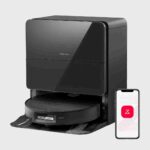
4.3
Choose Saros 10 if you want a slim, premium robot that vacuums hard, climbs thresholds, and runs a truly hands-off dock. Skip it...
Pros: Pet-Ready Features, Low-profile design, Suction & Airflow, Mop lifting system, Aesthetic design & finish, Hair‑Wrap / Tangle Resistance, Adaptive chassis lift
Cons: Streaking / Residue, Stuck resistance