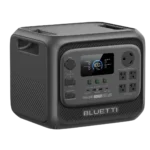
Bluetti Elite 300 Feature Scores
Explore all 107 feature scores for Bluetti Elite 300, organized into pros and cons.
Scores by Feature
Summary
107 reviewed features-
Very positive 4.5-5.070 (65%)
-
Positive 3.5-4.416 (15%)
-
Neutral 2.5-3.413 (12%)
-
Negative 1.5-2.48 (7%)
Pros
Sort
-
For a 3kWh station, the Elite 300 is exceptionally compact and often compared in size with 2kWh models. A few testers still found it chunky rather than truly small.
-
UPS performance is a standout strength: transitions were consistently fast and reliable across computers, routers, NAS devices, printers, and home-office equipment.
-
The 3,014Wh battery is the product's defining strength, delivering unusually deep reserves in a body closer to many 2kWh stations.
-
The built-in TT-30 is one of the most consistently praised additions. Its placement makes direct RV connection easy without blocking nearby AC outlets on the U.S. model.
-
It is highly effective for selected essentials such as refrigerators, routers, lights, computers, and kitchen appliances during short or medium outages.
-
Operation is straightforward: connect a device, select AC or DC output, and monitor the load. The simple layout and app reduce the learning curve for first-time users.
-
Measured AC efficiency was consistently strong, often around 86-94%, with several testers placing it above average or among the best large stations they had measured.
-
The all-in-one design avoids complex inverter and battery wiring. Most setups were described as plug-and-play, with app pairing and solar connections taking only minutes.
-
Wall charging is fast for a 3kWh battery, usually finishing in roughly 1.5 to 2.75 hours depending on mode and test conditions. One test found it slower than expected, but still respectable for the capacity.
-
The app is generally considered feature-rich, clear, and easy to use for monitoring, scheduling, UPS settings, and output control. One comparison found it slower and laggier than EcoFlow's app.
-
The large battery delivered long practical runtimes, from hours on cooking and computing loads to days on refrigerators and lighter essentials.
-
Extended use was generally consistent and trouble-free, with several testers describing the unit as dependable infrastructure rather than a gadget.
-
Kettles, toasters, microwaves, air fryers, heaters, tools, and even some welders ran successfully within the 2,400W limit. Industrial motors and simultaneous heavy loads can still trip it.
-
Most real-world loads ran smoothly, including appliances, computers, RV systems, and workshop tools. A minority of extreme sustained tests exposed shutdowns or limits near maximum output.
-
The reinforced housing, protected edges, sturdy handles, and solid feel inspire confidence for repeated transport between vans, campsites, workshops, and garages.
-
Surge performance was consistently strong, starting compressors, tools, and appliances that briefly demand far more than their running wattage.
-
The high-current 12V output is repeatedly praised for RV fridges, pumps, diesel heaters, compressors, and other gear that can overwhelm a standard 10A socket.
-
LiFePO4 cells earn strong approval for thermal stability, safety, and durability compared with older lithium-ion chemistries.
-
Controls and ports are generally clean, logical, and easy to reach, with clear labeling that works well in vans, workshops, and low-light settings.
-
With sufficient panels and good sun, solar charging is practical and can restore the battery in roughly three to four hours. Smaller arrays still meaningfully extend outdoor runtime.
-
Measured usable output was excellent, commonly around 89-94% in favorable tests and unusually high for a station this size.
-
The 2,400W inverter is strong enough for most household, RV, office, and workshop loads, though it trails some 3kWh rivals and cannot replace unlimited shore or whole-home power.
-
The 6,000-cycle rating is exceptional for the category and translates to many years of frequent use before capacity falls to 80%.
-
Solar support turns the unit into a capable off-grid hub for vans, boats, campsites, and outdoor work rather than a battery that only drains down.
-
The recessed, sturdy handles give a secure grip and make short moves manageable, even though the unit remains too heavy for casual one-handed carrying.
-
Normal operation is usually quiet enough for apartments, RVs, tents, and recording work. Under heavy load or fast charging, some units became noticeably louder than competing stations.
-
Transfer to battery power is exceptionally quick, with measured or reported switching around 9-20ms. Routers, computers, printers, and networking gear generally stayed online without rebooting.
-
The casing resists knocks and scrapes and feels suited to rough vehicle, campsite, and job-site use, though it is not fully ruggedized.
-
The mix of AC, USB, 12V, high-current DC, and RV connections covers most home, van, and mobile-work needs without extra splitters.
-
The 100W and 140W USB-C outputs are well suited to laptops and modern devices, with enough combined power to charge two computers at high speed.
-
Long cycle life makes the pack feel suitable for daily use rather than occasional emergencies, with estimates extending beyond 16 years at one cycle per day.
-
Many considered the sale price compelling for 3kWh, fast charging, and RV connectivity. Others found cheaper rivals with larger batteries or expansion, making full-price value more debatable.
-
The compact cube fits closets, van compartments, shelves, and under-desk spaces better than many 3kWh alternatives.
-
A standard, replaceable AC cord is a welcome improvement over proprietary cables, making replacements inexpensive and easy to source.
-
Testing and specifications support clean sine-wave power suitable for sensitive electronics, computers, and production equipment.
-
Several tests sustained the full rated load without shutdown, though one long-duration test exposed instability close to empty.
-
The small footprint travels well in vans and vehicles, but nearly 60 pounds makes it transportable rather than truly portable. It is best moved occasionally and then left in place.
-
The screen presents useful power-flow, charge, and runtime information without much learning curve. Minor complaints include visual clutter when readings sit at zero.
-
Multiple computers, chargers, lights, and appliances can run together, but the shared 2,400W ceiling means users must manage combinations of high-draw equipment.
-
Standby results varied sharply by mode and test, from excellent charge retention to roughly three days with the inverter left on. Output settings matter greatly when idle.
-
The removable fan filter and serviceable rear cover make dust cleanup unusually easy, a valuable detail for campsites, garages, and job sites.
-
Pairing and connection were described as quick and trouble-free, making app control easy to establish.
-
Scheduling and weather-aware routines can wake or cycle outputs automatically, adding useful hands-off control for backup and remote setups.
-
Combining AC with solar, or alternator with solar, can shorten recharge time and makes continuous travel or off-grid use more practical.
-
Real-time input and output data makes appliance draw and solar production easy to understand from the app.
-
Rapid recharging is a core strength, particularly for vanlife and travel where the station can be restored between daily uses.
-
App controls make it easy to switch outputs and adjust settings from bed, another room, or a remote installation.
-
Detailed remote readouts show output, state of charge, and estimated runtime without requiring access to the front panel.
-
Protection circuits generally shut the unit down cleanly when pushed beyond its limits and were easy to reset afterward.
-
Short moves are manageable with the built-in handles, but stairs and repeated carrying become tiring. Several testers preferred a two-person lift.
-
Most testers found the screen clear, including outdoors, but a few reported washout or reduced readability in bright sunlight.
-
The display and app provide useful estimates of remaining runtime, helping users judge whether a load can stay connected.
-
Direct RV hookup is a major convenience, avoiding adapters or custom wiring for common camper and van setups.
-
Standard connectors and straightforward setup are positives, but the low voltage ceiling complicates series wiring and can force parallel arrays into the current limit.
-
The 12V connections are genuinely useful for fridges, pumps, inflators, and vehicle accessories, especially when paired with the higher-current output.
-
Advanced protection circuitry adds confidence around a large indoor battery, with safety and stability treated as major strengths.
-
After sitting unplugged for three days, the unit lost only 1%, suggesting excellent charge retention while stored.
-
Local Bluetooth control connected without trouble in testing and provides dependable access when Wi-Fi is unavailable.
-
Silent charging produced a strong measured 88.5% input efficiency, using less energy than the faster modes.
-
Detailed logging makes it easier to understand hourly consumption and compare solar or vehicle charging against actual loads.
-
Stress testing earned exceptional praise for thermal control, suggesting the compact enclosure can manage sustained high power when ventilation is clear.
-
Two months of testing, including near-30°C conditions, showed consistent output; extra battery drain came from connected cooling equipment working harder.
-
Testing points to a well-built inverter with high usable capacity, strong efficiency, and dependable output across normal loads.
-
The LiFePO4 pack is strongly favored for safety, stability, and long service life under frequent use.
-
Long battery life produces very low estimated lifetime storage costs, strengthening the case for regular rather than emergency-only use.
-
Pass-through and backup tests showed clean, stable power without voltage problems for sensitive office and production equipment.
-
Charge retention is excellent: one unit lost only 1% after sitting unplugged for three days.
-
Standard-style solar connectors were easy to join and worked immediately, avoiding proprietary-cable frustration.
-
A promotion bundling a 200W panel at no extra cost was viewed as a strong deal.
-
Strong surge behavior helps start refrigerators, tools, and other motor-driven appliances with brief startup spikes.
-
Workshop testing showed demanding motor equipment starting and running cleanly when it stayed within the station's limits.
-
The 30-amp connection can feed an RV or suitable transfer-switch setup without awkward adapter arrangements.
-
A measured 120V output remained clean under a 1,500W load, supporting confidence in voltage stability.
-
Wi-Fi setup worked smoothly and extends monitoring and control beyond local Bluetooth range.
-
Cooling is mostly effective, including successful heat-soak testing, but one maximum-output test made the fan work harder and more erratically than expected.
-
The Charger 2 and compatible solar hardware give van and boat users practical ways to add alternator charging and evolve their setup over time.
-
ECO mode can shut outputs down after a load finishes, reducing unnecessary drain. It should be disabled for very low-power medical devices that could be mistaken for no load.
-
The reinforced molded housing feels rugged, resists flex, and appears ready for repeated transport and outdoor use.
-
In UPS and background use, the station stays quiet enough to sit near desks, routers, and living spaces without becoming distracting.
-
The casing handles knocks and scrapes well, adding confidence for repeated loading, vehicle travel, and rough job-site use.
-
Pass-through operation worked as claimed, allowing devices to remain powered while the battery recharged.
-
Silent charging meaningfully reduces fan noise by lowering input power, useful when the station is near sleeping or working areas.
-
A roughly 1.36kW heater ran for about one hour and 47 minutes, a solid result for a sustained mid-to-high load.
-
The five-year warranty is a strong match for the long-cycle battery and adds confidence for frequent use.
-
The refined footprint fits shelves, vans, and storage spaces more easily than older high-capacity Bluetti models.
-
Maximum charging or heavy output brings audible fan noise around 49-50dB. It remains tolerable, but it is not silent.
Cons
Sort
-
The fixed 3kWh capacity is the most repeated design limitation. Buyers who expect to add batteries later will need a different platform.
-
The lack of an integrated LED light is a recurring frustration, especially because the heavy unit often requires both hands during an outage.
-
At roughly 58-60 pounds, the Elite 300 is heavy despite its compact dimensions. The weight is acceptable for the capacity but remains the most consistent portability complaint.
-
Outlet count depends on region, and the two-socket European configuration drew repeated criticism. The four- or five-outlet versions are more flexible, but total inverter output still limits combined loads.
-
The rear exhaust can be blocked because the case lacks protective stand-offs, creating a serious overheating risk if placed flush against a surface.
-
An IP20 rating means there is no meaningful water protection, so outdoor users must keep the station dry and sheltered.
-
The Elite 300 is best for selected circuits and appliances, not days of whole-home power. Buyers needing scalable household backup should look at a modular system.
-
There are no wheels or trolley handle, so a heavier wheeled competitor can actually be easier to move across level ground.
-
The box is sparse, typically including only the mains cable. Solar and vehicle charging leads may require separate purchases.
-
Typical loads were stable, but one long-duration maximum test caused both AC and USB-C output failures near the limits.
-
The housing feels solid, but one review called the control buttons cheap-looking and criticized their loud click.
-
The USB-A ports work for legacy devices, but one tester would trade one of them for an additional USB-C connection.
-
The two USB-C ports are capable, but one tester wanted three USB-C ports and fewer legacy USB-A connections.
-
Results at the limit were mixed: some tests sustained near-rated output, while another shut down near empty and reviewers discouraged all-day maximum loading.
-
Support experiences were split: one reviewer received quick, helpful answers, while another reported no response after flagging test failures.
-
The integrated MPPT controller measured about 81% efficiency in one test. That was better than some competitors but still left noticeable solar energy lost as heat.
-
The 1,200W headline input is generous, but the 60V/22A window can make that ceiling difficult to reach with common panels. Several testers wanted a higher voltage limit.
-
Power Lifting can help with resistive appliances, but it does not turn the station into a true 4,800W continuous source. One test still capped around the normal 2,400W output.
-
Charging from a basic vehicle socket is painfully slow, often taking more than a day. Dedicated alternator hardware improves that dramatically to roughly three to six hours.
-
The high-current DC connections are useful, but results were not flawless. One sustained USB-C/DC test ended in an over-current shutdown, while other testers reported strong 12V performance.
-
The TT-30 placement is thoughtful, but AC outlet spacing varies by region and can be tight enough for large bricks to block neighboring sockets.