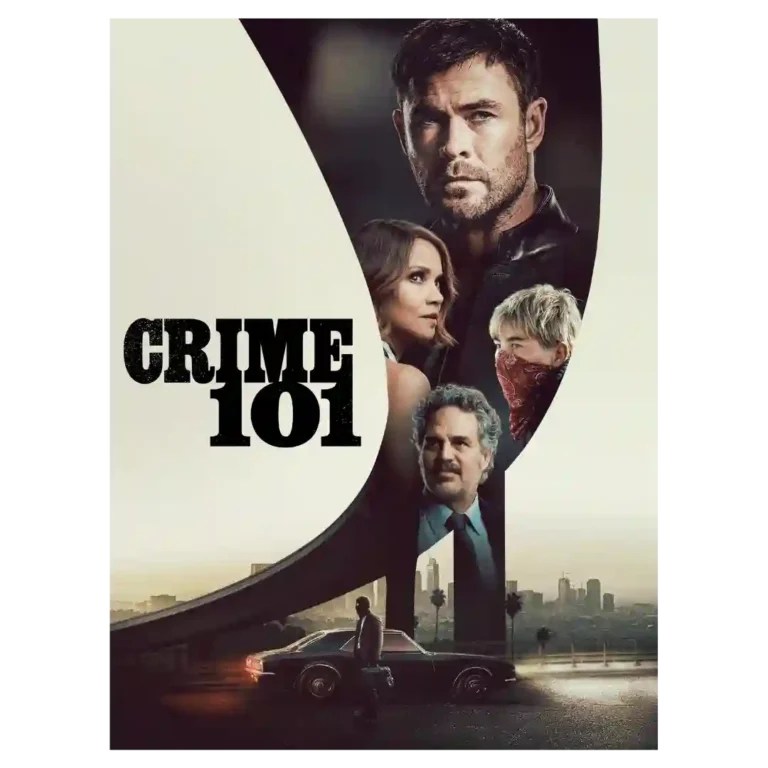
Choose Crime 101 for a polished, character-led L.A. heist thriller with strong performances, stylish photography, and tense chases. Skip it if a 140-minute slow burn, familiar Heat DNA, or a divisive tidy ending sounds frustrating.
Best for
Best for adults who enjoy patient, character-led heist thrillers, star-driven ensembles, polished Los Angeles noir imagery, and tense car chases more than nonstop action.
Not for
Skip it if you want a short, highly original, action-heavy thriller or need family-friendly content; profanity, violence, sexual material, and the long runtime are recurring cautions.
Verdict
Crime 101 works best as a polished throwback rather than a reinvention of the heist thriller. Its strongest assets are the cast, the sleek Los Angeles photography, a pulsing electronic score, and car chases that favor clarity and physical tension over spectacle. Chris Hemsworth’s restrained lead turn, Mark Ruffalo’s weary detective, Halle Berry’s frustrated insurance broker, and Barry Keoghan’s volatile wildcard give the familiar setup personality. The tradeoff is familiarity and excess: repeated Heat comparisons, a roughly 140-minute runtime, underdeveloped side threads, and an ending that some find satisfyingly clean and others consider rushed or too tidy. For viewers who enjoy patient, character-led crime movies, the craft usually outweighs the repetition.
Los Angeles is photographed with polished night imagery, freeway geography, and a strong sense of place; the look is one of the most consistently praised elements. Only a few critics found some night scenes too dark or derivative of Michael Mann.
The ensemble is one of the film’s safest bets: strong, committed performances repeatedly lift familiar material. Even cooler reactions tend to blame thin roles or the script more than the cast as a whole.
The sleek neo-noir look, night driving, glossy interiors, and L.A. skyline imagery are major selling points. It is stylish and cinematic even when critics argue that the aesthetic borrows heavily from earlier crime films.
Bart Layton’s controlled direction is a major strength, particularly in the car chases, slow-burn tension, Los Angeles atmosphere, and clear staging. Even detractors generally concede the film is polished and competently made.
Slow-burn tension is one of the film’s strongest qualities, with the Mike-Ormon friction, police pursuit, and major heist keeping many viewers locked in. A few critics feel the tension never rises enough or is isolated mainly to the action scenes.
The car chases and heist bursts are usually crisp, tense, and easy to follow, with several critics calling them standout sequences. A smaller group wanted more action or found the set pieces less thrilling than the build suggested.
The profanity is judged excessive by the family-focused sources, including repeated f-words that make the dialogue unsuitable for viewers avoiding strong language.
sexual content level: 1.0, 2 reviews, limited evidence
Family-content assessments criticize the sexual material and nudity as frequent or unwelcome, making the movie a poor fit for viewers seeking restrained adult content.
The movie’s ideas about class, work, morality, and self-interest divide opinion. Some find them meaningful and well integrated, while family-oriented and skeptical critics see the moral framing as muddled, shallow, or too forgiving of crime.
The violence is frequent and intense but generally not described as gory; some mainstream critics appreciate that restraint. Family-focused sources still consider the level too strong for younger or sensitive viewers.
Ruffalo’s rumpled, stubborn detective is another consistent highlight, with critics praising his charm, weary intelligence, understated confidence, and moral weight. Even when the role feels familiar, he is usually credited with making it distinctive and watchable.
Berry’s Sharon is one of the most consistently praised performances, blending frustration, intelligence, anger, and vulnerability into a role many critics found unusually substantial. Even mixed reviews often single her out as a major reason the character drama works.
Layton earns broad praise for polished direction, controlled slow-burn tension, clear action staging, and a vivid use of Los Angeles. The main pushback is aimed at the overlong structure, derivative influences, and a script that sometimes spreads itself too thin.
Keoghan’s Ormon is widely treated as the volatile spark that jolts the film whenever he appears, with his feral unpredictability and kinetic menace raising the tension. A few critics find the character one-note, over-the-top, or too familiar for the actor.
Chris Hemsworth: 4.4, 42 reviews, moderate consensus
Hemsworth’s restrained, vulnerable Mike is widely seen as a strong change from his larger action roles, with several critics calling it among his best work. A minority finds the stoicism too blank, dull, or emotionally remote.
Benjamin John Power: 5.0, 7 reviews, strong consensus
Power’s Blanck Mass score is one of the clearest craft standouts, using pulsing electronic textures, melancholy, and restrained intensity to drive the heists without overwhelming them.
Compared with other Movies, this product is above average in CGI quality, screenplay quality, special effects quality, near average in originality, lead performance, below average in language level, sexual content level, age appropriateness.
Comparison summary
47 compared features
Above average0.4+ pts higher
29(62%)
Same as averagewithin 0.3 pts
8(17%)
Below average0.4+ pts lower
10(21%)
Largest category differences
Attribute
This product
Category average
Difference
CGI quality
5.0
2.6
+2.4
language level
1.0
3.2
-2.2
sexual content level
1.0
3.1
-2.1
age appropriateness
1.0
3.0
-2.0
family friendliness
1.0
2.9
-1.9
screenplay quality
4.3
2.9
+1.4
special effects quality
5.0
3.3
+1.7
action sequences
4.6
3.5
+1.1
Consider This Instead
If you want better age appropriateness
Choose Project Hail Mary. It scores 4.8 vs 1.0 for age appropriateness, with a 4.3 overall score.
Products reviewers directly compared with this model, grouped into quick takeaways.
Heat
Similar: dueling lead rolesThe Hemsworth-Ruffalo rivalry is directly compared with the central dynamic in Heat.
Better: overall qualityThe panel says the film resembles Heat but is not quite as good.
Similar: target audience and genre feelThe review says it should appeal to viewers already familiar with Heat.
Thief
Similar: genre DNAThe reviewer hears the pulse of Thief in the movie's throwback crime-thriller approach.
Similar: visual style and crime-thriller DNAThe film's look and criminal-code focus are also compared to Thief.
Collateral
Similar: detective characterizationRuffalo's ahead-of-the-curve detective is directly compared with Collateral.
FAQ
Is Crime 101 worth watching?
Yes for fans of old-school crime thrillers: the cast, L.A. atmosphere, score, and car chases are widely praised. Expect a familiar story and a long runtime.
Is Crime 101 similar to Heat?
Very much so in setting, mood, professional-criminal focus, and cop-versus-thief structure. Some critics enjoy the homage, while others think the resemblance limits the film’s originality.
Is Crime 101 action-heavy?
Not constantly. It is a character-first slow burn with concentrated heists and car chases that are usually praised for clarity, tension, and physical staging.
Does the 140-minute runtime feel too long?
Opinions split. Some viewers say it flies by or earns the space through character and atmosphere, while many would trim 15–30 minutes.
How are the performances?
They are one of the strongest points, especially Chris Hemsworth, Mark Ruffalo, Halle Berry, and Barry Keoghan. Even mixed reviews often credit the cast with elevating familiar material.
Is Crime 101 family-friendly?
No. Family-focused assessments cite heavy profanity, strong violence, sexual content, and nudity as reasons for families and younger viewers to avoid it.
Sample Expert Reviews We Analyzed
These are a few of the reviews included in our analysis.
Best for a profound, formally inventive meditation on grief, memory, and the ethics of filming family. Skip it if intensely personal addiction material, a 114-minute runtime, or occasional repetition will...
Best for joyful music, rare footage, candid interviews, and a layered Maurice White portrait. Skip it if you want a tightly focused, unconventional reappraisal that lingers on performances instead of...
Best for a tender, accessible portrait that lets Oliver’s poetry, friends, and archival voice carry the experience. Skip it if you want a brisk, deeply investigative biography; the calm rhythm...
Pros: romance quality, faithfulness to source material
Best for razor-sharp adult comedy, exceptional ensemble work, and a surprisingly moving marriage story. Skip it if talk-heavy chamber pieces, explicit relationship discussions, or an occasionally intrusive string score wear...