- Review score
- 4.9
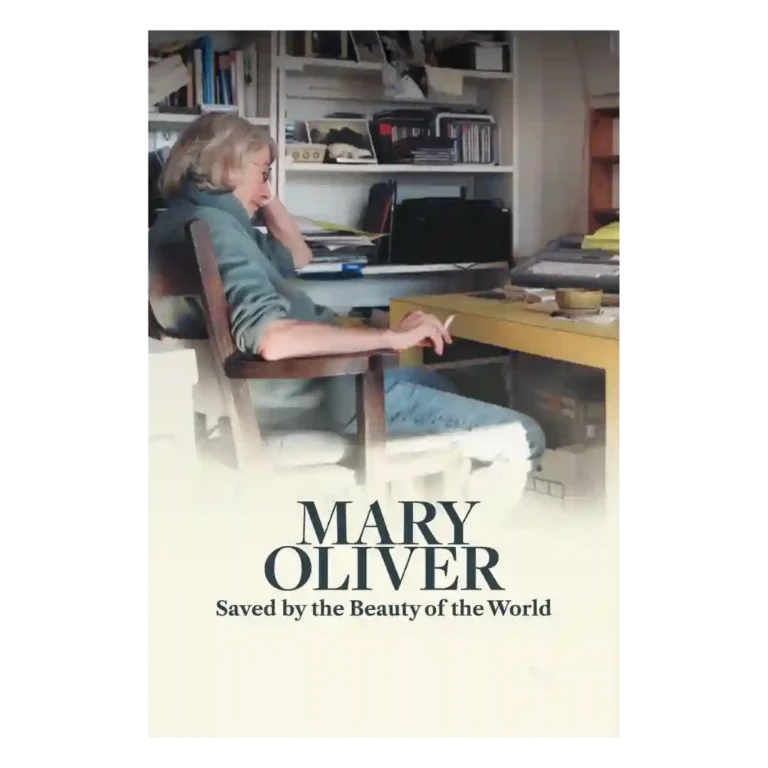
Mary Oliver: Saved by the Beauty of the World Movie Review
Bottom Line
Choose it for a tender, accessible portrait that lets Oliver’s poetry, friends, and archival voice carry the experience. Skip it if you want a brisk, deeply investigative biography; the calm rhythm and repeated nature imagery can feel slow or surface-level.
Poetry lovers, Mary Oliver admirers, and newcomers who want an emotionally inviting literary biography will get the most from it. It also suits viewers drawn to nature, queer artistic lives, and reflective documentaries.
Viewers seeking a fast pace, adversarial investigation, or exhaustive private-life detail may find it too gentle. Its calm repetition and reverent tone can feel restrained.
Sasha Waters builds an unusually warm literary documentary by trusting Mary Oliver’s poems, recorded voice, and closest observers to carry the story. The strongest passages pair emotionally charged readings with archival photographs and nature imagery, making Oliver’s ideas about attention, grief, love, and mortality feel immediate even to viewers who rarely read poetry. John Waters supplies candid humor and invaluable personal texture, while the wider interview group explains both Oliver’s popularity and the literary resistance to her simplicity. The film is more celebration than investigation, and its serene pacing, repeated landscapes, and respect for Oliver’s privacy can leave parts of the portrait feeling conventional or incomplete. Even so, its emotional honesty and accessibility make it a persuasive introduction and a rewarding tribute for existing admirers.
Feature Scorecards
Summary
24 reviewed features- Very positive 4.5-5.0 79% 19 features
- Positive 3.5-4.4 21% 5 features
- Neutral 2.5-3.4 0% 0 features
- Negative 1.5-2.4 0% 0 features
- Very negative below 1.5 0% 0 features
Pros
-
The film feels unusually faithful to Oliver’s tone, values, and poetic method. Its gentle imagery, archival voice, and emphasis on attention make the documentary feel shaped by her work rather than merely about it.
-
Critical response is overwhelmingly enthusiastic, with repeated praise for its beauty, thoughtfulness, and emotional honesty. Reservations focus mainly on pace, repetition, and limited depth in parts.
-
As a literary biography, it satisfies through abundant poetry, archival material, and thoughtful context. It is especially strong as an introduction and celebration rather than an aggressive investigation.
-
The relationship between Mary Oliver and Molly Malone Cook is presented as loving, sustaining, and essential to Oliver’s creative life. Their partnership gives the biography much of its emotional warmth.
-
The score is used with restraint and elegance, helping the nature imagery and emotional transitions flow. It reinforces the film’s contemplative character.
-
The film is remarkably accessible to people who rarely read poetry while still rewarding longtime Oliver readers. Its inviting tone often inspires newcomers to seek out her work.
-
The poetry readings and personal stories land with exceptional emotional force, repeatedly moving participants and critics to tears. Grief, wonder, love, and consolation are handled with unusual tenderness.
-
The film’s message centers on attention, wonder, resilience, and finding connection with the natural world. It leaves viewers with a clear invitation to look more closely at life.
-
The documentary explores nature, mortality, trauma, solitude, artistic reputation, and belonging with substantial depth. It connects Oliver’s ideas to contemporary isolation and environmental concern without becoming academic.
-
The interviews are a major strength, combining poets, friends, artists, and admirers who offer insight without feeling repetitive. John Waters is repeatedly singled out as the liveliest and most revealing contributor.
-
Sasha Waters’ direction is widely praised as thoughtful, gentle, and attentive to Oliver’s voice. The approach is emotionally effective, though occasionally conventional and restrained.
-
Oliver’s life as a queer woman and artist is treated with respect, context, and warmth rather than reduced to a label. The Provincetown community and her long partnership receive meaningful attention.
-
The editing creates poetic links between readers, archival material, and Oliver’s words, with several especially effective emotional transitions. Inconsistent poem title cards are a minor clarity issue.
-
The film turns Oliver’s life into more than a routine chronology, using her poetry and worldview to shape the biography. Its portrait feels purposeful rather than merely informational.
-
The film can engage younger viewers when shared with an adult, especially through its visual interpretation of poems. Its discussion of childhood abuse and grief may require parental context.
-
Despite its quiet manner, the film remains engaging through candid footage, readings, and an inspiring life story. Viewers seeking more momentum may find it too subdued.
-
The accessible presentation can work for families interested in poetry, nature, and biography. A child viewer reportedly connected with the imagery and later sought out Oliver’s poems.
-
John Waters supplies welcome irreverence and practical humor without undercutting the film’s sincerity. His stories keep the reverent tone from becoming too solemn.
-
Soft, meditative music supports the documentary’s reflective mood without overwhelming the poetry. It contributes to the serene, intimate atmosphere.
-
Nature photography, archival textures, and visual responses to the poems are often beautiful and expressive. A few found the imagery overly literal, repetitive, or occasionally like filler.
-
The film humanizes Oliver through archives, friends, and her own voice, though her guarded private life leaves a few areas only lightly explored. Some wanted a deeper, less surface-level portrait.
-
The documentary uses a familiar biographical format but finds fresh emotional and visual ways to present a poet’s inner life. Its surprises come more from intimate detail than formal experimentation.
-
The thematic, non-linear structure feels distinctive and emotionally open, even if it does not reinvent documentary form. Its looseness suits the poetry better than a rigid timeline would.
-
Most found the calm flow well matched to Oliver’s writing, but one response found the even tone noticeably slow. The relaxed pacing is soothing for some and soporific for others.
Cast & Creators
-
ActorBonham Carter’s reading is described as eloquent and charming. She helps make Oliver’s poetry feel vivid and inviting on screen.
-
FilmmakerJohn Waters is the standout participant, bringing funny, candid, and grounding memories of Oliver and Cook. His irreverence adds personality without weakening the film’s affection.
-
DirectorWaters is praised for thoughtful, emotionally sensitive direction that keeps Oliver’s own words and archives central. Her serene approach fits the subject, though a few found it conventional or not probing enough.
-
Television HostColbert’s vulnerable poetry readings give the film some of its most emotionally immediate moments. His visible difficulty continuing feels sincere rather than performative.
-
PoetKeplinger contributes warm personal details that help make the private poet feel more approachable. His presence adds intimacy to the film’s account of Oliver’s life.
-
PoetFlynn provides the clearest skeptical counterpoint, questioning whether Oliver’s work sufficiently confronts darkness. His criticism adds useful tension to an otherwise celebratory portrait.
Compared With Category Average
Compared with other Movies, this product is above average in family friendliness, faithfulness to source material, age appropriateness.
Summary
8 compared features- Above average 0.4+ pts higher 100% 8 features
- Same as average within 0.3 pts 0% 0 features
- Below average 0.4+ pts lower 0% 0 features
| Attribute | This product | Category average | Difference |
|---|---|---|---|
| family friendliness | 4.5 | 2.4 | +2.1 |
| faithfulness to source material | 5.0 | 3.1 | +1.9 |
| age appropriateness | 4.5 | 2.8 | +1.7 |
| critic appeal | 5.0 | 3.4 | +1.6 |
| audience appeal | 4.9 | 3.6 | +1.4 |
| emotional impact | 4.9 | 3.6 | +1.3 |
| editing quality | 4.5 | 3.1 | +1.4 |
| character development | 4.2 | 2.9 | +1.3 |
FAQ
Do I need to know Mary Oliver’s poetry first?
No. The documentary is repeatedly praised as an accessible introduction, and several critics said it made them want to read more of her work.
Is the film mainly a biography or a poetry showcase?
It is both, but the poems lead. Oliver’s life is organized around readings, archival recordings, interviews, and the ideas that shaped her writing.
Does the documentary address difficult parts of Oliver’s life?
Yes. It covers childhood abuse, grief, financial struggle, criticism, and periods of drinking, while keeping the overall tone gentle and restorative.
What is the main drawback?
The relaxed pace and repeated nature imagery can feel slow or visually similar, and some viewers wanted a deeper investigation of Oliver’s private life.
Who stands out in the interviews?
John Waters is the most consistently praised contributor for his funny, candid, and grounding memories. Stephen Colbert’s emotional readings are also frequently highlighted.
Sample Expert Reviews We Analyzed
These are a few of the reviews included in our analysis.
- Review score
- 4.8
- Review score
- 4.7
- Review score
- 5.0
Consider This Instead
If you want better visual style
Choose Remake. It scores 5.0 vs 4.3 for visual style, with a 4.8 overall score.
If you want better character development
Choose Mockbuster. It scores 4.8 vs 4.2 for character development, with a 4.4 overall score.
If you want better plot originality
Choose The Invite. It scores 5.0 vs 4.0 for plot originality, with a 4.5 overall score.
If you want better originality
Choose Rose of Nevada. It scores 4.5 vs 4.0 for originality, with a 4.4 overall score.
Top Movies to Consider
Best for a profound, formally inventive meditation on grief, memory, and the ethics of filming family. Skip it if intensely personal addiction material, a 114-minute runtime, or occasional repetition will...
Pros: plot originality, ending satisfaction
Cons: runtime, pacing
Best for razor-sharp adult comedy, exceptional ensemble work, and a surprisingly moving marriage story. Skip it if talk-heavy chamber pieces, explicit relationship discussions, or an occasionally intrusive string score wear...
Pros: plot originality, lead performance
Cons: runtime, score quality
Best for luminous coastal imagery, an exceptional debut performance, and a tender search through family memory. Skip it if slow pacing, subdued conflict, or a late shift into magical realism...
Pros: ending satisfaction, acting performance
Cons: character development, score quality
Best for a haunting, handcrafted time-travel drama with extraordinary 16mm imagery, thunderous sound, and a deeply moving lead performance. Skip it if slow pacing, unresolved rules, and an open ending...
Pros: plot originality, lead performance
Cons: runtime, screenplay quality