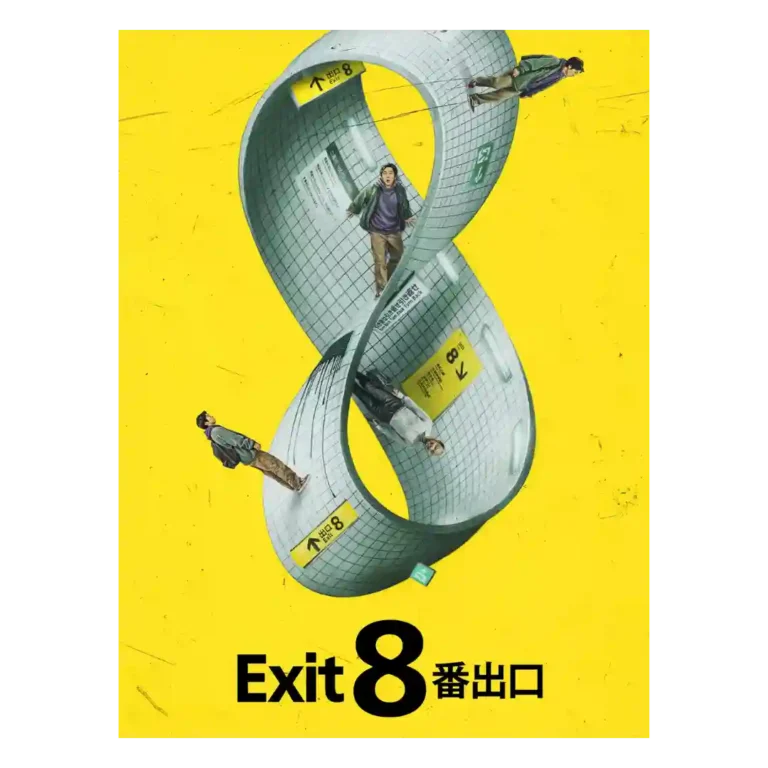
Choose it for faithful game design, precise camera work, and immersive sound-driven dread. Skip it if repeated corridors, ambiguity, or an explicit fatherhood message are likely to test your patience.
Best for
Best for liminal-horror fans, puzzle-film viewers, and players who want a highly faithful adaptation with participatory anomaly spotting, strong audiovisual craft, and a more emotional story.
Not for
Not ideal for viewers who need fast pacing, frequent conventional scares, fully explained world rules, or subtle, open-ended thematic messaging.
Verdict
Exit 8 turns an extremely thin game premise into an unusually controlled piece of liminal horror. Reviewers consistently praise the game-accurate corridor, long-take cinematography, seamless editing, and sound design that makes footsteps, silence, and fluorescent hum feel threatening. The anomaly hunt also gives viewers something active to do, while Kazunari Ninomiya’s anxious performance and the fatherhood storyline add a human center. The tradeoff is repetition: some find the loops hypnotic and perfectly suited to the concept, while others say the film drags, loses momentum, or would work better as a short. The thematic material is similarly divisive, landing as moving and meaningful for many but blunt, moralistic, or overly literal for a vocal minority.
Footsteps, fluorescent hum, silence, cries, and recurring audio cues are treated as major weapons of suspense. The sound work is among the most consistently praised elements.
Reviewers who connected with the film considered it worth a theatrical ticket, often emphasizing the large screen and sound system as part of the experience.
The long corridor takes and repeating Walking Man movements are praised for being achieved practically, with hidden cuts and in-camera work that feel seamless.
faithfulness to source material: 4.8, 26 reviews, strong consensus
The corridor, rules, game rhythm, and interactive feeling are recreated with exceptional fidelity. Reviewers repeatedly praise the film for expanding the game without losing its identity.
Long takes, first-person framing, precise camera moves, and bright corridor compositions repeatedly earn standout praise. The photography turns a single hallway into an interactive, claustrophobic visual puzzle.
production design: 4.8, 18 reviews, strong consensus
The immaculate white-tiled corridor is one of the film’s clearest triumphs. Its exact details, changing anomalies, harsh lighting, and game-accurate layout make the limited setting immersive and oppressive.
Genki Kawamura is repeatedly praised for controlling tension, perspective, and repetition with unusual precision. The direction makes a minimal premise feel cinematic rather than merely copied from a game.
The screenplay earns strong praise for building character, theme, and structure around a nearly plotless game. Its more literal or moralizing choices are the main source of criticism.
Seamless loops, hidden cuts, brisk transitions, and perspective changes make the corridor feel physically continuous while preventing the structure from becoming completely static.
Dark humor and precise comic timing provide welcome release without undercutting the horror, and several viewers were surprised by how funny the film could be.
The classical selections and recurring motifs fit the looping transit setting, with the Boléro use and other needle drops receiving particularly enthusiastic praise.
The film is widely seen as a strong piece of liminal and psychological horror, favoring dread, uncertainty, and participation over conventional shocks. Its deliberately repetitive style remains an acquired taste.
Reviewers repeatedly call the film fresh, singular, and unusually inventive, especially in how it turns a tiny game premise into a theatrical experience. A few familiar homages and generic thematic choices temper that praise.
The restrained score and recurring motifs are praised for supporting the atmosphere, with several reviewers highlighting forceful musical cues. One review found the score less memorable than the sound design.
Many reviewers were surprised by the pathos beneath the horror, especially the father-and-child material. Others felt the third act did not fully earn the emotional payoff.
The overlit, sterile, game-like imagery is widely admired as elegant, hypnotic, and claustrophobic. A few critics felt the sterility eventually became limiting or some homages too obvious.
Most critics and video reviewers strongly recommend the film, often calling it one of the better game adaptations or horror releases of the year. A smaller group found it disappointing or easier to admire than enjoy.
The ensemble is widely praised for making a sparse, repetitive concept feel human and immediate. Even more critical takes generally found the performances solid.
entertainment value: 4.3, 16 reviews, moderate consensus
For viewers who enjoy contained puzzle films, the anomaly hunt is absorbing and often fun. The same repetition can turn the experience into a chore for less receptive audiences.
The film’s ideas about empathy, responsibility, parenthood, and breaking passive routines connected strongly with many viewers. Others considered the lesson heavy-handed, moralistic, or restrictive.
Yamato Kochi’s Walking Man is the standout, repeatedly described as unnerving and memorable. The boy and other figures add useful perspective, though some critics found the secondary roles underdeveloped.
The film often balances calm repetition, dark comedy, dread, and emotion with impressive control. Some viewers felt the later tonal shifts interrupted the horror or became disorienting.
The film builds tension by making viewers inspect every corner and fear a missed detail. That slow-burn uncertainty works strongly for most, but a few viewers never felt the intended unease.
Kazunari Ninomiya’s physical, anxious everyman performance is frequently credited with holding the film together. A few critics blamed the thin writing or slow decisions rather than the acting itself.
Most reviewers think the film finds a surprisingly effective human story inside a nearly storyless game. The central disagreement is whether that added narrative is resonant and focused or thin, forced, and overextended.
The film relies more on claustrophobia, uncertainty, and accumulating dread than constant jump scares. Most found it effectively creepy, though a few said it was barely scary at all.
Puzzle-horror fans and players of the game are the clearest match, though several reviewers say newcomers can enjoy it too. Viewers with little patience for repetition or ambiguity may find it frustrating.
Fatherhood, responsibility, passivity, empathy, routine, and modern isolation give the loop more meaning than the game provides. Reactions split over whether those themes feel profound, elegantly integrated, or too literal.
character development: 3.9, 20 reviews, low consensus
The added fatherhood arc and shifting viewpoints give the game’s anonymous figures more humanity, especially the Lost Man and the boy. Some critics still found the protagonist thin or the growth overly obvious.
The spot-the-difference premise feels fresh on film, and several critics admired how it becomes a narrative engine. More negative reactions found the added fatherhood plot predictable or limiting.
The rules of the corridor are generally easy to learn, but the origin and logic of the loop remain unexplained. That ambiguity enriches the mystery for some viewers and breaks immersion for others.
special effects quality: 3.7, 3 reviews, moderate consensus
Set transformations, blood, water, lighting, and restrained effects usually support the anomalies well. The more overt creature imagery drew a more mixed response.
The ending is one of the most divisive elements: some found it resonant, satisfying, or beautifully thematic, while others called it didactic, underpowered, or overly obvious.
At roughly feature length, the premise feels perfectly sustained to some viewers and noticeably stretched to others. Several critics specifically argued that a shorter version could have been stronger.
Some reviewers want to revisit the film with friends to search for details, while others see the solved puzzle as a one-time experience and have no desire to endure the repetition again.
Repetition is the central tradeoff. Some found the loops hypnotic, brisk, or carefully varied, while many others felt the movie dragged, lost steam, or would have worked better at a shorter length.
The corridor’s rules are understandable, but the larger reality behind the loop remains deliberately vague. That restraint supports the metaphor while leaving some viewers wanting firmer answers.
One review strongly objects to the film’s traditional framing of masculinity and underwritten women, arguing that its message narrows the roles available to its characters.
Imamura’s precise long takes, bright framing, and fluid camera movement make the corridor feel both interactive and claustrophobic. His cinematography is one of the film’s most unanimously praised contributions.
Ninomiya’s anxious, physical everyman performance anchors the film and gives the abstract puzzle an emotional center. Reviewers consistently describe his work as persuasive, well judged, or exceptional.
Kawamura is widely praised for turning a tiny game mechanic into controlled, cinematic horror with strong visual and thematic ambition. Criticism centers on later pacing and the more literal or heavy-handed parts of the adaptation.
Hirase’s co-writing helps transform a dialogue-free game into an empathetic, personal story. The screenplay is praised for its structure, though its thematic additions divide some critics.
Compared With Category Average
Compared with other Movies, this product is above average in value for money, screenplay quality, language level, near average in pacing, audience appeal, below average in cultural representation, world-building, CGI quality.
Summary
45 compared features
Above average0.4+ pts higher
32(71%)
Same as averagewithin 0.3 pts
10(22%)
Below average0.4+ pts lower
3(7%)
Largest category differences
Attribute
This product
Category average
Difference
cultural representation
1.5
4.0
-2.5
value for money
5.0
2.7
+2.3
screenplay quality
4.8
2.8
+1.9
language level
4.8
2.9
+2.0
editing quality
4.7
3.3
+1.4
originality
4.5
3.4
+1.1
dialogue quality
4.5
3.0
+1.5
faithfulness to source material
4.8
3.8
+1.0
Consider This Instead
If you want better cultural representation
Choose Leviticus. It scores 5.0 vs 1.5 for cultural representation, with a 4.2 overall score.
Similar: liminal-space horrorIt is positioned as a natural companion to Backrooms.
Similar: liminal horror setupThe film is framed as a character-driven variation on The Backrooms.
Cube
Compared: minimalist sci-fi puzzleCube is an inevitable comparison, though this film is described as simpler and cleaner.
Similar: mystery-box structureThe expanded puzzle narrative is likened to the cult film Cube.
Similar: puzzle-horror structureThe film is recommended to fans of the contained puzzle horror Cube.
Beyond the Infinite Two Minutes
Similar: looping microbudget sci-fiThe film has links to the looping sci-fi of Beyond the Infinite Two Minutes.
FAQ
Do I need to play the game first?
No. Several reviewers say the movie teaches its rules clearly and works for newcomers, while game fans gain extra pleasure from the faithful details.
How scary is it?
It is more creepy and suspenseful than jump-scare heavy. The strongest fear comes from claustrophobia, uncertainty, sound cues, and a few disturbing anomalies.
Does the repetition become boring?
This is the main divide. Some viewers find the loops hypnotic and tense, while others say the film drags, loses steam, or would work better as a short.
Is it faithful to the game?
Yes. The corridor, rules, viewpoint, anomaly hunt, and reset rhythm are repeatedly praised as exceptionally faithful, even as the film adds characters and a fatherhood storyline.
Is it worth seeing in a theater?
Reviewers who connected with it strongly recommend the big-screen experience because the precise framing and surround sound make the hallway feel more immersive.
Is the ending satisfying?
Opinions are mixed. Some found it resonant and emotionally complete, while others called it didactic, underpowered, or too literal.
Are the subtitles difficult to follow?
The film uses relatively little dialogue, and reviewers say its visual storytelling makes it easier to follow than many subtitled films.
Sample Expert Reviews We Analyzed
These are a few of the reviews included in our analysis.
Best for a profound, formally inventive meditation on grief, memory, and the ethics of filming family. Skip it if intensely personal addiction material, a 114-minute runtime, or occasional repetition will...
Best for joyful music, rare footage, candid interviews, and a layered Maurice White portrait. Skip it if you want a tightly focused, unconventional reappraisal that lingers on performances instead of...
Best for a tender, accessible portrait that lets Oliver’s poetry, friends, and archival voice carry the experience. Skip it if you want a brisk, deeply investigative biography; the calm rhythm...
Pros: romance quality, faithfulness to source material
Best for razor-sharp adult comedy, exceptional ensemble work, and a surprisingly moving marriage story. Skip it if talk-heavy chamber pieces, explicit relationship discussions, or an occasionally intrusive string score wear...