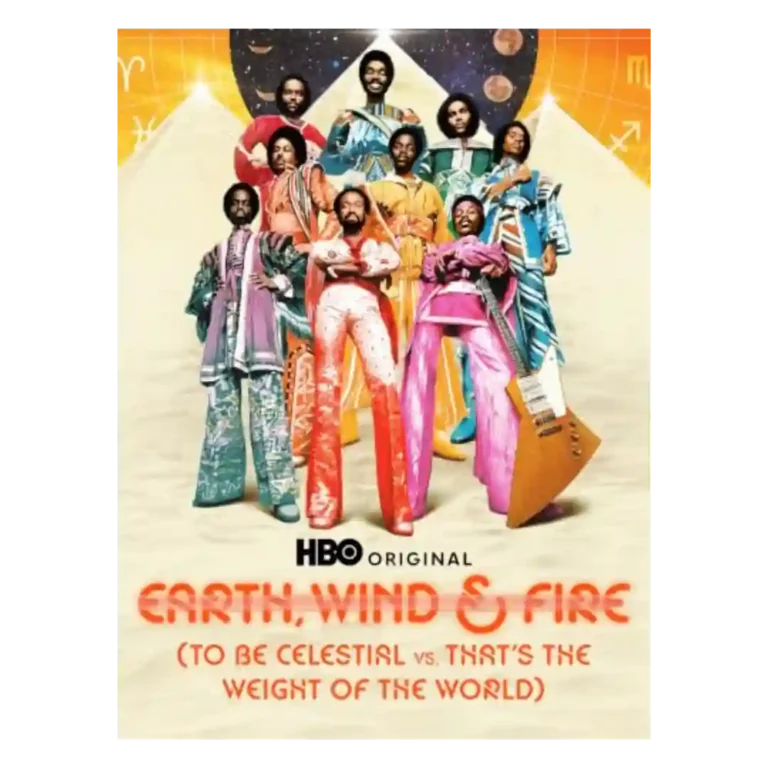
Earth, Wind & Fire (To Be Celestial vs. That’s the Weight of the World)

Earth, Wind & Fire (To Be Celestial vs. That’s the Weight of the World) Movie Review

Brand: HBO
Released: June 7, 2026
Updated: 1 hour ago
4.6
Overall review score
184
Review evidence points
28
Scored features
15
Expert reviews

Bottom Line

Choose it for joyful music, rare footage, candid interviews, and a layered Maurice White portrait. Skip it if you want a tightly focused, unconventional reappraisal that lingers on performances instead of racing through the full history.

Best for

Best for Earth, Wind & Fire fans, music-documentary viewers, and newcomers who want both an energetic celebration and a candid account of Maurice White’s complicated leadership.

Not for

Those seeking long uninterrupted concert performances or a sharply thesis-driven critical reappraisal may find the broad historical survey too conventional and rushed.

Verdict

Questlove turns Earth, Wind & Fire’s history into a vibrant, musically literate portrait of Maurice White’s genius, ambition, wounds, and controlling contradictions. The strongest passages fuse rare performance footage, candid interviews, animation, and precise musical analysis, making familiar songs feel newly alive while placing the band’s sound within Black culture, Afrofuturism, and spiritual aspiration. Philip Bailey, Marilyn White, Stevie Wonder, and other contributors add humor, candor, and emotional texture. The principal weakness is structural: the determination to cover decades of albums, personnel changes, and milestones can become conventional, rushed, or checklist-like, and one critic finds the film less probing than its subject deserves. Even so, the broad consensus is that the joy, insight, and archival richness comfortably outweigh those limitations.

Feature Scorecards

Summary

28 reviewed features
  • Very positive 4.5-5.0 75% 21 features
  • Positive 3.5-4.4 14% 4 features
  • Neutral 2.5-3.4 11% 3 features
  • Negative 1.5-2.4 0% 0 features
  • Very negative below 1.5 0% 0 features

Pros

  • 5.0
    based on 3 reviews
    ending satisfaction: 5.0, based on 3 reviews
    The closing emphasis on September, reunion, forgiveness, and the music’s permanence leaves the film on an exuberant and emotionally satisfying note.
  • 5.0
    based on 3 reviews
    world-building: 5.0, based on 3 reviews
    The film conveys Earth, Wind & Fire’s stage universe as a fusion of African roots, cosmic futurism, choreography, costumes, magic, and spiritual aspiration.
  • 5.0
    based on 2 reviews
    drama quality: 5.0, based on 2 reviews
    Maurice White’s brilliance, family wounds, financial conflicts, and strained band relationships give the documentary genuine tension beyond its celebratory music history.
  • 5.0
    based on 1 review
    score quality: 5.0, based on 1 review
    The Roots’ floaty ambient score supports the documentary’s meditative, cosmic atmosphere without competing with Earth, Wind & Fire’s own music.
  • 4.9
    based on 8 reviews
    soundtrack quality: 4.9, based on 8 reviews
    The band’s catalog is the film’s most dependable strength, with familiar songs made vivid through context, performance footage, and musical breakdowns. Several reactions say the documentary makes well-known tracks sound fresh again.
  • 4.9
    based on 8 reviews
    visual style: 4.9, based on 8 reviews
    Gold-toned archival footage, animation, stage spectacle, and trippy period imagery create a vivid ’70s atmosphere. Concert sequences are especially immersive and sometimes almost synesthetic.
  • 4.9
    based on 7 reviews
    archival footage quality: 4.9, based on 7 reviews
    Rare concert clips and archival interviews bring the band’s peak years vividly to life. The strongest footage feels immersive enough to place viewers inside the performances.
  • 4.8
    based on 12 reviews
    directing quality: 4.8, based on 12 reviews
    Questlove’s musical knowledge, enthusiasm, and archival instincts make the film vivid and accessible. The main reservation is that his attempt to balance celebration with reappraisal can sometimes feel unfocused.
  • 4.8
    based on 11 reviews
    audience appeal: 4.8, based on 11 reviews
    The film has broad pull for longtime fans and newcomers because its familiar songs, lively interviews, and cultural context are immediately inviting. One dissenting take finds the presentation more dependable than revelatory.
  • 4.8
    based on 11 reviews
    cultural representation: 4.8, based on 11 reviews
    The documentary connects Earth, Wind & Fire’s sound to African roots, Afrofuturism, Black cultural history, spiritual uplift, and crossover success without reducing the band to nostalgia.
  • 4.8
    based on 10 reviews
    interview quality: 4.8, based on 10 reviews
    Band members, family, peers, and famous admirers provide candid, funny, and informative perspectives. Philip Bailey, Marilyn White, Stevie Wonder, and the Obamas contribute several standout moments.
  • 4.7
    based on 13 reviews
    genre satisfaction: 4.7, based on 13 reviews
    This is widely seen as a strong music documentary that combines biography, cultural history, and musical analysis. Its main limitation is a conventional greatest-hits structure that occasionally feels more comprehensive than penetrating.
  • 4.7
    based on 11 reviews
    theme depth: 4.7, based on 11 reviews
    The tension between celestial ambition and worldly cost gives the documentary substantial depth. It explores how spiritual idealism, artistic control, family trauma, money, and fame shaped both the music and the fractures.
  • 4.7
    based on 10 reviews
    character development: 4.7, based on 10 reviews
    Maurice White emerges as visionary, wounded, controlling, inspiring, and self-sabotaging rather than a flattened musical icon. Family and bandmate testimony gives his contradictions emotional weight.
  • 4.7
    based on 9 reviews
    entertainment value: 4.7, based on 9 reviews
    Classic songs, charismatic interviews, humor, and vivid performance footage make the documentary consistently engaging. Even the most critical assessment concedes that the band’s catalog creates a high entertainment floor.
  • 4.7
    based on 3 reviews
    animation quality: 4.7, based on 3 reviews
    The animated passages make Maurice White’s spiritual and metaphysical ideas easier to grasp while preserving the film’s vibrant, period-rich personality.
  • 4.7
    based on 3 reviews
    humor: 4.7, based on 3 reviews
    Playful interview moments, especially around Reasons and the band’s rivalries, add warmth without undercutting the more painful material.
  • 4.6
    based on 13 reviews
    story quality: 4.6, based on 13 reviews
    The film builds a compelling story around Earth, Wind & Fire’s rise and Maurice White’s complicated leadership. Most find it rich and moving, though one critique sees an authorized greatest-hits tour where a deeper reappraisal was needed.
  • 4.6
    based on 8 reviews
    editing quality: 4.6, based on 8 reviews
    The strongest sequences combine interviews, archival performances, animation, and needle drops with infectious rhythm. The lone major complaint is that busy cutting sometimes interrupts songs before viewers can fully savor them.
  • 4.6
    based on 7 reviews
    emotional impact: 4.6, based on 7 reviews
    Joy, nostalgia, spiritual uplift, betrayal, loss, and forgiveness all register strongly. The best moments make the band’s music feel newly immediate while the darker history adds haunting weight.
  • 4.5
    based on 5 reviews
    critic appeal: 4.5, based on 5 reviews
    Most critical reactions are highly enthusiastic, calling the film superb, polished, essential, or a must-see. A notable dissent argues that it never reaches the greatness of its subject.
  • 4.3
    based on 4 reviews
    message quality: 4.3, based on 4 reviews
    The film clearly communicates the band’s belief in music as a force for hope, unity, expanded consciousness, and cultural possibility while acknowledging the personal cost of that vision.
  • 4.1
    based on 6 reviews
    plot clarity: 4.1, based on 6 reviews
    The documentary generally explains the band’s evolution, sound, and philosophy in a clear, accessible way. Its more impressionistic passages can feel sprawling, and one critique finds the overall focus insufficiently sharp.
  • 4.0
    based on 5 reviews
    pacing: 4.0, based on 5 reviews
    Most of the film moves with musical energy and keeps interviews flowing smoothly. The broad scope occasionally creates rushed or checklist-like stretches, especially when covering decades in limited time.
  • 3.8
    based on 2 reviews
    tonal consistency: 3.8, based on 2 reviews
    The film usually balances affection, honesty, humor, and sadness effectively. A dissenting view finds the celebration and critical inquiry insufficiently integrated.

Cons

  • 3.3
    based on 4 reviews
    originality: 3.3, based on 4 reviews
    Its immersive collage, animation, and musical analysis can feel distinctive, but some sections fall back on a conventional chronological survey of albums, hits, and personnel changes.
  • 3.3
    based on 3 reviews
    plot originality: 3.3, based on 3 reviews
    The sensory, non-linear passages feel fresh, but the career chronology often resembles a familiar music-documentary timeline. The result is inventive in texture more than in overall structure.
  • 2.8
    based on 2 reviews
    runtime: 2.8, based on 2 reviews
    The two-hour scope is packed with history, music, and personalities, yet the determination to be definitive can make some passages feel both overstuffed and hurried.

Cast & Creators

  • Interviewee
    5.0
    based on 5 reviews
    Verdine White: 5.0, based on 5 reviews
    Verdine White is praised both for extraordinary bass playing and for grounded, candid reflections that help balance myth with firsthand experience.
  • Editor
    5.0
    based on 1 review
    Andrew Morrow: 5.0, based on 1 review
    Morrow is identified as part of an ace editing team whose precise cuts and musical timing help place viewers inside the band’s sound.
  • Recording Engineer
    5.0
    based on 1 review
    George Massenburg: 5.0, based on 1 review
    Massenburg’s technical insight helps explain how the band’s dense arrangements became a clear, distinctive studio sound.
  • Interviewee
    5.0
    based on 1 review
    Marilyn White: 5.0, based on 1 review
    Marilyn White’s candid testimony gives the film crucial emotional insight into Maurice White’s private contradictions, infidelity, and fear of abandonment.
  • Editor
    5.0
    based on 1 review
    Matt Cascella: 5.0, based on 1 review
    Cascella is identified as part of an ace editing team whose precise cuts and musical timing help place viewers inside the band’s sound.
  • Interviewee
    5.0
    based on 1 review
    Ralph Johnson: 5.0, based on 1 review
    Johnson brings grounded, affectionate, and honest firsthand perspective that keeps the documentary connected to lived band experience.
  • Editor
    5.0
    based on 1 review
    Tim Ziegler: 5.0, based on 1 review
    Ziegler is identified as part of an ace editing team whose precise cuts and musical timing help place viewers inside the band’s sound.
  • Interviewee
    4.9
    based on 4 reviews
    Philip Bailey: 4.9, based on 4 reviews
    Bailey’s interviews combine fondness, humor, anger, and raw honesty. His candid comments about Maurice White and the true meaning of Reasons are among the film’s liveliest contributions.
  • Interviewee
    4.8
    based on 2 reviews
    Lionel Richie: 4.8, based on 2 reviews
    Richie contributes thoughtful reflections on Maurice White’s brilliance and lively humor about Earth, Wind & Fire’s rivalry with the Commodores.
  • Interviewee
    4.8
    based on 2 reviews
    Stevie Wonder: 4.8, based on 2 reviews
    Wonder offers thoughtful admiration and the film’s standout revelation that Shining Star inspired I Wish, giving the documentary a memorable moment of musical history.
  • Director
    4.7
    based on 13 reviews
    Ahmir Questlove Thompson: 4.7, based on 13 reviews
    Questlove is praised for deep musical knowledge, contagious enthusiasm, strong interview instincts, and imaginative use of archival material. One critical response finds his balancing of concert celebration and deeper reappraisal too unfocused.
  • Interviewee
    4.5
    based on 1 review
    Barack Obama: 4.5, based on 1 review
    Obama’s relaxed recollection of dancing to Reasons adds humor, familiarity, and a personal sense of the band’s cultural reach.
  • Archival Interviewee
    4.5
    based on 1 review
    Maurice White: 4.5, based on 1 review
    White’s archival interviews provide an effective narrative spine, allowing his own voice to guide the film’s portrait of vision, ambition, and personal cost.
  • Interviewee
    4.5
    based on 1 review
    Michelle Obama: 4.5, based on 1 review
    Michelle Obama’s quick, playful response in the Reasons discussion adds warmth and comic chemistry to one of the film’s most relatable interview moments.

Compared With Category Average

Compared with other Movies, this product is above average in character development, story quality, ending satisfaction.

Summary

8 compared features
  • Above average 0.4+ pts higher 100% 8 features
  • Same as average within 0.3 pts 0% 0 features
  • Below average 0.4+ pts lower 0% 0 features
Attribute This product Category average Difference
character development 4.7 3.1 +1.6
story quality 4.6 3.3 +1.3
ending satisfaction 5.0 3.5 +1.5
editing quality 4.6 3.3 +1.3
drama quality 5.0 3.6 +1.4
plot clarity 4.1 2.8 +1.3
audience appeal 4.8 3.7 +1.1
pacing 4.0 2.8 +1.2

FAQ

Is the documentary mostly celebratory or critical?

It is strongly celebratory about the music and cultural legacy, but it also examines Maurice White’s controlling behavior, infidelity, financial disputes, and damaged relationships.

Does it work for viewers who only know the biggest songs?

Yes. The film uses familiar hits, accessible musical explanations, and cultural context to bring casual listeners into the band’s deeper history.

Are the interviews a major strength?

Yes. Band members, family, musical peers, and famous admirers provide candid, humorous, and informative perspectives, with Philip Bailey, Marilyn White, and Stevie Wonder standing out.

Does the film include strong performance footage?

Yes. Rare and previously unseen concert material is repeatedly praised for capturing the band’s choreography, theatrical spectacle, musicianship, and crowd energy.

What is the main drawback?

The ambition to cover the full career can make parts feel conventional, crowded, or rushed, and the busy editing sometimes cuts away before a song can fully breathe.

Sample Expert Reviews We Analyzed

These are a few of the reviews included in our analysis.

Compared in Reviews

Products reviewers directly compared with this model, grouped into quick takeaways.

Summer of Soul

  • Compared: performance-driven documentary approach The new film is contrasted with the earlier documentary’s reliance on the joy of live performance.
  • Compared: Questlove’s documentary track record Questlove’s acclaimed earlier documentary is used to establish confidence in his filmmaking ability.

Sly Lives!

  • Compared: thesis-driven documentary approach The new film is contrasted with the stronger central argument of Questlove’s prior documentary.

Sly Lives! (aka the Burden of Black Genius)

  • Compared: Questlove’s evolving music-documentary style The film is framed as building on the distinctive musical-documentary qualities that emerged in Questlove’s prior work.

Consider This Instead

If you want better originality

Choose Remake. It scores 5.0 vs 3.3 for originality, with a 4.8 overall score.
Compare

If you want better runtime

Choose Mockbuster. It scores 4.8 vs 2.8 for runtime, with a 4.4 overall score.

Compare

If you want better plot originality

Choose Rose of Nevada. It scores 5.0 vs 3.3 for plot originality, with a 4.4 overall score.

Compare

Top Movies to Consider

#1 Remake
4.8

Best for a profound, formally inventive meditation on grief, memory, and the ethics of filming family. Skip it if intensely personal addiction material, a 114-minute runtime, or occasional repetition will...

Pros: plot originality, ending satisfaction

Cons: runtime, pacing
#2 Mary Oliver: Saved by the Beauty of the World
4.7

Best for a tender, accessible portrait that lets Oliver’s poetry, friends, and archival voice carry the experience. Skip it if you want a brisk, deeply investigative biography; the calm rhythm...

Pros: romance quality, faithfulness to source material

Cons: none
#3 The Invite
4.5

Best for razor-sharp adult comedy, exceptional ensemble work, and a surprisingly moving marriage story. Skip it if talk-heavy chamber pieces, explicit relationship discussions, or an occasionally intrusive string score wear...

Pros: plot originality, lead performance

Cons: runtime, score quality

#4 Romería
4.5

Best for luminous coastal imagery, an exceptional debut performance, and a tender search through family memory. Skip it if slow pacing, subdued conflict, or a late shift into magical realism...

Pros: ending satisfaction, acting performance

Cons: character development, score quality