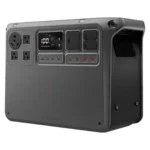
DJI Power 2000 Feature Scores
Explore all 118 feature scores for DJI Power 2000, organized into pros and cons.
Scores by Feature
Summary
118 reviewed features-
Very positive 4.5-5.065 (55%)
-
Positive 3.5-4.421 (18%)
-
Neutral 2.5-3.411 (9%)
-
Negative 1.5-2.417 (14%)
-
Very negative below 1.54 (3%)
Pros
Sort
-
The 3,000W continuous output repeatedly handled refrigerators, kitchen appliances, power tools, production gear, and RV loads with impressive ease.
-
Wall charging is a standout strength, commonly reaching 80% in under an hour and full capacity in roughly 90 minutes.
-
Across appliance, workshop, event, and production tests, the station handled demanding combinations with very few hiccups.
-
Construction feels premium, solid, and carefully engineered across nearly every hands-on assessment.
-
Near-silent operation is one of the most consistent strengths, though one stress test recorded loud fans at sustained maximum load.
-
It proved highly capable for refrigerators, networking gear, computers, lights, and other essentials during outages.
-
The 2,048Wh battery offers substantial useful energy in a relatively compact body and supports multi-hour or multi-day use depending on load.
-
SDC ports enable excellent drone charging and flexible DC accessories, but their proprietary nature and limited count create tradeoffs.
-
UPS operation is fast, automatic, and dependable in most tests, keeping offices, routers, computers, and other critical devices running.
-
The rugged enclosure, flame-retardant construction, and high load-bearing design were widely praised, with only isolated defects undermining confidence.
-
The capacity-to-size ratio is excellent, allowing the station to fit in vehicles, closets, and workspaces more easily than many rivals.
-
The LiFePO4 chemistry drew strong praise for safety, thermal stability, and long service life.
-
The generous mix of AC, USB, 30-amp, and SDC connections is one of the strongest port selections in this size class.
-
The integrated 30-amp connection was repeatedly praised as a rare and practical feature on a mid-sized station.
-
The roughly 10ms switchover was frequently described as seamless, with connected electronics continuing without a visible interruption.
-
Runtime is strong for refrigerators, RVs, DJ rigs, and production equipment, but space heaters and other resistive loads drain the 2kWh battery quickly.
-
Short owner reports were overwhelmingly positive, with the unit commonly described as dependable, useful, and fully meeting expectations.
-
The unusually high solar-input ceiling makes rapid off-grid recharging possible with a large enough array and the correct accessory.
-
Owners successfully powered several appliances, computers, chargers, lights, and USB devices at once without compromising operation.
-
It runs heaters, air fryers, kettles, microwaves, air conditioners, and tools well within its rating, but very hard-start loads remain a limitation.
-
The 30-amp RV connection adds unusual versatility for campers and can run essential RV appliances within the 3,000W limit.
-
The extensive sensors, fuses, protective coating, and automatic safeguards inspire confidence in battery safety.
-
With sufficient panels and the right adapters, solar input can be exceptionally fast; small panels and weak conditions produce much slower results.
-
The optional fast car chargers replenish the station quickly and efficiently while traveling between locations.
-
Capacity can scale to a serious home-backup system, although expansion batteries are expensive and add considerable bulk.
-
Once configured, the station is simple and intuitive for appliances, charging, backup, and field work.
-
Most users found the app useful for monitoring and settings, but complaints include limited controls, awkward installation, language errors, and occasional bugs.
-
Many consider it excellent value on sale, but the total cost rises quickly when solar, car-charging, trolley, and expansion accessories are added.
-
The app makes it convenient to check battery level, input, output, and remaining runtime without standing beside the unit.
-
The 4,000-cycle rating gives the station an unusually long projected lifespan, even with frequent use.
-
AC efficiency and idle consumption tested well for a station of this size, helping preserve more of the rated capacity.
-
The high-output USB-C ports charge laptops and other demanding mobile devices quickly and directly.
-
Recharging is generally very fast, with wall, car, and combined-input options allowing useful top-ups between jobs or trips.
-
Voltage and output stayed notably steady under demanding loads, supporting sensitive electronics and sustained tool use.
-
Runtime estimates were useful and generally accurate, helping users plan loads and charging.
-
The compact body stores neatly, and optional stacked batteries or a folding trolley can keep larger setups organized.
-
Testers highlighted an expected service life around a decade or longer before major capacity loss.
-
Built-in Wi-Fi was welcomed for remote access and worked smoothly in the positive tests.
-
Pass-through operation works well, allowing the station to charge while continuing to power connected equipment.
-
Bluetooth and Wi-Fi setup was usually straightforward, but some units or configurations failed to connect reliably.
-
Expansion can grow the system dramatically, but occupying SDC ports and the high price of extra batteries temper the appeal.
-
The main screen is bright and informative, although one detailed test strongly criticized the faint physical port labels.
-
Its compact shape and side handles help, but nearly 50 pounds makes it better for vehicle-based travel than frequent hand carrying.
-
Automatic cutoffs generally protected the unit appropriately, but some users encountered shutdowns or limits sooner than expected.
-
A range of panels worked successfully, but proprietary adapters, voltage limits, and occasional third-party incompatibility complicate setup.
-
The screen and app clearly show incoming and outgoing wattage for quick load management.
-
It can support selected household circuits through a transfer switch, though its 120V-only output and base capacity limit true whole-home coverage.
-
Surge handling is strong for most motors and tools, though hard-start air conditioners or multiple inductive loads can still exceed its limits.
-
Four AC outlets provide more plug capacity than several comparable stations and were viewed as a practical advantage.
-
The screen is bright, clean, and easy to read outdoors, with clear status information at a glance.
-
Combining wall power with solar or vehicle input enables exceptionally high total charging rates.
-
A generator can replenish the station rapidly, making it useful as a quiet indoor buffer during longer outages.
-
One outdoor test found the station continued operating reliably in high heat.
-
The rugged outer shell feels well protected for transport and outdoor work.
-
At light loads and standby-like use, the station is quiet enough to keep beside a bed or workspace.
-
The inverter showed strong stability and sustained tool performance, though one audio test found electrical interference.
-
Charging at off-peak electricity rates can reduce daily energy costs for users who cycle the station regularly.
-
Extensive temperature monitoring and automatic safeguards were praised as reassuring safety features.
-
Built-in voltage protections add confidence when powering valuable appliances and electronics.
-
A business user praised the high inrush capability for equipment that would overwhelm many battery stations.
-
Testing confirmed that the station can sustain its advertised 3,000W rating without shutting down.
-
Phone controls provide useful remote access to outlets and operating settings.
-
At least one faulty unit was successfully diagnosed and replaced, showing that repair or replacement service can work well.
-
Near-maximum-load testing delivered roughly half an hour of steady operation without hiccups.
-
Multiple circuit safeguards help protect the station and connected equipment from electrical faults.
-
One owner found it an effective quiet replacement for a gas generator when paired with suitable charging equipment.
-
The integrated TT-30-style RV outlet is an uncommon and highly valued addition at this size.
-
Four quick-charge USB-A ports add useful legacy-device capacity alongside the stronger USB-C selection.
-
Adequate airflow is important, and the hand-truck setup can help keep vents unobstructed during use.
-
Heavy-load testing found almost no voltage drop, indicating excellent regulation.
-
Basic operation is straightforward, while app installation, double-press controls, and accessory configuration can add friction.
-
Built-in side handles make short moves manageable, though carrying in front of the body can be awkward.
-
AC-side usable capacity was often excellent, while a few tests and owners found DC-side or real-world capacity lower than expected.
-
Keeping everything on the front is convenient for tight spaces, but the charging cable and crowded AC arrangement can create clutter.
-
One owner found the displayed and advertised capacity closely matched actual use.
-
Direct DC charging avoids unnecessary conversion losses and was praised for efficient power transfer.
-
Scheduling and peak-hour controls help shift charging to cheaper or more convenient times.
-
The LFP battery was specifically valued for lasting far longer than older lithium-ion power-station cells.
-
The outer shell and components feel substantial rather than cheap.
-
Inverter output was generally clean and stable, although one audio test detected interference that may require a line conditioner.
-
The pure sine-wave inverter was viewed as a strong foundation for appliances and sensitive electronics.
-
Phone, chat, and in-app support provide several ways to reach DJI when problems arise.
-
Its relatively small footprint was praised for packing substantial power into limited space.
-
The 120V output can support selected household circuits through a compatible transfer switch.
-
Cooling is usually effective and quiet, but sustained maximum output can trigger loud fans or require a cooldown before recharging.
-
Idle draw is respectable in some tests, but other measurements and owner experiences were less favorable.
Cons
Sort
-
Several owners reported a persistent chemical or urine-like odor during operation, and some said it made indoor use uncomfortable or impossible.
-
Solar charging depends on proprietary or extra conversion hardware, and required cables have sometimes been difficult to obtain.
-
The lack of a built-in 12V car socket is a recurring complaint because an SDC adapter is required for common fridges and camping gear.
-
Customers repeatedly struggled to find required chargers, adapters, and cables in stock.
-
A small but serious group received units that would not power on, failed after setup, or became unusable during firmware updates.
-
The minimal diagram-heavy manual left several owners relying on online videos or support for basic operation.
-
A few units encountered 50Hz configuration or over-frequency errors, usually tied to firmware or gray-market regional models.
-
Several owners reported defective ports, dead-on-arrival units, charging faults, or complete failures despite many trouble-free units.
-
The AC cable works, but small retaining screws, unusual plug geometry, and replacement concerns drew criticism.
-
Support experiences were sharply divided, ranging from excellent replacements and communication to long delays and repetitive, ineffective troubleshooting.
-
Maximum-load fan noise can become loud even though ordinary operation is exceptionally quiet.
-
The missing integrated light is a minor but repeated disappointment for camping and emergency use.
-
A few owners reported rapid heating under light loads, while broader testing found normal thermal protection and controlled temperatures.
-
The potential five-year coverage is attractive, but gray-market units, nonreturnable listings, and slow claims can complicate protection.
-
Uncovered ports and limited weather claims make rain exposure a poor idea despite internal moisture protections.
-
Bulky plugs can block neighboring AC outlets, making the otherwise generous port count less usable in some setups.
-
One defective unit could not establish the expected Bluetooth connection during setup.
-
There is no integrated cable storage, so proprietary cables and adapters must be organized separately.
-
The base package is sparse, generally providing only the AC cable and basic paperwork.
-
Expansion batteries add substantial capacity, but their roughly four-figure price makes a large system expensive.
-
One owner found the unexpected sleep behavior frustrating and could not find a clear way to disable it.
-
The lack of an integrated pull handle makes moving the nearly 50-pound unit harder than wheeled competitors.
-
Optional trolleys work well, but the absence of integrated wheels and a telescoping handle is repeatedly criticized.
-
The weight is the most common physical drawback: reasonable for its capacity, yet tiring on stairs or over any meaningful distance.
-
Four USB-C ports are useful, but a few owners experienced failed ports and some testers wanted a different power-delivery mix.
-
Most units performed reliably, but repeated bricking, early hardware failures, and idle shutdowns create a meaningful reliability caveat.
-
One person can lift it for short moves, but stairs and longer carries often call for a trolley or second person.
-
The station is not intended for very dusty locations despite internal protective coatings.
-
Updates added useful fixes for some owners, yet others encountered confusing errors or even units becoming unusable during installation.
-
The MPPT accessories can deliver strong input, though one test found mediocre efficiency and customers reported occasional charging glitches.
-
Internal moisture protections offer some reassurance, but uncovered ports and limited ratings make wet-weather use inadvisable.
-
DJI offers broad drone, car, solar, and expansion options, but proprietary connectors, extra cost, and recurring stock shortages reduce convenience.