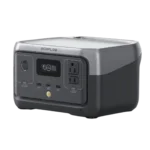
EcoFlow River 2 Feature Scores
Explore all 129 feature scores for EcoFlow River 2, organized into pros and cons.
Scores by Feature
Summary
129 reviewed features-
Very positive 4.5-5.055 (43%)
-
Positive 3.5-4.430 (23%)
-
Neutral 2.5-3.415 (12%)
-
Negative 1.5-2.424 (19%)
-
Very negative below 1.55 (4%)
Pros
Sort
-
A roughly 58-60 minute wall recharge is the clearest consensus strength and changes how easily the unit can be topped up between trips.
-
At about 7.7 pounds with a large rear handle, it is repeatedly praised as easy to carry for camping, road trips, field work, and short outages.
-
The small footprint is a defining advantage, fitting vehicles, bags, desks, and crowded camping kits without sacrificing basic outputs.
-
The 3,000-cycle rating is one of the product's strongest selling points, giving heavy users far more expected life than older NMC packs.
-
The EcoFlow app is widely praised for polished controls, charge limits, output switching, and firmware access, although deeper logging and automation remain limited.
-
The shell, controls, feet, and ports generally feel robust and premium, despite isolated defective units and a few internal-finish criticisms.
-
Simple buttons, a clear display, and direct outputs make the unit approachable even without the app.
-
Its mix of USB, DC, and AC connections can charge several low-power devices together, which campers and outage users found genuinely useful.
-
The front LCD is bright, clean, and informative, showing charge, input/output power, and time estimates without clutter.
-
The broad consensus is highly positive for fast-charging portable power, tempered by the small battery, 300W ceiling, and a minority of serious reliability complaints.
-
Several reviewers expect roughly eight to ten years of regular use before capacity falls to about 80%.
-
Testers could read the screen in direct sunlight, and customers found the battery and consumption information easy to understand.
-
Pass-through backup is a valuable extra for routers and tolerant electronics; some tests kept computers running, while others warn the sub-30ms transfer is not a true online UPS.
-
It is effective for routers, lights, phones, and other essentials during short outages, but the small battery is not a substitute for whole-home or long-duration backup.
-
The five-year warranty is unusually strong for this price and category, although a few customers reported frustrating disputes over coverage.
-
With a well-matched 100-110W panel and good sun, a full recharge commonly takes about three to four hours, though real weather can slow it dramatically.
-
Charge limits, temperature monitoring, tapering near full, and other BMS protections give buyers confidence in long-term battery care.
-
Most buyers found setup, app pairing, and first use straightforward, with plug-and-play operation.
-
The flat, slightly dished top can hold or stack gear, a practical improvement over the original top-handle design.
-
The direct kettle-style AC lead avoids a bulky brick and is easy to replace, while the XT60 car cable is more specialized and worth keeping track of.
-
AC, car, solar, and bidirectional USB-C make charging unusually flexible, but failed ports and modified-sine inverter incompatibility appear in isolated reports.
-
Most reviewers consider it exceptionally light for a power station, though a few buyers still found it heavier than expected or unsuitable for hiking.
-
The sturdy rear grab handle makes one-handed carrying easy and protects airflow, but it adds depth and some reviewers preferred a different placement.
-
Paired with a compact panel, it is highly useful for camping, field work, shop lighting, and keeping electronics charged off-grid.
-
Frequent discounts make it compelling for light-duty users, but full-price buyers may prefer larger capacity or competitors with more ports.
-
The two-tone shell and flat-top redesign are generally liked for clean looks and practicality, even if the rear handle appears less sleek.
-
Owners repeatedly praised how quickly it tops up, especially compared with traditional backup batteries and slower budget stations.
-
Wi-Fi enables monitoring and switching outputs from beyond Bluetooth range, which is useful for home or vehicle installations.
-
Bluetooth pairing was generally quick and reliable for local control while camping or away from Wi-Fi.
-
AC output stayed clean and stable at rated load in technical testing, with smooth recovery after brownouts and ordinary use.
-
Most units arrived well protected in foam and intact, though split shipments for cables and the station created confusion.
-
The inverter produces clean sine-wave AC that testers trusted with routers, computers, TVs, and other electronics.
-
Phones, laptops, routers, fans, lights, coolers, pumps, and other small loads are its sweet spot, with many owners reporting trouble-free operation.
-
Active cooling keeps the unit from overheating during heavy use, but fast charging can make it warm and a few fault reports involved heat-related shutdowns.
-
EcoFlow's folding panel and carry case feel premium and work well, but the carabiner-based stand can be fiddly and the bundle raises total cost.
-
LFP chemistry is consistently treated as a major advantage for safety, frequent cycling, and long service life.
-
The case survived real drops in one test and feels suited to outdoor use, though it lacks formal shock and weather protection.
-
Updates were easy to install and have improved features such as auto-shutoff behavior.
-
It can power connected devices while recharging, making it useful for continuous desk, router, and light backup duties.
-
AC and DC outputs can be switched from the app, adding convenience for installations and backup setups.
-
Multi-year adventure use and daily installations are encouraging, yet a handful of owners experienced failures within months.
-
Measured switching around 16-30ms worked well for lights, routers, and many electronics, but sensitive workstations remain a questionable match.
-
The unit generally shuts down and resets cleanly after oversized loads, though unexpected overload trips during solar charging were reported.
-
Its low height and flat top pack efficiently, though the protruding handle can make it deeper or awkward inside narrow enclosures.
-
Support experiences range from fast replacements and generous resolutions to prolonged runarounds, poor communication, and refund problems.
-
The fan is usually quiet or off at light loads, but fast AC charging and heavy output can produce audible whine or loud bursts.
-
The compact inverter is efficient for light loads and delivers clean power, though measured AC conversion was not class-leading.
-
The time estimate is useful and tracked charging closely in some tests, though another reviewer found such estimates inherently unreliable.
-
The consistent hands-on result is 60W bidirectional USB-C—adequate for many laptops, but less versatile than 100W competitors and weak for some legacy fast-charge modes.
-
Solar panels, app integrations, cables, backpacks, and larger EcoFlow models create a useful ecosystem around the base unit.
-
A vehicle installation kept the unit charging automatically whenever the engine ran, making the setup effectively always ready.
-
The fan and front-to-rear airflow keep the enclosure from becoming excessively hot, though they add noise and dust exposure.
-
The unit sustained rated operation in simulated heat, with active cooling managing temperature under load.
-
The plastic shell is repeatedly described as robust and premium, despite lacking formal shock or weather ratings.
-
The manual is detailed and covers operation, storage, warnings, and solar connections well.
-
The LFP pack is widely praised for safer operation, strong temperature tolerance, and roughly six times the cycle life of older lithium-ion designs.
-
The low weight and oversized grab handle make it easy to lift and carry one-handed over meaningful distances.
-
One hands-on test pulled about 95W from a 100W panel, showing strong tracking under good sun.
-
Technical testing found full input and output performance in simulated hot and cold conditions, though one customer reported poor cold runtime.
-
The BMS continually tracks temperature and active cooling prevents excessive heat during demanding use.
-
Layered BMS monitoring of voltage, current, and temperature is presented as a strong safety and battery-life feature.
-
Technical measurements found clean, stable AC output that compared favorably with ordinary mains power.
-
The front power and output buttons are simple, clearly indicated, and easy to operate.
-
The app is especially handy when the unit is mounted under a seat or otherwise hard to see, showing charge, temperature, and power flow remotely.
-
A technical test delivered about one hour and twenty minutes at a 150W load, a solid result for the 256Wh battery.
-
A technical reviewer praised the North American safety listing and the seriousness of the product's protection design.
-
Safety-focused coverage highlights short-circuit protection as part of the unit's certified protection system.
-
Configurable low-draw shutdown is useful for CPAP and storage scenarios, giving owners more control than many basic units.
-
XT60 works with EcoFlow and third-party panel cables, though separate shipments, missing cables, and isolated input failures caused frustration.
-
App-controlled charge limits make it easy to leave the battery near a storage-friendly level before storms or trips.
-
Short bursts and X-Boost worked as intended in testing, helping the inverter avoid immediate shutdown on compatible loads.
-
The rear handle helps preserve exhaust clearance against walls, but the vents still need open space and shelter from debris.
-
The 12V input is convenient and can approach 100W, but isolated owners reported car-charging failures and inverter compatibility problems.
-
Phone pairing adds remote status and controls, though some owners disliked needing internet or an account and one reported a model without expected connectivity.
-
Configurable charge limits help long-term storage, but self-discharge complaints make proper full shutdown important.
-
The supplied AC cord includes a tie, but there is no dedicated onboard compartment for cables.
-
Only one two-tone gray scheme is offered, but reviewers generally found it stylish and consistent with the EcoFlow range.
-
The sturdy handle does not fold, yet reviewers generally preferred its fixed rear placement for carrying, stacking, and airflow.
-
One analysis judged lifetime stored-energy cost reasonable for the unit's small size, especially when bought on sale.
-
X-Boost can keep some appliances rated up to 600W operating, but it does so by reducing voltage rather than delivering a true 600W continuous output.
-
Reducing AC charge rate through the app noticeably lowers fan noise, though the fan may still be audible.
-
One teardown-oriented reviewer said the internal pack can be reached and replaced, though it is not a simple user-swappable design.
-
The app shows useful live power trends, but it lacks deeper solar history, cycle counts, and long-term data logging.
-
External materials feel solid, but one teardown found inconsistent conformal coating and unsupported internal components.
-
The USB, 12V, and AC mix covers common portable electronics well, but the limited number of AC connections narrows heavier use.
Cons
Sort
-
It is not water-resistant and must stay dry; exposed ports and the cooling fan make rain, boats, and wet ground poor environments.
-
Charging sources cannot be combined; AC, USB-C, and XT60 inputs must be used one at a time.
-
One or two regional AC sockets are not enough for every setup, and bulky plugs can effectively reduce the usable count.
-
The car-style outlet handles many accessories, though a few owners reported heater incompatibility or outright port failure and reviewers disliked the loose or missing cover.
-
At 256Wh it is generally over airline carry-on limits, so it should be treated as road-travel equipment rather than a flyable battery.
-
Coffee makers, heaters, toaster ovens, large tools, and full-size appliances often overload it or drain it too quickly; X-Boost only partly expands the range.
-
Capacity is fixed on the base model, and the lack of a clean add-on battery path makes larger River or Delta models better for growing needs.
-
Live wattage information is helpful, but one technical test and one customer reported erratic or only approximate readings.
-
Experiences are split: some fully powered-down units held their percentage for days, while others lost substantial charge within 24 hours or over several weeks.
-
The 256Wh battery is well matched to light weekend use and mobile electronics, but it is too small for overnight refrigeration or serious home backup.
-
Mandatory registration, internet access, and account binding bothered several users who wanted local-only control.
-
Technical tests and owners found meaningful idle draw, especially with AC output or UPS mode enabled.
-
Many units work daily without issue, but the customer set includes serious failures to charge, early shutdowns, dead ports, and rapid depletion.
-
The two USB-A ports are useful for legacy devices but lack broad fast-charge protocol support and sometimes fall short of their rated output.
-
One owner saw an implausibly rapid fall from 99% to 74%, raising concern about calibration on that unit.
-
One customer reported very short runtime around 30°F, while broader technical commentary says LFP chemistry itself tolerates cold better than older cells.
-
One owner reported a strong hot-electronics smell across two units, along with noise concerns while charging.
-
The River 2 is not intended for a household distribution board or whole-home backup; it is limited to individual low-power essentials.
-
Unlike several competitors, it has no built-in flashlight, a missed convenience for camping and emergencies.
-
Measured usable energy falls below the 256Wh headline, with technical results around 200-218Wh and one customer reporting a much lower faulty result.
-
There is no built-in wireless charging pad; phones must use USB or an external charger through AC.
-
The front layout is mostly roomy, though regional upside-down sockets and tight spacing around large plugs create occasional frustration.
-
The fan and uncovered ports create clear dust-entry points, so occasional cleaning and sheltered use are sensible.
-
Unloaded energy-saving behavior reduces waste but creates higher USB ripple, making the implementation less polished than ideal.
-
The base unit lacks the modular capacity options found on newer or larger models.
-
One owner specifically found the fan too loud, while other tests describe maximum-load noise as noticeable but manageable.
-
The fan can remain audible even at its lowest speed, which matters in bedrooms and quiet campsites.
-
It is not shock-rated; ordinary vehicle bumps appear tolerable, but owners are advised not to drop it.
-
The 110W solar ceiling is suitable for the small battery but limits gains from larger panels.
-
At the full 300W AC rating, the 256Wh battery lasts under an hour, making maximum output suitable only for brief tasks.
-
It tolerates normal sheltered outdoor use, but rain, wet ground, and exposed conditions require extra protection.
-
X-Boost keeps some oversized resistive loads running by lowering voltage, so appliances may work more slowly or weakly.
-
Efficiency is strongest on USB-C and DC loads, while AC round-trip results range from acceptable to disappointing for a small power station.
-
A single bidirectional USB-C port is convenient, yet several users wanted a second port for modern gear.
-
Runtime varies sharply by load: phones and networking gear can last hours or days, while 150-300W appliances may empty it in under two hours.
-
Most technical measurements support the stated capacity and power, but regional listings, weight claims, and the 600W X-Boost headline can be confusing.
-
Hands-on tests show it can sustain roughly its 300W rating, while higher loads depend on X-Boost and reduced performance.
-
The 300W class output is useful for electronics and small appliances, but buyers repeatedly found it underpowered for broader backup needs.
-
Core AC and car cables are normally included, yet separate solar-cable shipments caused repeated confusion and several customers initially believed parts were missing.
-
XT60 input works with EcoFlow and many third-party panels through adapters, although the voltage/current window can be awkward and some owners hit compatibility problems.
-
Ports are easy to reach, but exposed buttons can be pressed accidentally when the unit is packed in a bag.
-
The case can be opened with screws, but the tightly integrated internals are not designed for simple consumer repair.
-
The 12V output works for coolers, pumps, and field gear, but its 8A ceiling is lower than the common 10A offered elsewhere.
-
Fast AC charging trades some efficiency for speed, while DC and USB-C results range from solid to excellent depending on voltage and load.