If you want better dual-input charging
Choose Jackery Explorer 1000 V2. It scores 5.0 vs 1.0 for dual-input charging, with a 4.4 overall score.
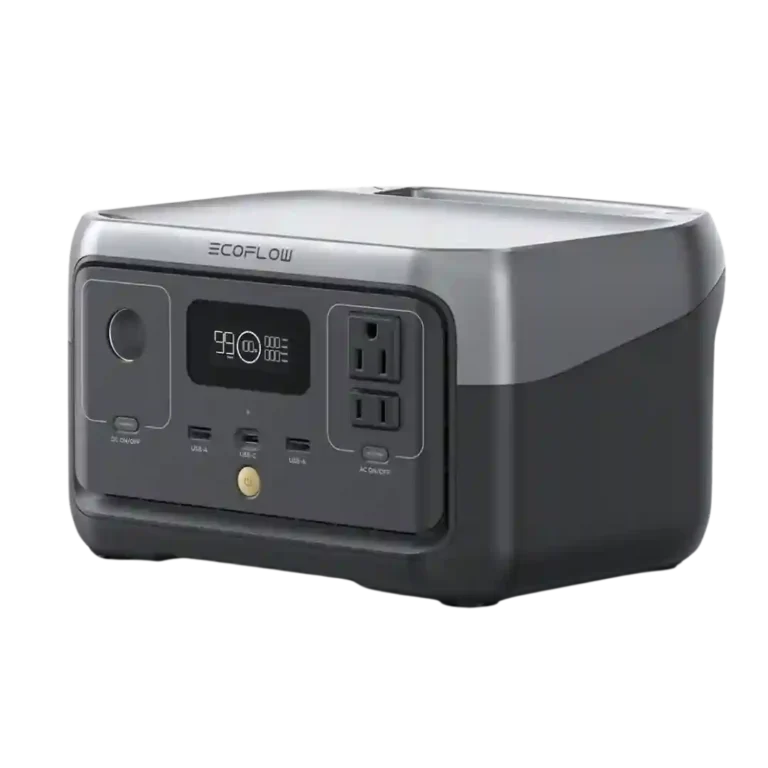
Choose the River 2 for phones, laptops, routers, lights, and short camping or outage needs where fast recharging matters. Skip it for overnight refrigeration, heating appliances, heavy tools, or long emergency backup.
Campers, road-trippers, mobile workers, and outage planners who mainly need phones, laptops, routers, lights, cameras, fans, or other modest loads—and value very fast recharging.
Buyers who need overnight fridge or CPAP runtime, heating and cooking appliances, power tools, whole-home backup, weatherproofing, or dependable high-wattage output.
The EcoFlow River 2 succeeds by focusing on speed and portability rather than capacity. Its roughly one-hour AC recharge, compact 7.7-pound body, long-life LFP battery, clear display, and capable app make it unusually easy to use every day. It handles phones, laptops, routers, lights, fans, coolers, and other modest loads well, and its EPS function adds useful short-outage protection. The tradeoff is a small 256Wh reserve and a 300W inverter: runtime collapses under heavier loads, X-Boost reduces voltage, and a single or limited AC outlet setup can feel restrictive. Most reviewers found it reliable and well built, but recurring customer reports of charging failures, self-discharge, and uneven support keep the consensus from being unqualified.
Compared with other Generators, this product is above average in sleep mode behavior, instruction quality, solar cable compatibility, near average in overall product satisfaction, customer support, below average in dual-input charging, input and output monitoring, idle noise.
| Attribute | This product | Category average | Difference |
|---|---|---|---|
| dual-input charging | 1.0 | 4.4 | -3.4 |
| input and output monitoring | 1.5 | 4.5 | -3.0 |
| sleep mode behavior | 5.0 | 2.4 | +2.6 |
| idle noise | 2.0 | 4.4 | -2.4 |
| cold-weather performance | 1.0 | 3.3 | -2.3 |
| rated output | 2.8 | 5.0 | -2.1 |
| impact resistance | 2.0 | 4.2 | -2.2 |
| instruction quality | 5.0 | 2.8 | +2.2 |
Choose Jackery Explorer 1000 V2. It scores 5.0 vs 1.0 for dual-input charging, with a 4.4 overall score.
Choose Bluetti Elite 30 V2. It scores 4.5 vs 1.0 for battery percentage accuracy, with a 4.4 overall score.
Choose EcoFlow Delta 3 Plus Review. It scores 5.0 vs 1.8 for AC outlet count, with a 4.6 overall score.
Choose Anker Solix C1000. It scores 4.8 vs 2.4 for high-demand appliance support, with a 4.5 overall score.
Products reviewers directly compared with this model, grouped into quick takeaways.
Hands-on tests repeatedly reached a full AC charge in about 58–60 minutes. A well-matched 100–110W solar panel typically needs about three to four hours in strong sun.
It is best with phones, laptops, routers, lights, fans, camera gear, coolers, and other small appliances. Coffee makers, heaters, toaster ovens, and many tools often overload it.
Not reliably. The 256Wh battery can run some small fridges or coolers for a few hours, but reviewers consistently recommend a larger model for overnight refrigeration.
Its EPS/pass-through mode switches in roughly 16–30ms and worked well for routers, lights, and many electronics. Sensitive computers or medical equipment may require a true online UPS.
The LFP battery is rated for about 3,000 full cycles before falling to 80% capacity, commonly described as roughly eight to ten years of frequent use.
No, basic operation is straightforward from the front panel. The app adds charge limits, output control, firmware updates, and remote monitoring, but account registration bothered some users.
At 256Wh, it is generally treated as above airline carry-on battery limits. Reviewers consider it a road-travel power station rather than a dependable option for flying.
These are a few of the reviews included in our analysis.


We keep the EcoFlow River 2 permanently in our vehicle to power Starlink Mini, laptops, and drone charging on the go. Here's our honest...
EcoFlow RIVER 2 review — 256Wh, 60-minute charge, 3,000-cycle LFP battery. Honest specs, real-world limits, and how it compares to RIVER 2...
I tested the EcoFlow RIVER 2 against 5 budget units under $200. Real 256Wh runtime, 60-min charge, LFP battery life. See my pick for 2026.
Is the EcoFlow RIVER 2 worth $189? Our analysis covers 256Wh capacity, 60-min charging, and real-world runtime. Find out who should buy this...
Is it worth the hype? In this 2026 EcoFlow RIVER 2 review, we test its 1-hour charging speed, LFP battery life, and what it can actually run.
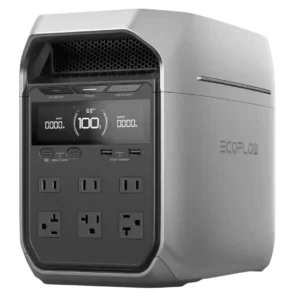
Best for rapid charging, versatile ports, excellent app control, and portable backup for appliances or electronics. Skip it for unattended low-load use or sustained heavy loads unless fan behavior and...
Pros: rated output, peak output
Cons: 30-amp output, parallel operation support
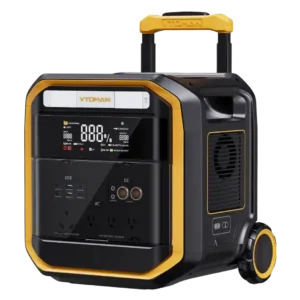
Best for fast-charging, high-output backup power that can run major appliances and roll easily between locations. Skip it if you need frequent lifting, a small footprint, or a screen that...
Pros: power output, surge capacity
Cons: specification accuracy, peak output
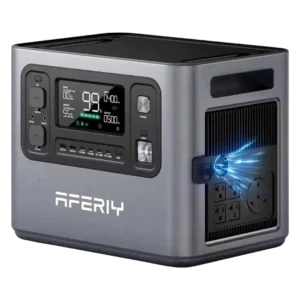
Choose the P280 for high-output home, RV, or off-grid backup with fast charging, strong usable capacity, UPS protection, and expansion. Skip it if you need lightweight portability, polished app control,...
Pros: rated output, peak output
Cons: app connectivity, voltage regulation
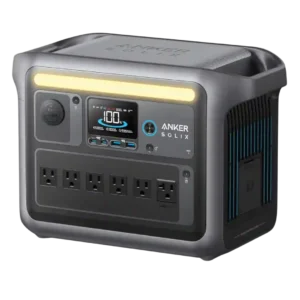
Best for fast charging, strong portable output, and short outage or camping duty. Skip it for quiet rooms, multi-day whole-home backup, or solar-only use with small panels.
Pros: power output, rated output
Cons: dual-input charging, cable storage