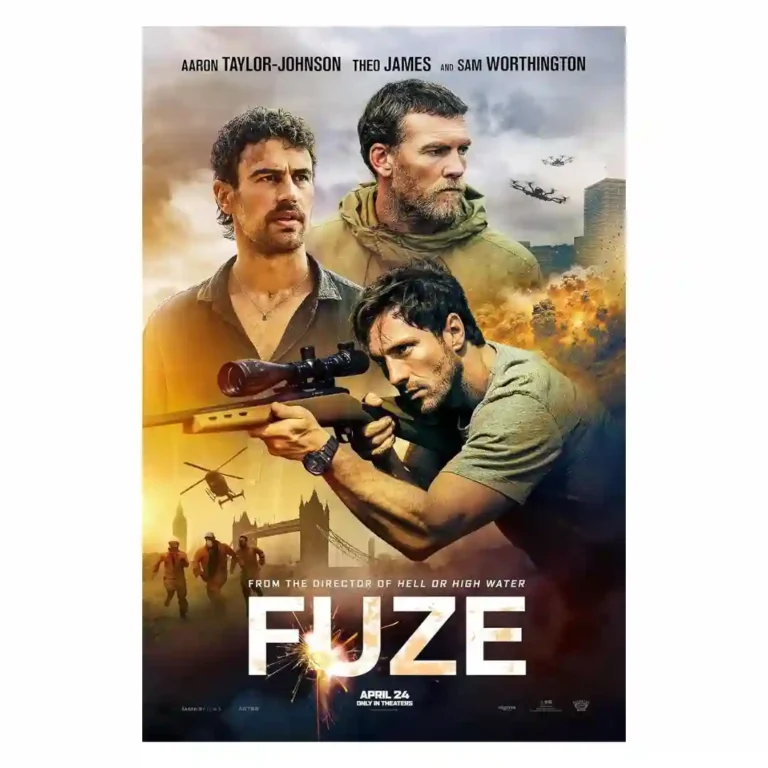
Choose Fuze for a brisk, tense bomb-heist thriller with solid leads. Skip it if you need deep characters, airtight plotting, or a cleanly satisfying ending.
Best for
Best for viewers who enjoy compact heist thrillers, ticking-clock suspense, twisty B-movie plotting, and solid star presence more than deep characterization.
Not for
Not for viewers who want rich character arcs, realistic crime mechanics, polished dialogue, or an ending that fully pays off every twist without extra explanation.
Verdict
Fuze works best as a lean genre ride: a ticking-bomb setup folded into a heist, driven by pace, tension, and watchable leads. Many reviewers found it fun, slick, and suspenseful, especially while the plot keeps moving. The tradeoff is that the movie often treats characters as pieces in a mechanism, leaving the ensemble underdeveloped and the drama less emotionally sticky. The final stretch is the biggest divider, with frequent complaints about abruptness, over-explaining, tonal wobble, or a baffling coda. For heist-thriller fans, it has enough momentum to satisfy; for viewers wanting richer writing, it may feel thin.
Compared in Reviews
Products reviewers directly compared with this model, grouped into quick takeaways.
Crime 101
Worse: heist movie entertainmentThe reviewer says Fuze offers a little more than Crime 101 as a heist movie.
Hell or High Water
Upgrade: overall thriller qualityThe reviewer calls Fuze a downgrade from Hell or High Water.
Ocean’s Eleven (2001)
Compared: ending and character charismaThe reviewer says the ending gestures toward Ocean's Eleven without the charismatic characters to earn it.
The soundtrack has a small positive signal. One reviewer specifically praised the exit music, while other music comments are captured more broadly under score quality.
Genre fans are the best fit. Reviewers repeatedly frame Fuze as a satisfying B-movie/heist/crime thriller for viewers who want pace, tension, twists, and a switch-your-brain-off ride.
The premise is one of Fuze's most praised assets, especially the collision of a bomb-disposal thriller with a heist movie. A few critics still found the result familiar, but the core idea often landed as strong and novel.
Runtime is mostly a plus. Reviewers appreciated the tight 90-ish minute length and some did not feel the runtime at all, though one argued short is not enough when the film feels unremarkable.
Direction is generally seen as controlled and efficient, with praise for Mackenzie's tension-building and urgency. The weaker reviews argue that he cannot overcome the script's flatness or lack of personality.
Sexual content appears minimal in the available commentary. The only direct judgment notes that the shirtless scenes are worked into the plot and are not treated as especially gratuitous.
Originality is mixed-positive. Reviewers liked the genre blend, novel structure, and stylized approach, though some still saw the movie as familiar within heist-thriller territory.
Lead performances are one of the brighter areas, especially for Aaron Taylor-Johnson and Theo James in positive reviews. Still, some viewers disliked the accent work or felt Taylor-Johnson's intensity tipped into mugging.
Most reviewers found Fuze brisk and tightly paced, with several calling out its fast start and short runtime. The main dissent came from viewers who felt it took too long to get going or somehow felt longer than it was.
Editing is generally praised when reviewers focus on it. Several liked the slick, fast-cutting or cross-cut structure, though one critic disliked the hyperactive early-2000s feel.
Suspense is a major selling point in positive reviews, with repeated praise for tension, ticking-clock pressure, and edge-of-seat momentum. Negative reviews push back hard, calling the film tensionless or too predictable.
Audience appeal is strongest for viewers seeking a lively, communal thriller rather than airtight logic. Even mixed reviewers admitted they were entertained or could see the film working for a fun crowd.
Entertainment value is the film's biggest battleground but trends positive. Many reviewers called it fun, watchable, engaging, or a blast, while a smaller group found it average, tepid, or outright bad.
The acting gets a mixed but generally serviceable response. Several reviewers found the ensemble solid or watchable, while harsher takes criticized accents, bland characterization, or performers who seemed underused by the script.
The score is divisive but often important to the movie's tension. Some praised a pulsing or simple effective score, while another found the TV-like music drained energy from the film.
chemistry between characters: 3.5, based on 1 review
The main-character chemistry is present but not heavily developed. One reviewer noticed a decent dynamic between the leads, while also stressing that the script gives them little room beyond the basics.
Reviewers split on the story: the bomb-and-heist setup gives the movie a lively hook, but several felt the narrative becomes tangled, thin, or overly dependent on twists. The strongest praise goes to the way side characters and criminal threads eventually connect.
Action is more selective than constant. Reviewers liked the staged set pieces, chases, explosions, and clean momentum when the movie works, though several wanted stronger or less predictable action scenes.
Cinematography receives scattered reactions. Some found the movie slick and polished, while one reviewer thought the visual language felt dated and borrowed from older crime-action films.
Visual style is one of the more divided craft areas. Some found the film good-looking or stylized, but others called it flat, cheap-looking, or lacking a real cinematic personality.
Emotional impact depends on whether the twists work for the viewer. One critic felt rewarded by the reveals, while another said the thin character investment leaves the outcome without enough reason to care.
The drama is strongest when the ticking-clock mechanics are in motion. Complaints center on the lack of character investment, which makes the stakes feel less personal than they could have been.
The screenplay draws some of the sharpest disagreement. Admirers call it smart and well-structured, but many critics point to uneven writing, overexplaining, artificial twists, and dialogue that does not fully support the cast.
Humor is a small, uneven ingredient. Some enjoyed the propulsive, funny tone, while others thought the late comic turn felt silly or out of place beside the otherwise tense setup.
Theme depth is limited by design. One positive review accepted that Fuze is built for plot rather than profound insight, but that same choice leaves little thematic weight to discuss.
The plotting is divisive. Some reviewers enjoyed the cunning reveals and hidden-in-plain-sight tricks, while others found the twists predictable, overexplained, confusing, or too convenient.
Big-screen value is sharply split in the small amount of direct commentary. One reviewer thought it was worth seeing theatrically, while another said it was not worth a cinema trip.
Dialogue rarely stands out as a strength. Reviewers described it as standard, perfunctory, weird, or shaky, with a few also struggling with muffled lines and accents.
supporting cast performance: 2.5, based on 3 reviews
Supporting players are often described as underused. Reviewers singled out the cast's wasted potential, with Gugu Mbatha-Raw and Sam Worthington drawing comments about thin or thankless roles.
Realism is shaky. Reviewers repeatedly noted convenient geography, credibility-stretching twists, coincidences, and robbery mechanics that can fall apart under close scrutiny.
The ending is the clearest weak spot. A few reviewers found it satisfying or complete, but many complained about an abrupt coda, confusing flashback, tonal shift, or over-explained final stretch.
Character work is consistently thin. Reviewers often said the cast is given too little inner life, backstory, or growth, even when the lean approach helps keep the thriller moving.
Production design has limited but negative support. One reviewer felt the British locations and overall presentation looked cheap, which reinforced the impression of a lower-tier streaming thriller.
FAQ
Is Fuze more of an action movie or a thriller?
Reviewers generally describe it as more thriller than all-out action. It has shoot-outs, chases, explosions, and violence, but the main appeal is tension and heist momentum.
Are the performances good?
Most reviewers found the cast at least solid, with Aaron Taylor-Johnson and Theo James often singled out. Complaints focus more on thin roles, underused supporting actors, and uneven accent work.
Does Fuze have a satisfying ending?
That is the biggest point of disagreement. A few reviewers were satisfied, but many found the ending abrupt, overexplained, confusing, or tonally out of step with the rest of the movie.
Is the plot easy to follow?
It depends on tolerance for twists. Some reviewers enjoyed the reveals and double-crosses, while others thought the story became tangled, predictable, or too dependent on late explanations.
Is Fuze worth watching in theaters?
The direct comments are split: one reviewer thought the tension made it worth the big screen, while another said it was not worth a cinema trip. It seems safest for viewers already drawn to heist thrillers.
Is Fuze character-driven?
No. Reviewers repeatedly say the film prioritizes plot, pace, and mechanics over character depth, which keeps it moving but limits emotional investment.
Sample Expert Reviews We Analyzed
These are a few of the reviews included in our analysis.

Best for a fast AI-court popcorn thriller with suspense and Rebecca Ferguson. Skip it if weak logic, messy themes, or a divisive ending will ruin the ride.
Best for Milly Alcock, Lobo moments, practical creature work, and a darker DC space-western mood. Skip it if you need a tight story, strong villain, kid-friendly tone, or satisfying action...