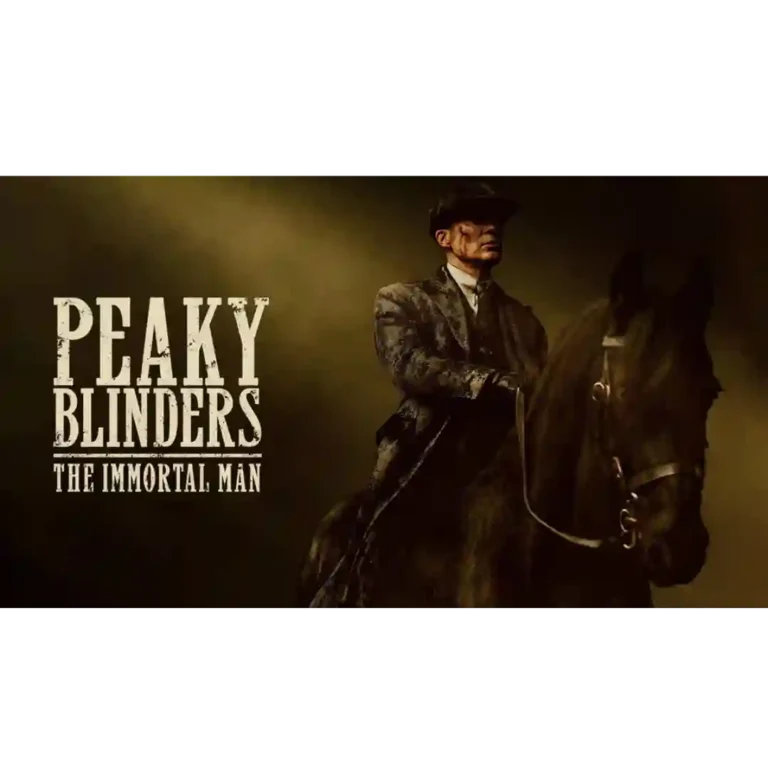
Choose it for Murphy’s commanding farewell, striking cinematography, and forceful music—especially if you know the series. Skip it if you want Season 6’s ending left intact, tighter pacing, or fuller treatment of the old ensemble.
Best for
Longtime Peaky Blinders fans who want one more Murphy-led farewell and value performance, visual style, music, and emotional closure more than tight feature-film pacing.
Not for
Viewers who prefer Season 6’s ending, want a brisk standalone crime film, or expect the old ensemble and its unresolved threads to receive full attention are the most likely to be disappointed.
Verdict
The Immortal Man works best as a lavish, performance-driven coda rather than a necessary new chapter. Cillian Murphy is the near-universal highlight, while Barry Keoghan and much of the supporting cast give the father-son conflict real bite. The cinematography, production design, and music preserve the show’s distinctive swagger and often make the film feel genuinely cinematic. The tradeoff is structure: reviewers repeatedly flag a slow first half, compressed character arcs, and a story that can feel like an extended episode or familiar one-last-job retread. Its final choices are the sharpest dividing line—some find them moving, fitting closure for Tommy, while others see them as an unnecessary reversal of Season 6’s stronger ending.
lead performance: 4.8, 26 reviews, strong consensus
Cillian Murphy’s return as Tommy is overwhelmingly praised for its weary stillness, menace, grief, and emotional control; even harsh critics routinely identify him as a major strength.
The cinematography is the clearest consensus strength, praised for striking light, shadow, mud, rubble, wintry landscapes, and a genuinely cinematic sense of scale.
The cast is one of the film’s safest bets: even many negative reviews praise the performances, with the central actors repeatedly credited for elevating uneven material.
The visual presentation is consistently celebrated: smoky interiors, chiaroscuro lighting, slow-motion swagger, period grime, and large-scale wartime imagery make the movie look distinctly cinematic.
Modern-rock needle drops remain a signature strength and are widely praised for driving emotion and atmosphere. A few reviewers find the choices dated, overly loud, or less appealing outside the iconic theme reprise.
Tom Harper is frequently praised for confident staging, visual control, suspense, and explosive set pieces. A few reviews fault specific tonal or narrative choices even while admiring the filmmaking.
Pacing is the most consistent weakness: the first half is repeatedly described as slow or drawn out, while the later material can feel rushed as too much story is compressed into feature length.
The central comeback structure, Nazi scheme, and legacy conflict are often described as familiar or clichéd, with several critics saying the film rarely finds a genuinely new plot shape.
At roughly feature length, the movie often feels too compressed for the number of character turns and plot developments it attempts. Several reviewers explicitly wish the story had been a season or miniseries instead.
Period immersion is weakened for some by modern-looking styling, oversized stakes, and questionable wartime plausibility. The film’s stylized mythmaking of Tommy also draws skepticism.
Rewatch interest is sharply polarized: one enthusiastic reviewer immediately wanted another viewing, while several detractors say they would not revisit it and even feel it harms the series’ rewatchability.
Many reviewers see the movie as a familiar one-last-job epilogue or a reworking of old Peaky Blinders beats. A smaller group praises its bolder choices and fresh generational angle.
Murphy is the film’s most consistent acting triumph, with reviewers praising his quiet intensity, exhaustion, menace, grief, and ability to make Tommy compelling even when the script falters.
Barry Keoghan: 4.3, 27 reviews, moderate consensus
Keoghan is widely praised for giving Duke menace, insecurity, vulnerability, and volatility that can stand opposite Murphy. A minority finds the performance or accent uneven, but the overall response is strongly positive.
Harper’s direction is frequently praised for stylish framing, suspense, action staging, and balancing Peaky Blinders swagger with larger cinematic scale, despite scattered complaints about tonal or structural choices.
Roth is usually praised for a chilling, diabolical, or entertaining villain performance, though some critics feel the film gives Beckett too little time or depth to become a great antagonist.
Knight’s writing draws a wide range of reactions: admirers praise the themes, plot momentum, and ending, while detractors attack the exposition, clichés, character choices, and sequel logic.
Compared with other Movies, this product is above average in acting performance, scares, cultural representation, near average in faithfulness to source material, ending satisfaction, below average in special effects quality, romance quality, CGI quality.
Comparison summary
48 compared features
Above average0.4+ pts higher
17(35%)
Same as averagewithin 0.3 pts
14(29%)
Below average0.4+ pts lower
17(35%)
Largest category differences
Attribute
This product
Category average
Difference
special effects quality
1.0
3.4
-2.4
romance quality
1.5
3.4
-1.9
CGI quality
1.0
2.6
-1.6
rewatch value
2.1
3.6
-1.5
realism
1.9
3.3
-1.5
plot originality
1.8
3.2
-1.4
originality
2.5
3.4
-0.9
acting performance
4.7
4.0
+0.7
Consider This Instead
If you want better CGI quality
Choose Project Hail Mary. It scores 4.7 vs 1.0 for CGI quality, with a 4.3 overall score.
Products reviewers directly compared with this model, grouped into quick takeaways.
El Camino
Similar: sequel-epilogue formatThe movie is compared to El Camino as an extended epilogue rather than a fully standalone experience.
Skyfall
Similar: return-to-action montageTommy's return-to-form montage is compared to 007 retrieving the Aston Martin in Skyfall.
Star Wars: The Last Jedi
Similar: damage to rewatch valueThe reviewer compares its damage to prior-story rewatchability with Star Wars: The Last Jedi.
FAQ
Do I need to watch the Peaky Blinders series first?
The movie gives enough context for some newcomers to follow it, but many reviewers say the callbacks, character history, and emotional payoff work much better for longtime viewers.
How is Cillian Murphy as Tommy Shelby?
He is the strongest point of consensus. Reviews repeatedly praise his quiet intensity, grief, menace, and ability to carry weaker or slower stretches.
How does Barry Keoghan work as Duke?
Most reviews respond positively to his menace, insecurity, and vulnerability, especially opposite Murphy. A minority finds the characterization thin or the performance and accent uneven.
Is the movie action-packed?
The biggest action arrives after a deliberately brooding first half, with the pub confrontation, shootouts, explosions, and final set pieces drawing the strongest praise.
How are the cinematography and music?
Both are major strengths. The film’s lighting, grime, wartime imagery, score, and modern-rock needle drops are praised repeatedly, though a few critics dislike the soundtrack choices or aggressive mix.
Is the ending satisfying?
It is the most divisive part of the film. Some call it moving, fitting, or perfect closure for Tommy, while others feel it undermines the stronger ending already provided by Season 6.
Does it feel like a true movie or an extended episode?
Visually, many reviewers think it earns the big screen. Structurally, a recurring criticism is that it still plays like an extra-long episode or compressed season rather than a fully standalone feature.
Sample Expert Reviews We Analyzed
These are a few of the reviews included in our analysis.
Best for a profound, formally inventive meditation on grief, memory, and the ethics of filming family. Skip it if intensely personal addiction material, a 114-minute runtime, or occasional repetition will...
Best for joyful music, rare footage, candid interviews, and a layered Maurice White portrait. Skip it if you want a tightly focused, unconventional reappraisal that lingers on performances instead of...
Best for a tender, accessible portrait that lets Oliver’s poetry, friends, and archival voice carry the experience. Skip it if you want a brisk, deeply investigative biography; the calm rhythm...
Pros: romance quality, faithfulness to source material
Best for razor-sharp adult comedy, exceptional ensemble work, and a surprisingly moving marriage story. Skip it if talk-heavy chamber pieces, explicit relationship discussions, or an occasionally intrusive string score wear...