- Review score
- 4.2
Garmin Forerunner 170 Review
Bottom Line
Choose it for accurate road-running data, advanced Garmin coaching, and useful payments or music in a light AMOLED watch. Skip it if you need multi-band GPS, full maps, week-long always-on battery, or the best value.
Best for road runners and improving beginners who want Garmin’s training ecosystem, recovery guidance, accurate everyday tracking, and useful smart features in a small watch.
Not ideal for technical hikers, ultrarunners, or multisport athletes who need topographic maps, multi-band GPS, triathlon support, or longer always-on endurance.
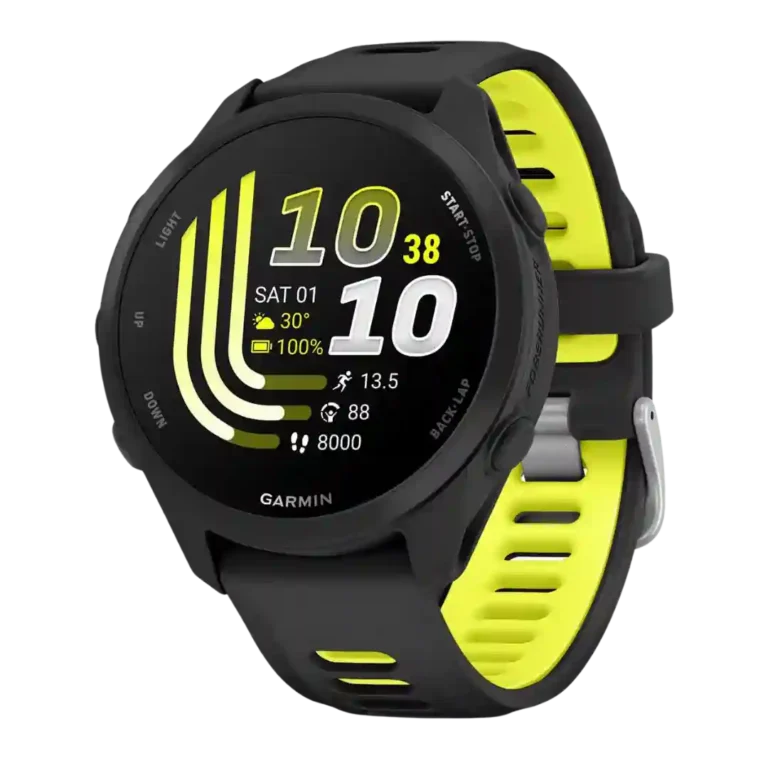
The Forerunner 170 is a highly capable running watch whose strongest upgrades are software-driven. Its bright AMOLED display, comfortable 41 g case, reliable road-running GPS, and deep Garmin training tools make it suitable for beginners through serious marathoners. Training Readiness, Training Status, adaptive coaching, running power, Garmin Pay, and optional music create a polished all-round package. The tradeoffs are meaningful: it uses older heart-rate hardware, lacks multi-band GPS and full maps, and always-on battery life often falls to roughly three or four days. Its price also leaves the cheaper Forerunner 70, Coros Pace 4, discounted Forerunner 165, and older Forerunner 265 looking attractive. The base 170 makes the most sense for runners who will actually use its smart features and richer training analysis.
Feature Scorecards
Summary
50 reviewed features- Very positive 4.5-5.0 54% 27 features
- Positive 3.5-4.4 28% 14 features
- Neutral 2.5-3.4 8% 4 features
- Negative 1.5-2.4 10% 5 features
- Very negative below 1.5 0% 0 features
Pros
-
Training Readiness, Training Status, HRV, load, and recovery guidance are the watch’s most consistently praised upgrades. They make the 170 useful well beyond beginner-level run tracking.
-
Wrist-based running power and dynamics bring advanced training metrics to a relatively affordable watch and are strongly praised.
-
Garmin’s training ecosystem is repeatedly praised as polished and deep, with strong analysis, coaching, and device integration.
-
Overall workout tracking impressed testers, with strong agreement between the watch and trusted comparison devices in controlled runs.
-
Charging is quick, reaching a full charge in roughly 65 minutes and providing a substantial top-up in about 20 minutes.
-
Garmin Connect remains free, easy to use, and effective for reviewing workouts and daily activity.
-
The refreshed Garmin interface makes menus smoother and faster to move through than on earlier entry-level models.
-
On-wrist music control is convenient during runs and contributes to the Music model’s beginner-friendly appeal.
-
Connect IQ supports major services such as Spotify and YouTube Music plus a wide range of community apps and widgets.
-
Five physical buttons are a major usability strength, especially during runs, with gloves, or when sweaty hands make touch controls awkward.
-
Body Battery, HRV, sleep guidance, Health Status, and lifestyle logging create a broad wellness package that supports recovery as well as training.
-
The refreshed software is faster, more polished, and easier to adjust before a run, with useful hidden settings and widgets.
-
The touchscreen is responsive without feeling overly sensitive, while physical buttons remain available for workouts.
-
Data layouts, swappable bands, report themes, and vibration patterns give the watch a pleasing level of personalization.
-
The 43 mm case fit testers securely and should suit many wrists, although the single-size design may not be ideal for everyone.
-
Garmin’s newer OS looks more polished, feels more modern, and aligns the watch with higher-end Forerunners.
-
Garmin Coach, Training Status, adaptive plans, and Quick Workouts give beginners and regular runners unusually strong guidance. Quick Workout targets can be aggressive and its duration options may feel restrictive.
-
The compact 41 g design is widely praised for all-day, sleep, and long-run comfort. One reviewer warned that the plastic rear casing may irritate sensitive skin during prolonged wear.
-
LiveTrack and location-sharing tools are valuable at this price, though live tracking still depends on carrying a connected phone.
-
More than 80 sport profiles make the watch versatile for running, cycling, gym work, swimming, and outdoor activities. The main gap is a dedicated triathlon or multisport mode.
-
The 1.2-inch AMOLED is colorful, sharp, and easy to read while moving. It is not as fluid or premium as flagship smartwatch displays, but testers still rate it highly.
-
Reviewers like the compact proportions, colorful two-tone options, and modern AMOLED look. The plastic construction keeps it sporty rather than luxurious.
-
The updated UI is polished and easier to use, with quick access to settings and rich data. New Garmin users may still find the menu depth intimidating.
-
The AMOLED remains clear outdoors and is easy to glance at during runs, even though brighter flagship panels exist.
-
The silicone strap is soft, stretchy, and easy to replace, while the 170’s metal clasp feels nicer than the cheaper model’s plastic hardware.
-
Pulse Ox is considered a meaningful upgrade over the previous entry-level generation and adds depth to overnight health monitoring.
-
Despite its low weight and plastic build, the watch is considered sturdy enough for regular training and daily wear.
-
Garmin Pay is a useful convenience and a key reason to choose the 170 over the 70. Its value depends on bank support and whether buyers can justify the price premium.
-
The AMOLED is consistently described as bright enough for everyday and outdoor use, though it is not Garmin’s brightest panel.
-
The lightweight plastic case feels sturdy and better finished than older entry models. It avoids feeling cheap, even if it lacks premium materials.
-
Steady running and treadmill readings usually tracked closely to chest straps. Rapid intervals, strength work, steep climbs, and some trail sessions exposed lag from the older sensor.
-
Road-running performance is dependable enough for several reviewers to use it as a primary training watch. Reliability becomes more mixed in dense forest, steep terrain, and technical hiking.
-
Most testers found all-systems GPS impressively close to multi-band reference watches on roads and open routes. Dense canopy, steep terrain, and technical trails produced drift or corner cutting for at least one long-term tester.
-
Calorie estimates stayed within about ten percent of a chest-strap comparison, which reviewers considered reasonably useful.
-
The base 170 offers a strong blend of training analysis, accuracy, and smart features. Value is less convincing beside the cheaper Forerunner 70, Coros Pace 4, discounted Forerunner 165, or the expensive Music upgrade.
-
The Music model supports useful phone-free playback and major streaming services. Reviewers like the feature but criticize the extra cost and unchanged storage capacity.
-
Wi-Fi is useful for downloading music on the Music model. The standard model lacks it, but reviewers found Bluetooth phone syncing adequate for normal use.
-
Battery opinions depend heavily on settings: raise-to-wake users often approach a week, while always-on users commonly report about three to four days. It trails the cheaper Forerunner 70 and several rivals.
-
The 170 offers payments, notifications, optional music, and apps, but it remains a training watch first and lacks the breadth of Apple or Samsung smartwatches.
-
Notifications are useful for daily wear, but one tester found the buzzing overly reactive during workouts.
-
Report themes add playful personalization, but the default progress-bar watch face can feel frustrating because its goals rarely align.
Cons
-
The compact single case works well for many smaller wrists, but buyers who need multiple case sizes have no alternative.
-
Sleep tracking produced conflicting results: one tester found it close to trusted wearables, while another found REM and deep-sleep estimates inaccurate.
-
Temperature-related capability is valued for cycle tracking, but reviewers also note that Garmin reserves some skin-temperature features for more expensive models.
-
The fiber-reinforced plastic keeps weight down but does not feel luxurious, and the glass is below sapphire or premium Gorilla Glass standards.
-
Breadcrumb routes are usable for familiar roads, but the absence of offline or topographic maps is a major limitation for trails, hiking, and exploration.
-
A built-in flashlight is missing. Reviewers did not expect it at this tier, but several still considered its absence disappointing.
-
The watch cannot take calls from the wrist because it lacks a microphone and speaker, limiting its appeal as a full smartwatch.
-
ECG is not available on the Forerunner 170, and reviewers note that buyers must move to a pricier Garmin to get it.
-
There is no onboard voice assistant because the watch lacks a microphone and speaker.
Compared With Category Average
Compared with other Smartwatches, this product is above average in third-party app support, contactless payments, running power support, below average in flashlight usefulness, materials quality.
Summary
8 compared features- Above average 0.4+ pts higher 75% 6 features
- Same as average within 0.3 pts 0% 0 features
- Below average 0.4+ pts lower 25% 2 features
| Attribute | This product | Category average | Difference |
|---|---|---|---|
| third-party app support | 5.0 | 3.2 | +1.8 |
| contactless payments | 4.3 | 2.7 | +1.6 |
| running power support | 5.0 | 3.5 | +1.5 |
| flashlight usefulness | 2.3 | 3.8 | -1.5 |
| music controls | 5.0 | 3.5 | +1.5 |
| app ecosystem | 5.0 | 3.6 | +1.4 |
| materials quality | 2.7 | 4.0 | -1.3 |
| recovery insights | 5.0 | 3.9 | +1.1 |
FAQ
Is the Garmin Forerunner 170 accurate?
For road runs, treadmills, and open routes, most testers found GPS and heart rate close to multi-band watches and chest straps. Accuracy can slip during fast intervals, strength work, dense tree cover, and steep terrain.
How long does the battery last?
Raise-to-wake users commonly approach about a week, while always-on users often report roughly three to four days with regular GPS workouts. That is shorter than the Forerunner 70 and several rivals.
Does it have maps?
It supports breadcrumb routes and basic course guidance, but it does not include offline topographic maps or full street-level navigation.
Is the Music version worth it?
It is worthwhile for runners who want phone-free playlists from supported streaming services. Reviewers frequently considered the added price steep, especially because storage capacity has not increased.
Is it better than the Forerunner 70?
The 170 adds Garmin Pay, extra sensors, stronger cycling support, and an optional Music model. The 70 delivers much of the same core running and training experience for less money and with somewhat longer battery life.
Who should buy the Forerunner 170?
It suits runners who want serious coaching and recovery tools without moving to Garmin’s premium range, particularly those who value payments, optional music, and a compact AMOLED design.
Sample Expert Reviews We Analyzed
These are a few of the reviews included in our analysis.
Video Reviews
- Review score
- 4.2
- Review score
- 4.7
- Review score
- 4.0
- Review score
- 4.3
Article Reviews
A detailed look at Garmin's new Forerunner 170.
- Review score
- 4.6
In this article, I'm going to share my HONEST Garmin Forerunner 170 review after 6 months of real-world testing across.
- Review score
- 3.2
Matt is TechRadar's expert on all things fitness, wellness and wearable tech. A former staffer at Men's Health, he holds a Master's Degree in...
- Review score
- 4.1
Disclaimer: The Run Testers sometimes use affiliate links. This means that we may receive payment if you buy products on our website or...
- Review score
- 4.2
Looking to discover the key differences between the Garmin Forerunner 70 and 170 series? Find them in this complete comparison guide.
- Review score
- 3.3
Compared in Reviews
Products reviewers directly compared with this model, grouped into quick takeaways.
- Alternative: technical hiking and multi-band GPS The Pace 4 is recommended instead for users needing more demanding outdoor capability.
- Alternative: running focus versus broader activity support The Pace 4 is a favorite pure running alternative but offers less non-running support.
- Better: value for money The Pace 4 is presented as a better-value option for runners who do not need Garmin's smart extras.
- Better: display sharpness and fluidity The Forerunner screen is less sharp and fluid than flagship smartwatch displays.
- Similar: GPS accuracy The Forerunner's GPS matched the Apple Watch Ultra 3 in testing.
Consider This Instead
If you want better flashlight usefulness
Choose Garmin Enduro 3. It scores 4.9 vs 2.3 for flashlight usefulness, with a 3.9 overall score.
If you want better mapping and navigation
Choose Garmin Epix Pro (Gen 2). It scores 4.7 vs 2.4 for mapping and navigation, with a 4.0 overall score.
If you want better value for money
Choose Apple Watch SE 3. It scores 4.9 vs 3.9 for value for money, with a 4.1 overall score.
If you want better GPS accuracy
Choose Apple Watch Series 10. It scores 4.6 vs 4.0 for GPS accuracy, with a 4.1 overall score.
Top Smartwatches to Consider
Best for rugged outdoor training, long battery life, accurate GPS, maps, calls, and a genuinely useful flashlight. Skip it if the high price, tactical extras, proprietary charging cable, or mixed...
Pros: wellness insights, build quality
Cons: LTE connectivity, band quality
Best for accurate training, excellent coaching, easy controls, and phone-free Spotify runs. Skip it if you need Apple Music, offline maps, maximum battery life, or the best pure-running value.
Pros: music controls, pairing reliability
Cons: LTE connectivity, ECG functionality
Good if you want the best balanced Apple Watch for an older upgrade, stronger battery, comfort, and health tools. Skip it if you own Series 10, need week-long battery, or...
Pros: ECG functionality, app ecosystem
Cons: cross-platform compatibility, recovery insights
Best for accurate running metrics, excellent coaching tools, a bright AMOLED display, and dependable battery life. Skip it if you need offline maps, music storage, contactless payments, multi-band GPS, or...
Pros: step counting accuracy, app ecosystem
Cons: Bluetooth connectivity, pairing reliability