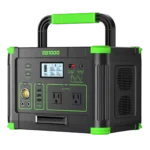
Grecell T-1000 Feature Scores
Explore all 100 feature scores for Grecell T-1000, organized into pros and cons.
Scores by Feature
Summary
100 reviewed features-
Very positive 4.5-5.044 (44%)
-
Positive 3.5-4.418 (18%)
-
Neutral 2.5-3.411 (11%)
-
Negative 1.5-2.417 (17%)
-
Very negative below 1.510 (10%)
Pros
Sort
-
Home-backup performance is one of the strongest themes, with successful use during hurricanes, tornado outages, winter cuts, and everyday grid failures for lights, communications, refrigeration, CPAP, and work.
-
Portability is an exceptional strength for this capacity: the compact body, folding handle, and relatively low weight make it easy to move between home, vehicle, campsite, and jobsite.
-
Real-world loads such as fridges, pumps, tools, projectors, coffee makers, and a firewood wrapper were handled reliably within the 1000W limit.
-
As a solar generator, it is highly useful for camping, RVing, remote work, and outage readiness. The main compromise is slow solar replenishment rather than poor solar compatibility.
-
At roughly 17–18 pounds, it is light for a 999Wh station and manageable for most buyers, though a few still compare the heft to a car battery.
-
Runtime is a major strength at light and moderate loads, often covering overnight CPAP use, full workdays, or multi-day electronics use. Heavy heaters and fans can drain it far faster.
-
Its compact, boxy shape fits tight RV corners, vehicle cubbies, shelves, and work setups more easily than many similarly sized power stations.
-
The broad output array makes it easy to power several phones, lights, laptops, tools, and appliances at once without sacrificing basic usability.
-
The 1000W output handles everyday electronics, tools, refrigerators, projectors, and many camping loads confidently. It falls short only when buyers expect more power than this size class can provide.
-
It pairs successfully with Grecell, Renogy, and other common solar panels, making it flexible for camping, RV, and emergency setups.
-
Straightforward buttons, grouped outputs, and simple operation make the station easy to use even for buyers new to portable power.
-
Charging cables, vehicle adapters, solar leads, and a storage pouch make the package unusually complete and ready to use.
-
Charging from a vehicle is consistently useful on road trips and camping drives, with several owners saying it replenished the station quickly enough to keep fridges running.
-
The display is consistently praised for clear battery, input, and output information that remains easy to read indoors, outdoors, and at night.
-
Two AC outlets, multiple USB ports, 12V connections, DC jacks, and wireless charging provide an unusually versatile set of outputs for the price.
-
It can run many demanding devices, including small heaters, coffee makers, pumps, and medical equipment, but kettles, air fryers, and prolonged high-wattage heating can exceed its practical limits.
-
The 999Wh battery offers a useful middle ground between portability and endurance, with enough capacity for overnight medical devices, camping equipment, and outage essentials.
-
The battery management system earns strong marks for its overload, overcharge, short-circuit, surge, and temperature protections.
-
The side-mounted emergency light is bright, practical for tents and outages, and easier to use without shining directly into the operator's eyes.
-
The MPPT controller performs strongly, including tests that pulled the full rated output from connected panels in suitable sunlight.
-
Overall satisfaction is mixed but leans positive: many owners love the portable power and value, while a substantial group experienced early charging failures that erased confidence.
-
Value is compelling at sale prices near $500, especially for buyers prioritizing capacity and ports. At higher prices, slow charging, older battery chemistry, and reliability risk weaken the case.
-
Most units arrived quickly and well protected, though one buyer received a product with a label already peeling away.
-
The pure sine wave inverter is a clear strength for laptops, televisions, refrigerators, and other sensitive electronics.
-
The overall footprint is easy to accommodate in sheds, vehicles, and camping setups without feeling oversized for the available capacity.
-
The flat-folding handle and square body make the unit easy to stack, pack, and store in confined travel spaces.
-
Wireless charging is a convenient and often effective bonus, including successful charging through phone cases. Speed and reliability vary, and two buyers could not get it working at all.
-
The included zippered cable pouch is sturdy and useful, though internal cable storage would be even more convenient.
-
Output and advertised capabilities generally match real-world performance, but the undisclosed low-load shutdown behavior and inconsistent display readings create exceptions.
-
Rubberized corners and tough plastic absorb everyday knocks well, with testing showing little effect after bumps and scuffs.
-
The casing generally feels solid and jobsite-ready, with tough plastic and rubber corners. A small number of owners reported loose labels or detached bumpers very early.
-
The casing and corners stand up well to normal travel and jobsite handling, though internal reliability problems prevent the same confidence in overall durability.
-
Pass-through charging works well in several tests and supports continuous low-power use, but a few owners experienced shutdowns or overheating in this mode.
-
Many units hold a charge for weeks or months, yet several owners saw unexpected self-discharge or declining retention as problems developed.
-
Self-discharge varies by unit: several owners retained charge for months, while faulty examples lost large amounts of stored energy unexpectedly.
-
Setup is largely plug-and-play, with clear basic steps and minimal effort required to begin charging or powering devices.
-
Tough, lightweight plastic keeps weight manageable while still handling normal bumps and jobsite use well.
-
Peak output gives useful short bursts above the continuous limit, including brief operation near the advertised 2000W surge level.
-
Brief surges above the 1000W continuous rating are handled well, giving motors and compressors useful startup headroom without promising sustained high-wattage operation.
-
Support can be excellent when Grecell responds directly, with quick emails, prepaid labels, and new replacements. Other buyers struggled to reach anyone or became trapped between seller, Amazon, and insurer.
-
Input and output wattage monitoring is genuinely useful for checking device draw, although one tester found some phone-charging readings inconsistent or missing.
-
The 12V connection adds useful flexibility for vehicle accessories, food warmers, coolers, and other DC equipment.
-
Replacement cables and accessories bought directly from Grecell can be remarkably inexpensive, which helps keep an aging unit usable.
-
Front-facing, clearly labeled controls and grouped output sections make the panel practical and easy to navigate.
-
The handle folds flat against the top, making the station easier to pack and leaving the wireless charging surface unobstructed.
-
The large rubberized grip is comfortable to carry and helps make the relatively light station easier to move.
-
The inverter handles small loads efficiently, with low idle consumption that helps preserve battery during light overnight use.
-
Its compact dimensions and relatively low weight make it easier to lift than many power stations with similar capacity.
-
Charging during off-peak hours and using stored energy during peak pricing can reduce daily electricity costs for light household loads.
-
Power delivery stayed smooth and free of noticeable fluctuations in extended use, making the station suitable for electronics that benefit from stable output.
-
Overload protection worked correctly in bench testing, allowing brief spikes before safely shutting down the AC section.
-
Sensitive devices ran smoothly without noticeable fluctuations, reinforcing confidence in the station's overall power quality.
-
The station reaches its 1000W continuous rating in bench testing, so the headline output is usable rather than merely theoretical.
-
Replacement charging cables can be purchased directly from Grecell, and at least one owner found them inexpensive and easy to obtain.
-
The 200W solar panel can be the most economical companion when handling its larger size is not a problem.
-
Low-load idle consumption was impressively low in one test, using roughly one percent of battery per hour while the inverter remained active.
-
The USB-A ports charge phones and smaller devices reliably, though their speeds trail newer power stations.
-
Cooling is effective in normal descriptions, but owner reports range from quiet dual fans to failed fans and noisy bearings, making consistency a concern.
-
Measured usable energy landed around 84% in lab testing, while one owner estimated roughly 800Wh. That is respectable, though clearly below the headline 999Wh.
-
Efficiency is good with small DC and inverter loads, and one tester measured low idle drain. AC use and a troubled pass-through setup showed how quickly losses can rise.
-
Measured charging and discharge losses were within normal expectations, delivering solid rather than exceptional conversion efficiency.
-
The 60W USB-C port is adequate for many laptops and phones, but buyers needing higher-power USB-C charging should look elsewhere.
Cons
Sort
-
Battery reliability is the dominant weakness. Numerous units stopped charging, displayed A06 errors, shut down unexpectedly, or became completely dead after light use.
-
Early startup reliability is the most serious concern: multiple buyers received units that were dead on arrival or failed after only minutes or a few uses.
-
Cable impressions are mixed: the included set is useful, but one DC lead feels short and several owners reported hot adapters, melted plastic, or damaged charging connections.
-
The roughly 150–155W solar-input limit is one of the clearest weaknesses, restricting how quickly a nearly 1kWh battery can be replenished.
-
The station is not weatherproof, and exposed outlets without covers make it poorly suited to rain, dust, or unattended outdoor use.
-
Long-term results are sharply split: some units remain dependable after a year or more, while many others fail within days, months, or around the one-year mark.
-
Charging heat is troubling in the worst cases, with hot power supplies, shutdowns, and even melted plastic around a charging port.
-
Weather resistance is weak because the station is not weatherproof and its uncovered outlets are exposed during outdoor use.
-
Recharge performance is inconsistent across owners. Some found it quick or reasonable, but many reported slow refills, unstable charging, or complete charging failure after limited use.
-
The internal battery cannot be expanded, so buyers who later need more capacity must add a separate station or replace the unit.
-
Exposed ports lack dust-resistant covers, making the unit less reassuring for dirty jobsites, campsites, or rugged storage.
-
Power-source switching can include delays or interruptions, so it should not be trusted for equipment that needs seamless backup.
-
There is no capacity-expansion path, so growing power needs require a separate or larger station.
-
One owner had a protective case bumper fall off within the first month, raising concern about consistency in housing assembly.
-
Important information about the 155W solar-input limit is buried too deeply in the manual instead of being highlighted before purchase.
-
Repairability is poor because there is no apparent user-accessible reset breaker, replaceable fuse, or straightforward fix when the unit becomes unresponsive.
-
The low-load auto-shutoff can turn the station off while powering a small cooler, a serious limitation for devices that cycle or draw very little power.
-
Battery aging is a real concern: daily users reported reduced capacity, and several lightly used units lost charging ability within a year. A few long-term owners still saw acceptable retention.
-
It can provide limited low-power backup in pass-through mode, but it is not a dependable true UPS for equipment that cannot tolerate interruptions.
-
The lithium-ion NCM pack keeps weight down, but it feels dated beside longer-lived LiFePO4 alternatives and is better suited to occasional than intensive daily cycling.
-
Noise varies sharply by load and unit condition. Normal operation can be quiet, but fans become noticeable above modest loads and defective bearings can be extremely disruptive.
-
Solar charging works, but the low input ceiling commonly stretches a full recharge to six to nine hours and can take much longer than claimed in real conditions.
-
There is no 30A DC output, which can leave higher-demand RV pumps underpowered and cause lights to flicker when loads overlap.
-
There is no app control or connected integration, which keeps operation simple but prevents remote alerts, status checks, and control.
-
Expected cycle life is modest by current standards, with one assessment placing it around 500 cycles rather than the much higher figures common to LiFePO4 stations.
-
Charging input flexibility is limited by the missing Anderson solar connectors, although the supplied lead can still use the main power port.
-
The shared 10A DC output can be limiting for pumps and other 12V devices with higher startup or running demands.
-
Remote control is absent, requiring all switching and checks to be handled directly from the front panel.
-
Without remote alerts or control, the station must be checked in person, which can be limiting when it is placed out of reach or in another area.
-
The supplied solar lead works through the main input, but the lack of Anderson connectors disappointed a buyer with an existing solar setup.
-
The screen provides the basics, but quality impressions are mixed: some call it simple or lack backlighting, while one failing unit developed unreadable, flickering numbers.
-
Wall charging ranges from a few hours in favorable reports to roughly seven hours in expert testing, leaving it noticeably slower than newer fast-charging competitors.
-
Two AC outlets are enough for basic use but can feel restrictive in an RV or multi-appliance setup where a third socket would be useful.
-
The fan is audible under heavier loads but acceptable on healthy units; defective examples can become much louder.
-
Most ports are convenient, but the low, recessed AC sockets can block bulky UK plugs and require an extension adapter.
-
Warranty experiences are mixed. Many buyers received fast, no-hassle replacements, while others encountered unclear coverage, seller handoffs, or no usable support after failure.
-
The industrial, boxy look is functional and jobsite-friendly but less refined than premium competitors. Some buyers still appreciate its compact, practical appearance.
-
USB-C can reach a phone's maximum rate in good conditions, yet charging readings varied and one owner experienced an early PD-port failure.