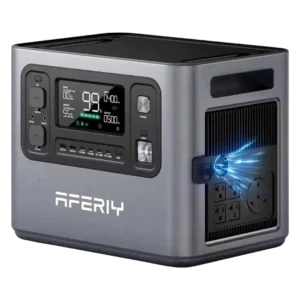
Choose it for affordable, compact 1000W power, long light-load runtime, and flexible camping or outage use. Skip it if dependable long-term charging, fast solar refills, true UPS operation, or weather protection matter most.
Best for
Occasional campers, RVers, mobile creators, and households needing compact backup for sub-1000W essentials benefit most, especially when it is discounted.
Not for
Skip it for daily heavy cycling, unattended low-draw coolers, true UPS duties, wet or dusty environments, or any use where a possible warranty exchange is unacceptable.
Verdict
The T-1000 gets the fundamentals right: it is unusually portable for a 999Wh station, reaches its rated 1000W output, runs many camping and outage essentials, and offers a generous mix of AC, USB, DC, vehicle, and wireless connections. Runtime at modest loads is often excellent, and sale pricing can make the capacity compelling. The tradeoff is confidence over time. Solar and wall recharging are slow by current standards, the battery cannot be expanded, and numerous owners report A06 errors, dead batteries, or units that stop accepting a charge. Grecell frequently earns praise for fast replacements, but support is inconsistent enough that a smooth warranty experience is not guaranteed.
home backup capability: 5.0, 21 reviews, strong consensus
Home-backup performance is one of the strongest themes, with successful use during hurricanes, tornado outages, winter cuts, and everyday grid failures for lights, communications, refrigeration, CPAP, and work.
Portability is an exceptional strength for this capacity: the compact body, folding handle, and relatively low weight make it easy to move between home, vehicle, campsite, and jobsite.
solar generator functionality: 4.9, 13 reviews, strong consensus
As a solar generator, it is highly useful for camping, RVing, remote work, and outage readiness. The main compromise is slow solar replenishment rather than poor solar compatibility.
Runtime is a major strength at light and moderate loads, often covering overnight CPAP use, full workdays, or multi-day electronics use. Heavy heaters and fans can drain it far faster.
The 1000W output handles everyday electronics, tools, refrigerators, projectors, and many camping loads confidently. It falls short only when buyers expect more power than this size class can provide.
car charging speed: 5.0, 5 reviews, strong consensus
Charging from a vehicle is consistently useful on road trips and camping drives, with several owners saying it replenished the station quickly enough to keep fridges running.
The 999Wh battery offers a useful middle ground between portability and endurance, with enough capacity for overnight medical devices, camping equipment, and outage essentials.
It can run many demanding devices, including small heaters, coffee makers, pumps, and medical equipment, but kettles, air fryers, and prolonged high-wattage heating can exceed its practical limits.
Wireless charging is a convenient and often effective bonus, including successful charging through phone cases. Speed and reliability vary, and two buyers could not get it working at all.
Output and advertised capabilities generally match real-world performance, but the undisclosed low-load shutdown behavior and inconsistent display readings create exceptions.
Value is compelling at sale prices near $500, especially for buyers prioritizing capacity and ports. At higher prices, slow charging, older battery chemistry, and reliability risk weaken the case.
The casing and corners stand up well to normal travel and jobsite handling, though internal reliability problems prevent the same confidence in overall durability.
Power delivery stayed smooth and free of noticeable fluctuations in extended use, making the station suitable for electronics that benefit from stable output.
Overall satisfaction is mixed but leans positive: many owners love the portable power and value, while a substantial group experienced early charging failures that erased confidence.
The casing generally feels solid and jobsite-ready, with tough plastic and rubber corners. A small number of owners reported loose labels or detached bumpers very early.
input and output monitoring: 4.0, 3 reviews, low consensus
Input and output wattage monitoring is genuinely useful for checking device draw, although one tester found some phone-charging readings inconsistent or missing.
Pass-through charging works well in several tests and supports continuous low-power use, but a few owners experienced shutdowns or overheating in this mode.
Cooling is effective in normal descriptions, but owner reports range from quiet dual fans to failed fans and noisy bearings, making consistency a concern.
Measured usable energy landed around 84% in lab testing, while one owner estimated roughly 800Wh. That is respectable, though clearly below the headline 999Wh.
Support can be excellent when Grecell responds directly, with quick emails, prepaid labels, and new replacements. Other buyers struggled to reach anyone or became trapped between seller, Amazon, and insurer.
Efficiency is good with small DC and inverter loads, and one tester measured low idle drain. AC use and a troubled pass-through setup showed how quickly losses can rise.
Battery reliability is the dominant weakness. Numerous units stopped charging, displayed A06 errors, shut down unexpectedly, or became completely dead after light use.
Early startup reliability is the most serious concern: multiple buyers received units that were dead on arrival or failed after only minutes or a few uses.
Long-term results are sharply split: some units remain dependable after a year or more, while many others fail within days, months, or around the one-year mark.
Recharge performance is inconsistent across owners. Some found it quick or reasonable, but many reported slow refills, unstable charging, or complete charging failure after limited use.
Cable impressions are mixed: the included set is useful, but one DC lead feels short and several owners reported hot adapters, melted plastic, or damaged charging connections.
Battery aging is a real concern: daily users reported reduced capacity, and several lightly used units lost charging ability within a year. A few long-term owners still saw acceptable retention.
solar charging speed: 2.7, 7 reviews, low consensus
Solar charging works, but the low input ceiling commonly stretches a full recharge to six to nine hours and can take much longer than claimed in real conditions.
Noise varies sharply by load and unit condition. Normal operation can be quiet, but fans become noticeable above modest loads and defective bearings can be extremely disruptive.
The lithium-ion NCM pack keeps weight down, but it feels dated beside longer-lived LiFePO4 alternatives and is better suited to occasional than intensive daily cycling.
Repairability is poor because there is no apparent user-accessible reset breaker, replaceable fuse, or straightforward fix when the unit becomes unresponsive.
The low-load auto-shutoff can turn the station off while powering a small cooler, a serious limitation for devices that cycle or draw very little power.
Warranty experiences are mixed. Many buyers received fast, no-hassle replacements, while others encountered unclear coverage, seller handoffs, or no usable support after failure.
The screen provides the basics, but quality impressions are mixed: some call it simple or lack backlighting, while one failing unit developed unreadable, flickering numbers.
Expected cycle life is modest by current standards, with one assessment placing it around 500 cycles rather than the much higher figures common to LiFePO4 stations.
Wall charging ranges from a few hours in favorable reports to roughly seven hours in expert testing, leaving it noticeably slower than newer fast-charging competitors.
The industrial, boxy look is functional and jobsite-friendly but less refined than premium competitors. Some buyers still appreciate its compact, practical appearance.
Most ports are convenient, but the low, recessed AC sockets can block bulky UK plugs and require an extension adapter.
Compared With Category Average
Compared with other Generators, this product is above average in built-in light, standby power loss, car charging speed, near average in runtime, value for money, below average in EPS switchover speed, dust resistance, housing durability.
Comparison summary
96 compared features
Above average0.4+ pts higher
32(33%)
Same as averagewithin 0.3 pts
18(19%)
Below average0.4+ pts lower
46(48%)
Largest category differences
Attribute
This product
Category average
Difference
EPS switchover speed
1.0
4.4
-3.4
dust resistance
1.0
4.3
-3.3
housing durability
1.0
4.0
-3.0
battery cycle life
2.0
4.8
-2.8
remote monitoring
2.0
4.8
-2.8
remote control
2.0
4.6
-2.6
recharge speed
2.5
4.7
-2.2
heat management
1.5
4.1
-2.6
Consider This Instead
If you want better expandability
Choose Anker Solix F3800. It scores 5.0 vs 1.0 for expandability, with a 4.0 overall score.
Cheaper: price and overall valueThe T-1000 is difficult to justify when the Jackery Explorer 1000 sells for slightly less.
T-300
Better: reliabilityThe failed original T-1000 compared poorly with the owner's trouble-free T-300.
Similar: reliability and charge retentionThe replacement T-1000 was described as working reliably like the owner's T-300.
Bluetti EB70S
Older model: capacity and portabilityThe T-1000 served as a larger replacement for the buyer's Bluetti EB70S.
FAQ
What can the Grecell T-1000 power?
It handles phones, laptops, CPAP machines, lights, projectors, refrigerators, small heaters, tools, and many camping appliances within its 1000W continuous limit. Kettles, air fryers, and sustained high-wattage heating may exceed what it can comfortably run.
How long does the battery last?
Runtime depends heavily on load. Owners report overnight CPAP use, full workdays, and even multiple days at very light draws, while heaters and other heavy loads can reduce runtime to only a few hours.
Is solar charging fast?
Solar charging works with Grecell and third-party panels, but the roughly 150–155W input ceiling usually means six to nine hours in good sun and sometimes longer in real conditions.
Can it power devices while charging?
Yes, pass-through charging worked in several tests for fridges, laptops, routers, and other modest loads. It is not a true seamless UPS, and a few owners reported shutdowns or overheating in pass-through use.
Is it easy to carry?
Yes. At roughly 17–18 pounds with a compact body and fold-flat handle, it is lighter and easier to pack than many power stations with similar capacity.
Is the Grecell T-1000 reliable?
Results are mixed. Many owners report dependable use for a year or more, but a substantial number experienced A06 errors, dead batteries, failed charging ports, or units that stopped accepting a charge; replacements were often fast but not universally easy.
Sample Expert Reviews We Analyzed
These are a few of the reviews included in our analysis.
Best for rapid charging, versatile ports, excellent app control, and portable backup for appliances or electronics. Skip it for unattended low-load use or sustained heavy loads unless fan behavior and...
Best for fast-charging, high-output backup power that can run major appliances and roll easily between locations. Skip it if you need frequent lifting, a small footprint, or a screen that...
Best for quiet, fast-charging backup power for camping, remote work, and household essentials. Skip it for whole-home loads, expandable capacity, or unrestricted third-party solar use.
Best for quiet, portable UPS backup, fast laptop charging, camping, and short outages. Skip it for whole-home power, heavy appliances, freezing-weather charging, or anyone unwilling to manage standby drain and...