-
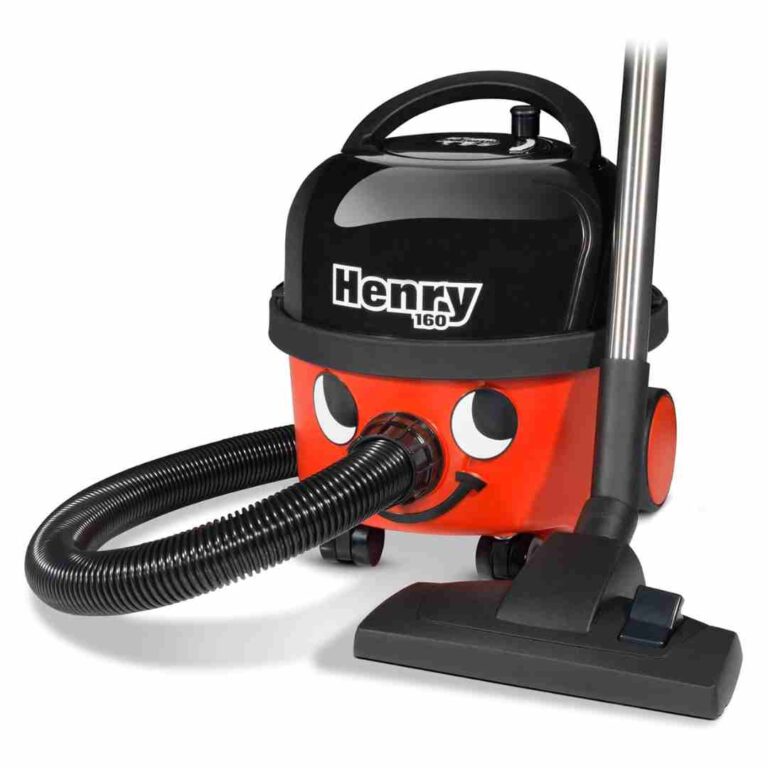
The long, angled wand and compact floorheads on the Henry HVR160 make it particularly good at reaching under beds and other low furniture where many uprights struggle.
-
The compact Henry HVR160 is frequently recommended for apartments, small houses and basements because its small footprint and long cord offer excellent coverage without needing a big machine.
-
Henry HVR160 is consistently described as a tough, commercial-leaning workhorse with thick plastics, a heavy-duty cord/switch, and a simple internal layout that leaves little to fail. Multiple reviewers cite multi-thousand-hour component ratings and UK manufacture, reinforcing expectations of long service life even with frequent use.
-
Cord length
★
★
★
★
★
★
★
★
★
★
10 reviews
4.8
Henry HVR160's roughly 30 foot (10m) cord gives enough reach to cover most rooms, hallways, stairs and even cars from a single outlet, so extension leads are rarely needed.
-
Bin & Bag
★
★
★
★
★
★
★
★
★
★
12 reviews
4.8
The HVR160 uses a large 6L bagged system, and multiple reviews highlight that the bags pack in a lot of debris before needing replacement. The self-seal tab makes disposal low-mess, and the vacuum tends to hold suction well as the bag fills.
-
A simple manual cord rewind neatly stores the entire 30 foot cord on board and is considered durable and satisfying to use compared with spring loaded rewinders.
-
Long-term owners and reviewers commonly describe Henrys as workhorses that keep running for years, including multi-year DIY/renovation use with no major issues. The simple, serviceable design and widespread parts availability underpin expectations of decade-plus longevity for many households.
-
The newer Henry HVR160 uses a 620 watt motor instead of the older 1200 watt design, cutting power consumption roughly in half and making it cheaper to run while still providing acceptable performance for household and detailing tasks.
-
Henry is widely treated as a heavy-duty, workhorse canister suitable for frequent cleaning and messy jobs like renovation dust, plaster crumbs and workshop-style debris (dry only). Commercial-style construction and commonly cited multi-thousand-hour component ratings support its reputation for tougher-than-average use compared with many domestic vacuums.
-
Price & Value
★
★
★
★
★
★
★
★
★
★
7 reviews
4.7
In the UK, Henry HVR160 is repeatedly positioned as a bargain workhorse (often around the 120 to 160 pound range) given its suction and durability, while US pricing can be much higher depending on the retailer. Most reviewers still frame value in terms of low cost-per-year, with bags as the main ongoing expense.
-
Across tests and user reports, the HVR160 delivers very strong suction for a compact canister (often measured around 75 sealed and about 50 working vacuum), and many reviewers describe it as a night-and-day upgrade from cordless or bagless vacuums. Suction remains consistent as the bag fills, but can feel almost too strong on thick rugs unless you reduce airflow with the relief valve.
-
The tapered hose design concentrates potential clogs near the tip where they are easy to reach, and users report few blockages even during dusty DIY cleanup when using the bare hose/tapered adapter. When something does get stuck, it is typically quick to access and remove.
-
With the standard non-motorised floorhead there is no powered brushroll to wrap hair, which reduces day-to-day tangle issues compared with many uprights and sticks. Turbo/turbine brush heads can still accumulate hair over time and benefit from occasional cleaning.
-
Versatility
★
★
★
★
★
★
★
★
★
★
4 reviews
4.6
With interchangeable tools that can mount on the hose handle, wands or directly on the hose, the Henry HVR160 adapts well to hard floors, rugs, stairs, cars and above floor dusting.
-
Maintenance is generally low: replace the bag when full, occasionally shake/replace the main filter, and check tools for blockages. The simple construction makes clearing jams easy, and there are fewer washable filters and no complicated cyclones compared with many bagless designs.
-
In mixed debris tests with flour and cat litter, the Henry HVR160's standard hard floor tool quickly cleared fine dust from bare floors, confirming strong hard floor pickup.
-
Reviewers frequently highlight strong reliability, simple troubleshooting, and the ability to buy replacement parts and tool kits easily. Warranty coverage (commonly cited as three years in the UK) and the long-running Henry ecosystem add confidence in long-term support.
-
-
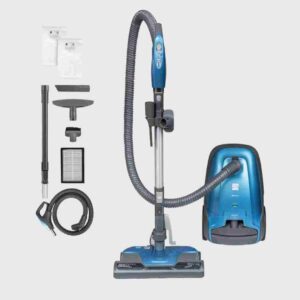
The standard kit is considered comprehensive for a bagged canister: combi floor tool, crevice tool, dusting brush, upholstery tool (often with removable brush), tapered adapter and multi-piece wand/tubes. Optional upgrades like a turbine/turbo brush or specialist hard-floor head noticeably improve hair and carpet agitation.
-
Across reviewers and long-term owners, the HVR160 is consistently seen as a dependable, high-suction, low-maintenance bagged canister that excels on hard floors, rugs, DIY dust and general whole-home cleaning. The main recurring drawbacks are bulk/storage, the canister-style towing experience, and weaker deep-clean performance on very thick/high-pile carpets without an upgraded brush head.
-
Even without an exhaust HEPA filter on some variants, reviewers report excellent dust containment thanks to the thick HEPAFlo-style bag material and simple sealed airflow path, including a smoke test showing essentially no visible emissions. The bagged, self-sealing disposal process is repeatedly praised by allergy-prone users for being cleaner than emptying a bagless bin.
-
Using the crevice tool or hard-floor head, Henry is frequently reported to clean skirting boards/baseboards and edges effectively, including along furniture legs and into tight gaps. Some users still prefer switching tools for the very best edge pickup.
-
Reviewers describe sturdy, well-protective cardboard packaging with practical inserts, usually with minimal plastic. Packaging is generally viewed as adequate and functional rather than premium.
-
The iconic smiling-face cylinder design is widely loved (and can usually be removed for a more plain look), but it is not a sleek, modern-looking vacuum. Most feedback focuses on its functional, workmanlike styling and solid plastic build over premium finishes.
-
Rubber bumpers and rubber-coated wheels/castors help reduce the risk of scuffing hard floors and furniture when the canister bumps into things. Using the right brushes and being mindful around paintwork is still advised since the canister can bash corners.
-
Setup is usually quick: screw in the hose, push together the wand/tube sections, and clip on a floorhead, with a bag often pre-installed. Several reviews note the instructions can be mostly pictorial and the wand sections may need a firm push to prevent them coming apart.
-
The push-fit tool system lets you quickly swap between floor tools, crevice, dusting, and upholstery attachments, and some users like being able to use the hose tip as a quick crevice tool. A few reviews note the interference-fit parts can feel stiff and may need a firm push/pull.
-
Hard-floor hair pickup is generally strong, especially when using the right head, though hair can sometimes cling to the floor tool and may need a quick clean-off pass. The bagged system keeps hair contained once collected.
-
Tests with pet hair on hard floors, low pile carpet and in car interiors show that the Henry HVR160 handles pet debris well, especially when paired with the optional turbo brush, though the basic head may leave a few tufts behind.
-
The main consumable cost is replacement bags (often reported around 10 to 12 pounds for a 10-pack in the UK, and higher in some US listings), but the 6L capacity means changes are infrequent for most homes. Filters are minimal and typically replaced occasionally rather than washed frequently, keeping upkeep straightforward.
-
On typical area rugs and low-pile rugs, Henry performs well and transitions easily between surfaces, especially when using the correct floorhead setting. Very thick rugs can require lowering suction or changing technique to keep the head moving smoothly.
-
On carpets and rugs, hair pickup ranges from good to very good depending on the floorhead: the standard combi head can leave some strands behind, while turbine/turbo brush heads significantly improve lift. Regular de-hairing of brush tools may be needed if you vacuum a lot of long hair.
-
Reviews often compare Henry favorably to cordless sticks and many bagless vacuums for sustained suction and dust containment, and as a lower-cost alternative to premium canisters from brands like Miele. Compared with vacuums that have powered brushrolls, it can be less effective on deep/high-pile carpet unless upgraded with a turbine/turbo head.
-
Above-floor performance is a strength: the dusting brush and crevice tool are effective for vents, shelves and tight gaps, and the upholstery tool generally removes crumbs and hair well. A few users find wider nozzles reduce focused suction, so the crevice tool is sometimes preferred for stubborn embedded debris.
-
Noise level
★
★
★
★
★
★
★
★
★
7 reviews
3.9
Noise is generally described as moderate for a corded vacuum, with published/recorded readings ranging roughly from the low-70s dB up to the low-80s dB in typical use, though one user measured around 90 dB depending on tool and airflow. The sound is often considered less harsh than some competitors, but it is not silent.
-
Controls are intentionally simple: a single on/off switch with a power indicator, plus manual floorhead brush switching and a suction/airflow relief valve (or twist ring) to reduce pull when needed. Several reviews mention the suction adjuster can be stiff at first and the floor-type switching is fully manual rather than automatic.
-
Hose length
★
★
★
★
★
★
★
★
★
6 reviews
3.9
The standard 2.2 meter hose on the Henry HVR160 is adequate for most cleaning and detailing, though some users find it only just reaches the middle seats in smaller cars and may prefer to add an aftermarket longer hose.
-
The Henry HVR160 provides solid cleaning on low pile carpet and area rugs with its standard nozzle, and paired with the optional turbo brush it delivers near deep clean performance, though a few small bits or deeply embedded sand in cheap automotive style carpets may remain.
-
Ease of use
★
★
★
★
★
★
★
★
★
3 reviews
3.9
Henry is easy to understand with one-button operation and quick tool swapping, but the canister-style experience can feel cumbersome for quick cleanups compared with cordless sticks. Common usability gripes include bending to reach the power switch, managing the long hose/cord, and storing the wand and attachments neatly.
-
Henry can pick up many larger debris items (crumbs, litter, leaves) effectively, but several reviews note the combi floorhead can push or snowplow pieces like oats/cereal on hard floors when set incorrectly. Flipping the floorhead brush setting, approaching debris from a different angle, or swapping to another tool typically resolves it.
-
The HVR160’s compact canister size and long hose/cord make stair cleaning possible, and some reviewers note it can sit on certain steps more securely than larger Henry models. However, on narrow or steep staircases the canister and hose can feel cumbersome, so many users leave the unit on a landing/bottom and clean stairs with the hose and tools.
-
Weight
★
★
★
★
★
★
★
★
★
7 reviews
3.8
At about 7.5kg for the machine and kit, the HVR160 is portable for a canister but can feel weighty when lifting or carrying up stairs, especially as the bag fills. Many users find it fine to move room-to-room, but less convenient than lightweight cordless vacuums.
-
Smooth castors and a short wheelbase help Henry follow along easily, but the round canister can snag on corners and the long cord/hose can tangle if you are not mindful. As the bag fills the unit can feel heavier to tow, and carrying it up stairs may be more awkward than a cordless stick.
-
The standard combi floorhead uses a foot switch to raise/lower brushes for carpet vs hard floors, which is simple but can feel stiff and somewhat basic in articulation. Some users report it can push larger debris on hard floors in certain settings, and many recommend adding a turbine/turbo brush for better carpet agitation.
-
The rear tool-docking and wand parking are convenient for storing commonly used tools, but several reviews note the system does not hold every attachment at once. Hose storage is limited, so some users wrap it around the canister for cupboard storage.
-
A small downside noted in testing is that some larger debris can drop back out of the floorhead or hose when you switch off the vacuum, especially if it had not fully traveled into the bag. This is occasional and can be reduced by pausing with the head on the floor before shutoff.