- Compared: mandatory co-op games The preview places LEGO Voyagers near other mandatory co-op games the reviewer enjoyed, including split fiction.
- Compared: strictly two-player design The review groups LEGO Voyagers with Split Fiction as a strictly two-player co-op experience.
- Compared: two-player-only structure The review frames LEGO Voyagers in the same two-player-only co-op vein as Split Fiction.
Lego Voyagers Review
Bottom Line
Choose Lego Voyagers for a short, cozy two-player LEGO adventure with heartfelt co-op charm. Skip it if you need deep puzzles, strong replay value, tight platforming, or lots of content for the price.
Best for pairs who want a relaxed, heartfelt co-op evening built around LEGO charm, gentle puzzles, and shared discovery. It especially suits families, partners, and mixed-skill players who value mood over difficulty.
Not for solo players, challenge seekers, or anyone expecting a long, replayable co-op game with deep puzzle variety. It is also less ideal for players sensitive to fiddly platforming, fixed-camera depth issues, glare, or screen shake.
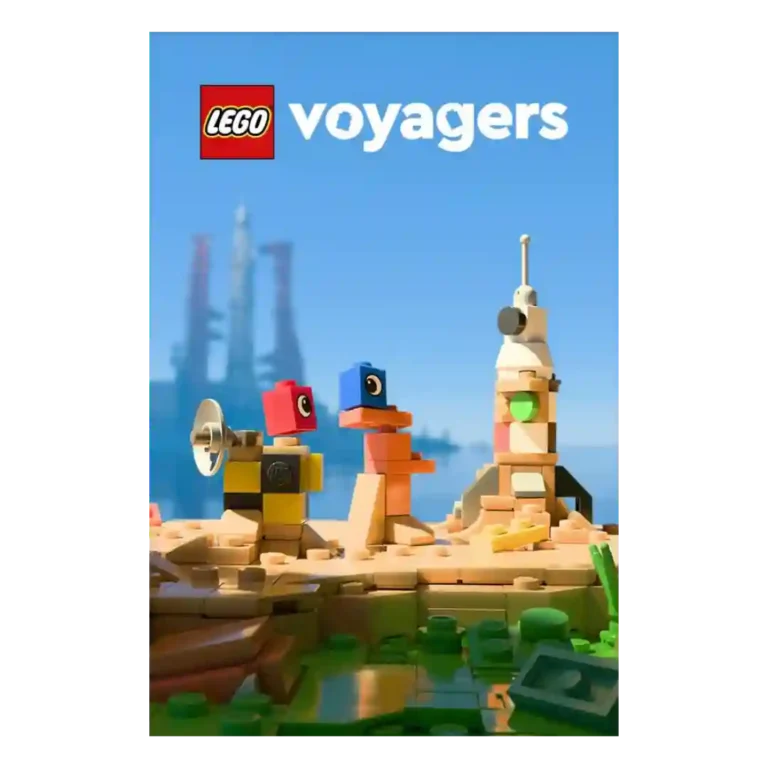
Lego Voyagers lands as a charming, unusually sincere co-op puzzle-platformer built around teamwork, creativity, and the simple pleasure of moving through a gorgeous brick-built world together. Reviewers consistently praised its art direction, music, forgiving respawns, and wordless emotional story, with several calling it memorable despite its tiny scale. The main tradeoff is that the same simplicity that makes it approachable can also limit it: puzzles often revolve around bridges, steps, and light coordination, while fiddly controls, fixed-camera depth issues, and sparse replay incentives frustrated some players. Its best moments come when two players communicate, experiment, and share the journey rather than chase challenge or longevity.
Compared in Reviews
Products reviewers directly compared with this model, grouped into quick takeaways.
It Takes Two
- Better: puzzle-solving and communication The review says LEGO Voyagers lacks the constant ingenious puzzle-solving and communication associated with It Takes Two.
- Compared: strictly two-player design The review groups LEGO Voyagers with It Takes Two as a strictly two-player co-op experience.
- Compared: two-player-only structure The review frames LEGO Voyagers in the same two-player-only co-op vein as It Takes Two.
Builder's Journey
- Older model: formula evolution The review calls LEGO Voyagers an ideal evolution of Builder's Journey's formula.
- Compared: adventure structure and building puzzles The review contrasts Builder's Journey's connected puzzle dioramas with LEGO Voyagers' more open adventure feel.
Feature Scorecards
Summary
51 reviewed features- Very positive 4.5-5.0 33% 17 features
- Positive 3.5-4.4 35% 18 features
- Neutral 2.5-3.4 25% 13 features
- Negative 1.5-2.4 6% 3 features
- Very negative below 1.5 0% 0 features
Pros
-
The checkpoint and respawn system was strongly praised for instant, forgiving recovery with almost no penalty for mistakes.
-
Writing quality stood out through the friendship theme, with one reviewer calling it one of the best video game depictions of friendship.
-
Family friendliness was a recurring strength, especially for parents, kids, partners, and mixed-skill co-op pairs.
-
Environmental detail was a strength, with reviewers pointing to handcrafted worlds, intricate LEGO construction, and richly designed areas.
-
Autosave was praised as frequent and almost constant, supporting the short pick-up-and-play structure.
-
Emotional impact was one of the strongest areas, with several reviewers citing tears, sadness, heartstrings, or lasting story moments.
-
Art direction was consistently praised for authentic, realistic, warmly lit LEGO dioramas and strong visual identity.
-
Graphics received broad praise for gorgeous plastic materials, reflections, lighting, water, and convincing LEGO environments.
-
Faithfulness to LEGO was strong, with reviewers admiring authentic brick-built worlds and real LEGO construction logic.
-
Couch co-op was praised as a natural fit, especially for partners, family, and playing together in the same room.
-
Immersion came from getting lost in the atmosphere, puzzle flow, lighting, and shared world moments.
-
The red and blue 1x1 bricks were repeatedly described as cute, likable, and emotionally expressive despite their minimal design.
-
Atmosphere was consistently praised as cozy, relaxing, childlike, serene, and warmly inviting.
-
The soundtrack was widely praised as mellow, ambient, emotional, memorable, and well-suited to the calm co-op tone.
-
Sound design was praised for cute brick vocalizations, satisfying LEGO noises, and music/sound cues that convey character.
-
Small interactive moments such as flowers, benches, swings, and environmental toys helped the world feel playful and worth engaging with.
-
Originality was praised in the way the game treats LEGO as creative expression rather than another licensed slapstick formula.
-
Co-op was the central strength overall, with reviewers praising teamwork, shared problem-solving, Friend Pass access, and two-player bonding.
-
Reviewers praised level design for its handcrafted worlds, co-op readability, and sense of wonder, with a few comments on unclear routes.
-
World-building was praised for its lonely, toy-like LEGO spaces and sense of childhood wonder, though one review questioned who built the world.
-
The game was repeatedly described as a good entry point for children, partners, and newer players, despite some motor-control challenges.
-
Vehicle sequences were often singled out as cooperative highlights, especially when each player controlled part of a boat or vehicle.
-
The wordless narrative was often praised as wholesome, coherent, touching, and surprisingly emotional, though a few reviewers found it vague or confusing.
-
Exploration was praised when side sights, distractions, and small world details encouraged players to linger beyond the main path.
-
Tutorialization was praised for trusting players and avoiding heavy spoon-feeding while still keeping puzzles understandable.
-
Performance was platform-dependent: one PS5 review reported excellent optimization, while Switch-focused reviews noted noticeable drops.
-
The basic mechanics are approachable and playful, though several reviewers framed them as simple rather than deep.
-
Fun factor was generally high for positive reviewers, though a few felt the experience became forgettable, repetitive, or not worth the time.
-
Difficulty was generally seen as gentle and approachable, though several reviews noted uneven spikes, tricky tasks, or challenges for younger players.
-
Content variety was praised for different environments, but criticized for having little side content beyond the main path.
-
Puzzle design drew the widest split: many praised cooperative, elegant, rewarding ideas, while others found bridge-building repetitive or underwhelming.
-
Bug frequency appeared low overall, though reviewers did mention minor glitches, hitches, or rare awkward respawn behavior.
-
Value for money was split: several praised the Friend Pass and modest price, while others felt the short length made full price steep.
-
Polish was mixed: some praised smooth presentation, while one review cited screen tearing and another broader technical rough edges.
-
Pacing was mixed: some felt the short runtime kept momentum brisk, while many felt the adventure ended just as it was getting going.
Cons
-
The snap system helps platforming, yet depth perception, small ledges, and inconsistent latching still caused frustration for some players.
-
Age appropriateness was mixed, with broad all-ages appeal but caveats about tricky puzzles, platforming, and younger children's motor skills.
-
Rolling a cuboid brick was often charming and fitting, but reviewers also noted odd cadence, clumsiness, and occasional frustration.
-
Mission variety was mixed: reviewers liked vehicles and set pieces, but some found standout moments limited or repetitive.
-
Handheld play was acceptable on Steam Deck, but local co-op around a small screen was not the preferred setup.
-
Controls were a recurring caveat: many found the basics workable, but building, snapping, hitboxes, and fine movement could feel fiddly.
-
Frame rate was mixed, with some reports of temporary hiccups and Switch 2 drops that were noticeable but usually not gameplay-breaking.
-
Onboarding could be sparse; at least one reviewer noted early annoyance from little explanation about what to do or where to go.
-
Navigation was mixed because some reviewers liked organic discovery, while others found objectives or next steps unclear.
-
Camera behavior was a repeated frustration because fixed, distant, or angled views made some platforming and depth judgment harder.
-
The loop of hauling pieces, building routes, and solving co-op obstacles split opinion, with some enjoying its calm rhythm and one finding it busywork.
-
One reviewer criticized the broader mission structure for lacking clear direction and goals.
-
Replay value was a common weakness because the campaign is short, linear, and light on collectibles, side content, or reasons to return.
-
Visual effects were a notable downside in some reviews, especially bright glare, screen shake, and washed-out lighting that affected playability.
-
Interface clarity was criticized where the game's visual language made interactable options or progress less obvious.
-
Menu usability had a clear complaint from one reviewer who found the selected main-menu option hard to distinguish.
Compared With Category Average
Compared with other Video Games, this product is above average in family friendliness, checkpoint system, writing quality, below average in visual effects quality, replay value, core gameplay loop.
Summary
8 compared features- Above average 0.4+ pts higher 38% 3 features
- Same as average within 0.3 pts 0% 0 features
- Below average 0.4+ pts lower 63% 5 features
| Attribute | This product | Category average | Difference |
|---|---|---|---|
| visual effects quality | 2.3 | 4.4 | -2.1 |
| family friendliness | 4.8 | 3.0 | +1.8 |
| replay value | 2.5 | 4.2 | -1.8 |
| core gameplay loop | 2.5 | 4.3 | -1.8 |
| menu usability | 1.8 | 3.3 | -1.5 |
| user interface design | 2.2 | 3.7 | -1.5 |
| checkpoint system | 5.0 | 3.7 | +1.3 |
| writing quality | 5.0 | 3.7 | +1.3 |
FAQ
Can you play Lego Voyagers solo?
No. Reviewers repeatedly describe it as a mandatory two-player co-op game, with no solo or bot companion option.
How long is Lego Voyagers?
Most reviews describe it as very short, commonly around three to five hours, though slower or younger pairs may take longer.
Is Lego Voyagers good for kids?
Reviewers generally found it family-friendly and approachable, but several warned that some platforming, vehicle control, and later puzzles may be tricky for younger children.
Are the puzzles difficult?
Usually no. Many reviewers called the puzzles simple, gentle, or easy to understand, though a few noted occasional difficulty spikes and repetitive bridge-building.
What are the biggest strengths?
The most consistent strengths are cozy two-player cooperation, beautiful LEGO diorama visuals, a mellow soundtrack, forgiving respawns, and a surprisingly emotional wordless story.
What are the main drawbacks?
Common complaints include the short runtime, limited replay value, fiddly controls, depth-perception issues, repetitive puzzle ideas, and occasional performance or visual-effect problems.
Is the Friend Pass useful?
Yes. Multiple reviewers praised that only one player needs to own the game for online co-op, which helped its value despite the short length.
Consider This Instead
If you want better menu usability
Choose Shinobi: Art of Vengeance. It scores 5.0 vs 1.8 for menu usability, with a 4.2 overall score.
If you want better user interface design
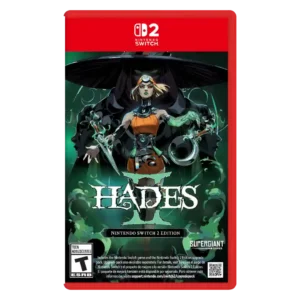
Choose Hades II. It scores 5.0 vs 2.2 for user interface design, with a 4.6 overall score.
If you want better visual effects quality
Choose Dragon Quest I & II HD-2D Remake. It scores 5.0 vs 2.3 for visual effects quality, with a 4.3 overall score.
If you want better replay value
Choose Forza Horizon 6. It scores 4.8 vs 2.5 for replay value, with a 4.1 overall score.
Overall Top Video Games Alternatives
Good if you want deeper Hades-style roguelite combat, huge build variety, polished art, and rewarding progression. Skip it if repetition, resource tracking, or a less intimate story than the original...
Pros: world interactivity, side character depth
Cons: grind level
Best for a stylish, emotional RPG with deep timed combat and exceptional music. Skip it if tight parry timing, weak maps, or awkward platforming would frustrate you.
Pros: world-building, crash stability
Cons: platforming precision, map and navigation design
Choose it if you want classic turn-based Dragon Quest modernized with richer stories, gorgeous HD-2D visuals, and helpful quality-of-life options. Skip it if random encounters, grinding, or occasional difficulty spikes...
Pros: visual effects quality, environmental detail
Cons: AI behavior, level design
Best for gorgeous beat-em-up combat, standout music, strong co-op, and replayable buildcrafting. Skip it if grind-heavy roguelite progression, repeated routes, or thin endgame content will wear you down.
Pros: mission design, world interactivity
Cons: quest design, endgame content