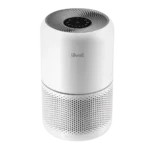
Levoit Core 300-P Feature Scores
Explore all 43 feature scores for Levoit Core 300-P, organized into pros and cons.
Scores by Feature
Summary
43 reviewed features-
Very positive 4.5-5.011 (26%)
-
Positive 3.5-4.421 (49%)
-
Neutral 2.5-3.43 (7%)
-
Negative 1.5-2.47 (16%)
-
Very negative below 1.51 (2%)
Pros
Sort
-
Sleep mode is one of the strongest features, repeatedly described as nearly silent, whisper quiet, or bedroom-friendly.
-
Design is mostly praised as sleek, modern, compact, unobtrusive, and décor-friendly.
-
Most reviewers found the Core 300-P effective for everyday small-room purification, though one major review criticized its performance versus stronger competitors.
-
Maintenance is mostly praised as easy, especially filter replacement, though one reviewer disliked the base/filter design.
-
Indicator and display lights are a strength, especially the lights-off function and filter-change reminder for bedroom use.
-
Size and footprint are praised as compact and unobtrusive, though coverage limitations remain tied to its small form.
-
Noise opinions vary by speed: sleep and low are widely praised, while high speed is sometimes called loud or noisy.
-
Filter availability is a major strength, with reviewers citing genuine choices, pet filters, and broad third-party availability.
-
Value is generally strong because of low upfront price and good small-room performance, but some reviewers prefer newer models for long-term costs.
-
Dust removal is consistently praised in home use, with reviewers seeing reduced buildup, captured dust, and cleaner pet-heavy rooms.
-
Display and control readability are consistently praised as intuitive, clearly labeled, responsive, and easy to use.
-
Pet-related evidence is favorable, with reviewers citing pet allergy filters, dog hair, pet rooms, and noticeable air improvement around pets.
-
Portability is praised because the unit is compact, fairly light, and easy to move between rooms.
-
Reliability is mostly positive across long-term and lab reviews, though one user reported an early squeaking issue that required support.
-
Particle-removal evidence is mostly positive, with several tests reporting strong PM and particulate reductions, while one reviewer doubted its high-grade filtration.
-
Child lock feedback is positive, especially for homes with young children or pets that might press controls.
-
Room coverage is strong for bedrooms and small rooms but weak for whole-house or larger-area expectations.
-
Filtration-stage feedback is positive overall, with reviewers generally liking the three-stage setup and its broad all-around performance.
-
Allergen evidence is mostly positive for pollen, dust, pets, and sinus comfort, with one skeptical review saying noticeable allergy relief may be hit or miss.
-
Fan speed feedback is mixed: many like the simple options, but some consider three speeds limited compared with newer models.
-
Odor control is generally praised for pets, kitchens, and mild smells, but reviewers caution that heavy odors and gases need more carbon.
-
Durability evidence is strong but limited, with long-term reviews saying performance and motor behavior held up over years.
-
Filter costs are generally considered reasonable, helped by affordable genuine and generic filters, though replacements still add to annual cost.
-
Reviewers like the pelleted or granular activated carbon for the price, but several say the carbon amount is too limited for heavy gases or odors.
-
Scheduling is mixed: reviewers like the timer, but some wish it offered longer or more flexible schedules.
-
Pollen removal evidence is positive but limited, mostly tied to allergy-focused use and broad particle-removal claims.
-
Smoke evidence is mixed: some tests and home reports praise fast smoke clearing, while one reviewer says it is not suitable for cigarette smoke.
-
CADR sentiment is mixed: some praise the price-to-CADR ratio, while others say newer or similar-size rivals outperform it.
-
Build quality is mixed, with one long-term reviewer praising solidity and another criticizing the base/filter design.
-
Filter-life evidence is mixed, with reviewers accepting six-to-eight-month replacement but noting more frequent replacement than annual norms.
-
Ozone-free operation has limited but positive evidence from one reviewer who valued its purely mechanical filtration.
-
Air-change evidence is limited but positive from one reviewer who praised a fast full-room cycle for a 300-square-foot room.
Cons
Sort
-
App connectivity scores low because the standard Core 300-P lacks app support, Wi-Fi, and remote control, unlike the 300S.
-
Smart features are a consistent weakness; reviewers repeatedly describe the Core 300-P as basic or outdated without sensors, app control, or automation.
-
Auto mode scores poorly because reviewers repeatedly note that the standard Core 300-P lacks automatic air-quality-based fan adjustment.
-
Power consumption is commonly criticized, especially relative to newer models and the purifier’s size/performance.
-
Real-time monitoring is a weakness because reviewers note the lack of a sensor or air-quality display on the standard model.
-
Mold evidence is negative and limited, with one reviewer advising against this model for significant mold problems.
-
Energy efficiency is a weakness because reviewers say the older motor uses more power than newer Core 300S-style alternatives.
-
HEPA filtration receives a low score from one critical review that says the unit does not actually have a HEPA filter.
-
True-HEPA sentiment is split, with some reviews treating the filter as a plus and others criticizing or questioning Levoit’s true-HEPA claims.
-
VOC evidence is mixed and mostly cautious: reviewers credit the carbon filter for some VOC help, but warn it is not enough for serious VOC loads.
-
Pre-filter quality is mixed: some praise its particle capture, while others dislike that it is not removable or call it poorly made.