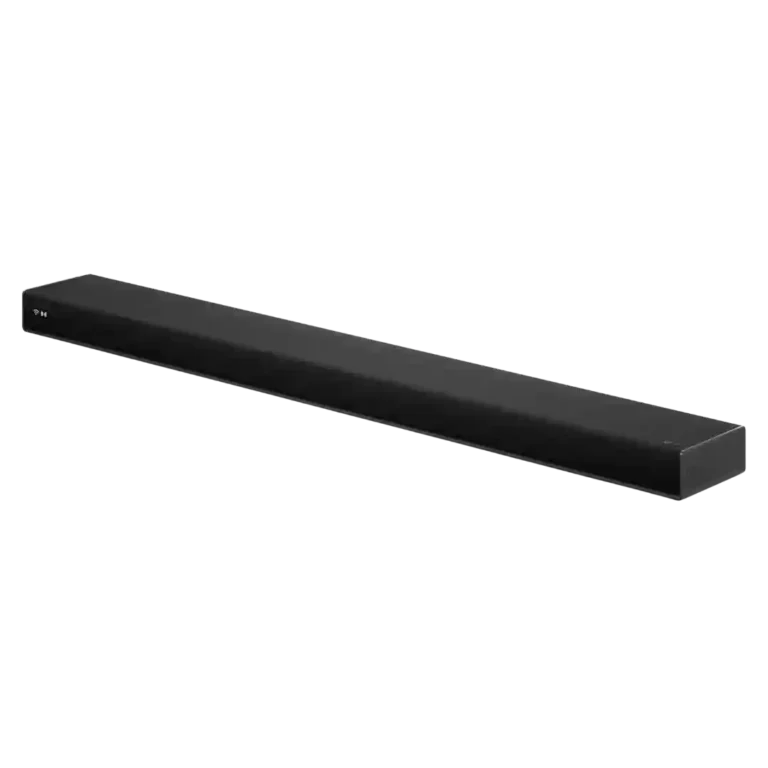
LG Sound Suite H7

LG Sound Suite H7 Soundbar Review

Brand: LG
Released: January 6, 2026
Updated: 40 minutes ago
3.9
Overall review score
431
Review evidence points
57
Scored features
19
Expert reviews

Bottom Line

Choose it for spectacular Atmos scale, flexible speaker placement, and gradual system expansion. Skip it if you need HDMI passthrough, DTS support, effortless setup, natural vocals, or strong value from a full surround package.

Best for

Best for home-theater fans with awkward or open room layouts who want powerful Atmos immersion and the freedom to expand a system gradually.

Not for

Not ideal for buyers who prioritize natural vocals, refined music playback, guaranteed plug-and-play setup, direct console passthrough, DTS support, or budget value.

Verdict

The LG Sound Suite H7 is an ambitious theater hub whose FlexConnect calibration and Dolby Atmos presentation can be genuinely spectacular. It creates a wide, tall, room-filling soundfield, places effects convincingly, and delivers impressive bass for a standalone bar. Its modular design is especially valuable in awkward rooms where conventional speaker placement is impossible. The tradeoff is refinement and maturity: many reviewers found voices cold or synthetic, AI modes too aggressive, and the full system difficult to pair reliably. Missing HDMI passthrough and DTS support are conspicuous at this price, while a complete setup can exceed $3,000. Standard mode, careful EQ, and later firmware improve the experience, but the H7 remains better at spectacle than subtlety.

Feature Scorecards

Summary

57 reviewed features
  • Very positive 4.5-5.0
    21 (37%)
  • Positive 3.5-4.4
    11 (19%)
  • Neutral 2.5-3.4
    11 (19%)
  • Negative 1.5-2.4
    11 (19%)
  • Very negative below 1.5
    3 (5%)

Pros

  • 5.0
    based on 15 reviews
    Surround sound simulation: 5.0, based on 15 reviews
    Surround immersion is outstanding across Atmos and upmixed 5.1 content. The system produces a large, enveloping bubble with convincing front-to-back, side-to-side, and overhead movement.
  • 5.0
    based on 7 reviews
    Soundstage height: 5.0, based on 7 reviews
    The system creates a tall, open soundstage with clearly elevated effects. Up-firing drivers remain effective even when speaker placement is less than ideal.
  • 5.0
    based on 3 reviews
    HDMI ARC: 5.0, based on 3 reviews
    HDMI eARC was easy to connect and stable in the tests that discussed it. TV audio generally worked as intended over the wired link.
  • 5.0
    based on 3 reviews
    Privacy and data: 5.0, based on 3 reviews
    Physical microphone switches let users disable the calibration mics directly. Reviewers appreciated having a clear hardware privacy control.
  • 5.0
    based on 2 reviews
    Spotify Connect reliability: 5.0, based on 2 reviews
    Spotify Connect worked smoothly in the tests that mentioned it. The remote’s customizable heart button can also launch a favorite Spotify playlist.
  • 5.0
    based on 1 review
    Cabinet construction / bracing: 5.0, based on 1 review
    The rigid metal chassis and exposed metal grilles give the H7 a sturdy, premium cabinet. It feels more substantial than LG’s previous soundbar generation.
  • 5.0
    based on 1 review
    Chromecast compatibility: 5.0, based on 1 review
    Google Cast streaming was smooth in the tested setup. It provides an easy route for wireless music playback.
  • 5.0
    based on 1 review
    Google: 5.0, based on 1 review
    Google Cast worked smoothly in the tested Wi-Fi setup. It adds convenient whole-home and mobile streaming support.
  • 5.0
    based on 1 review
    Latency with TV (lip sync): 5.0, based on 1 review
    One post-update test reported no dropouts or lip-sync issues over Wi-Fi. TV sound remained synchronized in that setup.
  • 4.9
    based on 17 reviews
    Home theater integration: 4.9, based on 17 reviews
    The H7 is an excellent hub for a modular theater system, supporting gradual expansion with M5 or M7 speakers and the W7 subwoofer. It also works with non-LG TVs through eARC, making it more flexible than speaker-only configurations.
  • 4.8
    based on 18 reviews
    Inter-speaker connectivity: 4.8, based on 18 reviews
    FlexConnect’s speaker coordination is highly impressive when the system is functioning, maintaining convincing placement even with unconventional layouts. Early software made grouping unreliable for some reviewers, but the underlying spatial technology earned broad praise.
  • 4.8
    based on 13 reviews
    Stereo imaging accuracy: 4.8, based on 13 reviews
    Wide front separation and precise movement tracking are major strengths, especially when extra M7 speakers flank the soundbar. Effects travel smoothly around the room instead of feeling trapped inside the bar.
  • 4.8
    based on 11 reviews
    Status indicators: 4.8, based on 11 reviews
    The small OLED display is one of the most consistently praised design touches, clearly showing input, volume, sound mode, and format. Its only drawback is limited readability from far across a large room.
  • 4.7
    based on 10 reviews
    Lighting effects: 4.7, based on 10 reviews
    The customizable LED strips are widely liked for adding subtle atmosphere and useful status feedback. Brightness and color can be tailored or turned off.
  • 4.7
    based on 9 reviews
    Design and build quality: 4.7, based on 9 reviews
    The H7 itself is consistently described as solid, premium, and well made. The optional surrounds and subwoofer sometimes feel lighter and less substantial than the bar.
  • 4.6
    based on 16 reviews
    Dolby Atmos height effects: 4.6, based on 16 reviews
    Dolby Atmos is the standout performance area, with convincing overhead movement, precise height placement, and a large three-dimensional bubble. Even skeptical reviewers generally praised the vertical effects.
  • 4.6
    based on 12 reviews
    Detail retrieval: 4.6, based on 12 reviews
    Environmental effects, small background cues, and spatial details come through with impressive precision. That extra detail can become overemphasized when AI modes push background sounds too far forward.
  • 4.6
    based on 11 reviews
    EQ customization: 4.6, based on 11 reviews
    ThinQ offers deep control over bass, midrange, treble, channel levels, presets, and custom EQ. Those adjustments are valuable because Standard mode and reduced AI processing often sound more natural.
  • 4.5
    based on 18 reviews
    AI Room Calibration: 4.5, based on 18 reviews
    FlexConnect and Room Calibration Pro are the system’s defining strengths, quickly adapting sound to awkward speaker positions and off-center seats. A few early tests hit calibration failures or odd results, but most found the placement correction remarkably effective.
  • 4.5
    based on 16 reviews
    Design and aesthetics: 4.5, based on 16 reviews
    Most reviewers liked the understated, modern styling, premium fabric, metal accents, and subtle lighting. A minority found the bar generic rather than distinctive.
  • 4.5
    based on 4 reviews
    Control button responsiveness: 4.5, based on 4 reviews
    The H7’s tactile top buttons are easy to identify and respond well. Their clicky feel and logical layout make basic operation pleasant.
  • 4.4
    based on 4 reviews
    On-device controls: 4.4, based on 4 reviews
    Physical controls are straightforward and convenient for volume, input, playback, and switching speaker modes. They reduce dependence on the app for basic operation.
  • 4.3
    based on 6 reviews
    Remote control usability: 4.3, based on 6 reviews
    The included remote is clearly labeled and easy to use, though it feels light and lacks a dedicated Night Mode button. A few software bugs also caused inconsistent volume control.
  • 4.3
    based on 4 reviews
    AirPlay compatibility: 4.3, based on 4 reviews
    AirPlay playback was generally smooth where it was tested. One reviewer did encounter an AirPlay-specific grouping bug that left a removed speaker playing.
  • 4.1
    based on 16 reviews
    Bass performance: 4.1, based on 16 reviews
    The H7 delivers unusually deep, forceful bass for a single bar, and the full system can hit with real cinematic weight. The W7 can become boomy, slow, or overbearing, so careful placement and level adjustment matter.
  • 4.0
    based on 11 reviews
    Smart features: 4.0, based on 11 reviews
    Sound Follow and AI Upmix are clever, useful ideas, especially for off-center seating. Sound Follow did not work convincingly in one test, and AI modes often made voices more artificial or treble more aggressive.
  • 4.0
    based on 5 reviews
    Small-room suitability: 4.0, based on 5 reviews
    The ecosystem can be scaled down for smaller rooms with M5 or M7 speaker-only setups. The H7 itself is wide and can look oversized beneath TVs smaller than about 65 inches.
  • 4.0
    based on 4 reviews
    TV connection stability: 4.0, based on 4 reviews
    HDMI eARC and later-firmware setups were stable in several tests, but other reviewers experienced complete sound loss or failed TV-based grouping. TV integration is therefore promising but not uniformly dependable.
  • 4.0
    based on 3 reviews
    Distortion at high volume: 4.0, based on 3 reviews
    The system can play loudly with little obvious bass distortion, especially in speaker-only configurations. One harsher review still heard strain at both quiet and loud levels.
  • 3.7
    based on 13 reviews
    Loudness / maximum volume: 3.7, based on 13 reviews
    The H7 and full Sound Suite can fill medium and large rooms with ease. That power is exciting for action, but several reviewers felt the default presentation was excessively loud and forceful.
  • 3.6
    based on 14 reviews
    Dialogue clarity (for TV/soundbar use): 3.6, based on 14 reviews
    Dialogue is usually easy to understand in Standard mode and can sound natural in a well-balanced full system. The bigger weakness is placement and tone: some setups make speech thin, detached, or overshadowed by ambient effects.
  • 3.5
    based on 14 reviews
    Setup simplicity: 3.5, based on 14 reviews
    Basic H7 setup can be quick, but building a full FlexConnect group has been inconsistent. Some reviewers called it painless, while others needed resets, router changes, repeated pairing, or several days of troubleshooting.

Cons

  • 3.2
    based on 14 reviews
    Music performance: 3.2, based on 14 reviews
    Music performance is mixed. The H7 can sound wide, detailed, and enjoyable after tuning, but several reviewers preferred the M7 speakers alone and criticized the bar’s harsh vocals, cluttered timing, or overplayed bass.
  • 3.2
    based on 5 reviews
    Weight convenience: 3.2, based on 5 reviews
    The H7 is wide and heavy, while the W7 is hefty but thin enough for flexible placement. The satellite speakers are easier to move and can suit layouts where a large bar would be awkward.
  • 3.1
    based on 4 reviews
    Subwoofer: 3.1, based on 4 reviews
    The W7 adds deep cinematic weight and flexible placement, but opinions on its quality are mixed. Some found it powerful; others called it boomy, slow, and less musical than the rest of the system.
  • 3.0
    based on 2 reviews
    Bluetooth connectivity: 3.0, based on 2 reviews
    Bluetooth is convenient for wireless playback, but using it for TV sound was said to reduce quality noticeably versus HDMI. It is better treated as a secondary connection.
  • 3.0
    based on 1 review
    Auto Volume leveling: 3.0, based on 1 review
    Auto Volume is available alongside dynamic-range controls, but it was viewed as unnecessary for most normal setups. Night Mode was the more practical option for reducing sudden loudness.
  • 2.9
    based on 10 reviews
    App reliability: 2.9, based on 10 reviews
    ThinQ is well organized once everything is connected, with useful tuning and grouping controls. Early reviewers repeatedly ran into pairing errors, stale connection status, and calibration quirks, though later firmware appeared to improve matters.
  • 2.8
    based on 9 reviews
    Reliability: 2.8, based on 9 reviews
    Reliability varies sharply by firmware and network environment. Some later tests were stable, while early units suffered pairing failures, disconnects, volume bugs, and sound dropouts.
  • 2.6
    based on 6 reviews
    Dynamic headroom: 2.6, based on 6 reviews
    Action scenes can hit hard, but the H7 often starts too loud and leaves little room for bigger dynamic swings. Explosions may feel less dramatic because quiet moments are already presented aggressively.
  • 2.5
    based on 11 reviews
    Cohesive presentation: 2.5, based on 11 reviews
    The H7 excels at scale and spectacle, but its tonal presentation is often less cohesive. Several reviewers described the sound as shouty, synthetic, or poorly balanced until AI processing was reduced and EQ was adjusted.
  • 2.5
    based on 7 reviews
    Wi-Fi streaming reliability: 2.5, based on 7 reviews
    Wi-Fi performance ranged from smooth and dropout-free to extremely frustrating. Several early reviewers needed router changes, separate bands, repeated resets, or days of troubleshooting before the system connected.
  • 2.5
    based on 2 reviews
    Amplifier power requirements: 2.5, based on 2 reviews
    Imported H7 units may need a voltage converter in 220V regions. That practical complication makes local-market models preferable.
  • 2.4
    based on 18 reviews
    Value for money: 2.4, based on 18 reviews
    The H7 alone is expensive, and a full Sound Suite can exceed $3,000 without bundle savings. A few reviewers found the technology worth it or liked the cheaper entry configurations, but value is the most common practical objection.
  • 2.3
    based on 9 reviews
    Voice clarity: 2.3, based on 9 reviews
    Speech is usually intelligible, but voices often lack warmth, body, and emotional nuance. AI modes can add a hollow, raspy, or synthetic character, while careful Standard-mode tuning improves naturalness.
  • 2.1
    based on 4 reviews
    Multi-speaker pairing reliability: 2.1, based on 4 reviews
    Multi-speaker pairing is the ecosystem’s biggest reliability risk. Several early tests had stubborn grouping failures and disappearing speakers, while one later sponsored setup stayed connected without trouble.
  • 2.0
    based on 12 reviews
    Frequency response balance: 2.0, based on 12 reviews
    The most repeated sonic complaint is a cold, bright, bass-and-treble-heavy balance with weak midrange warmth. Careful EQ can improve it, but several reviewers still found the presentation aggressive or metallic.
  • 2.0
    based on 7 reviews
    Audio format support: 2.0, based on 7 reviews
    Dolby Atmos support is excellent, but DTS and DTS:X are consistently absent. Disc collectors and all-LG setups may need their TV or player to decode DTS first.
  • 2.0
    based on 3 reviews
    Smart assistant integration (Alexa: 2.0, based on 3 reviews
    Despite having built-in microphones, the H7 does not support mainstream voice assistants. Buyers seeking Alexa-style control will be disappointed.
  • 1.8
    based on 5 reviews
    Low-volume performance: 1.8, based on 5 reviews
    Low-volume listening is a weak point because the bar often remains shouty even at moderate settings. Quiet scenes can lose warmth and subtlety unless the treble, center, and AI processing are reduced.
  • 1.8
    based on 3 reviews
    optical: 1.8, based on 3 reviews
    LG omits optical input entirely. That is understandable for an Atmos-focused bar, but it removes a familiar fallback connection.
  • 1.8
    based on 2 reviews
    Wired input: 1.8, based on 2 reviews
    Wired connectivity is sparse: the H7 offers eARC and USB-A but no optical, Ethernet, analog input, or extra HDMI sockets. That minimalist approach may frustrate complex theater setups.
  • 1.5
    based on 10 reviews
    Video passthrough support: 1.5, based on 10 reviews
    The lack of any dedicated HDMI input is a near-universal complaint. Buyers with multiple consoles or source devices must connect everything to the TV and give up direct passthrough.
  • 1.5
    based on 1 review
    Gaming performance: 1.5, based on 1 review
    The missing HDMI input makes the H7 a poor direct hub for modern consoles. Gaming audio must be routed through the TV instead.
  • 1.0
    based on 1 review
    Gaming HDMI passthrough: 1.0, based on 1 review
    The H7 cannot accept a console through a dedicated HDMI input. Gamers who need soundbar passthrough should look elsewhere.
  • 1.0
    based on 1 review
    HDMI 2.1 gaming: 1.0, based on 1 review
    The H7 does not provide full-bandwidth HDMI 2.1 passthrough. Gamers must depend on available HDMI 2.1 ports on their TV.
  • 1.0
    based on 1 review
    Rear speaker cable length: 1.0, based on 1 review
    The M7 power cables are far too short for a system built around flexible placement. Extension leads may be necessary even in ordinary rooms.

Compared With Category Average

Compared with other Soundbars, this product is above average in Google, Privacy and data, Status indicators, near average in Design and aesthetics, Detail retrieval, below average in HDMI 2.1 gaming, Rear speaker cable length, Low-volume performance.

Summary

52 compared features
  • Above average 0.4+ pts higher
    21 (40%)
  • Same as average within 0.3 pts
    6 (12%)
  • Below average 0.4+ pts lower
    25 (48%)

Largest category differences

Attribute This product Category average Difference
HDMI 2.1 gaming 1.0 3.8 -2.8
Rear speaker cable length 1.0 3.5 -2.5
Low-volume performance 1.8 4.2 -2.4
Google 5.0 2.7 +2.3
Gaming HDMI passthrough 1.0 3.3 -2.3
Voice clarity 2.3 4.3 -2.1
Frequency response balance 2.0 4.0 -2.0
Wired input 1.8 4.0 -2.2

Consider This Instead

If you want better Gaming HDMI passthrough

Choose Samsung HW-Q990F Soundbar. It scores 5.0 vs 1.0 for Gaming HDMI passthrough, with a 4.4 overall score.

Compare

If you want better Video passthrough support

Choose Samsung HW-Q990H. It scores 4.8 vs 1.5 for Video passthrough support, with a 4.3 overall score.

Compare

Compared in Reviews

Products reviewers directly compared with this model, grouped into quick takeaways.

  • Cheaper: full-system price The Samsung is an obvious, cheaper alternative with a smaller subwoofer.

FAQ

Does the H7 work with non-LG TVs?

Yes. The H7 connects to modern TVs through HDMI eARC and can act as the FlexConnect hub without an LG TV.

How good is its Dolby Atmos performance?

Atmos is the strongest part of the package. Reviewers repeatedly praised the height, width, scale, and precise movement of effects.

Does it support HDMI passthrough or DTS:X?

No. The H7 has no dedicated HDMI input for passthrough and does not support DTS or DTS:X.

Is setup truly plug-and-play?

Sometimes. Several tests were quick and easy, but others required resets, router changes, repeated pairing, or firmware updates.

Is the H7 good on its own?

It can deliver strong bass, clear dialogue, and impressive Atmos without extra speakers. Its default tuning can still sound harsh, shouty, or unnatural, especially for music.

Is the full Sound Suite worth buying?

It makes the most sense for awkward rooms and buyers who value flexible expansion. The high total price, mixed software reliability, and uneven W7 subwoofer performance are important drawbacks.

Sample Expert Reviews We Analyzed

These are a few of the reviews included in our analysis.

Video Reviews

Article Reviews

Top Soundbars to Consider

#1 Samsung HW-Q990F Soundbar
4.4

Choose the Samsung HW-Q990F if you want a premium, easy Atmos system with huge surround, strong bass, and Samsung TV perks. Skip it if price, a four-piece setup, music purity,...

Pros: Multi-speaker pairing reliability, Gaming HDMI passthrough

Cons: Google, Cabinet construction / bracing
#2 Samsung HW-Q990H
4.3

Best for class-leading Atmos immersion, clear dialogue, compact but forceful bass, and a complete rear-speaker package. Skip it if you own the Q990F, need a compact one-bar setup, or cannot...

Pros: Loudness / maximum volume, Stereo imaging accuracy

Cons: Smart assistant integration (Alexa, Status indicators
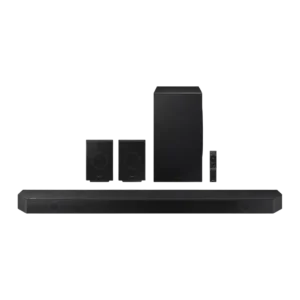
#3 Samsung HW-Q990D Soundbar
4.3

Choose the HW-Q990D for immersive Atmos, clear dialogue, strong bass, and HDMI 2.1 gaming in a full soundbar package. Skip it if price, large hardware, small display, or the cheaper...

Pros: Soundstage height, Surround sound simulation

Cons: Chromecast compatibility, Google

#4 Sonos Arc Soundbar
4.3

Choose the Sonos Arc if you want immersive Atmos, easy Sonos setup, and a soundbar you can expand with Sub and surrounds. Skip it if price, HDMI passthrough, Bluetooth, or...

Pros: Multi-speaker pairing reliability, Spotify Connect reliability

Cons: Gaming HDMI passthrough, Video passthrough support