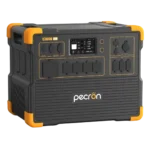
Pecron E3600 Feature Scores
Explore all 129 feature scores for Pecron E3600, organized into pros and cons.
Scores by Feature
Summary
129 reviewed features-
Very positive 4.5-5.066 (51%)
-
Positive 3.5-4.424 (19%)
-
Neutral 2.5-3.419 (15%)
-
Negative 1.5-2.415 (12%)
-
Very negative below 1.55 (4%)
Pros
Sort
-
Value is the dominant strength: reviewers repeatedly found substantially more power, solar input, and expandability than similarly priced alternatives.
-
Recharge speed is one of the most consistent strengths, with AC, DC, solar, and generator methods all producing fast results.
-
The true 30-amp connection is one of the E3600’s clearest strengths, supporting RV loads and high-current charging without the token limitations seen on weaker units.
-
The E3600 performs very well as emergency and partial-home backup, powering essential circuits for hours or even a full day.
-
Expansion is a major advantage, with support for multiple batteries and unusually large total system capacity.
-
Real-world runtime is excellent for the class, including roughly a day of home essentials and about 25–33 hours for a refrigerator.
-
Most buyers are highly satisfied with the power, capacity, and price, but the minority reporting severe failures prevents an unqualified recommendation.
-
Up to roughly 2,400–2,500 watts of solar input is a standout capability and was repeatedly achieved in testing.
-
Once configured, the E3600 is easy to operate from the touchscreen, with simple mode helping less technical users.
-
The main unit is repeatedly described as sturdy, beefy, and well made, with construction that feels built for demanding use.
-
AC charging is consistently fast, with standard charging around two hours and the optional 30-amp cable cutting that substantially.
-
The port mix is unusually complete, covering household AC, RV power, USB, wireless charging, and multiple DC formats.
-
The 3,600-watt inverter is repeatedly praised for powering serious appliances and tools at a budget price.
-
The port and inverter combination can power many devices at once, including refrigeration, lighting, communications, and small climate-control loads.
-
Pass-through operation is a major strength, allowing loads to run while AC, solar, or generator power replenishes the battery.
-
The inverter can run refrigerators, kettles, air conditioners, tools, and other demanding loads, though some HVAC startup combinations remain incompatible.
-
Simultaneous solar and AC charging works well and can push total recharge power to very high levels.
-
The RV outlet is genuinely useful because the inverter can supply the power needed to run real 30-amp RV loads.
-
With two units and the voltage hub, the system can feed a breaker panel and run major 240-volt household loads.
-
The touchscreen is a major strength, offering deep control without the app, though a few owners found the interface dated or inaccurate.
-
Generator charging is fast and practical, especially with the 30-amp cable and adjustable input rate.
-
The touchscreen provides detailed battery, input, output, temperature, and runtime data, although one solar reading appeared lower than external measurements.
-
Pairing two units provides powerful 240-volt capability, though AC charging is disabled while the inverters are synchronized.
-
The station can wake and resume charging when solar returns, a valuable feature for unattended off-grid systems.
-
The front panel and touchscreen are logically organized, with clear sections and unusually deep on-device controls.
-
Setup is largely plug-and-play, helped by clear controls and, in one case, an excellent manual.
-
The broader system is highly expandable, including dual-unit 240-volt configurations and large battery banks.
-
The box includes a generous set of charging and solar cables, adapters, tools, and storage accessories.
-
Remote monitoring is genuinely useful for long-running refrigerator, charging, and whole-home tests.
-
Expansion batteries are priced far below many mainstream competitors, making large storage builds unusually affordable.
-
Independent tests recovered roughly 86–93% of rated capacity, which is strong for a large inverter power station.
-
Most advertised performance was achieved, but the 7,000-watt surge claim appears exaggerated.
-
Customer support experiences are sharply divided, ranging from exceptional replacement help to complaints about missing phone support and slow resolutions.
-
The 3,072Wh battery offers substantial storage for backup and off-grid use, though full-cabin users may still want expansion packs.
-
Independent high-load tests measured about 89% efficiency, a strong result for a large inverter.
-
Owners using solar and generator-assisted charging reported substantial reductions in electricity and fuel costs.
-
Near maximum load, the station delivered roughly 50 minutes, an efficient result for its rated capacity.
-
The station works convincingly as the center of an off-grid solar setup for sheds, garages, and daily household loads.
-
The TT-30 outlet stands out as a practical RV-ready connection rather than a lightly powered convenience port.
-
The five-year registered warranty is unusually generous, and at least one owner reported that Pecron honored it without resistance.
-
Dual wireless pads are a convenient extra and delivered functional fast charging in testing.
-
Most stress tests showed good thermal control, but one replacement ran hot and one solar board overheated and throttled.
-
Factory packaging is usually protective, but replacement cosmetics and one misleading shipping-status experience reduce consistency.
-
The app exposes useful controls and monitoring, but pairing trouble, slow refreshes, and an unfinished interface keep it from feeling fully polished.
-
Using the station between a generator and household loads can reduce generator runtime and fuel consumption substantially.
-
The app can remotely switch AC and DC outputs and adjust key settings, though the touchscreen is often preferred.
-
The trolley’s retractable handle makes rolling much easier, even though stairs remain difficult.
-
Simple mode and large icons make the screen easy to read, but failed units have occasionally shown unusable or false values.
-
The high-current 12-volt output is useful for van and RV systems, though one prototype’s DC circuit failed after sustained testing.
-
Solar charging can be extremely fast with a proper array, though defective units and input-reporting issues create uneven experiences.
-
Efficiency is usually strong under load, but one replacement unit showed severe heat-related loss that appears abnormal.
-
The MPPT system can reach very high input, but the 20-amp limit and cable setup can complicate panel configuration.
-
Healthy units lose very little charge in storage, but one defective unit drained itself within days before replacement.
-
Strong units sustain near-rated loads impressively, but defective samples shut down under modest appliances.
-
Four household AC receptacles give the station enough plug capacity for multi-device backup setups.
-
The included pouch and trolley bags keep the large cable set organized and easier to transport.
-
Daily use through heavy storms was dependable, giving one mountain-home owner reliable emergency power.
-
Thick ABS construction gives the housing a durable, heavy-duty feel.
-
Battery switchover occurs in under 20 milliseconds, fast enough for the tested backup use.
-
The cases tolerated heavy stacking without damage, suggesting a strong external frame.
-
Voltage frequency held at 60Hz during 240-volt testing, with a stable sine wave.
-
Using the battery station between a gas generator and household loads can noticeably reduce fuel spending.
-
The thick ABS housing feels rugged and well suited to stationary backup use.
-
A tested solar over-voltage condition cleared automatically once voltage dropped, avoiding a manual reset.
-
Short bursts can reach roughly double rated output according to one review, providing useful startup headroom.
-
Pure sine wave output remained clean under load, making it suitable for most sensitive electronics.
-
The station can sustain its full 3,600-watt rating in demanding use, including long high-load tests.
-
Pecron offered to ship a replacement solar charging board, showing that at least some internal parts can be supplied.
-
Short-circuit protection cuts power promptly and acts like an electronic fuse.
-
The matching solar-panel option was considered a strong fit for the station’s capacity and charging system.
-
The inverter started a 240-volt air compressor without trouble, showing strong motor-starting capability.
-
The optional trolley adds useful bags that keep cables with the station.
-
The 30-amp UPS connection can feed a generator transfer switch for automatic furnace and outage backup.
-
Two fast-charging USB-C ports add useful modern charging alongside the larger AC and DC connections.
-
The 100-watt USB-C port delivered its rated power in testing and handled laptop-class charging without trouble.
-
A sheltered unit operated outdoors for a full year without weather-related trouble, though it was kept away from direct rain.
-
UPS performance is capable in normal 120-volt use, but some owners experienced discharge faults, overloads, or limitations in parallel and generator scenarios.
-
Optional trolleys, expansion batteries, voltage hubs, and solar kits create a broad accessory system, though some parts can be hard to obtain.
-
Grid bypass reduces unnecessary charge cycles, which should help preserve the battery over time.
-
Bluetooth makes initial app setup straightforward before the station transitions to Wi-Fi control.
-
Software improvements gave one owner noticeably better control than an earlier Pecron model.
-
The plastic shell feels sturdy rather than flimsy, supporting the product’s tank-like impression.
-
The station accepts several charging sources and high input power, but its proprietary AC connector prevents use of a standard household cord.
-
Wi-Fi enables useful remote access, though occasional disconnects mean it may require reconnection.
-
Eco mode meaningfully lowers charging demand when using the 30-amp cable, helping match generator capacity.
-
Two top handles make short moves easier, though the overall mass still limits comfortable carrying.
-
The station supports a broad discharge temperature range, though charging is more restricted near freezing.
-
Thermal protection throttled solar input when the charge board overheated, preventing continued full-power operation.
-
The on-screen runtime estimate proved useful during home-backup use, giving a clear sense of remaining hours.
-
Standard XT60 solar inputs are easy to source cables for, but the included splitter caused confusion and did not work properly in one test.
Cons
Sort
-
Several failed units shut down unexpectedly or refused to restart, making startup reliability a serious concern in those samples.
-
A small group of failed units produced unstable voltage or randomly dropped AC output, which is a serious reliability risk.
-
Weight is the most universal drawback; at roughly 79–80 pounds, the station is difficult for one person to move.
-
Mobility hardware is weak: the main unit lacks wheels, and one optional trolley wheel loosened and fell off.
-
Several units displayed inaccurate state-of-charge readings, including sudden drops from high percentages to empty.
-
The missing built-in light is a recurring annoyance during outages, although one reviewer considered the omission reasonable given the unit’s weight.
-
Service access is inconsistent: some buyers received excellent end-to-end replacements, while others found no phone line or struggled with missing shipments.
-
At nearly 80 pounds, the station is difficult to lift and often requires two people.
-
The E3600 is technically movable but not comfortably portable without a trolley.
-
The lack of a separate physical power button is inconvenient and contributes to unnecessary standby behavior.
-
Cooling performance varies widely: some fans are quiet and effective, while others are loud, grind, or accompany solar-board overheating.
-
Standby loss varies dramatically by mode and unit, from impressively low to enough draw to waste substantial energy.
-
A unit arriving at 0% after warehouse storage points to poor storage handling and possible battery damage.
-
One unit’s voltage repeatedly swung from the 90s to 120 volts, an unacceptable regulation failure.
-
Panel setup can be restrictive because of voltage and amperage limits, and one owner received a mechanically faulty XT60 input.
-
Healthy units produce a clean sine wave, but several customer units suffered inverter overloads or outright inverter failure.
-
Charging from a vehicle is possible but painfully slow, taking roughly 34 hours in one calculation.
-
This is not a compact station; its bulky body is better suited to stationary backup than frequent travel.
-
Closely spaced AC receptacles can make bulky plugs difficult to fit together.
-
Documentation quality is inconsistent: one manual was praised as excellent, while others found UPS and battery details vague or bare-bones.
-
The inverter produced noticeable radio and electromagnetic interference in one test, which may matter around sensitive communications or recording equipment.
-
The inverter tolerates moderate overloads, but testing did not validate the full advertised surge figure.
-
Battery reliability is mixed: many units hold charge well, but others suffered cell faults, deep self-discharge, or sudden capacity collapse.
-
One refrigerator test showed a sudden drop from roughly 30% to empty, suggesting occasional battery-management calibration trouble.
-
After being switched off, wireless electronics can remain active briefly, so shutdown is not always immediate.
-
At demanding loads, noise ranges from acceptable in controlled testing to very distracting in real-world use.
-
Repairability is mixed: one owner faced costly return shipping, while another was offered a replacement circuit board for self-installation.
-
The footprint is large and visually bulky, although some owners still find it manageable when left in place.
-
Overload behavior is mixed: healthy units provide useful headroom, while faulty units trigger warnings far below rated load.
-
One owner reported that USB power damaged two devices, making the USB-A output a serious concern in that unit.
-
LFP chemistry supports long service life but contributes heavily to the station’s substantial weight.
-
The LiFePO4 battery is valued for longevity, though its weight makes the unit difficult to move.
-
DC output coverage is broad and useful, but isolated reports of failed ports and a prototype DC-board failure raise some reliability concern.
-
Power quality is generally clean enough for electronics and audio gear, though one defective unit damaged USB devices and one test found mild interference.
-
The design is functional rather than universally attractive; one owner praised it, while an expert called it bulky and ugly.
-
Charging hardware is generally robust and well supplied, but faulty or confusing splitter cables and proprietary connectors weaken the experience.
-
Noise is highly unit- and load-dependent, ranging from barely noticeable to loud fan and bearing sounds.
-
App pairing is inconsistent: some owners connect easily, while others need support, replacements, or repeated attempts.
-
Long-term reliability is the biggest uncertainty: many owners report flawless daily use, while a meaningful minority describe early electronics, inverter, or battery failures.