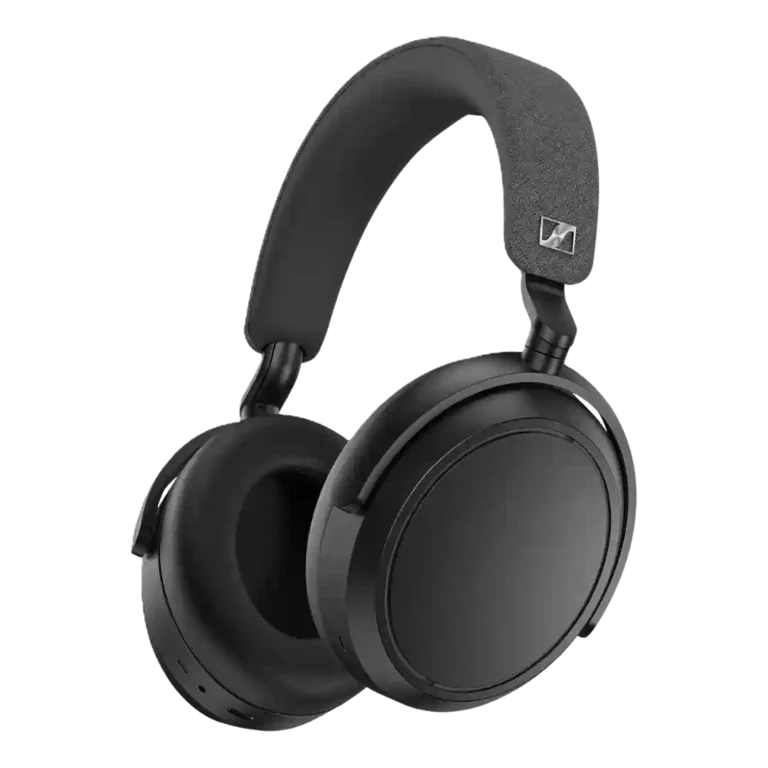
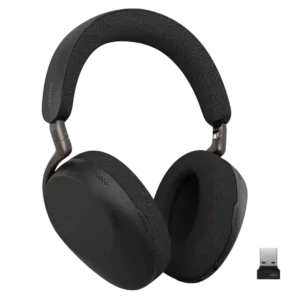
Sennheiser MOMENTUM 4 Wireless Headphones Review
Bottom Line
Choose MOMENTUM 4 for rich, detailed sound and marathon battery life; Skip if you need class-leading noise canceling or crystal-clear calls.
Listeners who want a premium, detailed sound signature, long battery life, and lots of app customization for commuting, office, and travel.
Frequent flyers or callers who prioritize the strongest possible noise canceling and the cleanest voice pickup in loud environments.
Across expert tests and long-term use reports, MOMENTUM 4 stands out as a sound-first wireless ANC headphone with exceptional endurance. Reviews consistently praise its detailed, engaging tuning (often slightly bass-forward) and comfort that can last all day, plus a feature-rich Smart Control app with EQ and location-based profiles. The main tradeoff is consistency in isolation and communications: several outlets call its ANC and passive isolation behind the top Bose or Sony options, and mic performance is commonly described as only average in noisy places. If you prioritize music quality and battery over absolute commuting silence, it is a strong value pick.
Scored Features
Pros
-
Battery life is the most consistent standout: multiple sources cite roughly 50 to 60 hours or more with ANC depending on test methods and usage.
-
aptX support is a notable plus cited by several reviews, helping Android users with more consistent performance compared to AAC in many setups.
-
Sound quality is a consistent highlight: most reviews describe an engaging, detailed presentation that competes strongly at the price, often with a fun, slightly bass-forward tilt and strong clarity after light EQ if desired. Wired audio can sound tighter and more stable than Bluetooth in some reports, but at least one review warns wired listening can degrade significantly if the headphones are not powered on.
-
Audio-video sync is generally reported as strong for video watching, with latency management helped by codec selection in some advice-focused reviews.
-
USB-C is a key advantage: reviews highlight charging convenience and USB-C audio as a rare, practical feature for wired listening.
-
Earpads are commonly described as soft and comfortable, contributing to long-wear comfort; the softer seal may slightly reduce isolation for some.
-
Charging is generally strong, with quick-charge claims and reasonable full-charge times; experiences vary slightly by power source and usage.
-
Comfort is frequently described as excellent, including long sessions and glasses-friendly padding, though a few users report headband pressure or fit quirks during extreme-length wear.
-
Measurements and listening impressions generally align on a well-tuned response for broad appeal, with small deviations (notably bass lift) that can be refined via EQ.
-
Codec support is strong for mainstream and Android use, including multiple aptX options and AAC, but it is not positioned around newer lossless Bluetooth standards.
-
Clamp force is often described as moderate and comfortable, but the lighter clamp can trade off with stability during movement-heavy activities.
-
Accessories are generally generous, commonly including a case, charging cable, analog cable, and an airplane adapter, though one review notes a missing adapter compared to the prior generation.
-
Bluetooth stability is generally solid with modern connectivity, though real-world reliability can still depend on device ecosystem and nearby previously paired devices.
-
Wear sensors and auto pause features are frequently mentioned as useful quality-of-life additions, though auto power behaviors can be inconsistent for some users.
-
Earcup rotation is praised in at least one review as smooth and helpful for fit, with cups lying flat for storage and neck rest.
-
Sidetone is praised in at least one review for making calls feel more natural by letting you hear your own voice more clearly.
-
The carry case is usually praised as protective with storage for cables, but a few reviews call it larger than ideal for pack-light travel.
-
EQ customization is a meaningful strength across reviews, commonly used to tame bass, refine mids, or personalize the overall signature without major distortion issues.
-
Weight is typically reported around the 290g range and perceived as manageable, though not the lightest in class and still a factor for ultra-long sessions for some users.
-
The Smart Control app is widely viewed as feature-rich with EQ and zone-based behavior, but some reviewers dislike setup friction, pop-ups, or account requirements for certain features.
-
Setup and daily control are generally easy once configured, but a few reviewers report initial friction in the app experience or connection steps.
-
Instrument separation and imaging are commonly rated as strong for the category, with clear placement and good stereo definition, though not always a large leap over prior models.
-
Treble is frequently praised for detail and shimmer, though a few reviewers mention occasional brightness, fatigue, or a sharper peak that may bother treble-sensitive listeners.
-
Preset modes and guided personalization features are generally useful and can improve tonality for specific tastes, though some presets may limit manual slider control.
-
Bass is commonly described as elevated and impactful without constant bleed, but several reviewers note it can be a bit much stock and may benefit from EQ to reduce boom or flab in some tracks.
-
Even when pushed loud, multiple reviews note the sound stays clean, but the practical ceiling can feel lower than expected compared to peers.
-
Soundstage is usually described as wide enough for an immersive feel, but depth can be limited and some tests describe the stage as more inside-the-cups than truly expansive.
-
Midrange is generally clear, but some reviews call it less rich than Momentum 3 or slightly recessed depending on tuning, with vocals still remaining clean and present for most listeners.
-
Fit and adjustability are generally straightforward, though users are advised not to over-tighten because pressure points can develop.
-
Design is commonly described as minimalist and understated; some like the clean look while others miss the more distinctive style of earlier Momentum models.
-
Multipoint is supported and often convenient, but at least one lab test reports occasional glitches when other known devices are nearby, even though switching can be quick once connected.
-
Sustainability gets a small nod through minimalist, paper-forward packaging in at least one review, though it is not a dominant theme.
-
ANC effectiveness is mixed across sources: some call it very good and close to leaders, while others measure it as clearly behind top Bose and Sony options, especially for tougher noise scenarios. ANC adjustability is widely praised thanks to sliders, adaptive behavior, and app-driven profiles and zones that let you tune isolation versus awareness.
-
Touch controls are often described as intuitive and capable, but several reviews mention sensitivity, accidental triggers, or occasional glitches requiring app toggles.
-
Build quality is typically seen as solid but more plastic-heavy and less premium-feeling than metal-rich rivals; durability is considered fine with reasonable care.
-
Portability is good but not best-in-class: cups lie flat and cases can be compact versus some rivals, yet the design does not fully fold into the headband in some reports.
-
Transparency is adjustable and generally usable, but opinions vary: some like the control and naturalness, while others find it less crisp or overly amplified in busy spaces.
-
Call quality trends average-to-good in quiet rooms, but multiple tests report reduced clarity and competitiveness when background noise is present.
-
Surface smudging is mentioned as manageable: oils can show with regular handling but a quick wipe restores a clean look.
-
Volume output is sometimes reported as lower than competing flagships, leading some users to run near the top of the volume range.
Cons
-
Noise rejection for calls is a frequent criticism, with several reviews noting background sounds can intrude; wind reduction features can help in some cases.
-
Passive isolation is a recurring weak point in several lab-style reviews, sometimes attributed to a softer seal; others find it adequate in real travel use.
-
Fit stability can be a weakness during vigorous movement due to moderate clamping, with at least one test noting issues beyond walking.
-
The single physical power and pairing control is sometimes criticized as finicky or confusing compared to simpler button-driven systems.
-
One review criticizes the included analog cable as thin and less confidence-inspiring for travel wear and tear.
-
Spatial audio support is not a core strength in these reviews, with some calling it limited or weaker than ecosystem-driven alternatives.
-
LDAC is not supported and is repeatedly mentioned as the key wireless hi-res omission for enthusiasts.
-
Find My style tracking is described as lacking compared to Apple ecosystem features in at least one review.
-
Water resistance is effectively absent in practice: at least one review notes no IP rating and recommends avoiding rain.
FAQ
How long does the battery really last?
Multiple reviews report battery life as a standout, often around the 50 to 60 hour range with ANC, depending on volume and settings.
Is the noise canceling top tier?
It is generally effective for steady noise, but several reviews place it behind the best Bose and Sony models, especially for more challenging or sudden sounds.
Does it support wired listening over USB-C?
Yes. Reviews note USB-C audio as a key strength, alongside analog wired use, giving you a reliable fallback when you do not want Bluetooth.
Does it have LDAC?
No. Several reviewers call out the lack of LDAC as the main wireless hi-res limitation, even though it supports multiple aptX variants.
How is call quality?
Call quality is mixed: it can be fine in quieter spaces, but many tests report weaker noise rejection and reduced clarity when background noise ramps up.
Can you wear it in the rain?
At least one review notes there is no IP rating for water resistance, so it is better to avoid rain or heavy moisture.
Video Reviews
Article Reviews
Best Over-Ear Headphones Alternatives
Choose the PX7 S3 for class-leading sound and premium comfort with strong-enough ANC; Skip if you want Sony/Bose-level noise canceling or a lighter, cooler-fit headset for long flights.
Pros: aptX, Multipoint connectivity reliability, Codec support, Volume output, Android compatibility, Maximum volume clarity, Design and Aesthetics
Cons: Replaceable battery, LDAC, Spatial audio, Portability/foldability, Preset EQ profile quality
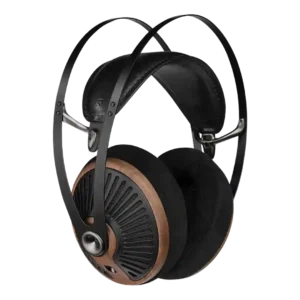
Choose the Meze 105 Silva for gorgeous, comfy open-back listening with strong imaging and a warm-yet-detailed tuning; Skip if you need isolation for commuting or you’re sensitive to...
Pros: Sustainability materials, Replaceable earpads, Design and Aesthetics, Headband adjustability, Hinge durability, Build quality, Volume output
Cons: Noise isolation (passive), Portability/foldability
Choose the Soundcore Space 2 for huge battery life, comfort, and strong value. Skip it if you need flagship-level ANC polish or a protective hard case.
Pros: Bluetooth version, Charging, Battery, Weight comfort, Ear cup padding quality, Comfort during long use, Equalizer customization
Cons: Water/sweat resistance rating, Wind noise handling, ANC background noise level, Carry case quality, Smudge resistance, Immersive audio quality, Spatial audio
Choose these for travel-first flexibility, long battery life, and very strong ANC. Skip them if you want the most premium feel or perfectly polished touch controls.
Pros: Battery, Connectivity options, Included accessories, Features at launch, ANC background noise level, Instrument separation, Equalizer customization
Cons: Water/sweat resistance rating, Replaceable earpads, Maximum volume clarity, Smart Pause performance, Premium feel, Preset EQ profile quality, ANC effect on sound signature