- Review score
- 3.8
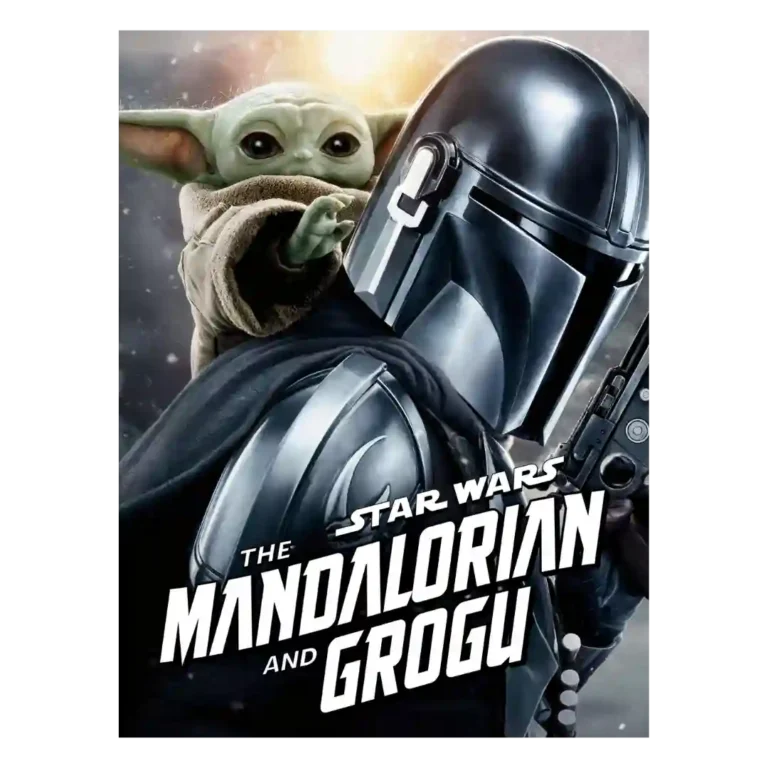
Star Wars: The Mandalorian and Grogu Movie Review
Bottom Line
Choose it for Grogu’s charm, energetic action, excellent puppetry, and a terrific score. Skip it if you expect an ambitious Star Wars event, meaningful character growth, or a story that truly needs the big screen.
Families, casual Star Wars viewers, and Mandalorian fans who mainly want Grogu, creature comedy, and frequent action will get the most from it. The simple setup also works for newcomers.
Viewers expecting a bold franchise reset, deep mythology, major character consequences, or consistently convincing CGI should skip it. The two-hour-plus runtime also tests patience with the slight story.
The Mandalorian and Grogu works best as a polished family matinee rather than the major cinematic revival its release suggests. Grogu remains irresistibly expressive, the practical creature work is excellent, Ludwig Göransson’s score adds energy, and several action sequences benefit from IMAX scale. The quieter stretch in which Grogu protects Din also gives the film genuine warmth. Yet the mission-based plot feels assembled from television episodes, dialogue is frequently blunt or repetitive, and Din changes very little. CGI quality is uneven, the two-hour-plus runtime exposes the thin story, and low stakes make much of the spectacle feel disposable. Casual viewers and families may enjoy the accessible adventure, while longtime fans seeking ambition, consequence, or deeper Star Wars mythology are likely to leave underwhelmed.
Feature Scorecards
Summary
46 reviewed features- Very positive 4.5-5.0 11% 5 features
- Positive 3.5-4.4 28% 13 features
- Neutral 2.5-3.4 20% 9 features
- Negative 1.5-2.4 41% 19 features
- Very negative below 1.5 0% 0 features
Pros
-
Shakari's dark techno music feels fresh for Star Wars while still fitting the setting naturally. The soundtrack gives the neon city a distinct identity.
-
Grogu's puppetry, the Anzellans, stop-motion robots, and other tactile creatures are among the movie's most celebrated elements. Their expressiveness and physical presence often outshine the CGI characters.
-
The light adventure, cute creatures, and straightforward story are aimed squarely at children and family audiences. The heavy combat and darker monster encounters may still be intense for sensitive younger viewers.
-
Blaster fire, ship battles, armor movement, and the large-format mix give the film strong sonic presence. The sound helps sell the action even when the images or story feel less convincing.
-
Mando's armor, trooper gear, and the broader franchise wardrobe retain a polished, recognizable Star Wars look. The practical costumes help ground action that is otherwise heavily digital.
-
Cute creatures, broad humor, a clear plot, and a caring parent-child relationship make this a strong family outing. The frequent combat and monster violence keep it from feeling completely gentle.
-
Ludwig Göransson's music is a major strength, mixing the familiar Mandalorian theme with techno, Western, orchestral, and electronic textures. Even negative reactions often praise the score's energy and personality.
-
Shakari's neon streets, Nal Hutta's swamps, varied creatures, and large-scale environments give the adventure attractive new spaces. The strongest designs feel fresh while remaining recognizably Star Wars.
-
The clearest message is that family is built through care, responsibility, and mutual protection rather than bloodline. Grogu's role reversal with Din gives that simple idea genuine warmth.
-
Grogu caring for an injured Din provides the most consistently moving material, combining tenderness, resilience, and role reversal. The broader film has heart, though its thin story limits the emotional payoff.
-
Shakari and Nal Hutta expand the franchise with distinctive urban and swamp environments, unusual creatures, and fresh musical textures. These locations are often more memorable than the plot unfolding within them.
-
The finale delivers a cool burst of large-scale action and visual spectacle. It resolves the immediate mission cleanly, but does little to make the story feel more consequential.
-
Grogu's practical puppet is unusually believable and emotionally readable within the fantasy setting. The contrast makes several digital characters look noticeably less convincing.
-
The mission is simple, self-contained, and understandable without watching every season of the series. That accessibility is a strength, though the straightforward plotting can also feel overly basic.
-
Families, casual viewers, and fans primarily seeking more Mando and Grogu are the most likely to have fun. Longtime fans hoping for a major, consequential Star Wars event are far more divided.
-
The opening assault, dogfights, chases, and close-quarters battles deliver frequent excitement and strong theatrical scale. Later set pieces can become repetitive, overextended, or visually muddy.
-
The neon city, swamp worlds, creature designs, and IMAX action provide striking moments. Flat lighting, murky colors, and uneven CGI prevent the movie from looking consistently cinematic.
-
Grogu, the Anzellans, and Martin Scorsese's nervous food vendor generate the biggest laughs. The comedy is charming in spots but too sparse or repetitive for some viewers.
Cons
-
Din and Grogu's warm father-son bond remains the film's emotional anchor, particularly in quieter scenes. Some find the familiar dynamic repetitive and insufficiently developed for a feature-length story.
-
The film delivers expensive spectacle, large creatures, ships, and explosive battles, but the quality is inconsistent. Practical work impresses far more reliably than the busiest digital sequences.
-
Martin Scorsese's cameo is a comic highlight, while Rotta brings more personality than expected. Sigourney Weaver is underused, and Jeremy Allen White's heavily processed voice draws mixed reactions.
-
As a pulpy space Western and Saturday-matinee adventure, the film supplies chases, monsters, dogfights, and heroic rescues. It is less satisfying as an epic Star Wars chapter with mythic stakes.
-
The movie offers easy fun through Grogu's charm, plentiful action, strange creatures, and a lively score. Reactions range from delighted to deeply bored because the simple adventure lacks urgency and depth.
-
Critical response is sharply divided between praise for accessible fun and frustration with the thin, television-sized story. The craft highlights are widely recognized even when the overall verdict is negative.
-
The music, Western tone, episodic mission structure, and Din-Grogu dynamic closely preserve the television series. That familiarity pleases existing fans but makes the movie feel less like a full-scale Star Wars event.
-
Pedro Pascal's distinctive voice and underlying charisma keep Din Djarin watchable, even behind the helmet. The static characterization and flat dialogue sometimes make the performance feel wooden or emotionally distant.
-
Jon Favreau handles several action beats and creature moments with energy, but the feature often lacks cinematic shape and escalation. The direction feels more comfortable delivering television-style missions than a major theatrical event.
-
Grogu gains welcome independence and Rotta receives a modest arc, but Din Djarin remains largely static. The movie often preserves the status quo instead of meaningfully advancing its leads.
-
The central rescue-and-betrayal adventure is clear and occasionally charming, but it is widely viewed as thin, episodic, and inconsequential. The story rarely justifies the scale of a major theatrical comeback.
-
IMAX scale, strong sound, and practical creature work can justify a theater ticket for devoted fans and families. Many others see the story as streaming-sized and recommend waiting for home viewing.
-
The digital Hutts and several creature battles are frequently criticized as flat, weightless, or visibly artificial. A few large-scale effects impress, but the CGI rarely matches the tactile charm of the puppets.
-
The movie borrows heavily from familiar Star Wars imagery, television structure, and recognizable action-film references. Fresh locations and creature concepts cannot fully overcome the sense of recycled material.
-
The cold open moves quickly and several early missions have strong momentum. The middle and third act often slow down, repeat beats, or stretch thin material beyond its natural length.
-
Found family, generational responsibility, and breaking from a parent's legacy provide a workable thematic base. The movie usually states these ideas simply rather than exploring them in depth.
-
The film repeatedly feels like two to four television episodes joined together, with visible act breaks and uneven momentum. Strong individual sequences do not always build into a cohesive feature.
-
Most reactions describe the film as pleasant but disposable, with little story consequence to reward repeat viewing. A smaller group enjoyed the action and puppetry enough to plan another watch.
-
The human performances are often described as stiff or awkward, especially when exposition takes over. The expressive puppet work and a few voice turns fare much better.
-
At roughly two hours and twelve minutes, the movie is widely considered too long for its simple mission plot. Repeated action and a slow middle make the length more noticeable.
-
Low stakes, predictable rescues, and limited consequences keep tension modest. A few monster encounters and the Grogu rescue sequence create temporary urgency, but the film rarely feels dangerous.
-
Dialogue is one of the clearest weaknesses, with repetitive motivations, blunt exposition, and stiff exchanges. The near-wordless Grogu material often works better precisely because it avoids talking.
-
The screenplay is frequently described as bare-bones, expository, and shaped like compressed television episodes. It provides a clear mission but too little character conflict, thematic development, or memorable dialogue.
-
The IMAX framing gives several environments and battles scale, but many images are criticized as flat, dim, or murky. The movie looks grandest in isolated sequences rather than consistently.
-
The film contains frequent shootings, fights, explosions, monster attacks, and a surprisingly high body count. Several reactions find the violence excessive beside the child-friendly humor and merchandising appeal.
-
The drama rarely develops meaningful jeopardy, conflict, or consequence. Even potentially powerful ideas about mortality, family, and inherited identity are usually kept on the surface.
-
The plot follows a familiar chain of mission briefings, rescues, betrayals, and battles while echoing several earlier genre films. It rarely surprises or develops a distinctive dramatic direction.
-
The combination of cute family comedy, heavy killing, and prolonged creature combat can feel contradictory. The lighter Grogu material and harsher action do not always blend smoothly.
Cast & Creators
-
ComposerLudwig Göransson supplies the film's strongest craft contribution, expanding the Mandalorian sound with muscular themes, techno textures, and emotional range.
-
HugoMartin Scorsese turns a tiny food-vendor cameo into one of the movie's funniest and most memorable human performances.
-
Visual Effects ArtistPhil Tippett's stop-motion robot guardians are a standout practical-effects achievement with tactile personality and old-school Star Wars charm.
-
Din DjarinPedro Pascal's vocal charisma still gives Din Djarin presence, but the static writing and limited facial performance leave some scenes feeling wooden.
-
WriterDave Filoni's contribution is criticized for favoring familiar lore, episodic plotting, and safe franchise choices over a stronger feature-film story.
-
Rotta the HuttJeremy Allen White's natural energy is largely buried beneath heavy voice processing and repetitive dialogue, making Rotta's vocal performance feel forgettable.
-
DirectorJon Favreau's direction is faulted for retaining television-scale structure and delivering spectacle without enough dramatic shape or consequence.
-
Colonel WardSigourney Weaver is given little beyond exposition and mission briefings, and her performance is criticized as unusually disengaged.
Compared With Category Average
Compared with other Movies, this product is above average in family friendliness, below average in cinematography, acting performance, theme depth.
Summary
8 compared features- Above average 0.4+ pts higher 13% 1 feature
- Same as average within 0.3 pts 0% 0 features
- Below average 0.4+ pts lower 88% 7 features
| Attribute | This product | Category average | Difference |
|---|---|---|---|
| cinematography | 1.5 | 4.2 | -2.7 |
| acting performance | 1.8 | 4.0 | -2.2 |
| theme depth | 1.9 | 3.7 | -1.8 |
| rewatch value | 1.8 | 3.7 | -1.9 |
| suspense | 1.7 | 3.7 | -2.0 |
| drama quality | 1.5 | 3.5 | -2.0 |
| tonal consistency | 1.5 | 3.5 | -2.0 |
| family friendliness | 4.4 | 2.7 | +1.7 |
FAQ
Do I need to watch The Mandalorian first?
No. The mission and character setup are explained clearly enough for newcomers, although existing fans will recognize more callbacks and supporting characters.
Is it suitable for children?
It is strongly aimed at families, with Grogu, broad humor, and a straightforward adventure. Frequent shootings, fights, explosions, and monster attacks may be intense for sensitive younger children.
Is IMAX worth it?
The biggest battles, planetary backgrounds, sound mix, and score benefit from a large screen. However, many critics still felt the story itself was sized more like streaming television.
What are the movie’s biggest strengths?
Grogu’s puppetry, the Anzellans, the score, several opening and aerial action sequences, and the Din-Grogu family bond receive the strongest praise.
What are the main weaknesses?
The most common complaints are thin episodic plotting, repetitive or blunt dialogue, low stakes, limited character growth, uneven CGI, and an overlong runtime.
Sample Expert Reviews We Analyzed
These are a few of the reviews included in our analysis.
Video Reviews
Article Reviews
Action-packed, adorable, and uninterested in mythology, ‘The Mandalorian and Grogu’ finally gets the franchise back on big-screen track.
- Review score
- 3.8
The food is terrible and such small portions.
- Review score
- 1.9
It's not just that 'The Mandalorian and Grogu' turns a promising TV show into a mediocre movie. It makes you feel like the I.P. is creatively...
- Review score
- 1.4
Had the storyline for The Mandalorian and Grogu beenused for a three-episode arc in the Disney+ TV series, I don't think anyonewould have...
- Review score
- 1.8
This one-shot movie of a scrapped Disney TV series slides by on the indisputable sweetness of Baby Yoda and Pedro Pascal as his helmet-head...
- Review score
- 3.8
Compared in Reviews
Products reviewers directly compared with this model, grouped into quick takeaways.
Andor
- Better: dialogue quality Its dialogue compares poorly with Andor's stronger writing.
Attack of the Clones
- Better: arena action direction The arena battle is judged inferior to the earlier film's set piece.
Blade Runner
- Similar: urban visual style The reviewer sees the city imagery as imitation rather than invention.
Consider This Instead
If you want better rewatch value
Choose The Furious. It scores 5.0 vs 1.8 for rewatch value, with a 4.0 overall score.
If you want better CGI quality
Choose Backrooms. It scores 5.0 vs 2.0 for CGI quality, with a 4.1 overall score.
If you want better dialogue quality
Choose Stop! That! Train!. It scores 4.8 vs 1.6 for dialogue quality, with a 3.6 overall score.
If you want better character development
Choose The Odyssey. It scores 4.5 vs 2.4 for character development, with a 3.7 overall score.
Top Movies to Consider
Best for a profound, formally inventive meditation on grief, memory, and the ethics of filming family. Skip it if intensely personal addiction material, a 114-minute runtime, or occasional repetition will...
Pros: plot originality, ending satisfaction
Cons: runtime, pacing
Best for a tender, accessible portrait that lets Oliver’s poetry, friends, and archival voice carry the experience. Skip it if you want a brisk, deeply investigative biography; the calm rhythm...
Pros: romance quality, faithfulness to source material
Cons: none
Best for joyful music, rare footage, candid interviews, and a layered Maurice White portrait. Skip it if you want a tightly focused, unconventional reappraisal that lingers on performances instead of...
Pros: ending satisfaction, drama quality
Cons: runtime, originality
Best for razor-sharp adult comedy, exceptional ensemble work, and a surprisingly moving marriage story. Skip it if talk-heavy chamber pieces, explicit relationship discussions, or an occasionally intrusive string score wear...
Pros: plot originality, lead performance
Cons: runtime, score quality